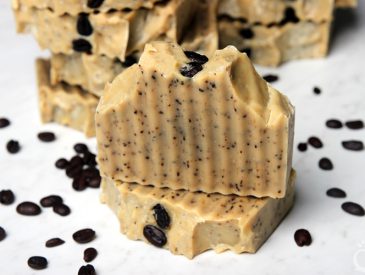
Simple Coffee Soap DIY
Coffee lovers, this simple cold process soap is for you!
Ingredients
- 10 ″ Silicone Loaf Mold
- 13.9 oz. Olive Oil 42%
- 8.3 oz. Coconut Oil 25%
- 8.3 oz. Palm Oil 25%
- 1.7 oz. Coffee Butter 5%
- 1 oz. Coffee Oil 3%
- 5 oz. Brewed Coffee
- 5 oz. Distilled Water
- 4.6 oz. Sodium Hydroxide Lye
- 2 Tbsp. Used Coffee Grounds
- Whole Coffee Beans for the top
- Optional: Crinkle Cutter
Instructions
SAFETY FIRST: Suit up for safe handling practices! That means goggles, gloves and long sleeves. Make sure kids, pets, and other distractions and tripping hazards are out of the house or don’t have access to your soapmaking space. Always soap in a well-ventilated area.
COFFEE LYE PREP: First, we need to prep the lye solution. For this project, we are using half coffee and half distilled water. Brew the coffee using distilled water. The strength of the coffee is up to you. The stronger it is, the darker your soap batter will be. In this recipe, we brewed enough coffee for the entire recipe (5 ounces) and used a “normal” strength, which resulted in a rich, dark color. Measure 5 ounces of coffee into the container you use to mix the lye solution. Add 5 ounces of distilled water to the coffee, which needs to cool to room temperature or below before adding the lye. The colder the mixture is when the lye is added, the colder it will be after the lye is added. Once your liquid is room temperature or below, slowly add the sodium hydroxide lye to the coffee and gently stir until the lye flakes are fully dissolved. The solution will start to darken and smell quite unpleasant. This is normal! Luckily, the scent goes away in the final bars.
- Slowly and carefully add the lye to the water-coffee mixture, and gently stir until the lye has fully dissolved. Set aside to cool.
- Fully melt and combine the coconut oil, palm oil, olive oil, coffee butter, and coffee oil. Remember to fully melt then mix your entire container of palm oil before portioning. Once the lye water and the oils have cooled to 130 degrees or below (and are ideally within 10 degrees of each other), add the lye water to the oils, and stick blend until it’s at a thin trace. If you’d like a harder bar of soap that releases faster from the mold, you can add sodium lactate to the cooled lye water. Use 1 teaspoon of sodium lactate per pound of oils. For this recipe, add 2 teaspoons sodium lactate. Stick blend the soap until it’s at a thin trace.
- Continue to stick blend the soap until you reach a medium trace. Medium trace is perfect for suspending the coffee grounds and creating texture on top.
- Add 2 tablespoons of used coffee grounds to the soap batter and use a whisk to fully incorporate them.
- Pour the soap batter into the mold. Tap the mold firmly on the counter to get rid of bubbles.
- Use a spoon to mound the soap in the center and create texture. There is no right or wrong way to do this, so have fun with it!
- Place coffee beans in the center of the soap down the length of the mold. Gently pressing the beans into the soap will help them stick better. Once you’re happy with the look, spritz the top with 99% isopropyl alcohol to prevent soda ash. Allow the soap to stay in the mold for about two or three days. Unmold, and cut into bars. Use the Crinkle Cutter to achieve the textured cut shown here. Allow the bars to cure for four to six weeks, and enjoy!
Tried this recipe?Let us know how it was!