





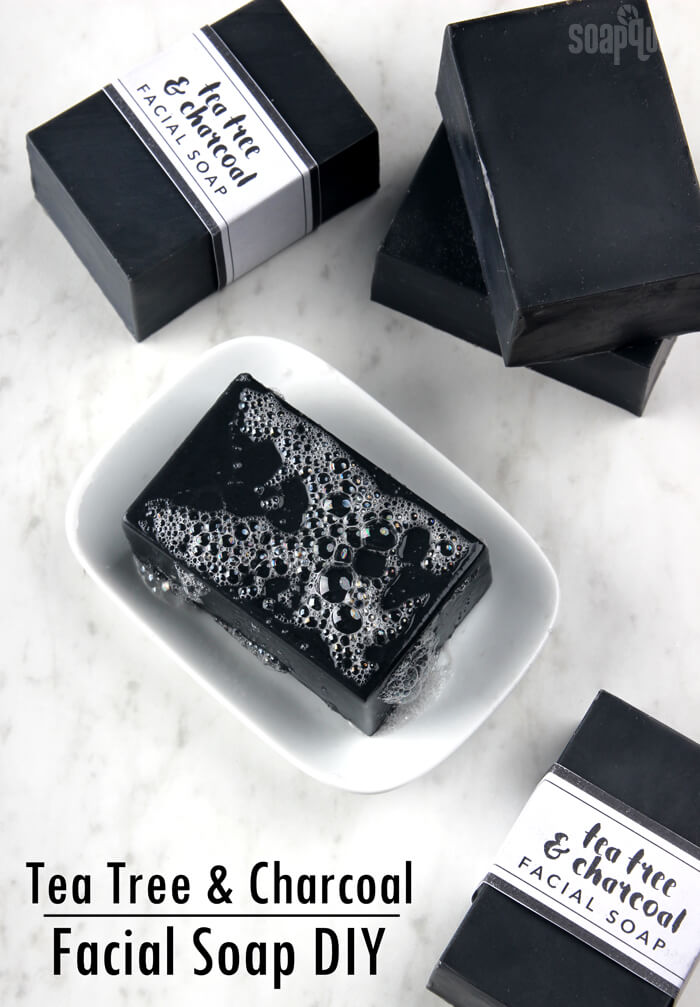
Charcoal face soap seems to be everywhere right now, along with charcoal face masks and bath bombs. It’s easy to understand why – charcoal is fantastic for the skin. It binds to dirt and oil and pulls it out of pores, leaving skin clean and refreshed. Because of its oil absorbing properties, it’s especially fantastic for oily skin.
This Tea Tree and Charcoal Facial Soap was formulated with combination to oily skin in mind. It contains activated charcoal, which gives the bars a rich black color. It does produce a slightly gray lather due to the large amount of charcoal, but does not stain washcloths. This recipe also uses tea tree essential oil, which has an earthy scent. Because this product is meant for the face, a small usage rate for the essential oil is used.
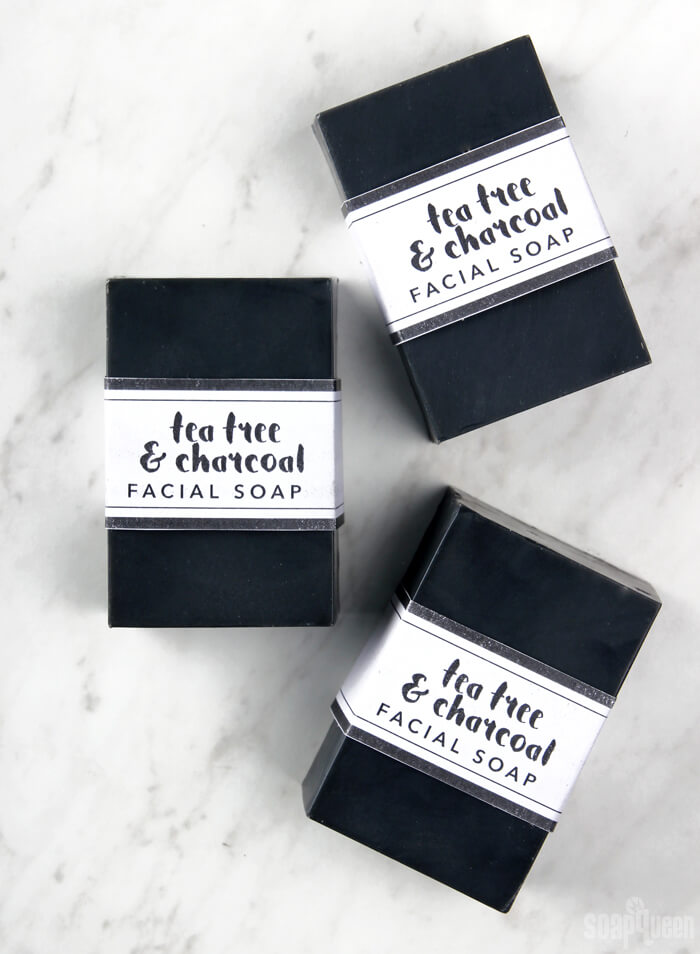
The oils in this recipe were specially chosen for facial skin. A high percentage of olive oil makes the bars gentle. Palm oil makes the bars firm, while coconut oil adds cleansing properties. Usually, I don’t use more than 2-3% castor oil in cold process soap recipes. But, in this recipe, a slightly larger amount of castor oil adds lather and cleansing properties. It also helps draw moisture to the skin to keep it hydrated. The soap is formulated with a 15% water discount to prevent stickiness and help it release from the mold faster. I also highly recommend sodium lactate for this recipe to aid in unmolding.
Last, but certainly not least, is tamanu oil. It is an incredibly unique oil with a dark color and nutty odor. If you search “tamanu oil,” you’ll find it is widely thought to benefit skin scarring, stretch marks and sores, and has anti-fungal properties. However, this recipe hasn’t been tested to prove it helps cure those ailments. We added it because it helps moisturize the skin. Learn more about tamanu oil here. Speaking of medical claims, making claims that this soap treats acne or other skin conditions qualifies classifies it as a drug by the FDA. This requires additional testing and approval. Learn more about cosmetic vs. drug claims here.
What You’ll Need:
12 Bar Rectangle Silicone Mold
1.8 oz. Castor Oil (5%)
9 oz. Coconut Oil (25%)
14.4 oz. Olive Oil (40%)
9 oz. Palm Oil (25%)
1.8 oz. Tamanu Oil (5%)
5.1 oz. Sodium Hydroxide Lye
10.1 oz. Distilled Water (15% water discount)
1.7 oz. Tea Tree Essential Oil
2 Tbsp. Activated Charcoal
Optional: 2 tsp. Sodium Lactate
Optional: Charcoal Soap & Scrub Label Template -Free PDF

Click here to add everything you need for this project to your Bramble Berry shopping cart!
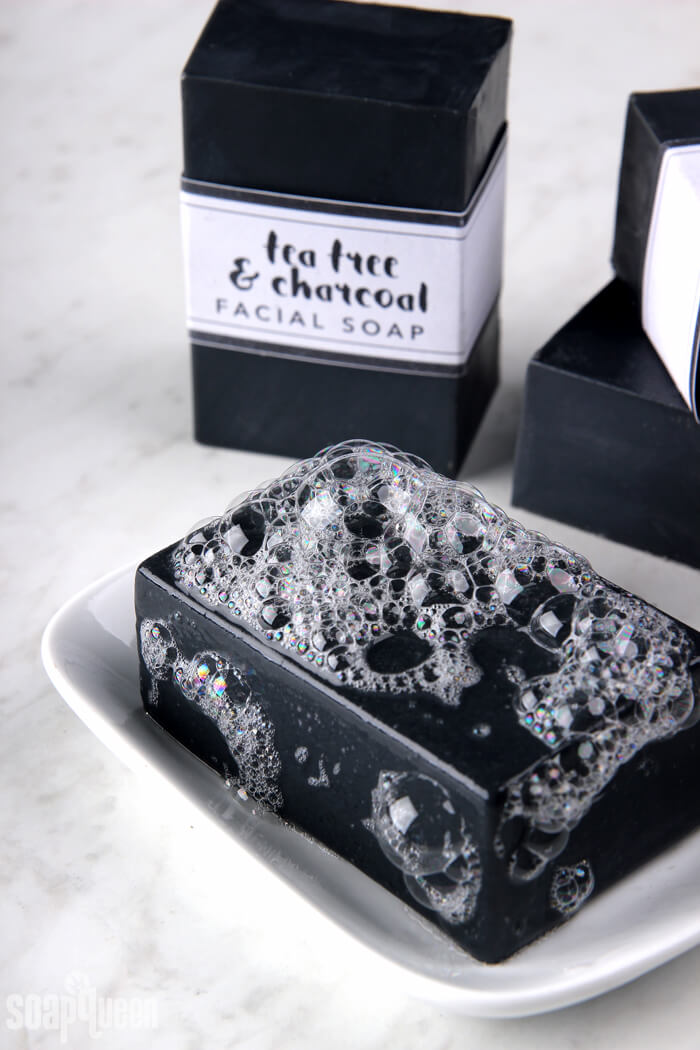
How to Make Charcoal Facial Soap
Ingredients
- 12 Bar Rectangle Silicone Mold
- 1.8 oz. Castor Oil 5%
- 9 oz. Coconut Oil 25%
- 14.4 oz. Olive Oil 40%
- 9 oz. Palm Oil 25%
- 1.8 oz. Tamanu Oil 5%
- 5.1 oz. Sodium Hydroxide Lye
- 10.1 oz. Distilled Water 15% water discount
- 1.7 oz. Tea Tree Essential Oil
- 2 Tbsp. Activated Charcoal
- Optional: 2 tsp. Sodium Lactate
- Optional: Charcoal Soap & Scrub Label Template -Free PDF
Instructions
SAFETY FIRST: Suit up for safe handling practices! That means goggles, gloves and long sleeves. Make sure kids, pets, and other distractions and tripping hazards are out of the house or don’t have access to your soaping space. Always soap in a well-ventilated area.
FRAGRANCE PREP: Measure 1.7 ounces of Tea Tree Essential Oil into a glass, essential oil safe container. Set aside.
- Slowly and carefully add the lye to the water and gently stir until the lye has fully dissolved and the liquid is clear. Set aside to cool.
- Fully melt the castor oil, coconut oil, olive oil, palm oil and tamanu oil (remember to fully melt then mix your entire container of palm oil before portioning).Once the lye water and the oils have cooled to 130 degrees or below (and are ideally within 10 degrees of each other), add the lye water to the oils and stick blend until thin trace. If you’d like a harder bar of soap that releases faster from the mold, you can add sodium lactate to the cooled lye water. Use 1 teaspoon of sodium lactate per pound of oils in the recipe. For this recipe, you’d add 2 teaspoons sodium lactate. Stick blend the soap until it’s at a thin trace.
- Add 2 Tbsp. activated charcoal to the soap. Use your stick blender to "tap down" the charcoal to start to mix it into the batter. If you turn on the stick blender immediately, the charcoal may "poof" into the air. Slowly pulse the stick blender to incorporate the charcoal.
- Add the tea tree essential oil to the soap, and use the stick blender to blend and stir the essential oil until completely mixed in.
- Continue to stick blend for just a few seconds, to make sure the ingredients are completely combined. When the soap is a medium trace and is still pourable, pour the batter into the individual cavities of the 12 Bar Rectangle Mold. Tap the mold on the counter to even the soap and get rid of bubbles.
- Spritz the top of the soap with 99% isopropyl alcohol to prevent soda ash. Place on a heating pad set to medium heat, and insulate the soap for about 30 minutes. Turn off the heating pad, and leave the soap insulated for 24 hours.
- Allow the soap to stay in the mold for at least 3-4 days. Because this soap has plenty of soft oils, it may need up to a week in the mold. Don't rush it! Once the soap is firm enough, unmold and allow them to cure for 4-6 weeks. Enjoy!
