





• April 14, 2014

If you’re a new soaper, the amount of resources, guides and tutorials to sift through can seem overwhelming. To make things seem a little less daunting, we’re collecting the best resources from around the Bramble Berry network. We’re always excited to welcome new soapers in our community, and hopefully this post will serve as a hub of information to get you on the right track.

Some of you may remember the “choose your own adventure” books that were popular 90s. Well, think of this post in the same way! If you want to start soaping, you’ll need to figure out whether you want to tackle melt and pour or cold process soapmaking. Both methods of soapmaking have their own set of techniques, challenges and new things to explore, and there is certainly no reason you can’t master both. We just recommend starting with one so you can focus your learning. Get ready to dive in, immerse yourself in information and choose your own soapmaking adventure!
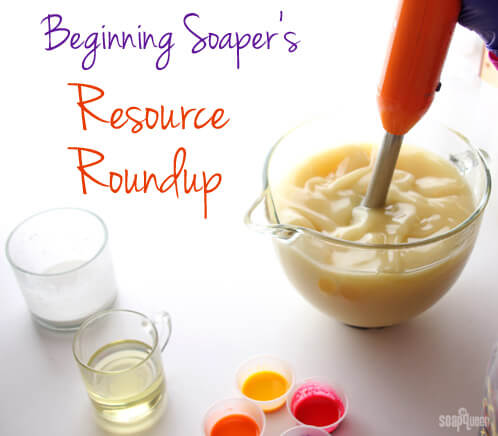
Soap Queen TV

Soap Queen TV is a wonderful resource with more than 100 videos on making cold process, melt and pour, bath bombs and more. The Basics of Cold Process Soapmaking is a must see for anyone curious about the wonderful world of CP. The series includes everything from lye safety information to using colorants and fragrances.

Soap Queen TV: Cold Process for Beginners

If melt and pour is more your style, we’ve got a series on that too! From using fragrance oils and additives to preventing common melt and pour problems, this series will give you a solid foundation of basic skills so you can become a melt and pour pro.

Soap Queen TV: Melt and Pour Basics

Soap Queen Blog

And the resources don’t stop there. Below is a collection of the best resources on the Soap Queen blog to help get you started.

Free Beginner’s Guide to Cold Process

Free Beginner’s Guide to Melt and Pour
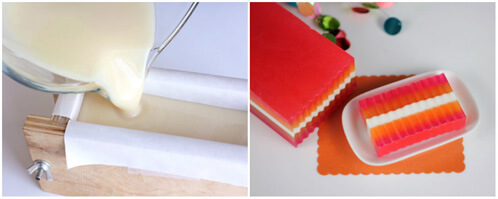
Cold Process specifics

If you’ve chosen the cold process route, the following posts will become your best friend. They cover everything from the properties of various oils to how to formulate your own recipes.

Common Oils and Butters

Formulating Cold Process Recipes

Super Fat: An Explanation

Using the Lye Calculator

Cold Process tutorials on the Soap Queen blog

Beginner’s Soaping Tool Kit

Cold Process Troubleshooting

Don’t be discouraged if you have a few batches of CP that do some strange things. The following posts are great for diagnosing any soapy problems.

Soap Behaving Badly

Why did my soap turn brown?: An explanation of vanilla discoloration

Explaining and Preventing Soda Ash

Melt and Pour specifics

Melt and pour is easy to learn yet difficult to master, but the following blog posts will help you become a melt and pour master in no time.

Talk it out Tuesday: Melt & Pour

Natural Colorants for Melt & Pour

My Melt and Pour is weeping! An explanation of glycerin dew

Using Silicone Molds with Melt and Pour

Using Oxide Colorants in Melt and Pour

Working with water soluble paper

Tips for Cold Process and Melt & Pour

There are a few posts that can be useful for whatever craft you’re making, not just soap. These posts cover everything from making soapy calculations to understand the difference between ‘natural’ and ‘organic’ products.
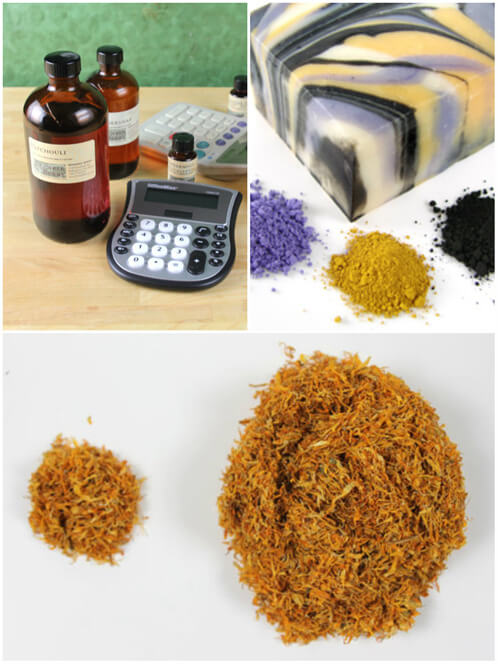
Using the Fragrance Calculator (top left)

Talk it out Tuesday: Colorants (top right)

Weight vs. Volume (bottom)

Soapy Math

Natural vs. Organic

Even with all of these resources, sometimes you may want a little personalized help. In that case, head over to the Teach Soap Forum, where a community of experienced crafters and soapers discuss topics ranging from cold process troubleshooting to gearing up for your first craft show. There’s also the Bramble Berry Facebook page, where our social media team helps soapers answers questions seven days a week. Finally, from 10 a.m. – 3 p.m. Monday through Friday, you can chat live with a Bramble Berry representative who can walk you through any problems or questions in real time.

We’re excited for you to join our ever-growing community of soapers and crafters. It may seem daunting at the start, but we guarantee you’ll have support at every turn. Happy soaping!

You may also like these

Become an email subscriber

Enter your email address below and you will receive all our new posts directly in your email inbox.

  1. Love , love, love your videos and comment areas. I am learning so much and am so excited about making safer soaps. ????

    1. Thank you so much Carol, so glad you love the videos! If you have any questions let us know. We’re happy to help. 🙂

      -Kelsey with Bramble Berry

  2. Great website and information!

    I am a beginner CP soap maker, and I would love your opinion on a recipe I was looking to make. First off, I am looking for a long lasting and very cleansing, hard bar with nice amount of bubbles and great lather. Please let me know if the following recipe would do this. If not, please offer your professional opinion on what I should change:

    Superfat – 5%

    Coconut oil (virgin) – 6oz
    Extra Virgin Olive Oil – 8.4oz
    Palm Oil – 8.4oz
    Castor Oil – 1.2oz
    Shea Butter (unrefined) – 2oz

    Thank you!!
    AJ

    1. Hi AJ!

      I think that recipe is going to give you exactly what you’re looking for! The high amount of hard oils coconut, palm and shea butter are going to make the bars nice and firm. The coconut oil and castor oil will also add some great fluffy lather. The olive oil is going to add moisturizing properties to the bar. It looks like an awesome recipe! I wouldn’t change a thing about it. 🙂

      To ensure the bars are nice and firm and last long in the shower, make sure to let them cure for 4-6 weeks! Read more about curing and storing soap here: https://soapqueen.com/bath-and-body-tutorials/tips-and-tricks/how-to-store-handmade-bath-products/

      -Kelsey with Bramble Berry

    1. Hi Priscilla!

      You can definitely do that zap test if you like! The zap test is used to check the pH level of your soap. If you tap the bar on your tongue and it zaps, that can mean the soap is lye heavy. We recommend doing that test after about 5 days or so. You can also check the pH level using cabbage juice or pH strips. Learn more about those tests here: https://soapqueen.com/bath-and-body-tutorials/tips-and-tricks/test-ph-red-cabbage/

      Basically, the zap test is a quick way to make sure your soap is the right pH level! 🙂

      -Kelsey with Bramble Berry

  3. Happy Easter!
    Ive been using your recipe for Sunshine Soap as a favorite but was wondering if I can use it as-is for hot process or do I need to modify the recipe before doing that? One MORE question: Ive also tried this recipe to do swirls and it seems to thicken fairly quickly, making it harder to swirl. I make sure my oils and lye water are at 120° (within 5 or 10 degrees of each other) and mix for about 45 seconds (which it seems to need to make sure it’s all blended). I then add the fragrance and color, if using or divide my batches first depending on what Im making. Is there a better recipe to use for more complicated pours? I notice this happens even with the Sunshine soap – I have to “help” it out of the pot with a spatula or spoon – but because it’s fairly simple it works ok when I pull the divider out, never had any problems. Swirls though are a little harder. Thanks for you help, I love this site and the fact that you all are so helpful. Wish you were closer so I could take some classes! Im in Sarasota FL. is there anyone near me that you know of that I could learn from?

    1. Hi Patti!

      Happy Easter to you too! You can definitely use the hot process method for the Sunshine Soap. Hot process soap has a thicker texture, so it may be tricky to use the divider as the soap may harden before you can remove it. I would recommend scooping it in quickly and tapping it on the counter often to get rid of excess air. 🙂

      Making Sunshine Soap on Soap Queen TV: https://soapqueen.com/bath-and-body-tutorials/cold-process-soap/making-sunshine-cold-process-soap/

      When you’re stick blending your recipe, are you stick blending for a full 45 seconds? We usually alternate stick blending and stirring with the blender for about 45 seconds. You want to stick blend until it’s just emulsified, but still thin. That will give you plenty of time for swirls.

      Also, the Sunshine Soap recipe has quite a few hard oils, like coconut, palm and shea butter. Adding more soft oils like rice bran oil will give you more time to work with your design. If you do bump up that olive oil, make sure to run it through the Lye Calculator again: https://www.brambleberry.com/Pages/Lye-Calculator.aspx

      These posts have more helpful information on trace:

      All About the Trace: https://soapqueen.com/bath-and-body-tutorials/tips-and-tricks/trace/

      Formulating Cold Process Recipes: https://soapqueen.com/bath-and-body-tutorials/tips-and-tricks/formulating-cold-process-recipes/

      I’m not sure of any classes near Sarasota, FL, but a soaper on our Teach Soap Forum may know more! A quick internet search may tell you more too. 🙂

      Teachsoap.com/forum

      -Kelsey with Bramble Berry

  4. I am very new to cold pour soap. I’m still in the reading and research phase. You site is wonderful! Do you know if you can pour the cold pour soap directly into a cardboard box instead of a mold? Thank you

    1. Hi Pam!

      I’m so glad you like the website! We definitely recommend lining your cardboard box with freezer paper. If not, your soap will stick to the box. No fun! Hope that helps. 🙂

      -Kelsey with Bramble Berry

  5. Newbie on the loose

    Re: Bergamot Pure Essential Oil
    I cannot find any information on discoloration or trace acceleration. Do you have any info regarding this EO IN CP

    Re: discoloration
    I am using electric bubblegum and merlot to make a valentines day red. – is there any way I can account for for fragrances that discolor to cream or yellow or tan so that I can still end up with a great red in my CP- or maybe you can recommend a different colorant.

  6. I swear- I’ve read and reread all the CP articles- so many time my head is spinning and copious bubble are floating out of my ears. I need clarification please and thank you.

    1. Any negative to leaving soap in molds for long periods of time when using
    a) Individual 6 cavity silicone molds in various shapes
    B) loaf molds
    **** I wanted to start some batches before I head out of town on a business trip which could take me away for 2 days-2 weeks.

    2. I know that fragrance oils should not be set aside in plastic after measuring.
    I read that HDPE is ok- I know that glass is ok- Can I also use
    a) ceramic ramekins
    b) stainless steel pinch bowls
    c) undetermined metal of some kind tiny bowls

  7. You have a video on a basic cold process recipe using equal amounts of Olive Oil, Coconut Oil and Palm Oil, could the Palm oil be substituted with Rice Bran Oil on this recipe?

    Thanks

    1. Hi Ella!

      While you could substitute the Palm Oil with Rice Bran Oil, it will make a very soft bar of soap. If you do this, I would recommend adding some other hard oils/butters like Cocoa Butter. If you are looking to make a Palm free bar of soap, here are some recipes that you may find helpful!

      Palm Free in the Pot Swirl:
      https://soapqueen.com/bath-and-body-tutorials/cold-process-soap/a-palm-free-in-the-pot-swirl/

      Palm Free Vertical Twist Tutorial:
      https://soapqueen.com/bath-and-body-tutorials/cold-process-soap/palm-free-vertical-twist-tutorial/

      -Amanda with Bramble Berry

  8. Hi. thanks a lot for this resource. There truely is too much information for beginners like. I can’t find the answer to one question though. That is: can essential oils and fragrance oils be used together in soap?

    1. Hi Hina!

      Fragrance Oils and Essential Oils can indeed be used together in soap! 🙂 You can make some really great, interesting blends using the two.

      -Amanda with Bramble Berry

  9. This forum seems to be addressing cp soap or hp soap. i only do m&p soap. What are the benefits of using cp or hp? it seems like a lot of work, when it
    could be so simple with m&p. anyway my question today is when you are using a stamp to decorate your soap, do you use it when soap is dry, or when it is semi cooled? thank you for your response.

    mary336

    1. Hi Mary!

      We love both melt and pour soap, and cold process! Both are a lot of fun :). This post includes lots of links for melt and pour as well, I hope you found them helpful! Many people like to make cold process soap because you have complete control over every ingredient that goes into your soap. You are also able to do techniques that can’t be done with melt and pour, like swirls. Both techniques have advantages and disadvantages, it’s really a personal preference 🙂

      Regarding stamping your soap, I would recommend doing so once it has fully cooled 🙂

      -Amanda with Bramble Berry

  10. I already have seen some of these, but some are new and very informative and helpful. So great! That’s one thing that is so great about Bramble Berry, Anne Marie’s willingness to freely share information and projects to help us all out. I’m a desciple 🙂 I’ve only been soaping since January and I am already making awesome tiger stripe and swirl soaps and am doing a few of my own recipes and am getting more and more knowledgeable about how ingredients perform. Thanks a bunch Bramble Berry!

    1. Hi Michael!

      I’m so happy you have found these posts helpful! We are always excited to share new information with soapers. The willingness to share ideas is one of the things I love most about the soaping community! Everybody is so supportive :). I’m glad we could help you! If you ever get photos of your projects, we would love to see them on our Facebook page!

      https://www.facebook.com/BrambleBerry

      -Amanda with Bramble Berry

  11. I actually use the first two cold process links all the time-they’re good references!!!!

    1. Hi Rhonda!

      I’m so glad you have found this blog post helpful! It’s nice to have all these links in once place 🙂

      -Amanda with Bramble Berry

Comments are closed.

{"email":"Email address invalid","url":"Website address invalid","required":"Required field missing"}

The Latest from Soap Queen TV

Inspired by Gems & Crystals

All About Essential Oils

The Power of Charcoal

Create Your Own Clay Face Mask

DIY Bath Bombs

Cold Process Soap Tips & Tricks

Learn the Basics of Cold Process Soapmaking

Learn the Basics of Melt & Pour Soapmaking

Want to Start Your Own Soap Business?

Soap Business Success Stories

Soap Queen TV Favorites

Ingredient Spotlight

Disclosure

Unless stated otherwise, all images are original material and are copyrighted. If you'd like to use an image, please be a friend and credit the photo and link back to Soap Queen. Feel free to share, tweet and pin to your hearts content.