




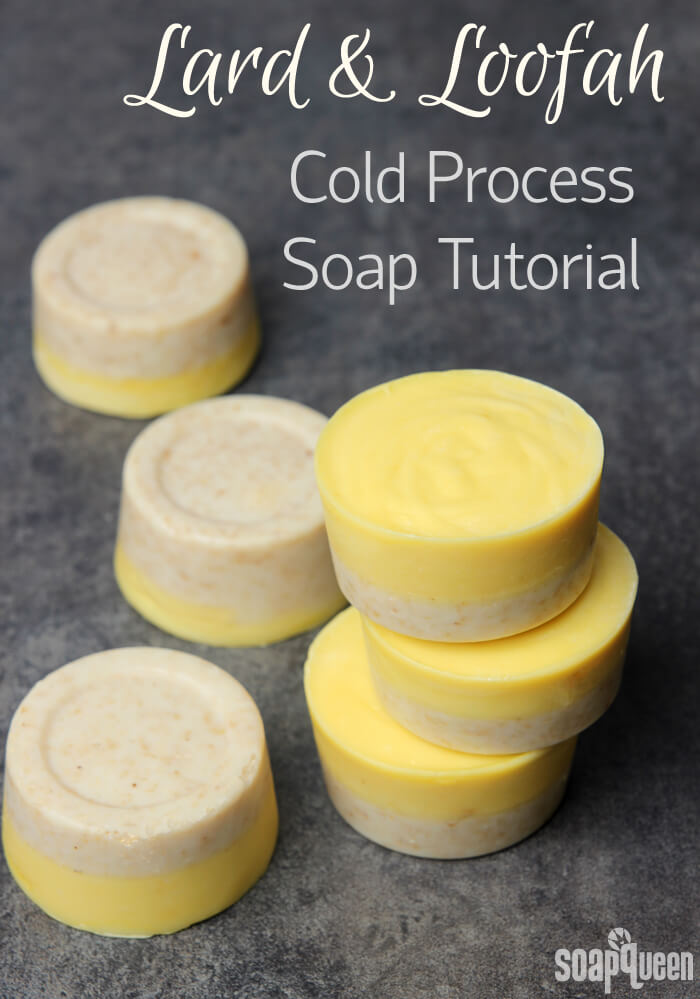
Lard and tallow are popular soapmaking ingredients. Tallow is the rendered fat of animals, and usually refers to fat from cows and sheep. Lard refers to pig fat. Lard and tallow give soap firmness and contribute to a stable lather. Because of these properties, both tallow and lard are common substitutes for palm oil.
Lard and tallow can be purchased from the store, or you can render your own at home. Rendering your own tallow is a great way to reduce, reuse and recycle. In the spirit of Earth Day this Friday, I saved bacon grease from an epic Bramble Berry staff lunch cooking extravaganza to use in this palm-free recipe. First, the bacon grease needed to be cleaned up to reduce the smell and remove any bacon bits. Click here to see the process. I also used leftover yogurt containers as the molds in this recipe. I love the cute little shape! Click here for more ideas on using recyclables for soap molds.
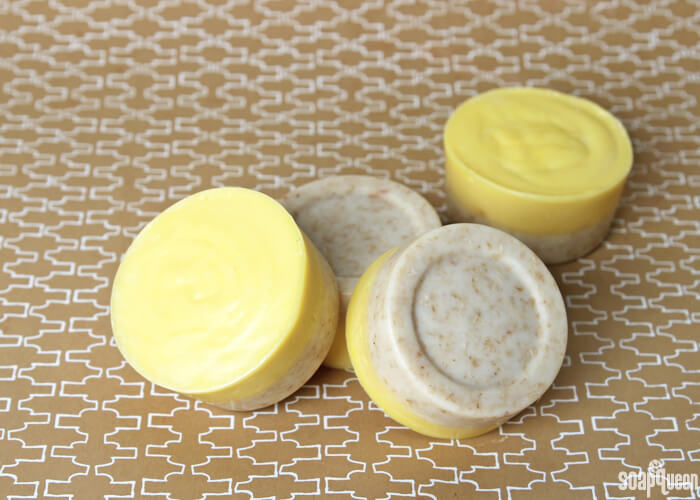
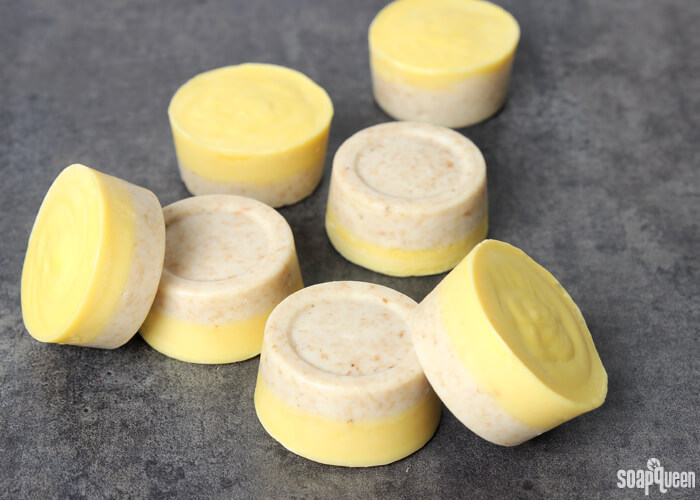
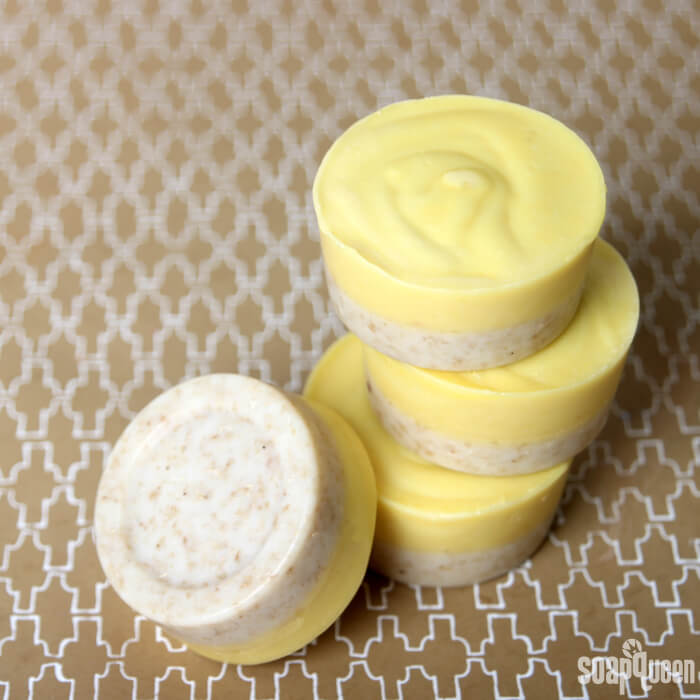
Once the bacon grease was cleaned up, I used it at 30% of my total recipe. I generally recommend using lard and tallow at 50% or less in your cold process recipes. If you’re looking for more tallow recipes, check out this guest post by Eric Vought for tallow laundry soap. I added shredded loofah to the bottom layer of these bars for exfoliation. The top layer contains carrot puree, which gives the soap a soft yellow color and additional creaminess. For more information on using purees in cold process soap, click here.
What You’ll Need:
8 Clean Yogurt Contains
4.8 oz. Lard, I used leftover bacon grease (30%)
8 oz. Olive Oil (50%)
3.2 oz. Coconut Oil (20%)
2.2 oz. Sodium Hydroxide Lye
5 oz. Distilled Water
.2 oz. Bergamot Essential Oil
.3 oz. Black Pepper Essential Oil
1 heaping Tbs. Carrot Puree
2 Tbs. Shredded Loofah

Click here to add everything you need for this project to your Bramble Berry shopping cart!
[sq_products]
If you’ve never made Cold Process soap before, stop here! I highly recommend checking out our FREE four part SoapQueen.tv series on Cold Process Soapmaking, especially the episode on lye safety. And if you’d rather do some reading, Bramble Berry carries a wide range of books on the topic, including my newest book, Pure Soapmaking. You can also checkout the digital downloads for that instant gratification factor.
SAFETY FIRST: Suit up for safe handling practices! That means goggles, gloves and long sleeves. Make sure kids, pets, and other distractions and tripping hazards are out of the house or don’t have access to your soaping space. Always soap in a well-ventilated area.
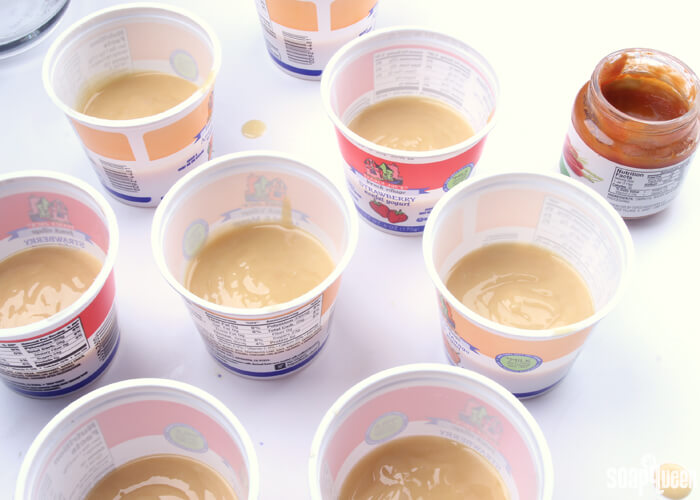
MOLD PREP: For this project, I used clean, empty plastic yogurt containers. They make great soap molds because the soap does not stick to them, and they are slightly flexible which helps when unmolding. My eight containers were 6 ounces each, but you could use a different size if that’s what you have on hand. You could also use a completely different container, click here for more mold ideas. Just make sure the containers are completely clean before use. I like the idea of reusing, especially in honor of Earth Day. Do note the glass container in the photo below is to showcase the carrot puree; don’t make soap in glass containers. You’ll never get it out. =)
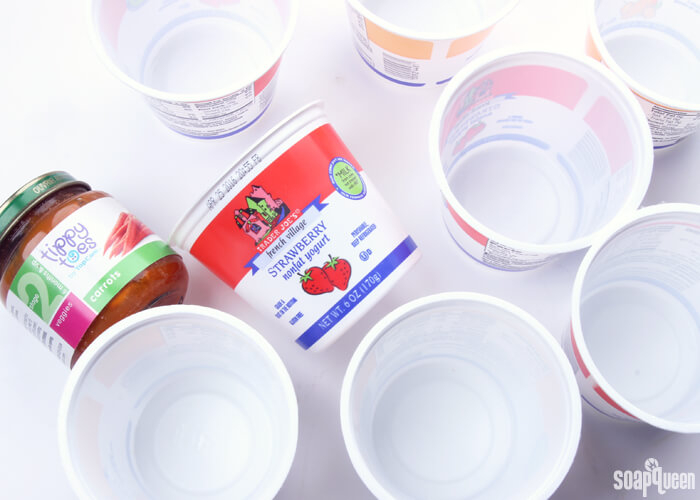
PUREE PREP: For this recipe, I used store bought carrot puree (aka baby food). If you’d like you can certainly make your own carrot puree at home. If purchasing puree from the store, just make sure the only ingredients are carrots and water. If the puree contains other ingredients, it may have unpredictable effects on the soap.
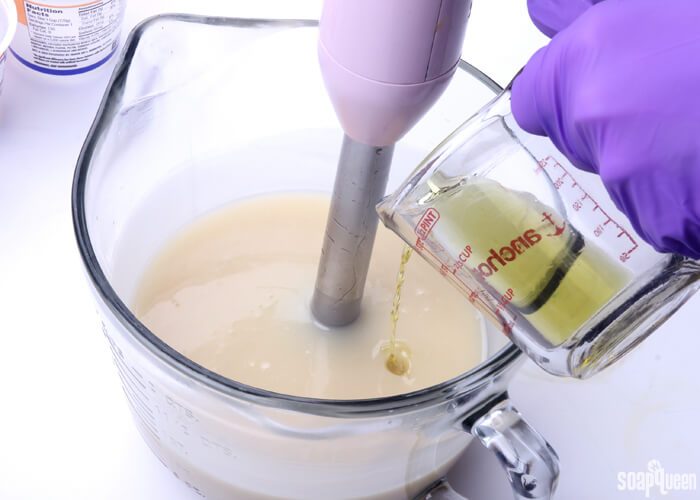
FRAGRANCE PREP: Measure .2 ounces of the bergamot essential oil and .3 ounces of the black pepper essential oil in a glass container. Set aside.
ONE: Slowly and carefully add the lye to the water and gently stir until the lye has fully dissolved and the liquid is clear. Set aside to cool.
TWO: Melt and combine the coconut oil, olive oil and lard. Once the lye water and the oils have cooled to 130 degrees or below (and are ideally within 10 degrees of each other), add the lye water to the oils and stick blend until thin trace. If you’d like a harder bar of soap that releases faster from the mold, you can add sodium lactate to the cooled lye water. Use 1 teaspoon of sodium lactate per pound of oils in the recipe. For this recipe, you’d add about 1 teaspoon sodium lactate. Because this recipe contains a high amount of olive oil, don’t be surprised if the soap takes a little bit longer to trace.
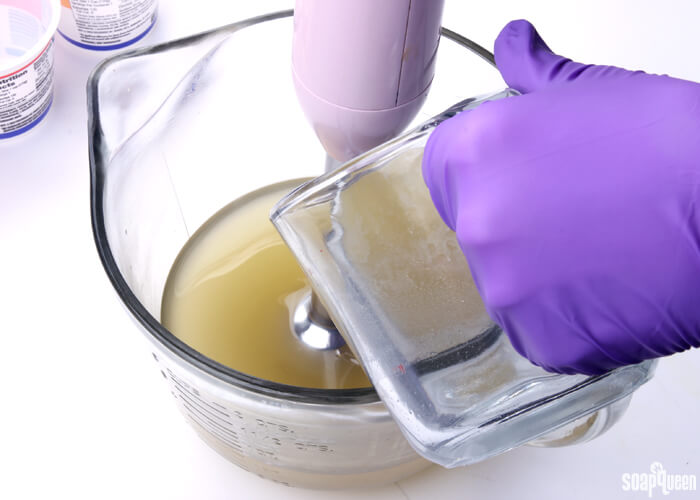
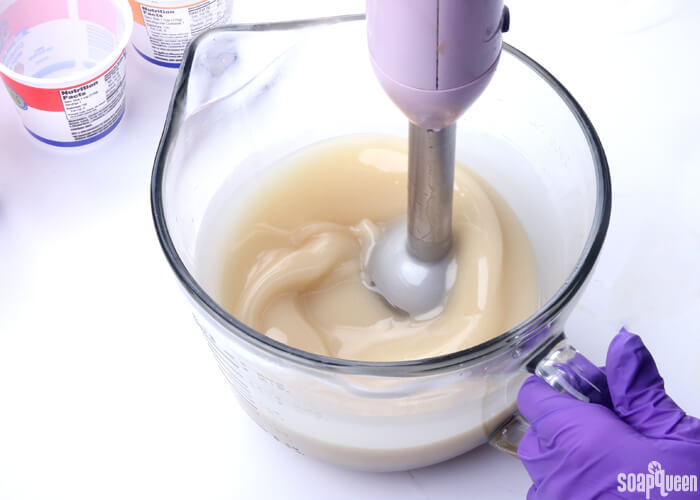
THREE: Once you’ve reached a thin trace, add the essential oil blend and stick blend until fully emulsified.
FOUR: Split off about half of the batter. It’s okay to eyeball it!
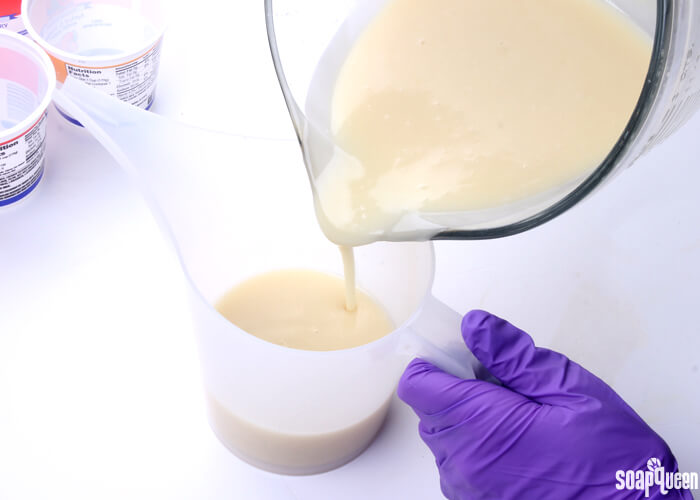
FIVE: To this container, add 2 tablespoons of shredded loofah and use a whisk or spoon to thoroughly mix in.
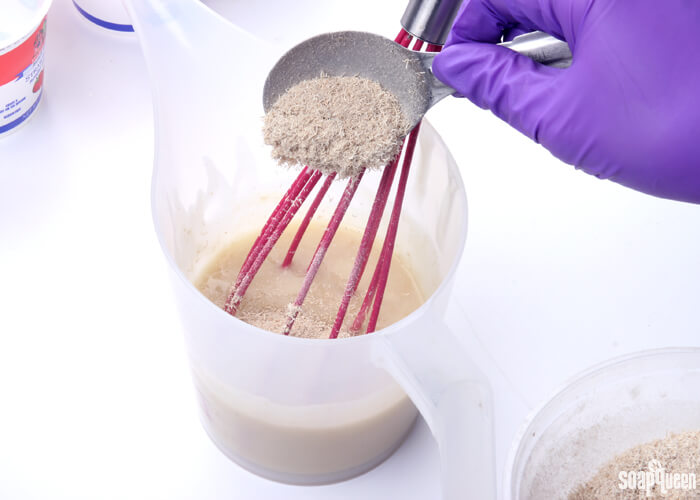
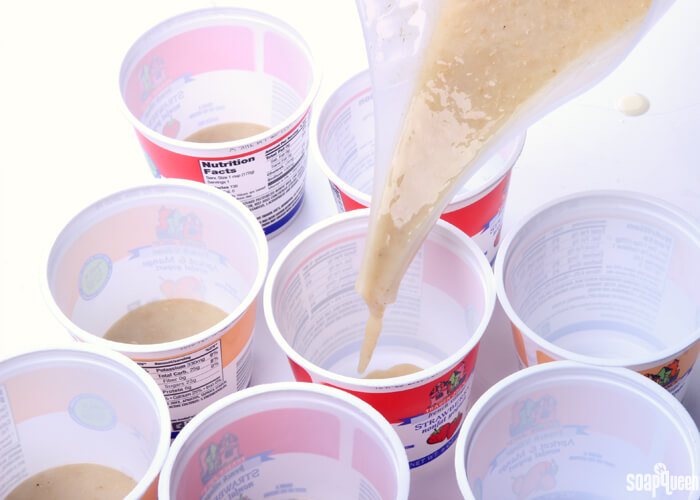
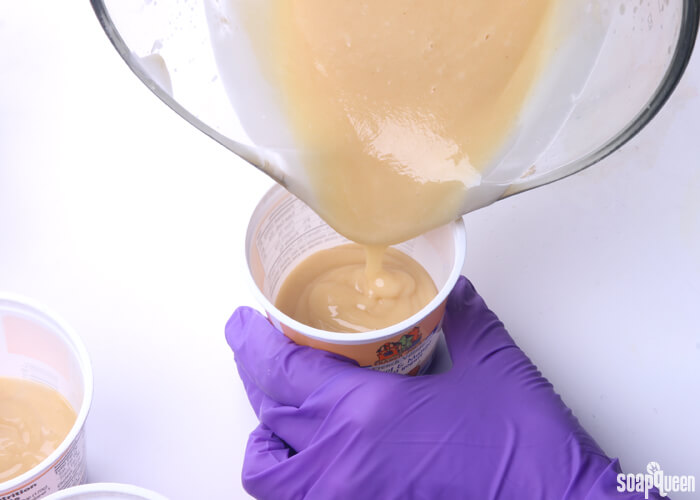
SIX: Pour the loofah soap evenly into each yogurt container.
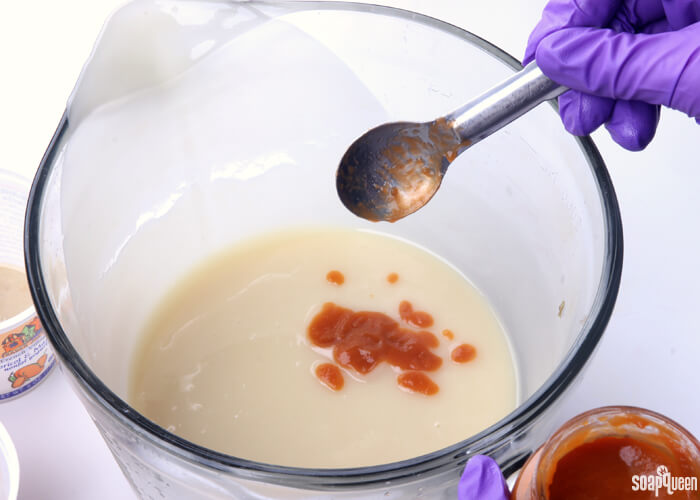
SEVEN: To the remaining soap, add 1 heaping tablespoon of the carrot puree and use a whisk or the stick blender to thoroughly mix in.
EIGHT: Carefully pour the carrot puree soap into the yogurt containers evenly. Try your best to not break the bottom layer. If you need to, use a spoon to gently add the soap on top.
NINE: Tap each yogurt container on the counter firmly to help eliminate bubbles. Spritz the top of the soap with rubbing alcohol to help prevent soda ash. Allow the soaps to stay in the mold for about one week. Because of the high amount of olive oil in this recipe, it may require a little extra time in the mold. Once the soaps have hardened, remove from the yogurt containers and allow the soap to cure for 4-6 weeks. Enjoy!
Lard & Loofah Cold Process Bars DIY
Ingredients
- 8 Clean Yogurt Contains
- 4.8 oz. Lard I used leftover bacon grease
- 8 oz. Olive Oil
- 3.2 oz. Coconut Oil
- 2.2 oz. Sodium Hydroxide Lye
- 5 oz. Distilled Water
- .2 oz. Bergamot Essential Oil
- .3 oz. Black Pepper Essential Oil
- 1 heaping Tbs. Carrot Puree
- 2 Tbs. Shredded Loofah
Instructions
SAFETY FIRST: Suit up for safe handling practices! That means goggles, gloves and long sleeves. Make sure kids, pets, and other distractions and tripping hazards are out of the house or don’t have access to your soaping space. Always soap in a well-ventilated area.
MOLD PREP: For this project, I used empty plastic yogurt containers. They make great soap molds because the soap does not stick to them, and they are slightly flexible which helps when unmolding. My containers were 6 ounces each, but you could use a different size if that's what you have on hand. You could also use a completely different container, click here for more mold ideas. Just make sure the containers are completely dry before use.
PUREE PREP: For this recipe, I used store bought carrot puree (aka baby food). If you’d like you can certainly make your own carrot puree at home. If purchasing puree from the store, just make sure the only ingredients are carrots and water. If the puree contains other ingredients, it may have unpredictable effects on the soap
FRAGRANCE PREP: Measure .2 ounces of the bergamot essential oil and .3 ounces of the black pepper essential oil in a glass container. Set aside.
- Slowly and carefully add the lye to the water and gently stir until the lye has fully dissolved and the liquid is clear. Set aside to cool.
- Melt and combine the coconut oil, olive oil and lard. Once the lye water and the oils have cooled to 130 degrees or below (and are ideally within 10 degrees of each other), add the lye water to the oils and stick blend until thin trace. If you’d like a harder bar of soap that releases faster from the mold, you can add sodium lactate to the cooled lye water. Use 1 teaspoon of sodium lactate per pound of oils in the recipe. For this recipe, you’d add about 1 teaspoon sodium lactate.
- Once you’ve reached a thin trace, add the essential oil blend and stick blend until fully emulsified.
- Split off about half of the batter. It’s okay to eyeball it!
- To this container, add 2 tablespoons of shredded loofah and use a whisk or spoon to thoroughly mix in.
- Pour the loofah soap batter evenly into each yogurt container.
- To the remaining soap batter, add 1 heaping tablespoon of the carrot puree and use a whisk or the stick blender to thoroughly mix in.
- Carefully pour the carrot puree soap into the yogurt containers evenly.
- Tap each yogurt container on the counter firmly to help eliminate bubbles. Spritz the top of the soap with rubbing alcohol to help prevent soda ash. Allow the soaps to stay in the mold for about one week. Once the soaps have hardened, remove from the yogurt containers and allow the soap to cure for 4-6 weeks. Enjoy!
