




• March 5, 2018

Baby's Breath Soap Tutorial

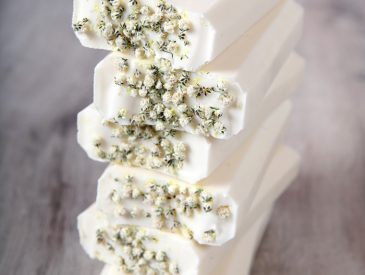
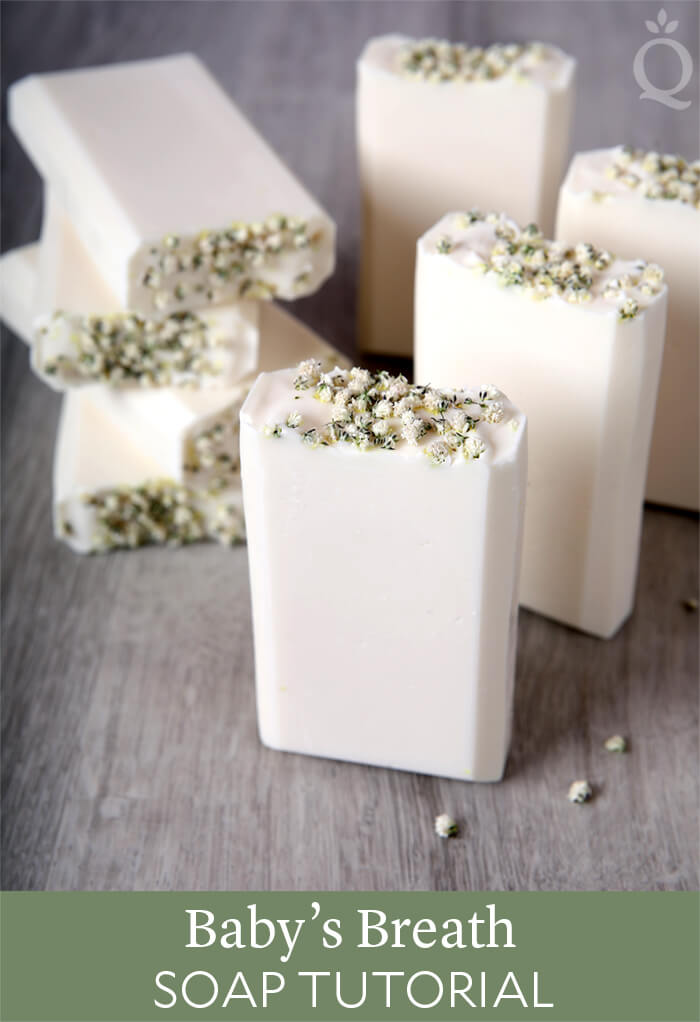
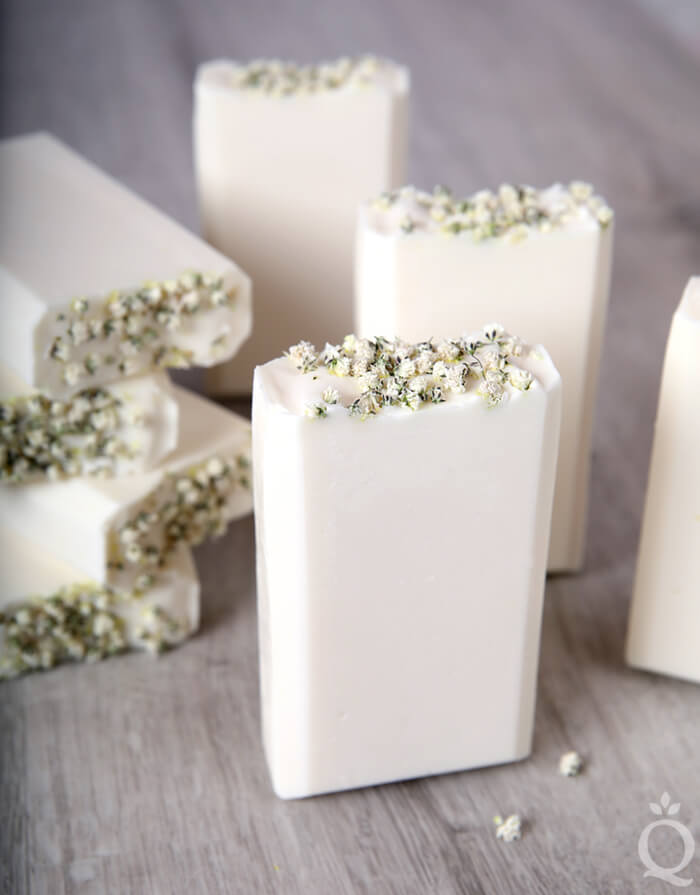
Baby’s breath flowers are a delicate addition to any bouquet. They usually play second fiddle to larger flowers, but for this soap we let baby’s breath take center stage. We kept the design extremely simple – the entire batch is colored white and dried baby’s breath flowers are placed on top.

To get the bright white shade, we used only light-colored oils. We also added plenty of titanium dioxide, which does pose a few obstacles. Using a large amount of titanium dioxide can lead to glycerin rivers. They can be prevented by using a water discount, so this recipe is discounted by 15%.
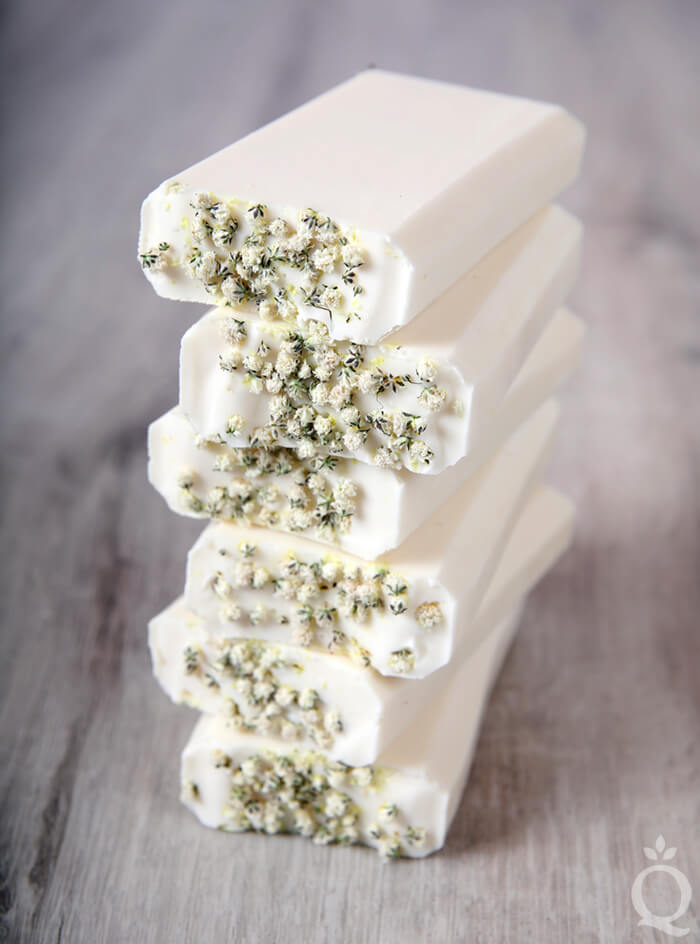
Babys Breath Cold Process Soap

Titanium dioxide is similar to clay in soap – it tends to dry it out. The wood mold also insulates the soap, causing it to become quite warm. We found the combination of titanium dioxide, heat, and a water discount led to cracking. After tweaking the recipe a few times, we found an amount of titanium dioxide that led to extremely white bars without cracking. The key was soaping with slightly cooler temperatures (100-110 ° F) and placing the soap in the freezer for 24 hours.
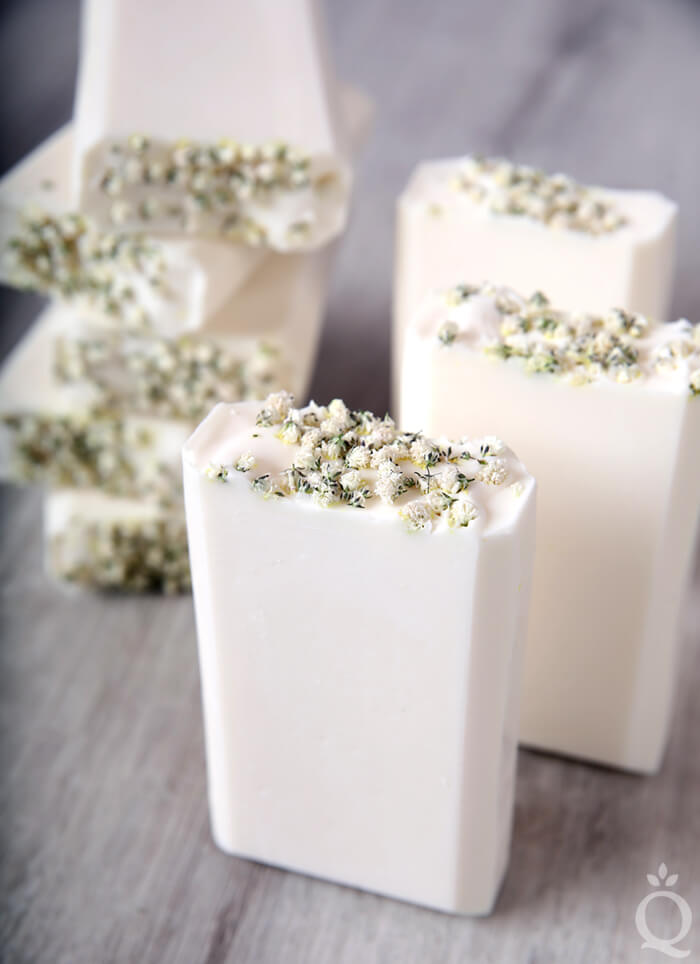
Babys Breath Soap

The soap is made with Baby’s Breath Fragrance Oil, which is a soft and delicate scent that doesn’t discolor. The Baby’s Breath Fragrance Oil is part of our Modern Floral Collection, which includes four new scents, extracts, dried botanicals, and more. Click here to see all the new products.
BabysBreath

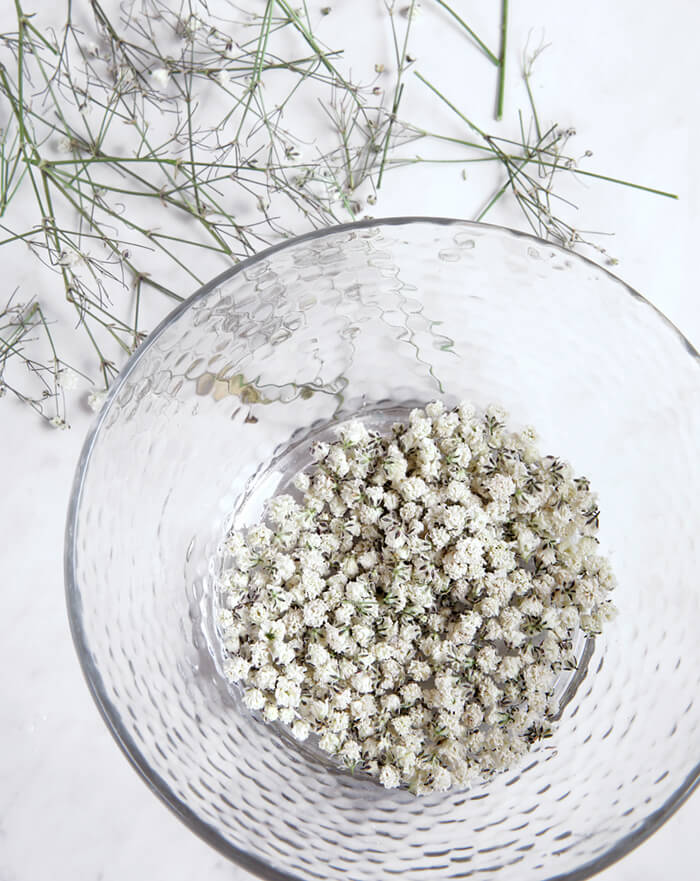
The baby’s breath flowers used on top were purchased fresh and allowed to dry for several weeks. We picked off the flowers to sprinkle on top prior to soaping. Interestingly, we found that the flowers bled a yellow hue onto the soap.

What You Need:
Tall Narrow Wood Loaf Mold
6.8 oz. Canola Oil (17%)
1.2 oz. Castor Oil (3%)
10 oz. Coconut Oil (25%)
8 oz. Palm Oil (20%)
6 oz. Shea Oil (15%)
8 oz. Sweet Almond Oil (20%)
5.6 oz. Sodium Hydroxide Lye
11.2 oz. Distilled Water (15% water discount)
2.5 oz. Baby’s Breath Fragrance Oil
2 tsp. Titanium Dioxide
Dried Baby’s Breath Flowers

Click below to add everything you need for this project to your Bramble Berry shopping cart!

If you’ve never made cold process soap before, stop here. We highly recommend checking out our FREE four part SoapQueen.tv series on cold process soapmaking, especially the episode on lye safety. And if you’d rather do some reading, Bramble Berry carries a wide range of books on the topic, including Pure Soapmaking. You can also check out the digital downloads for that instant gratification factor.

FRAGRANCE PREP: Measure 2.5 ounces of Baby’s Breath Fragrance Oil into a small glass container and set aside.

MOLD PREP: Line the Tall Narrow Wood Loaf Mold with freezer paper with the shiny side up. For tips on how to line the mold, click here.

SAFETY FIRST: Suit up for safe handling practices. That means goggles, gloves, and long sleeves. Make sure kids, pets, other distractions, and tripping hazards are out of the house or don’t have access to your soaping space. Always soap in a well-ventilated area.

ONE: Slowly and carefully add 5.6 ounces of lye to 11.2 ounces of water and gently stir until the lye has fully dissolved and the liquid is clear. Set aside to cool. If you’d like a harder bar of soap that releases faster from the mold, you can add sodium lactate to the cooled lye water. Use 1 teaspoon of sodium lactate per pound of oils in the recipe. For this recipe, you’d add 2.5 teaspoons sodium lactate.

TWO: In a large glass bowl, combine and melt the 10 ounces of coconut oil, 6.8 ounces of canola oil, 1.2 ounces of castor oil, 6 ounces of shea oil, 8 ounces of sweet almond oil, and 8 ounces of palm oil (remember to fully melt then mix your entire container of palm oil before portioning).

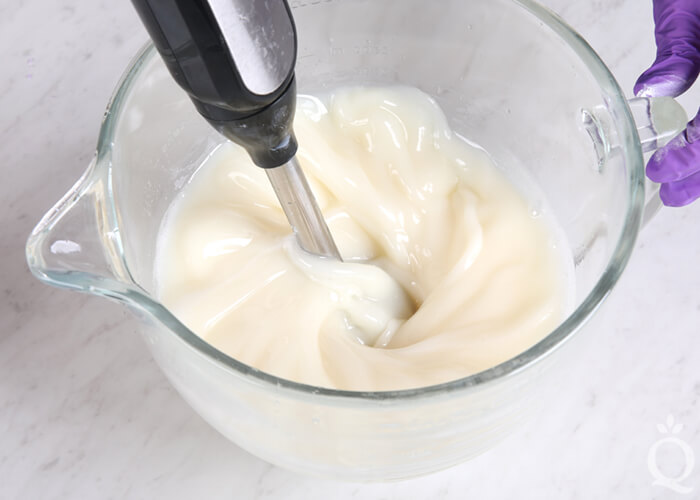
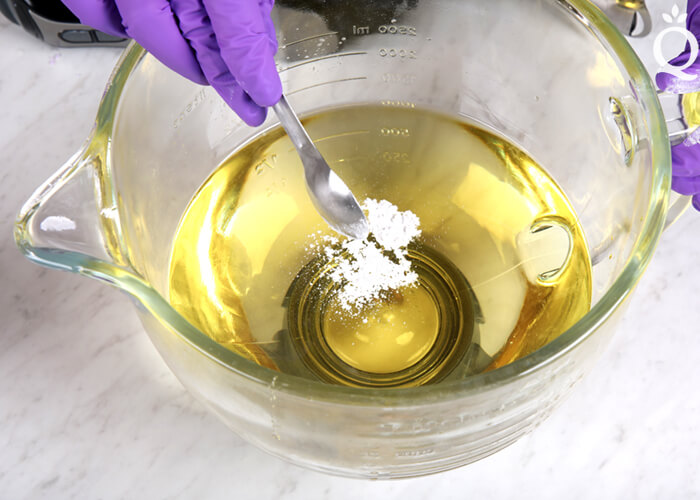
THREE: Add 2 teaspoons of titanium dioxide to the oils and use a stick blender to fully combine until there are no chunks.

ONETWO

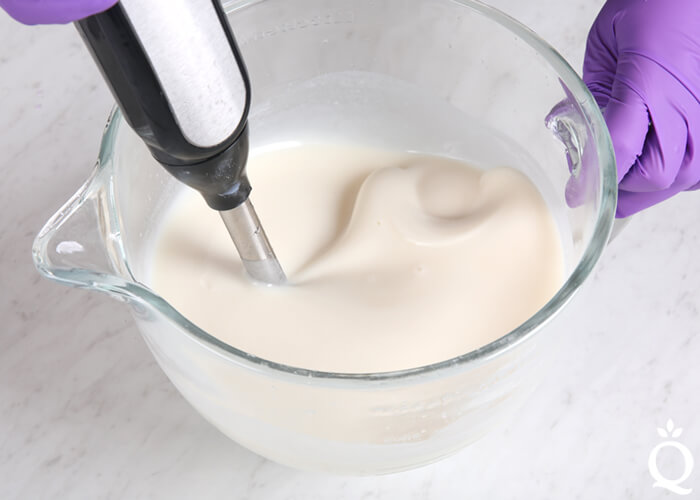
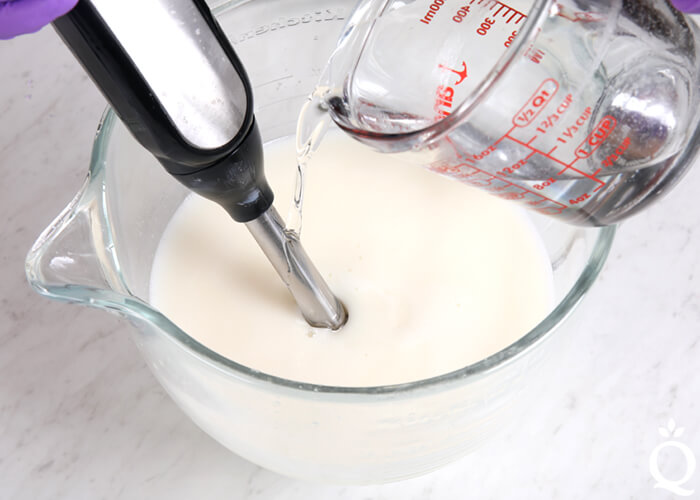
FOUR: Once the lye water and the oils have cooled to about 100-110 degrees F, add the lye water to the oils and stick blend until a thin trace.

THREEFOUR

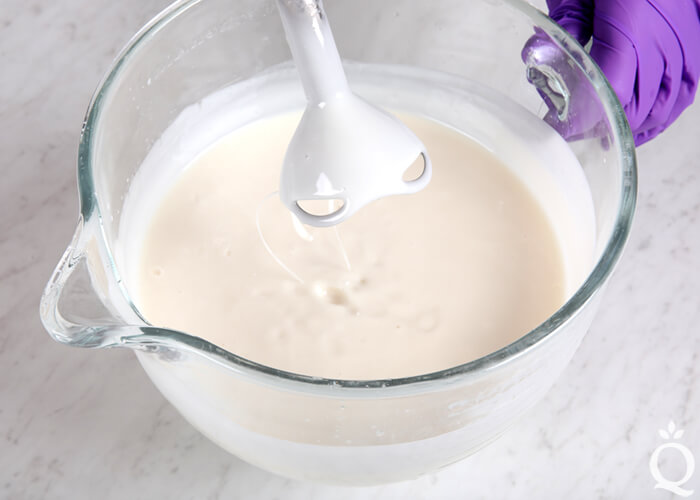
FIVE: Add the 2.5 ounces of Baby’s Breath Fragrance Oil, and use the stick blender to mix in. Continue blending until you reach a medium trace.

FIVE

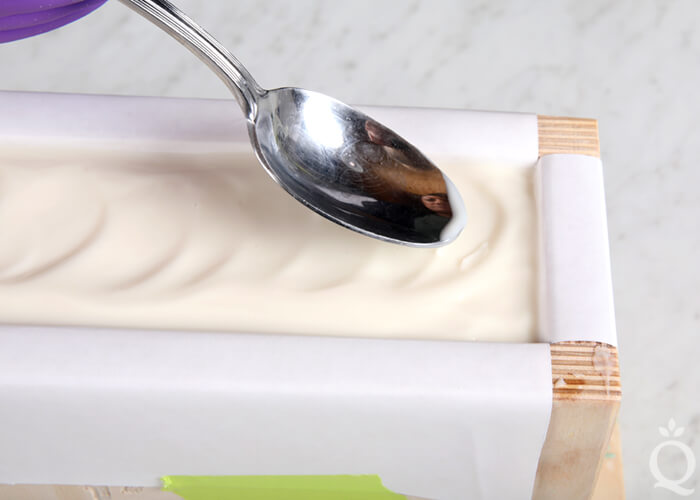
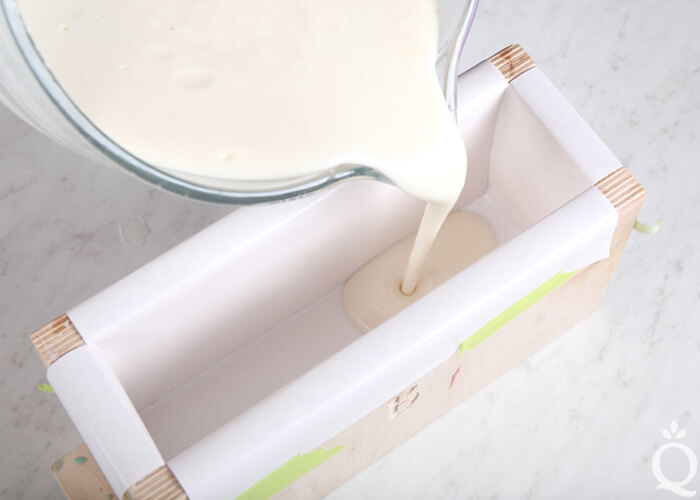
SIX: Pour all of the soap batter into the mold. Firmly tap it on the counter to help get rid of bubbles. Use a spoon to manipulate the top and add a very light texture.

SIXEIGHT

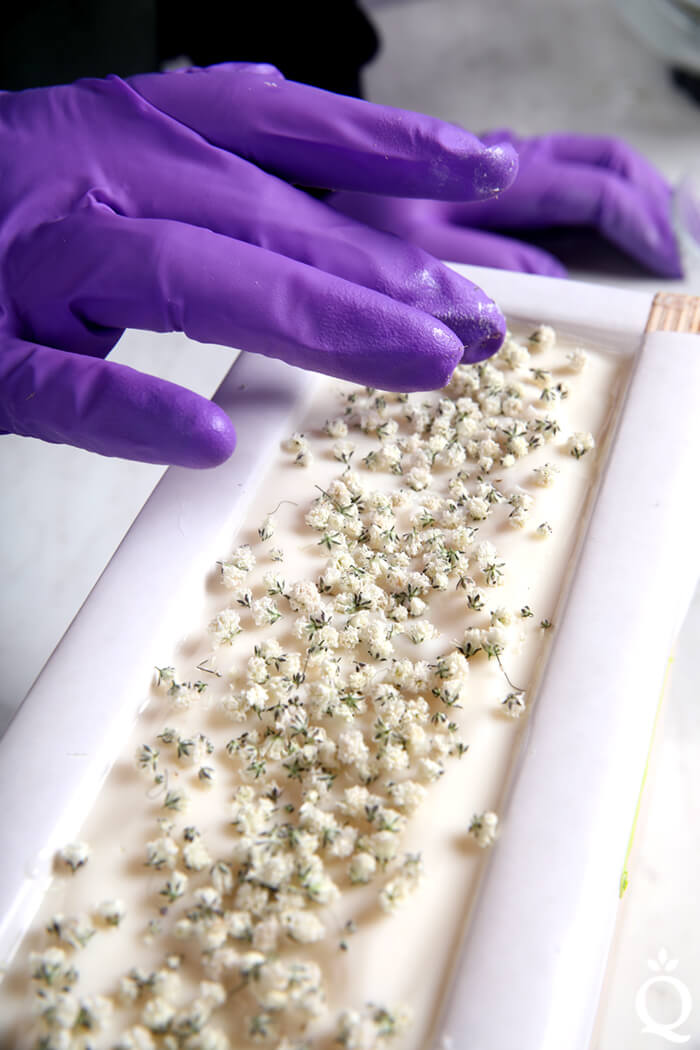
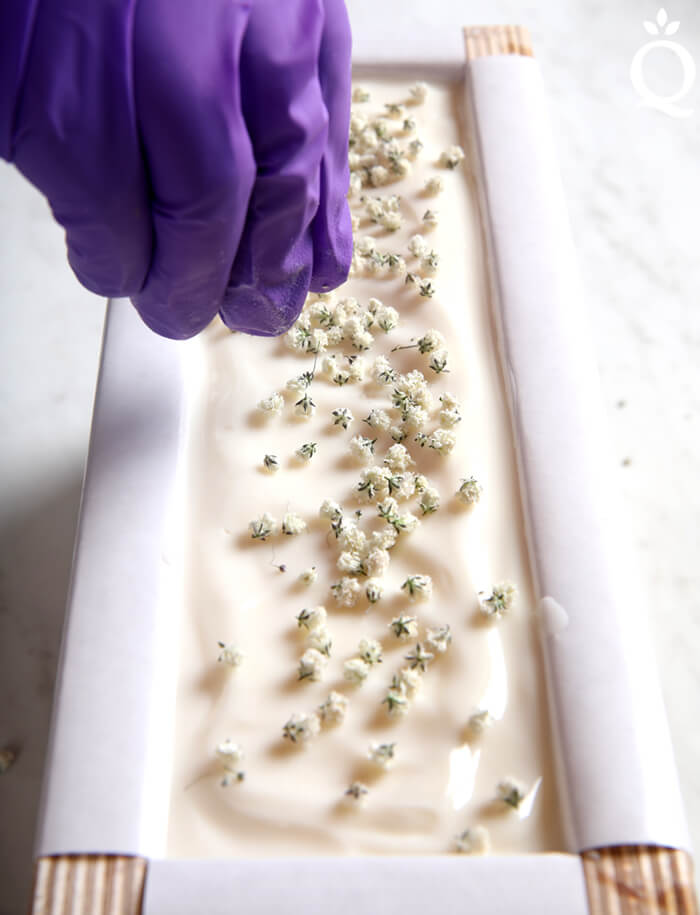
SEVEN: Sprinkle dried baby’s breath flowers on top of the soap, concentrating them toward the center. Use a little more than you’d like, as some may fall off during the cutting process. Use gloved fingers to gently press the flowers into the soap to help them stick better.

NINETEN

EIGHT: Spritz the top of the soap with 99% isopropyl alcohol to help prevent soda ash. To prevent cracking and glycerin rivers, place the soap in the freezer for 24 hours. Allow the soap to fully thaw and harden for another 2-3 days.

To remove, slide out the bottom piece of the mold and gently push the soap down and out. You can also grab the freezer paper and lift it up and out. Peel away the paper and cut the soap into bars. To avoid drag marks, lay the soap on its side and cut. Allow the bars to harden and cure for 4-6 weeks. Enjoy.

Baby's Breath Cold Process Soap Tutorial


Baby's Breath Soap Tutorial

Soap Queen
These bright white bars are scented with Baby's Breath Fragrance Oil and topped with dried flowers.
Cook Time 2 hours
Total Time 2 hours
Recipe type Cold process soap
Makes 3 .5 pounds of soap

Ingredients
  

  • Tall Narrow Wood Loaf Mold
  • 6.8 oz. Canola Oil 17%
  • 1.2 oz. Castor Oil 3%
  • 10 oz. Coconut Oil 25%
  • 8 oz. Palm Oil 20%
  • 6 oz. Shea Oil 15%
  • 8 oz. Sweet Almond Oil 20%
  • 5.6 oz. Sodium Hydroxide Lye
  • 11.2 oz. Distilled Water 15% water discount
  • 2.5 oz. Baby’s Breath Fragrance Oil
  • 2 tsp. Titanium Dioxide
  • Dried Baby’s Breath Flowers

Instructions
 

FRAGRANCE PREP: Measure 2.5 ounces of Baby’s Breath Fragrance Oil into a small glass container and set aside.

    MOLD PREP: Line the Tall Narrow Wood Loaf Mold with freezer paper with the shiny side up.

      SAFETY FIRST: Suit up for safe handling practices. That means goggles, gloves, and long sleeves. Make sure kids, pets, other distractions, and tripping hazards are out of the house or don’t have access to your soaping space. Always soap in a well-ventilated area.

      • Slowly and carefully add 5.6 ounces of lye to 11.2 ounces of water and gently stir until the lye has fully dissolved and the liquid is clear. Set aside to cool. If you’d like a harder bar of soap that releases faster from the mold, you can add sodium lactate to the cooled lye water. Use 1 teaspoon of sodium lactate per pound of oils in the recipe. For this recipe, you’d add 2.5 teaspoons sodium lactate.
      • In a large glass bowl, combine and melt the 10 ounces of coconut oil, 6.8 ounces of canola oil, 1.2 ounces of castor oil, 6 ounces of shea oil, 8 ounces of sweet almond oil, and 8 ounces of palm oil (remember to fully melt then mix your entire container of palm oil before portioning).
      • Add 2 teaspoons of titanium dioxide to the oils and use a stick blender to fully combine until there are no chunks.
      • Once the lye water and the oils have cooled to about 100-110 degrees F, add the lye water to the oils and stick blend until a thin trace.
      • Add the 2.5 ounces of Baby’s Breath Fragrance Oil, and use the stick blender to mix in. Continue blending until you reach a medium trace.
      • Pour all of the soap batter into the mold. Firmly tap it on the counter to help get rid of bubbles. Use a spoon to manipulate the top and add a very light texture.
      • Sprinkle dried baby’s breath flowers on top of the soap, concentrating them toward the center. Use a little more than you’d like, as some may fall off during the cutting process. Use gloved fingers to gently press the flowers into the soap to help them stick better.
      • Spritz the top of the soap with 99% isopropyl alcohol to help prevent soda ash. To prevent cracking and glycerin rivers, place the soap in the freezer for 24 hours. Allow the soap to fully thaw and harden for another 2-3 days. To remove, slide out the bottom piece of the mold and gently push the soap down and out. You can also grab the freezer paper and lift it up and out. Peel away the paper and cut the soap into bars. To avoid drag marks, lay the soap on its side and cut. Allow the bars to harden and cure for 4-6 weeks. Enjoy.
      Tried this recipe?Let us know how it was!


      You may also like these

      Become an email subscriber

      Enter your email address below and you will receive all our new posts directly in your email inbox.

      1. Hi BB team, I was curious I kept the soap in the freezer for a full 24 hours yesterday. My soap cracked overnight. Dont understand why? I used sunflower oil instead of shea oil. Also used fresh babys breath and added slick. Thanks Kelley

        1. That’s really strange! Usually cracking happens with overheating which putting your soap in the freezer should prevent. It could be the additive you used and fresh versus dried baby’s breath could have caused your soap to get a little too hot, even in the freezer.

      2. The tall mold you used is discontinued by Bramble Berry. What alternative mold should be used? I have the 10 inch and 5 pound molds. Thank you.

        1. For a similar shape of soap you can use our Tall 12″ Silicone Loaf Mold: https://www.brambleberry.com/Tall-12-Silicone-Loaf-Mold-P6073.aspx

          You can also use one of the molds you already own if you prefer. You’ll just need to resize the recipe to fit your mold depending on which one you use.

          How to Resize Cold Process Soap Recipes: https://www.google.com/search?q=resize+soap+queen&rlz=1C1KMZB_enUS554US554&oq=resize+soap+queen&aqs=chrome..69i57.1775j0j4&sourceid=chrome&ie=UTF-8

          1. Does the silicon mold hold up on it’s own without the structure of the wooden mold? Love the different shape that the tall mold offers. Thanks!

        1. You can use shea butter, but it will change the consistency of the recipe. It will make it harder than the liquid shea oil, and also more prone to crack. You may want to make a small test batch to see what you think.

          Also, remember to run the recipe through the Lye Calculator again after any substitutions: https://www.brambleberry.com/Pages/Lye-Calculator.aspx

          Learn more about substituting oil here: https://soapqueen.com/bath-and-body-tutorials/tips-and-tricks/how-to-substitute-oil-in-cold-process-recipes/

      3. I do it and i put it in freezer for4 hour when i removed it its crack from the top ? What can i do

        1. The soap will still be fine to use, even with the crack. You can leave it as is or cut the top off so it’s more smooth.

          For your next batch, we recommend leaving the soap in the freezer for a full 24 hours so it stays cool. That should help prevent the cracking.

        1. Thank you Diane, we appreciate your sweet comment. Hope you get a chance to give this recipe a try.

      4. 5 stars
        This soap is absolutely gorgeous yet so simplistic looking. I definitely have to make it! Thanks for tutorial!

      5. What are your thoughts on substituting goats milk for the water to make this a goats milk soap?

      6. Hi. You all ran out of the canola Oil. Which one can I replace it with? Or can I use ultra filtered canola oil that I have at home in lieu of the one that is sold out?
        Thanks

      7. 5 stars
        5.6 oz. Sodium Hydroxide Lye
        11.2 oz. Distilled Water (15% water discount)
        Hello I am new in cold process Making, please let me know if total amount of water to use is 11.2 oz and 5.6 oz of sodium hydroxide.
        One more question, it should be placed in the refrigerator after pouring it in the mold?

        1. Yes, 11.2 oz. of distilled water and 5.6 oz. of lye is the correct amount for this recipe. Once the soap is in the mold put it in the freezer for 24 hours to prevent cracking and glycerin rivers.

          1. Thank you! I will do it. I will be more than happy to see results because every time I tried, I am afraid of the results (cracking!!) it is realy hot where I live… max daytime is 41.2 Celsius

          2. 5 stars
            How can I increase recipe for 4.5 mold? Your lye superfatting only goes to 10%. Thank you.

      8. I made this recipe using the refined white shea butter instead of shea oil and I absolutely love the lather it produces. This olive-free recipe is great for lather. I topped with Chamomile buds since I didn’t have baby’s breath. The baby’s breath fragrance oil is beautiful! Thank you Annemarie for a wonderful recipe!

        1. That’s awesome, glad to hear you’re loving the recipe. Thanks for the sweet comment Marilyn.

      9. I would love to try and make this soap however I’m not a fan of using Palm oil. Is there another oil I could substitute?

        1. Babassu oil can be used in place of palm oil: https://www.brambleberry.com/Babassu-Oil–P6807.aspx

          You can also add a hard oil like cocoa butter up to 15% to add firmness like palm oil does. Coconut oil or tallow up to 33% work as well. Read more about common oils and what properties they add to soap here: https://soapqueen.com/bath-and-body-tutorials/tips-and-tricks/free-beginners-guide-to-soapmaking-common-soapmaking-oils/

          This post on substituting oils has some great information too: https://soapqueen.com/bath-and-body-tutorials/tips-and-tricks/how-to-substitute-oil-in-cold-process-recipes/

      10. 5 stars
        Hi! I did this soap, and it was perfect, but after two days it have brown spots. I put the blumble gum fragrance.

            1. Hi Kelsey, The soap didn’t turn brown. It was only brown spots. After two days that I took out the mold. I am confused ????????‍♀️

      11. 5 stars
        This recipe really intrigued me, but since I had neither the white BB flowers, nor the Baby’s Breath fragrance, I adjusted the recipe with some pink Baby’s Breath flowers I had and added pale pink clay to delicately color the soap. The fragrance I used was a combination of some Rose Fragrance mixed with Aloe&Clover Fragrance, plus some Gardenia Fragrance I had left.
        I had some misgivings regarding this fragrance combination, especially about the Rose accelerating the trace – but it came out absolutely fabulous; the Aloe&Clover tempered the sweetness of the Rose and Gardenia.

        1. That sounds like a perfect combination, especially for spring. Thanks for sharing – we love hearing how people get creative with these recipes.

      12. 4 stars
        The soap is beautiful. Do you think it would make much difference to put 2 ounces of Baby’s Breath in the soap, since you sell it in 2-ounce bottles?

      13. Hello, I love all your recipes and this one looks beautiful! I have a stick blender that I use for making lotions, will it be safe to use my stick blender for both soap and lotions? I know after a couple of days it will be basically soap rather than lye on the stick blender, but would like to be able to make both soap and lotion in one day without worrying about lye being in the lotion. Would it be best to have a stick blender for each? Thank you, and thank you for all your amazing recipes!

        1. You can put the bowl in the microwave to heat it, or place it over a pot of simmering water. Make sure the bowl is glass, stainless steel, or heat-resistant plastic.

      14. 5 stars
        I’m a newbie soaper and learning fast. Anyhow the the term 15 % water discount is what exactly I can guess what it is but rather be sure than sorry. I love this baby’s breath soap looks awesome!!

        1. Hi Jerry! If you go up to the search bar at the top of the Soap Queen blog and type in “Water Discounting Cold Process Soap”, you will find a really good article here that explains everything in detail. I just love Ann-Marie’s articles!

      15. Gorgeous! I have everything except shea oil…what could I use instead or could I use more of the other oils listed?

        1. Cocoa butter, avocado butter, or any other hard oil can be subbed for shea, but you really should then run the resulting recipe through the Lye Calculator to make sure you get the right amount of lye. I hope I could help and happy soaping!

          1. I would think that you want to sub liquid oil with another one that’s close with consistency. I believe the recipe calls for shea oil rather than butter.

        2. If you’d like to replace the shea oil in this recipe, you could increase the other oils slightly, or introduce another lightweight liquid oil. I would recommend something with a neutral color so it does not affect the white color. Sweet almond oil, avocado oil, chia oil, or sunflower oil would all be nice choices.

          1. 5 stars
            Hi BB team, i was wondering about the same question… so we can substitute with light colored oils, so can it be rice bran oil or sesame seed oil?
            Thank you for giving us so much information and inspiration☺????

      Comments are closed.

      {"email":"Email address invalid","url":"Website address invalid","required":"Required field missing"}

      The Latest from Soap Queen TV

      Inspired by Gems & Crystals

      All About Essential Oils

      The Power of Charcoal

      Create Your Own Clay Face Mask

      DIY Bath Bombs

      Cold Process Soap Tips & Tricks

      Learn the Basics of Cold Process Soapmaking

      Learn the Basics of Melt & Pour Soapmaking

      Want to Start Your Own Soap Business?

      Soap Business Success Stories

      Soap Queen TV Favorites

      Ingredient Spotlight

      Disclosure

      Unless stated otherwise, all images are original material and are copyrighted. If you'd like to use an image, please be a friend and credit the photo and link back to Soap Queen. Feel free to share, tweet and pin to your hearts content.