





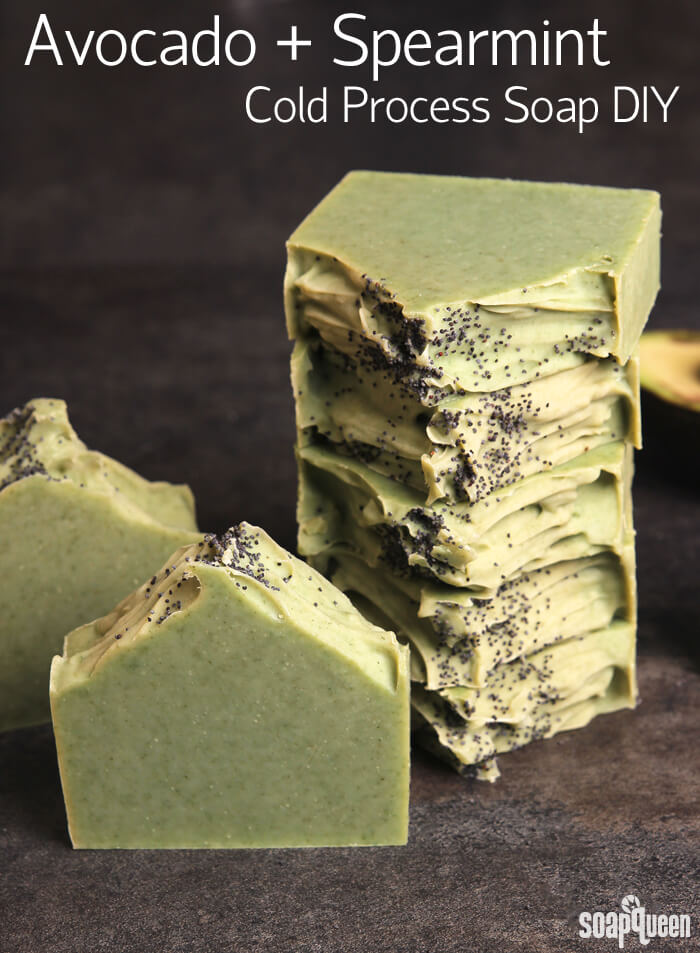
 Adding fresh fruit and vegetable purees to cold process soap has long been a staple in the soapmaking community. Purees can add color and skin-loving properties to the bar. In addition, purees are great from a marketing standpoint. One of my favorite purees for cold process soap is avocado. It gives the soap a luxurious feeling. Unlike some additives, avocados do not contain a large amount of sugar. Adding sugars (like those found in fruit) to cold process soap can cause excess heat, which can make the soap difficult to work with. For example, adding honey can cause an extreme gel phase, as seen in the Adding Honey to Cold Process Soap blog post.
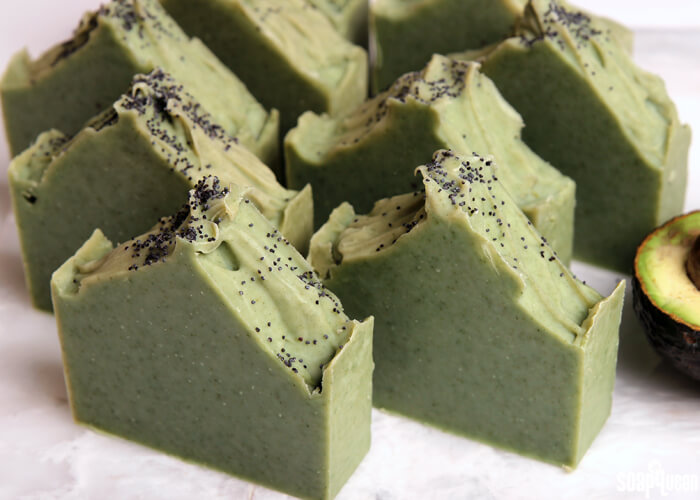
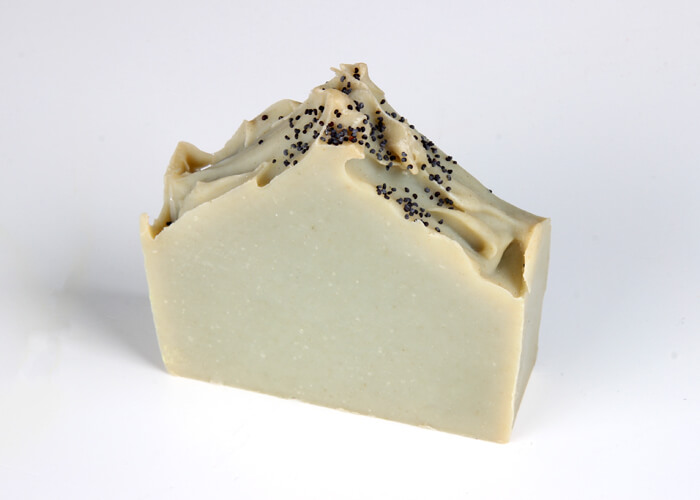
For this recipe, I added a full 3 ounces of avocado pulp, in addition to French green clay and spirulina powder for color. Spearmint essential oil gives these bars a crisp and refreshing scent. After achieving a nice thick texture, I mounded the top of the soap toward the center, created texture and sprinkled poppy seeds on top for decoration. I decided to place this soap into the fridge to prevent gel phase. The additional water from the avocado and clay + heat causes glycerin rivers. Believe me…it happened! You can see my first batch of this soap without a water discount and after gel phase at the bottom of this tutorial. Learn more about glycerin rivers and how to prevent them in this post.
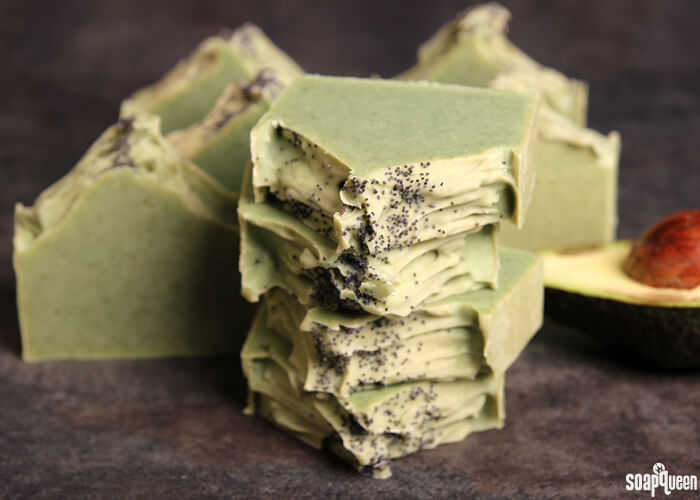
After making this soap, I was perusing the #SoapShare hashtag on Instagram (one of my favorite ways to spend precious downtime) I stumbled upon this beautiful Listea Poppyseed Mead Sea Mud Soap by sassy_soaps_and_such. I was shocked how similar the two designs were. Isn’t it crazy how that happens sometimes? I love Rhonda’s spin on a similar idea, with a layer on the bottom. Great minds really do think alike!
This recipe does contain a water discount to take into consideration the extra water that is added to the recipe. This recipe adds water in three different ways. First, 1.5 ounces of water is added to create the avocado puree. Then 2 Tbs. (about 1 ounce) of water is added to the clay to help create a dispersion. In addition, the avocado itself contains water. It’s tricky to know for sure how much water the 3 ounces of avocado contains, so I estimated about .5 ounces. That’s a total of 3 ounces of added water. The full amount of water in this recipe is 11.5 ounces. To get the amount below, I subtracted the 3 ounces which is 8.5 and used a water discount of 15% which is 7.2 ounces. With the added water, that’s a water discount of about 11% (7.2 ounces + 3 = 10.2).
What You’ll Need:
Note: This recipe has a 3% superfat to compensate for the added oils in the avocado. It also has a large water discount to compensate from the water in the avocado puree and the clay dispersion.
10″ Silicone Loaf Mold
3.5 oz Avocado Butter (10%)
5.2 oz. Avocado Oil (15%)
1 oz. Castor Oil (3%)
7.7 oz. Coconut Oil (22%)
8.8 oz. Olive Oil (25%)
8.8 oz. Palm Oil (25%)
5 oz. Sodium Hydroxide Lye
7.2 oz. Distilled Water
3 oz. Fresh Avocado + 1.5 oz. Distilled Water
Spirulina Powder
French Green Clay
Poppy Seeds
2 oz. Spearmint Essential Oil

Click here to add everything you need for this project to your Bramble Berry shopping cart!
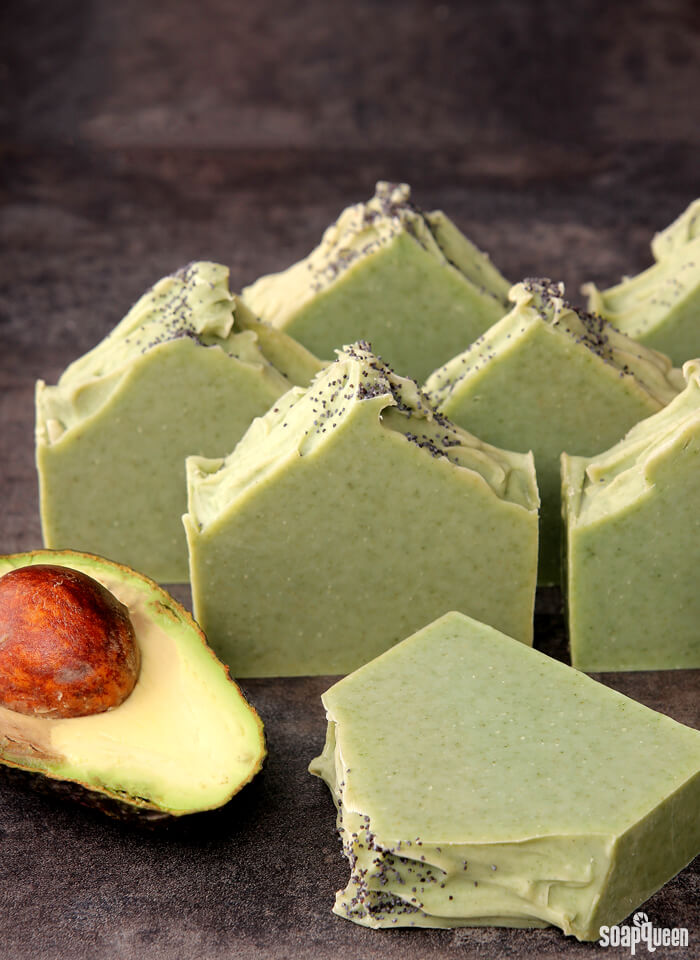
If you’ve never made Cold Process soap before, stop here! I highly recommend checking out our FREE four part SoapQueen.tv series on Cold Process Soapmaking, especially the episode on lye safety. And if you’d rather do some reading, Bramble Berry carries a wide range of books on the topic, including my newest book, Soap Crafting. You can also checkout the digital downloads for that instant gratification factor.
SAFETY FIRST: Suit up for safe handling practices! That means goggles, gloves and long sleeves. Make sure kids, pets, and other distractions and tripping hazards are out of the house or don’t have access to your soaping space. Always soap in a well-ventilated area.
COLOR PREP: Disperse 1 tablespoon of the spirulina powder into 1 tablespoon lightweight liquid oil such as sunflower or sweet almond oil. Use a mini mixer to get rid of any clumps. Then mix 1 tablespoon French green clay into 2 tablespoons distilled water. The mixture will become quite thick. Clay is dispersed in water due to help avoid cracking due to the clay’s tendency to absorb moisture.
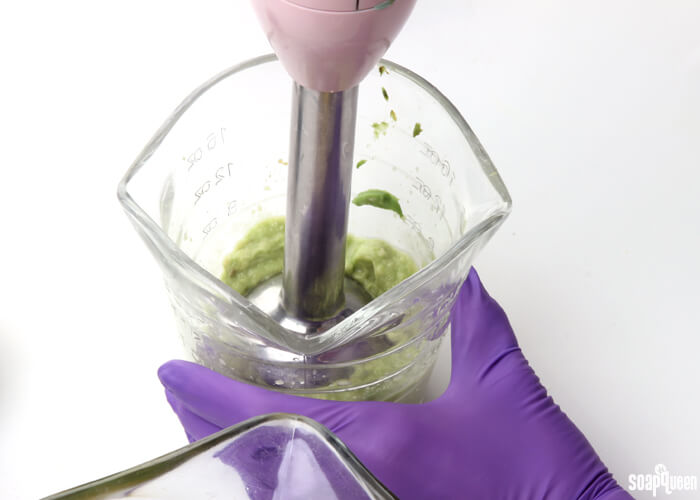
PUREE PREP: In a small container, measure out the 3 ounces of fresh avocado pulp (no skin). Add 1.5 ounces of distilled water, and use a stick blender, food processor or blender to blend until smooth. Set aside.
 ONE: Slowly and carefully add the lye to the water and gently stir until the lye has fully dissolved and the liquid is clear. Set aside to cool.
TWO: Melt and combine the coconut oil, avocado oil, avocado butter, olive oil, castor oil and palm oils (remember to fully melt then mix your entire container of palm oil before portioning). Once the lye water and the oils have cooled to 110-120 degrees or below (and are ideally within 10 degrees of each other), add the lye water to the oils and stick blend until thin trace. If you’d like a harder bar of soap that releases faster from the mold, you can add sodium lactate to the cooled lye water. Use 1 teaspoon of sodium lactate per pound of oils in the recipe. For this recipe, you’d add about 2 teaspoons sodium lactate.
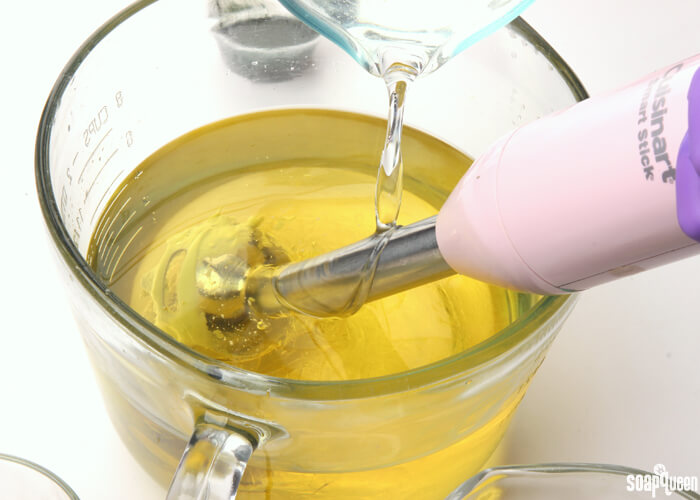
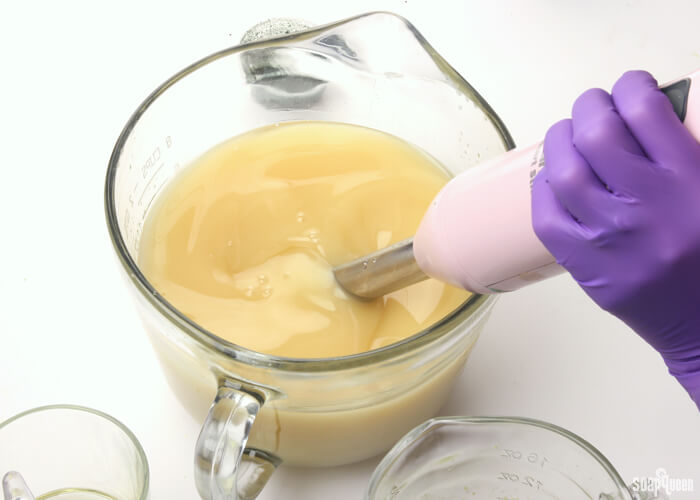 THREE: Once the mixture has reached a thin trace, add the avocado puree, all the dispersed spirulina powder and all the dispersed French green clay.
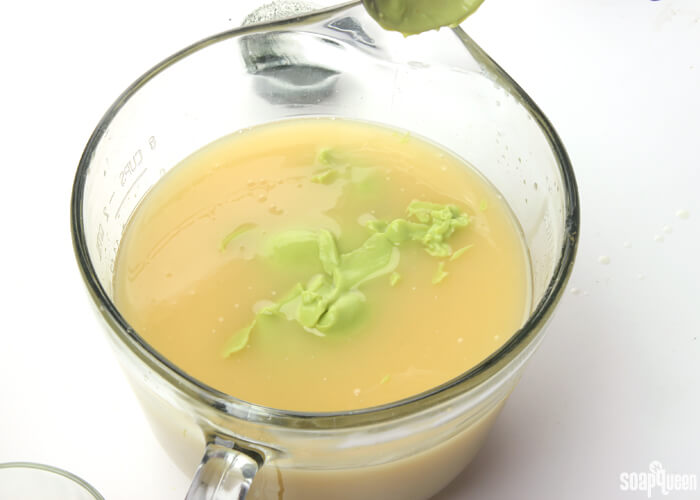
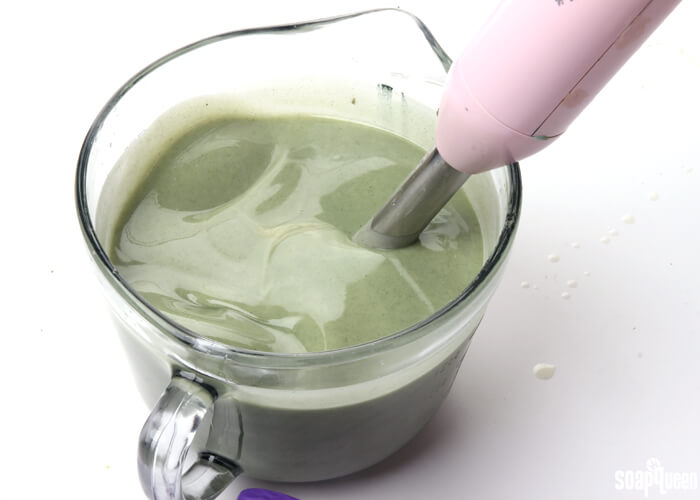
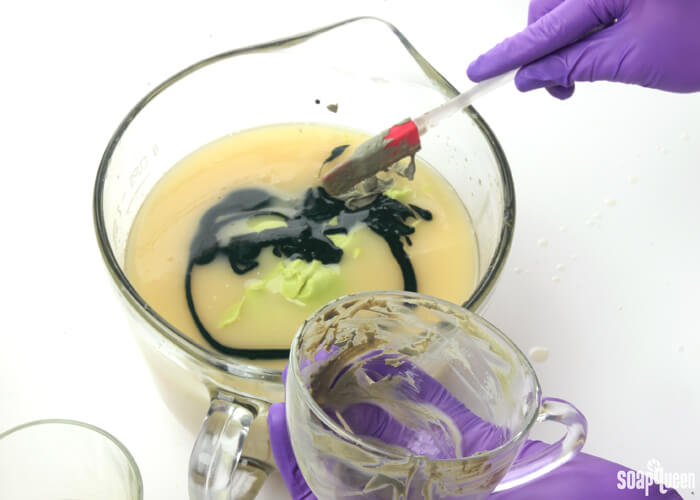 FOUR: Stick blend the additives into the soap until completely smooth. Add the spearmint essential oil, and stick blend using short pulses until incorporated. You don’t need to worry too much about the batter becoming thick. In fact, you want a nice thick trace! But, the soap still needs to be workable.
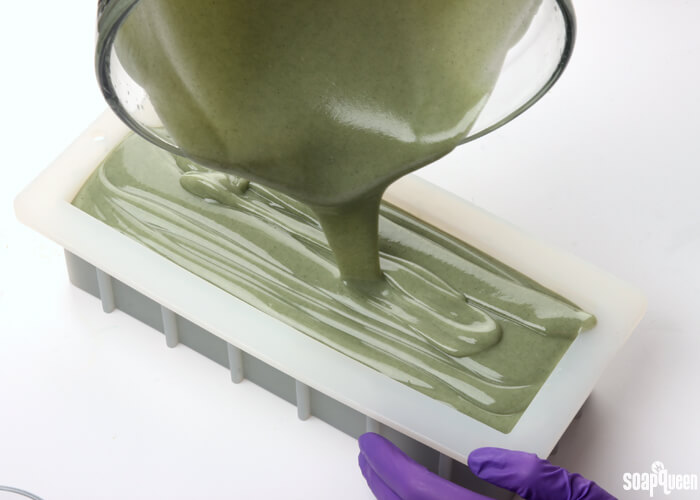
 FIVE: Pour all the batter into the mold, concentrating the batter in the center.
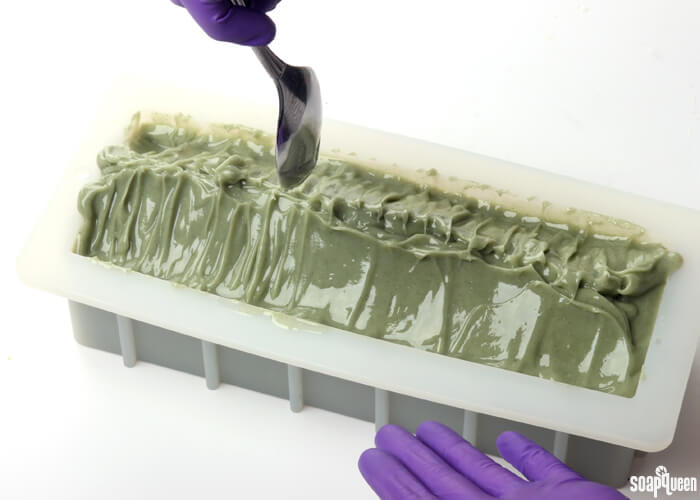
 SIX: Use a spoon or spatula to begin mounding the soap batter into the center of the mold, creating a peak. If the soap is not thick enough to hold a shape, allow it to sit for several minutes to firm up slightly. Continue to build the soap in the center until you’ve created a large peak.
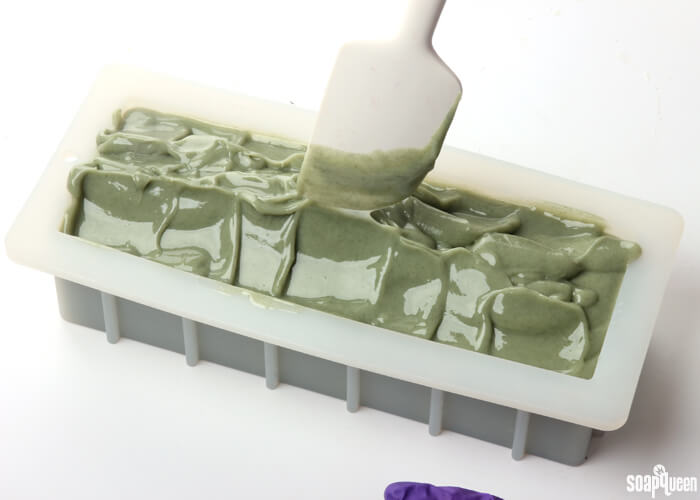 SEVEN: Once you’re happy with the height of the soap, use the side of a spoon to create divots/texture into the peaks. You could also use a fork for this step. There is no right or wrong way to do this, just keep playing with the soap until you’re happy with the look.
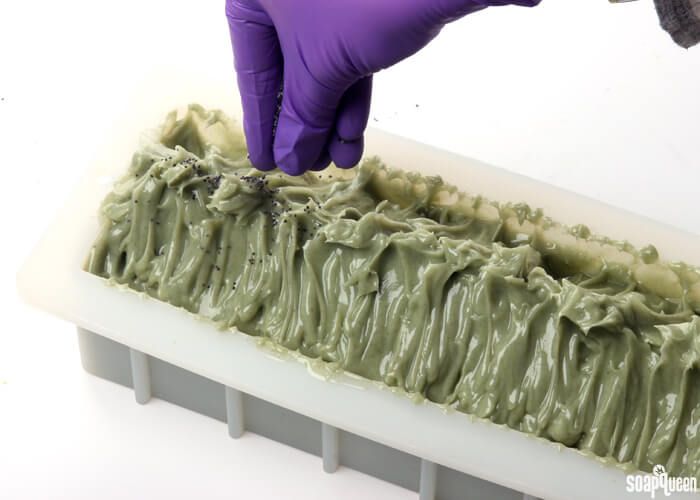
 EIGHT: Once you’re happy with the top, sprinkle poppy seeds in the center of the peak. Spritz the top of the soap with 99% isopropyl alcohol to avoid soda ash. Then, place the soap in the fridge (or freezer) for 4-24 hours. Doing so will help prevent gel phase and glycerin rivers. If you soaped at slightly higher temperatures I would recommend placing it in the freezer. Remove from the fridge or freezer and allow the soap to harden in the mold at room temperature for 3-4 days. Unmold, and cut into bars. Allow to cure for 4-6 weeks.
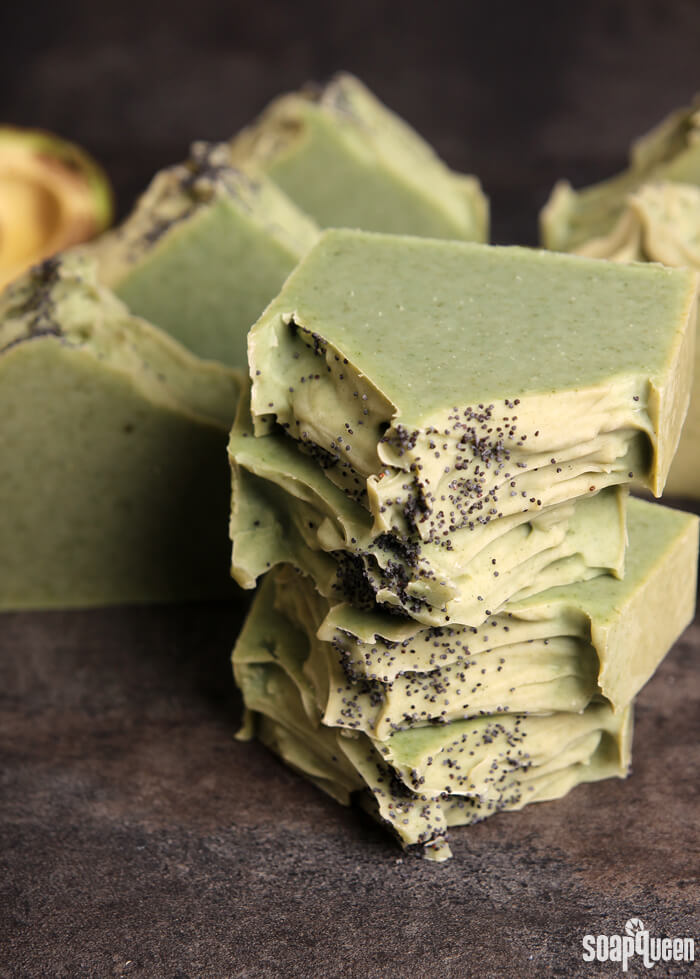
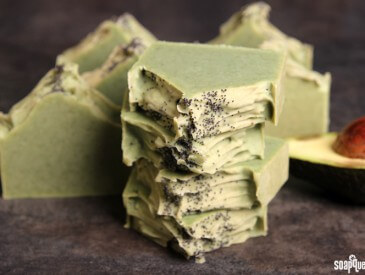
Below is an example of this recipe gelled vs. un-gelled. The soap in the top right is the soap shown in this tutorial, which was placed in the fridge. The soap in the bottom left is the same recipe without a water discount, and the soap was insulated to promote gel phase. The first time I made this soap, I insulated the soap because I wanted the spirulina to be vibrant. But, I ended up with glycerin rivers. The color is fine, but I actually prefer the lighter shade on top. Of course this is just personal preference, and both soaps will feel fantastic.
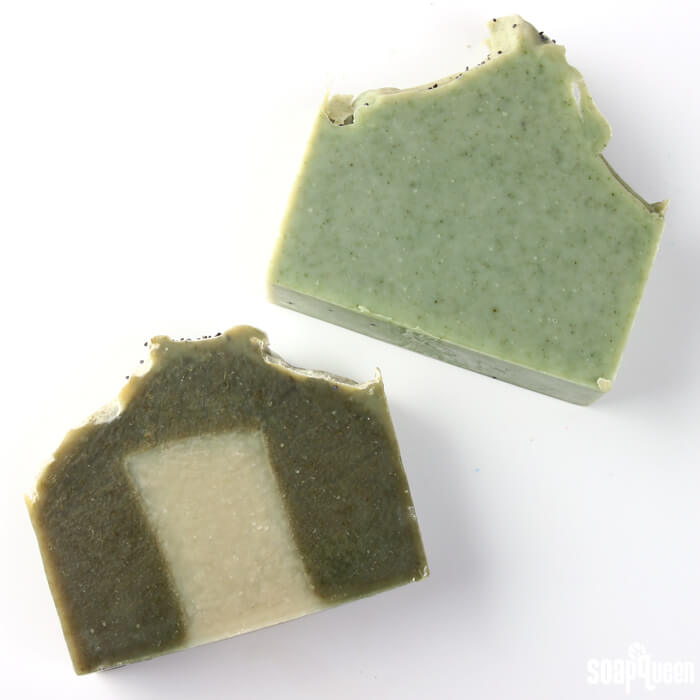 The soap in the top right was placed in the fridge to keep cool, while the soap on the bottom left was insulated and went through gel phase.
UPDATE 7/6/2016: Below is a photo of the soap, almost exactly 5 months after being made. As you can see, the green has faded to a very light shade. This soap was not exposed to light, and stored in a cool, dry place. Unfortunately, there is not a way to prevent the colorants from fading.
Have you used purees in cold process soap before? If you’re looking for ideas, my new book Pure Soapmaking has several recipes using purees, including tomato, cucumber and more!
Avocado + Spearmint Cold Process Soap Tutorial
Ingredients
- 10 ″ Silicone Loaf Mold
- 3.5 oz Avocado Butter
- 5.2 oz. Avocado Oil
- 1 oz. Castor Oil
- 7.7 oz. Coconut Oil
- 8.8 oz. Olive Oil
- 8.8 oz. Palm Oil
- 5 oz. Sodium Hydroxide Lye
- 7.2 oz. Distilled Water
- 3 oz. Fresh Avocado + 1.5 oz. Distilled Water
- Spirulina Powder
- French Green Clay
- Poppy Seeds
- 2 oz. Spearmint Essential Oil
Instructions
SAFETY FIRST: Suit up for safe handling practices! That means goggles, gloves and long sleeves. Make sure kids, pets, and other distractions and tripping hazards are out of the house or don’t have access to your soaping space. Always soap in a well-ventilated area.
COLOR PREP: Disperse 1 tablespoon of the spirulina powder into 1 tablespoon lightweight liquid oil such as sunflower or sweet almond oil. Use a mini mixer to get rid of any clumps. Then disperse 1 tablespoon French green clay into 2 tablespoons distilled water; the mixture will become quite thick. Clay is dispersed in water due to help avoid cracking due to the clay's tendency to absorb moisture.
PUREE PREP: In a small container, measure out the 3 ounces of fresh avocado pulp (no skin). Add 1.5 ounces of distilled water, and use a stick blender, food processor or blender to blend until smooth. Set aside.
- Slowly and carefully add the lye to the water and gently stir until the lye has fully dissolved and the liquid is clear. Set aside to cool.
- Melt and combine the coconut oil, avocado oil, avocado butter, olive oil, castor oil and palm oils (remember to fully melt then mix your entire container of palm oil before portioning). Once the lye water and the oils have cooled to 120 degrees or below (and are ideally within 10 degrees of each other), add the lye water to the oils and stick blend until thin trace. If you’d like a harder bar of soap that releases faster from the mold, you can add sodium lactate to the cooled lye water. Use 1 teaspoon of sodium lactate per pound of oils in the recipe. For this recipe, you’d add about 2 teaspoons sodium lactate.
- Once the mixture has reached a thin trace, add the avocado puree, all the dispersed spirulina powder and all the dispersed French Green Clay.
- Stick blend the additives into the soap until completely smooth. Add the spearmint essential oil, and stick blend using short pulses until incorporated. You don’t need to worry too much about the batter becoming thick. In fact, you want a nice thick trace! But, the soap still needs to be workable.
- Pour all the batter into the mold, concentrating the batter in the center.
- Use a spoon or spatula to begin mounding the soap batter into the center. If the soap is not thick enough to hold a shape, allow it to sit for several minutes to firm up slightly. Continue to build the soap in the center until you’ve created a large peak.
- Once you’re happy with the height of the soap, use the side of a spoon to create divots/texture into the peaks. There is no right or wrong way to do this, just keep playing with the soap until you’re happy with the look.
- Once you’re happy with the top, sprinkle poppy seeds in the center of the peak. Spritz the top of the soap with 99% isopropyl alcohol to avoid soda ash. Then, place the soap in the fridge or freezer for 4-24 hours. Doing so will help prevent gel phase and glycerin rivers. Remove from the fridge and allow the soap to harden in the mold at room temperature for 3-4 days. Unmold, and cut into bars.
