





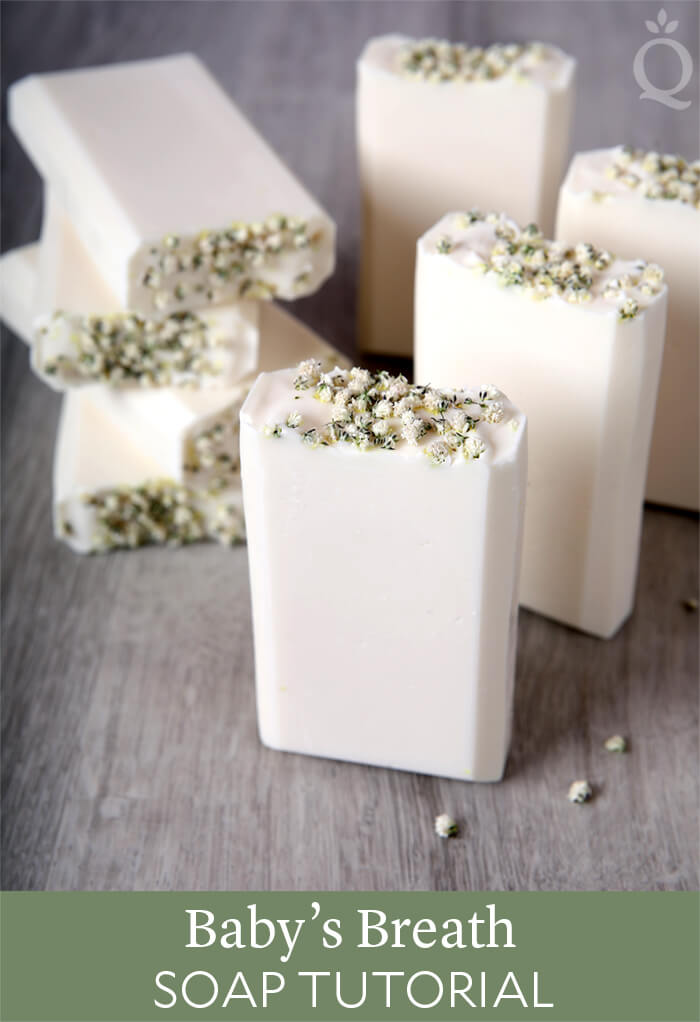
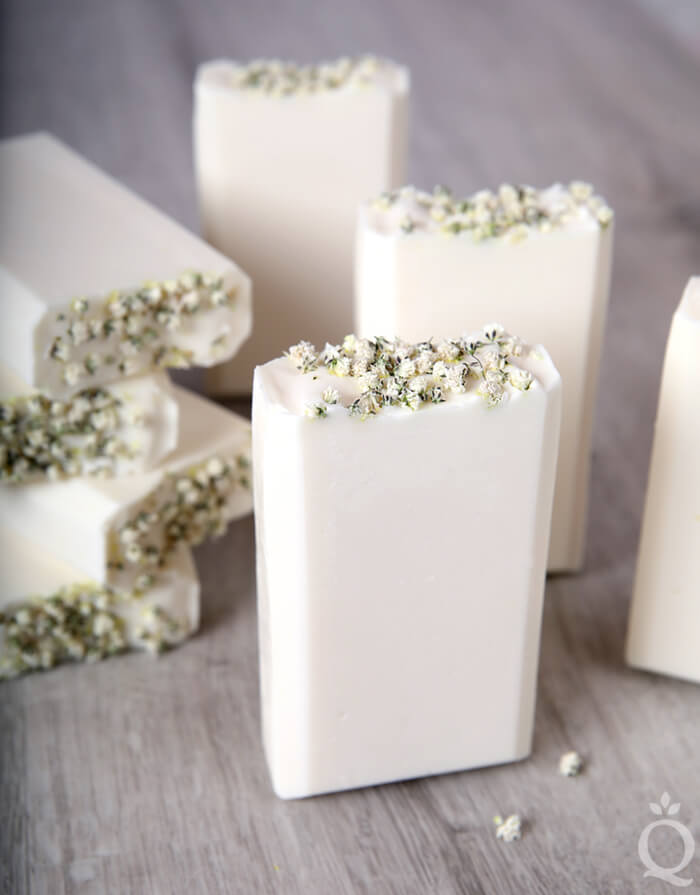
Baby’s breath flowers are a delicate addition to any bouquet. They usually play second fiddle to larger flowers, but for this soap we let baby’s breath take center stage. We kept the design extremely simple – the entire batch is colored white and dried baby’s breath flowers are placed on top.
To get the bright white shade, we used only light-colored oils. We also added plenty of titanium dioxide, which does pose a few obstacles. Using a large amount of titanium dioxide can lead to glycerin rivers. They can be prevented by using a water discount, so this recipe is discounted by 15%.
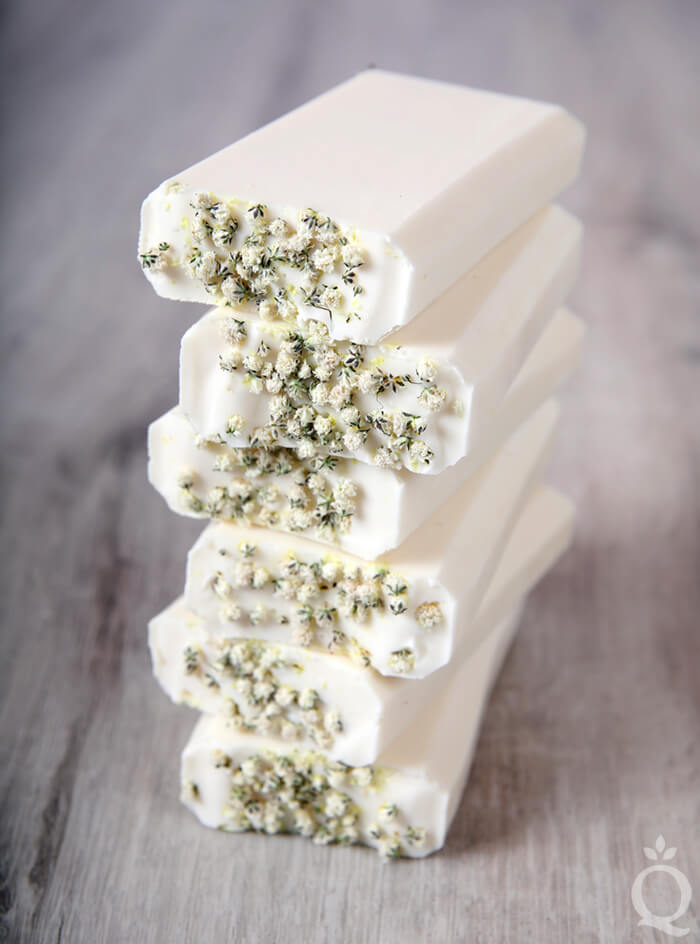
Titanium dioxide is similar to clay in soap – it tends to dry it out. The wood mold also insulates the soap, causing it to become quite warm. We found the combination of titanium dioxide, heat, and a water discount led to cracking. After tweaking the recipe a few times, we found an amount of titanium dioxide that led to extremely white bars without cracking. The key was soaping with slightly cooler temperatures (100-110 ° F) and placing the soap in the freezer for 24 hours.
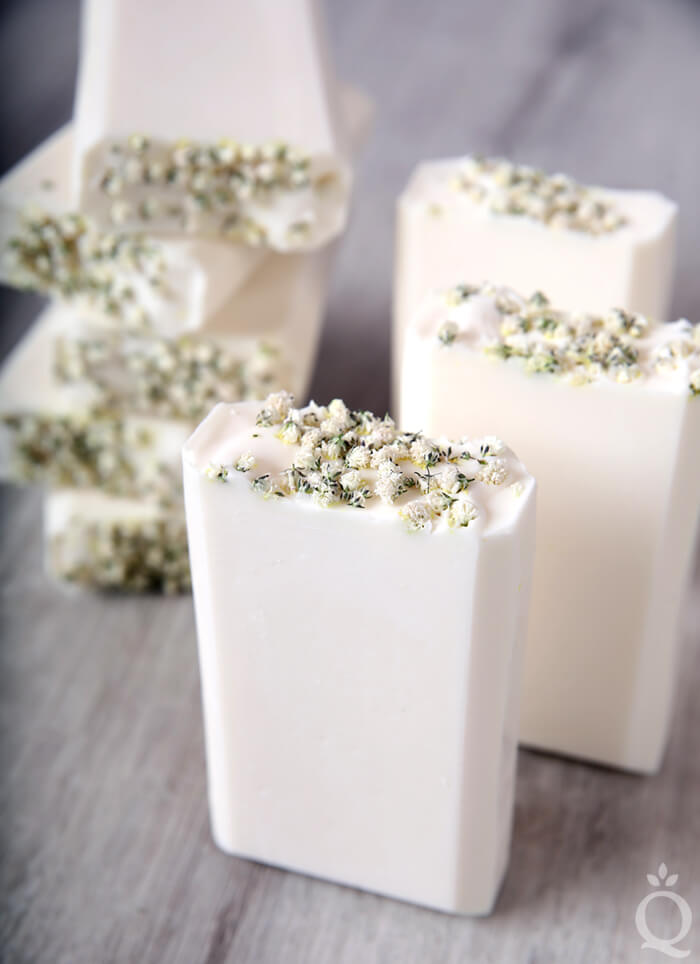
The soap is made with Baby’s Breath Fragrance Oil, which is a soft and delicate scent that doesn’t discolor. The Baby’s Breath Fragrance Oil is part of our Modern Floral Collection, which includes four new scents, extracts, dried botanicals, and more. Click here to see all the new products.
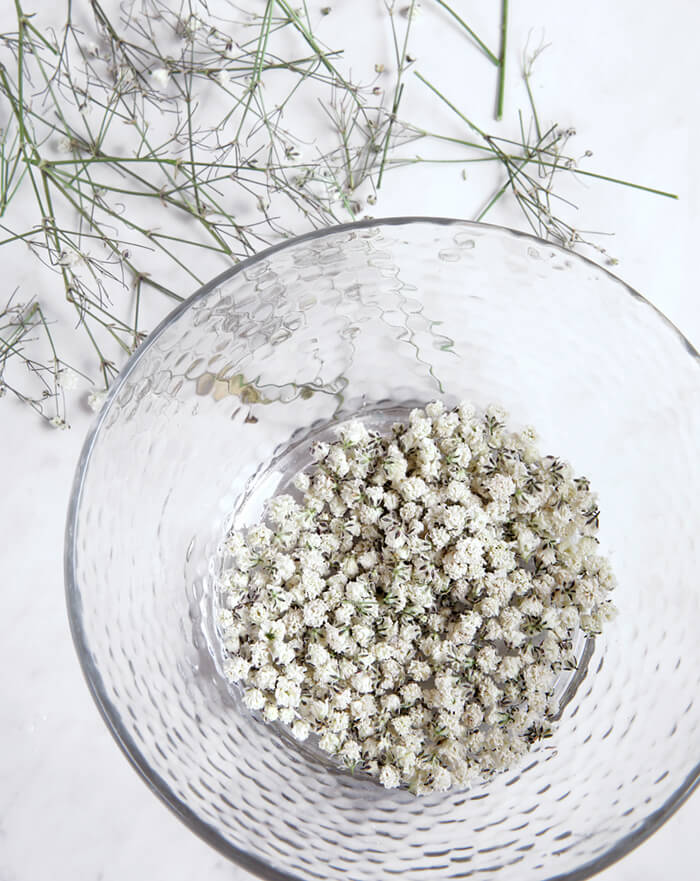
The baby’s breath flowers used on top were purchased fresh and allowed to dry for several weeks. We picked off the flowers to sprinkle on top prior to soaping. Interestingly, we found that the flowers bled a yellow hue onto the soap.
What You Need:
Tall Narrow Wood Loaf Mold
6.8 oz. Canola Oil (17%)
1.2 oz. Castor Oil (3%)
10 oz. Coconut Oil (25%)
8 oz. Palm Oil (20%)
6 oz. Shea Oil (15%)
8 oz. Sweet Almond Oil (20%)
5.6 oz. Sodium Hydroxide Lye
11.2 oz. Distilled Water (15% water discount)
2.5 oz. Baby’s Breath Fragrance Oil
2 tsp. Titanium Dioxide
Dried Baby’s Breath Flowers
Click below to add everything you need for this project to your Bramble Berry shopping cart!
If you’ve never made cold process soap before, stop here. We highly recommend checking out our FREE four part SoapQueen.tv series on cold process soapmaking, especially the episode on lye safety. And if you’d rather do some reading, Bramble Berry carries a wide range of books on the topic, including Pure Soapmaking. You can also check out the digital downloads for that instant gratification factor.
FRAGRANCE PREP: Measure 2.5 ounces of Baby’s Breath Fragrance Oil into a small glass container and set aside.
MOLD PREP: Line the Tall Narrow Wood Loaf Mold with freezer paper with the shiny side up. For tips on how to line the mold, click here.
SAFETY FIRST: Suit up for safe handling practices. That means goggles, gloves, and long sleeves. Make sure kids, pets, other distractions, and tripping hazards are out of the house or don’t have access to your soaping space. Always soap in a well-ventilated area.
ONE: Slowly and carefully add 5.6 ounces of lye to 11.2 ounces of water and gently stir until the lye has fully dissolved and the liquid is clear. Set aside to cool. If you’d like a harder bar of soap that releases faster from the mold, you can add sodium lactate to the cooled lye water. Use 1 teaspoon of sodium lactate per pound of oils in the recipe. For this recipe, you’d add 2.5 teaspoons sodium lactate.
TWO: In a large glass bowl, combine and melt the 10 ounces of coconut oil, 6.8 ounces of canola oil, 1.2 ounces of castor oil, 6 ounces of shea oil, 8 ounces of sweet almond oil, and 8 ounces of palm oil (remember to fully melt then mix your entire container of palm oil before portioning).
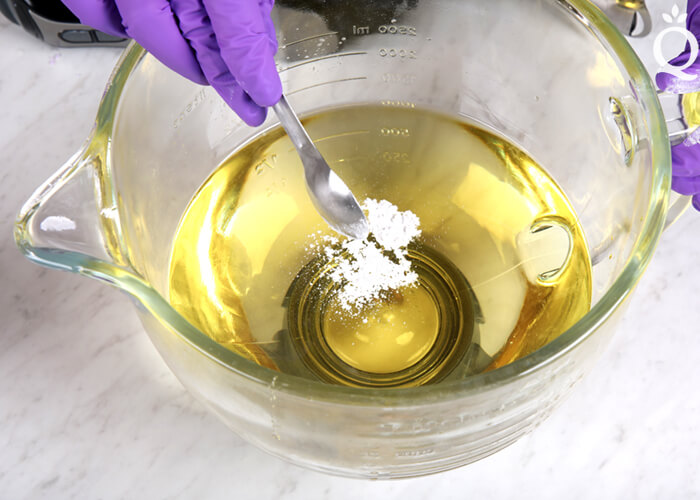
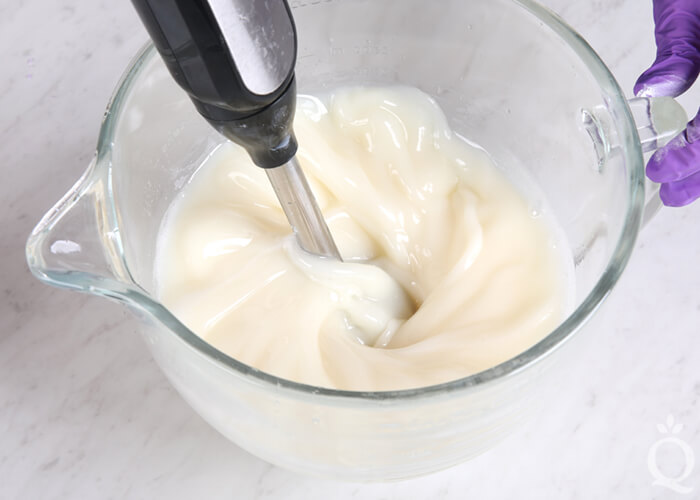
THREE: Add 2 teaspoons of titanium dioxide to the oils and use a stick blender to fully combine until there are no chunks.
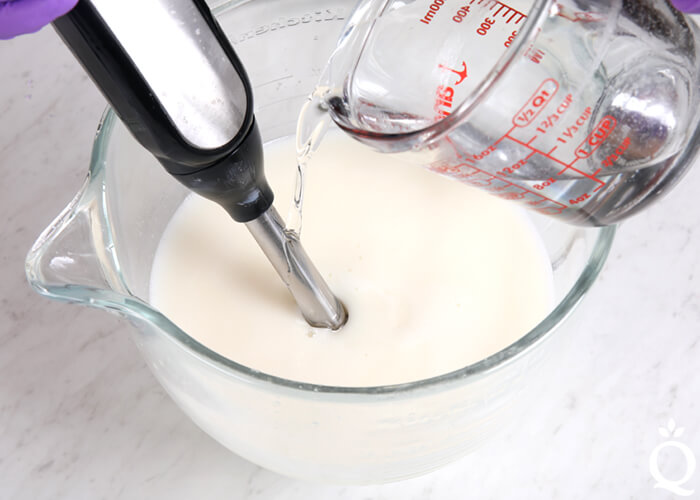
FOUR: Once the lye water and the oils have cooled to about 100-110 degrees F, add the lye water to the oils and stick blend until a thin trace.
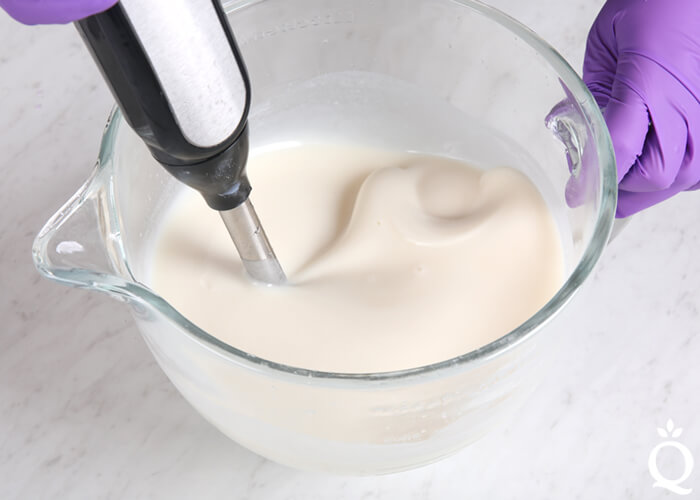
FIVE: Add the 2.5 ounces of Baby’s Breath Fragrance Oil, and use the stick blender to mix in. Continue blending until you reach a medium trace.
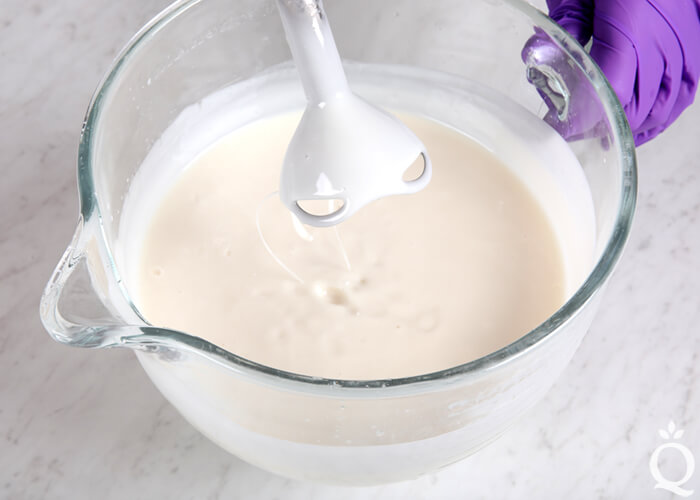
SIX: Pour all of the soap batter into the mold. Firmly tap it on the counter to help get rid of bubbles. Use a spoon to manipulate the top and add a very light texture.
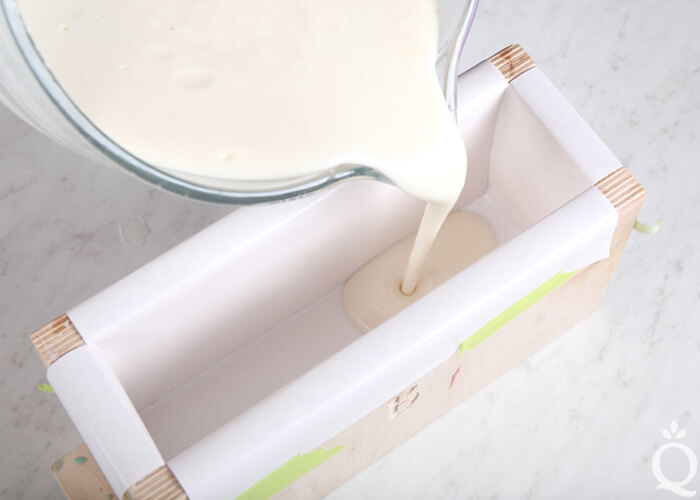
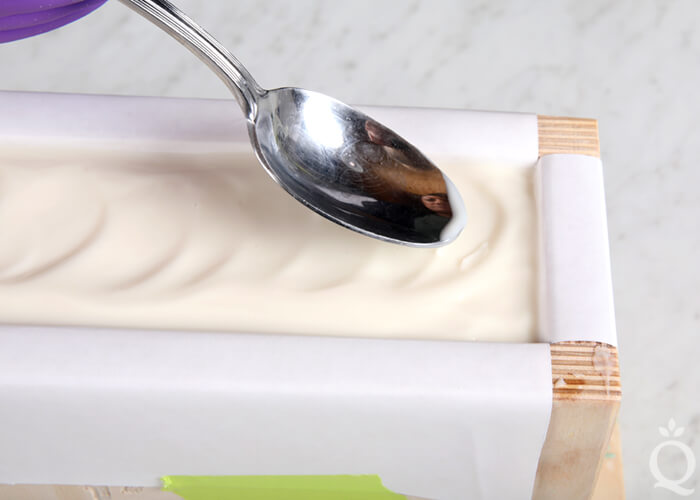
SEVEN: Sprinkle dried baby’s breath flowers on top of the soap, concentrating them toward the center. Use a little more than you’d like, as some may fall off during the cutting process. Use gloved fingers to gently press the flowers into the soap to help them stick better.
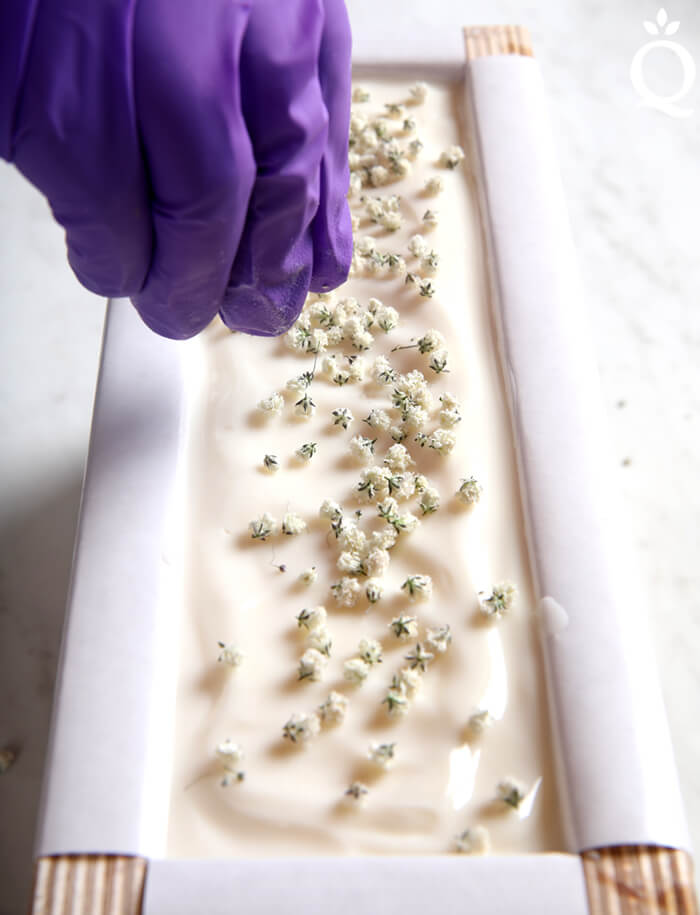
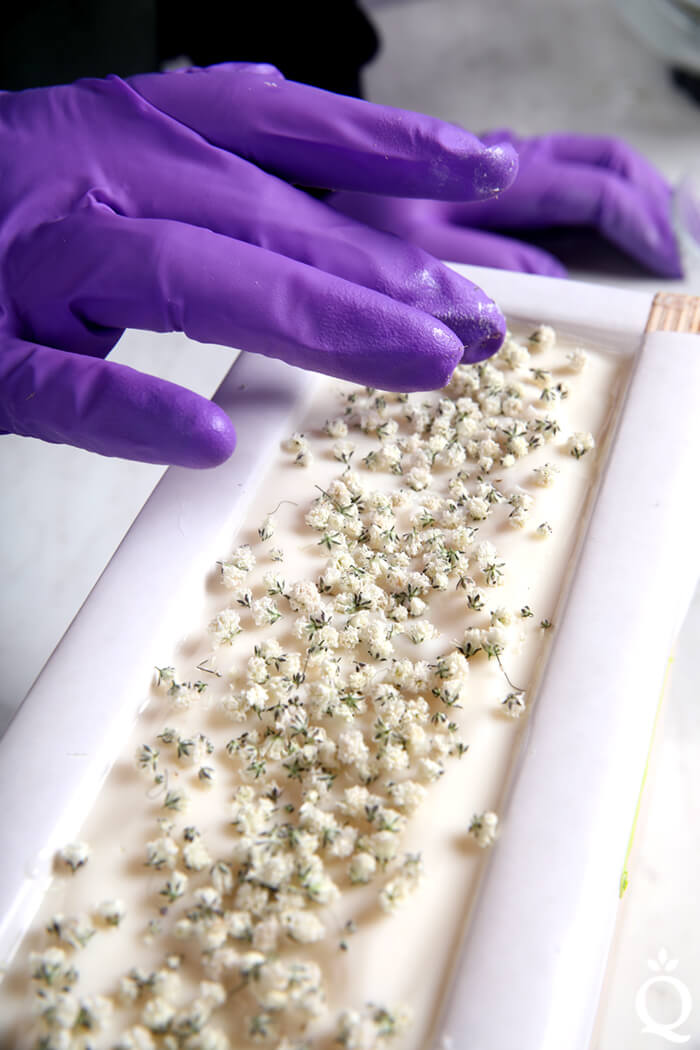
EIGHT: Spritz the top of the soap with 99% isopropyl alcohol to help prevent soda ash. To prevent cracking and glycerin rivers, place the soap in the freezer for 24 hours. Allow the soap to fully thaw and harden for another 2-3 days.
To remove, slide out the bottom piece of the mold and gently push the soap down and out. You can also grab the freezer paper and lift it up and out. Peel away the paper and cut the soap into bars. To avoid drag marks, lay the soap on its side and cut. Allow the bars to harden and cure for 4-6 weeks. Enjoy.
Baby's Breath Soap Tutorial
Ingredients
- Tall Narrow Wood Loaf Mold
- 6.8 oz. Canola Oil 17%
- 1.2 oz. Castor Oil 3%
- 10 oz. Coconut Oil 25%
- 8 oz. Palm Oil 20%
- 6 oz. Shea Oil 15%
- 8 oz. Sweet Almond Oil 20%
- 5.6 oz. Sodium Hydroxide Lye
- 11.2 oz. Distilled Water 15% water discount
- 2.5 oz. Baby’s Breath Fragrance Oil
- 2 tsp. Titanium Dioxide
- Dried Baby’s Breath Flowers
Instructions
FRAGRANCE PREP: Measure 2.5 ounces of Baby’s Breath Fragrance Oil into a small glass container and set aside.
MOLD PREP: Line the Tall Narrow Wood Loaf Mold with freezer paper with the shiny side up.
SAFETY FIRST: Suit up for safe handling practices. That means goggles, gloves, and long sleeves. Make sure kids, pets, other distractions, and tripping hazards are out of the house or don’t have access to your soaping space. Always soap in a well-ventilated area.
- Slowly and carefully add 5.6 ounces of lye to 11.2 ounces of water and gently stir until the lye has fully dissolved and the liquid is clear. Set aside to cool. If you’d like a harder bar of soap that releases faster from the mold, you can add sodium lactate to the cooled lye water. Use 1 teaspoon of sodium lactate per pound of oils in the recipe. For this recipe, you’d add 2.5 teaspoons sodium lactate.
- In a large glass bowl, combine and melt the 10 ounces of coconut oil, 6.8 ounces of canola oil, 1.2 ounces of castor oil, 6 ounces of shea oil, 8 ounces of sweet almond oil, and 8 ounces of palm oil (remember to fully melt then mix your entire container of palm oil before portioning).
- Add 2 teaspoons of titanium dioxide to the oils and use a stick blender to fully combine until there are no chunks.
- Once the lye water and the oils have cooled to about 100-110 degrees F, add the lye water to the oils and stick blend until a thin trace.
- Add the 2.5 ounces of Baby’s Breath Fragrance Oil, and use the stick blender to mix in. Continue blending until you reach a medium trace.
- Pour all of the soap batter into the mold. Firmly tap it on the counter to help get rid of bubbles. Use a spoon to manipulate the top and add a very light texture.
- Sprinkle dried baby’s breath flowers on top of the soap, concentrating them toward the center. Use a little more than you’d like, as some may fall off during the cutting process. Use gloved fingers to gently press the flowers into the soap to help them stick better.
- Spritz the top of the soap with 99% isopropyl alcohol to help prevent soda ash. To prevent cracking and glycerin rivers, place the soap in the freezer for 24 hours. Allow the soap to fully thaw and harden for another 2-3 days. To remove, slide out the bottom piece of the mold and gently push the soap down and out. You can also grab the freezer paper and lift it up and out. Peel away the paper and cut the soap into bars. To avoid drag marks, lay the soap on its side and cut. Allow the bars to harden and cure for 4-6 weeks. Enjoy.
