





• April 14, 2017

Can You Make Bath Bombs Without Citric Acid?

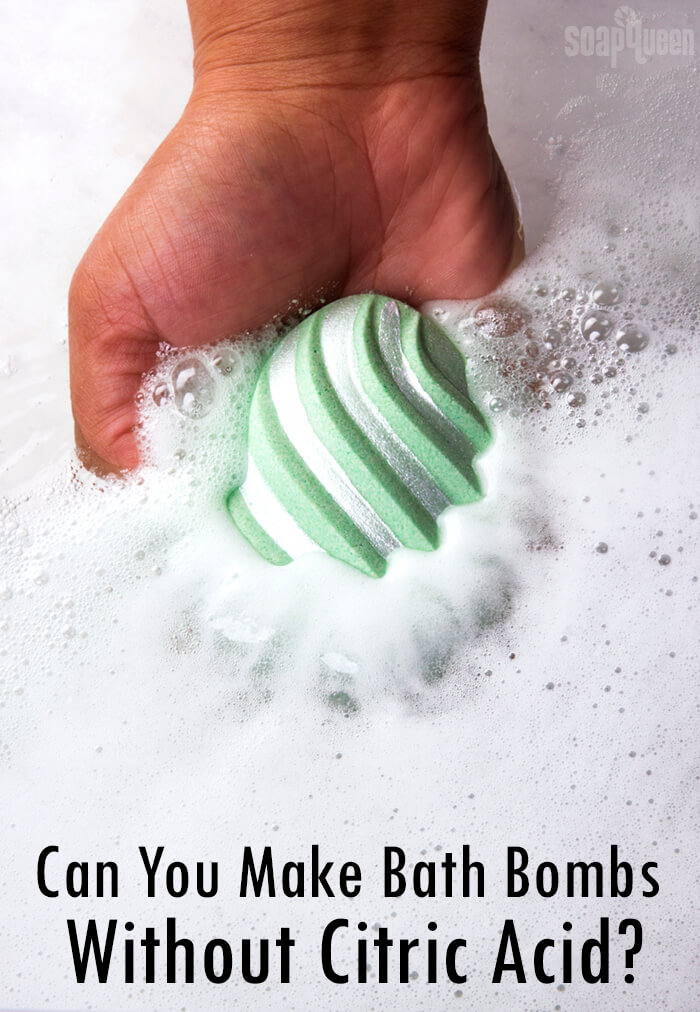
Citric acid and baking soda (aka sodium bicarbonate) are the two main ingredients in bath bombs. That combination creates the fun fizzy reaction when the bath bomb is introduced to water. Additional ingredients can be added, such as oils, fragrance, color, glitter, and more. Then the mixture is molded into fun shapes.

But, at the core, bath bombs are baking soda and citric acid. The most common bath bomb recipe is 2 parts baking soda to 1 part citric acid. Citric acid is a mild preservative that’s often used in canning and other applications like candy making. It can be a little tricky to find in stores, which is why some recipes call for substitutions. So, can you make bath bombs without citric acid?

In the Soap Queen TV video above, three experiments are conducted to see how bath bombs fizz without citric acid. The ingredients tested are lemon juice, cream of tartar, and cornstarch. Do they create fizz in the tub? The combination of lemon juice and baking soda created very little fizz. Cream of tartar bath bombs created a little more fizz, but not much. Cornstarch bath bombs had no fizz, and created a gloppy texture in the water.

The combination of citric acid and baking soda produce the best, most fizzy bath bomb. Head over to the Bath Bomb Questions and Answers post for more tips and tricks. Can’t find your answer there? Be sure to search the comments; with more than 400 comments and counting, your question may have already been answered! 😉 The “recipes” for the bath bombs tested in the video are below, although we don’t really recommend them.

Lemon Juice Bath Bomb:
1 cup baking soda
Lemon juice (until moldable texture)

Cream of Tartar Bath Bomb:
1 cup baking soda
1/2 cup cream of tartar
Witch hazel (until moldable texture)

Cornstarch Bath Bomb:
1 cup baking soda
1/2 cup cornstarch
Witch hazel (until moldable texture)

If you’d like a variety of tried-and-true bath bomb recipes that include citric acid and have plenty of fizz, check out the Bath Bomb category page. 

You may also like these

Become an email subscriber

Enter your email address below and you will receive all our new posts directly in your email inbox.

  1. Hai I’m from Indonesia. My question is , is citric acid necessary for liquid soap making? If so, what is the measurement? i find my ph usually around 9. Thank you 🙂

    1. We have not tried that before so I’m not 100% sure. I would be interested to see how the vinegar affects the fizz reaction of the bath bombs.

    1. It depends on your area and the humidity. You will want to add the lemon juice until the bath bombs are a moldable texture.

    1. Since there is a lot of excess moisture in the freezer we don’t recommend putting bath bombs in the freezer.

  2. Really nice!! DIY bath bombs are always appreciated to me without any toxic chemicals like citric acid. “I couldn’t but I think I can now” – thanks for sharing….

    1. We got the best results with citric acid, which is skin safe and heavily diluted in the bath water. We didn’t have a lot of luck with the other options.

    1. It depends on your environment and recipe. After all the ingredients are combined, squeeze the mixture in your hand. It should feel like wet sand and hold its shape when squeezed. If it does, it’s ready to mold. If not, spritz with witch hazel and mix with your hand until it’s the right consistency.

      You can see that process in this video: https://www.youtube.com/watch?v=8bjpsQXt6NU

      Witch hazel: https://www.brambleberry.com/Witch-Hazel-P4212.aspx

  3. Can I use pickling salt in place of citric acid? Are they the same salt only different names?

  4. Acid + carbonate reaction

    Find a powdered acid as strong as, or stronger than citric acid (pH 3.24)

    I propose Tartaric acid (pH 3.18)

    1. I believe tartaric acid is also known as cream of tartar. We gave that one a try without a lot of luck. You can definitely give it a try and see what you think though.

      -Kelsey with Bramble Berry

      1. Cream of tartar is actually a salt of tartaric acid – ie an acid that has already undergone it’s acid/base reaction (acid + base -> salt + water). The reason you didn’t have much luck was because there was no acid left to react with your baking soda.

  5. Hi please can i use real egg white for the frosting in cupcake bath bomb because i cant find the powder eeg white i try to use it but it dosent hold the shape what i can do ????

    1. Meringue powder is a mix of several ingredients like egg whites, sugar, cream of tartar, etc. It does work differently than regular egg whites. You may check your grocery store in the baking aisle, or search online. It works best in the cupcake recipe.

      -Kelsey with Bramble Berry

      Bath Bomb Cupcakes: https://www.youtube.com/watch?v=WBvC1RnWqrE&t=123s

  6. The way a bath bomb works in terms of fizzing is a reaction between an acid and a base. The citric is acid, and the baking soda is base. The reason the ratio works is due to the fact that citric acid loses 2 protons effectively (the “acid” component of the chemical) and baking soda can accept 1 of these protons. The ratio that reacts completely, therefore, is 1 citric to 2 baking soda.

    The fizz is due to the release of carbon dioxide upon the progression of the acid/base reaction. This carbon dioxide gas is from the baking soda (sodium bicarbonate).

    The reason the citric and baking soda work so well is due to the high acidity of the citric versus cream of tartar or cornstarch. The reason citric works better than lemon juice is a couple of reasons. 1. The acid/base reaction is only possible in water (hence why the bombs activate when wet). The fact that citric acid crystals versus lemon juice (whcih is just citric acid dissolved in water) work is because the reaction starts due to the water in the lemon.
    2. The citric acid in lemon juice is dilute, so you are left with some reactants (baking soda) and some of the “fizz” therefore is not produced.

    In order to replace the citric acid and maintain the properties of a traditional bath bomb, a dry acid would need to be used that has a similar acidity. Based upon how many protons the acid will release, the ratio of the citric to baking soda might need to be adjusted.

    Hope this helps. I’m a PhD chemist and I love juxtaposing my love of chemistry with my bath product production 🙂

    1. Thanks for sharing! Creating handmade products is the perfect mix of science and art. 🙂

      -Kelsey with Bramble Berry

    2. Great explanation! Love the science.
      Thank you for taking the time 🙂

Comments are closed.

{"email":"Email address invalid","url":"Website address invalid","required":"Required field missing"}

The Latest from Soap Queen TV

Inspired by Gems & Crystals

All About Essential Oils

The Power of Charcoal

Create Your Own Clay Face Mask

DIY Bath Bombs

Cold Process Soap Tips & Tricks

Learn the Basics of Cold Process Soapmaking

Learn the Basics of Melt & Pour Soapmaking

Want to Start Your Own Soap Business?

Soap Business Success Stories

Soap Queen TV Favorites

Ingredient Spotlight

Disclosure

Unless stated otherwise, all images are original material and are copyrighted. If you'd like to use an image, please be a friend and credit the photo and link back to Soap Queen. Feel free to share, tweet and pin to your hearts content.