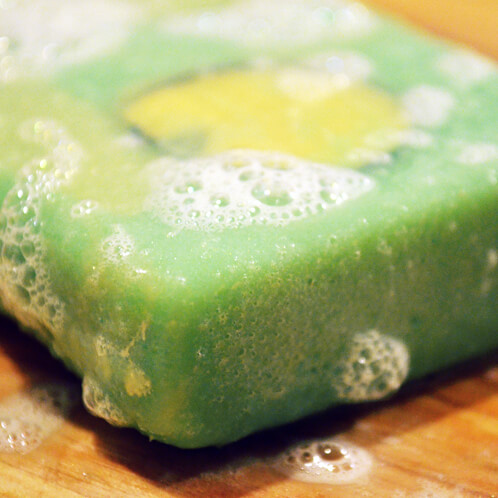





Today’s tutorials comes to you from one of my favorite soapmakers, Kenna from Modern Soapmaking. Her soaps always have unique designs, ingredients and colors. She is consistently pushing the soaping envelope. This recipe is particularly intriguing because it breaks a few conventional soaping “rules.”
There are a lot of “rules” of soap making that get spread around like wildfire, and for the most part, they are true…
But not always! 100% coconut oil soap defies not one, not two, but THREE of the soapmaking rules I’ve heard from other soap makers in the past:
- Single oil soaps do not perform as well as synergistic formulas with multiple oils.
- Using over 30-40% coconut oil in a soap recipe is too drying for the skin.
- Superfatting above 10% will leave too many free oils and cause the soap to spoil or develop DOS.
What’s the magic soap recipe?
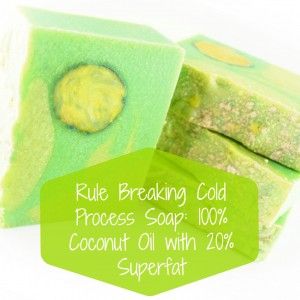
I hit the workshop to make a 100% coconut oil soap with a 20% superfat, an amazingly luxurious formula that is one of my all time favorites. Plus, I power-packed it with goodies, too, like coconut flour and aloe vera juice, and pulled out a mantra swirl with an embed.
Coconut oil has great shelf life and stability, so it’s the perfect oil for extreme superfatting. This coconut oil soap formula results in a rock hard bar, with luscious lather, without drying the skin out. Ready to give it a shot? Let’s do this thing.
Recipe
36 oz Coconut Oil
5.18 oz Lye (Sodium Hydroxide)
10.53 oz chilled Aloe Vera Liquid
1.5 oz Fragrance Oil (optional)
2 tsp Coconut Flour (optional)
Soap balls for embeds (optional)
2 teaspoons of Mica (optional)
Silicone Loaf Mold
a 5 quart bucket
a 2-cup measuring cup with spout
three 4-cup measuring cups with spouts
a piece of cardboard cut to fit in the mold
Bamboo Skewer
Spatula
Stick Blender
Get Down to Business:
This tutorial assumes you are an experienced soap maker. If you’ve never made Cold Process soap before, stop here! I highly recommend checking out our FREE four part SoapQueen.tv series on Cold Process Soapmaking, especially the episode on lye safety. And if you’d rather do some reading, Bramble Berry carries a wide range of books on the topic, including my newest book, Soap Crafting. You can also checkout the digital downloads for that instant gratification factor.
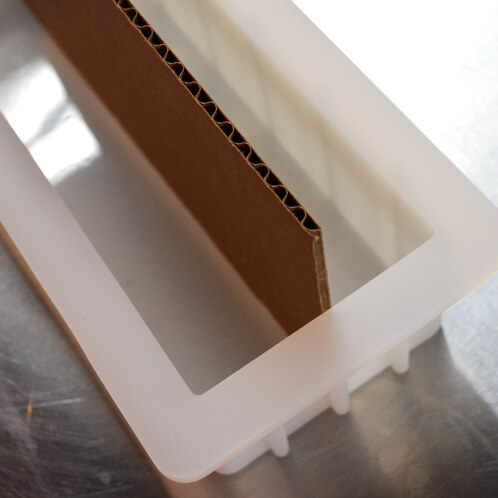
ONE: Prepare your mold by lining it, if necessary. Cut out a piece of cardboard that fits length and height-wise into your mold snugly. Place the piece of cardboard down the center of the mold to divide the mold in half lengthwise.
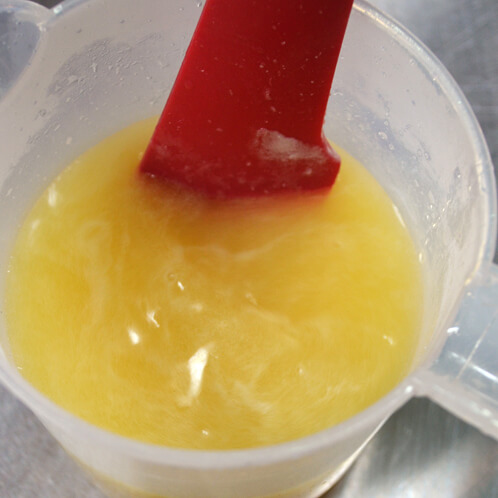
TWO: Prepare your lye solution by slowly pouring the sodium hydroxide into the chilled aloe vera juice, stirring until the lye has dissolved. The aloe vera will turn a mustard yellow color, like pictured to the right. Allow to cool.
THREE: Heat your coconut oil to about 120° to 130° F. You want to soap this formula hot (I usually soap at room temperature), soaping coconut oil at too low of a temperature will increase your chances of false trace. I add my fragrance to my oils before my lye solution so I don’t forget it later on.
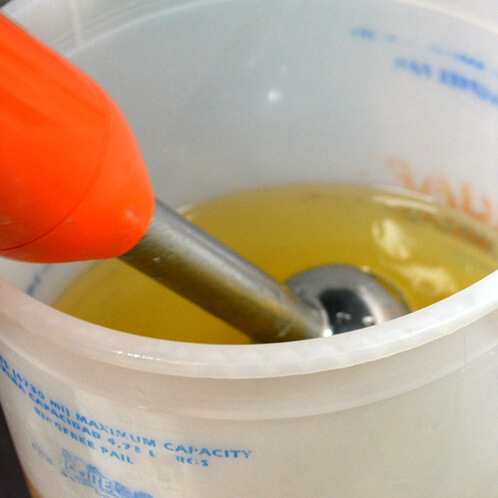
FOUR: Prepare two containers with mica for coloring the soap halves. I use 1 tsp of mica and 1 tsp of coconut flour per container, with 2 tsp of base oils for each container from my main soaping pot. Using a frother, I thoroughly mix the mica and coconut flour with the oils.
FIVE: Combine half of your lye solution with your coconut oil, and stick blend thoroughly. Add the remaining half of your lye solution, and stick blend only until emulsified. I always refrain from over-mixing – bringing your soap to an emulsion first, and then adding anything extra allows you more time to focus on what is happening with the soap.
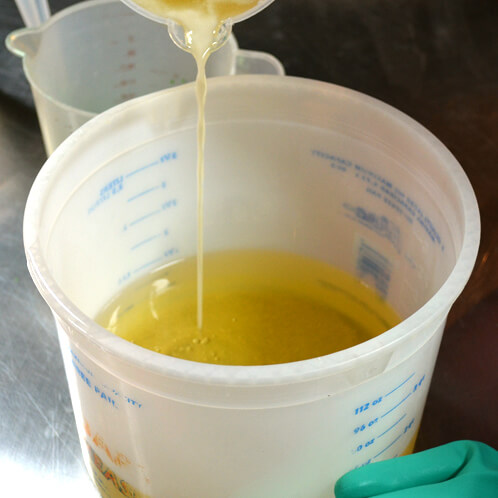
SIX: Split the batch of coconut oil soap between your two containers and thoroughly mix with a spatula. If you are still at a barely emulsified or very light trace, bring the coconut oil soap in each container to a medium trace using your stick blender. A medium trace is my favorite pour viscosity for a mantra.
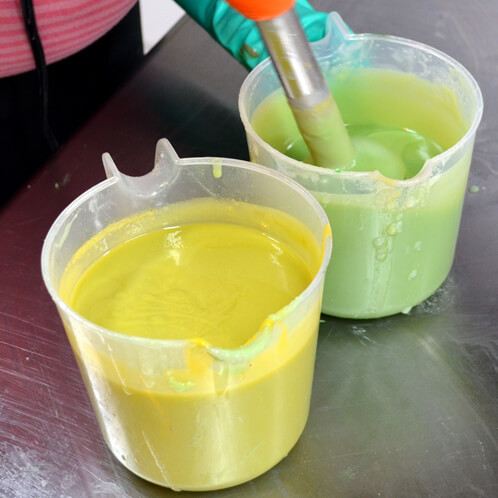
SEVEN: When your mica and coconut flour are thoroughly mixed into each part, begin your pour. I pour both halves at the same time so that there is equal force and weight on each side of the cardboard divider. You can also use two more pieces of cardboard on the ends of your mold with notches cutout to hold the divider in place.
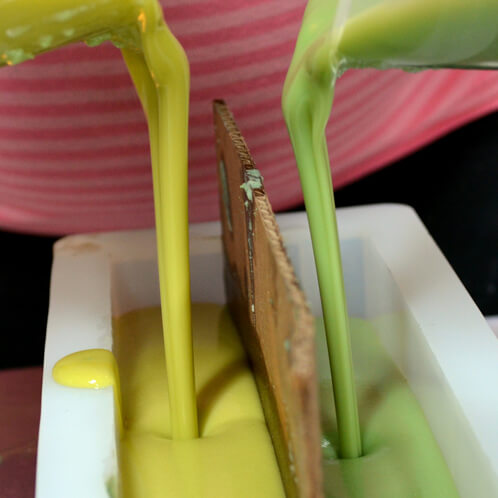
EIGHT: Once both halves are poured, carefully and slowly pull your cardboard divider straight up out of the mold. If you are embedding soap balls, use a bamboo skewer to push them down into the soap. Or place them mid-way through pouring.
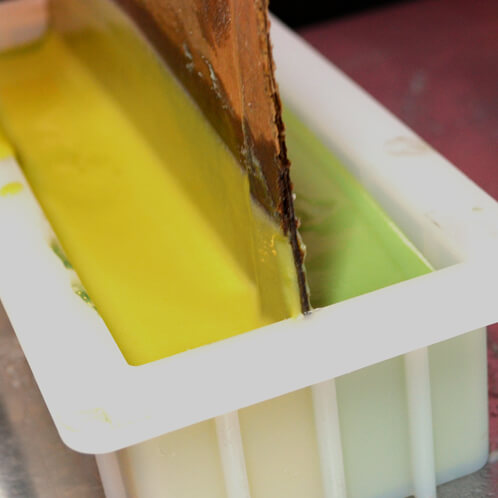
NINE: Using a bamboo skewer (or chopstick, or your personal weapon of choice!), swirl the mantra. Pushing the skewer down into the mold all the way to the bottom will swirl both sides of your soap. If you only put the end of the skewer into the soap, you can swirl just the top, leaving a crisp line between the two halves in the bars.
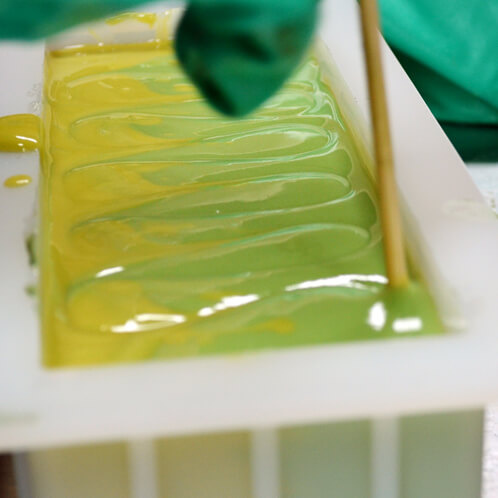
TEN: Put the pretty soap to sleep. I do not insulate coconut oil soap, but you can if you want to (same with CPOPing.) Unmold and cut the coconut oil soap as soon as it has hardened up. It sets up real hard, and real quick! You’ll want to clean up the bars of coconut oil soap straight out of the mold, such as beveling or planing – this soap will be a brick in 24 hours flat. The lather is really creamy and luscious straight out of the mold, and just gets better and better as it ages.