




• November 13, 2017

Orange Spice Hot Process Soap Tutorial

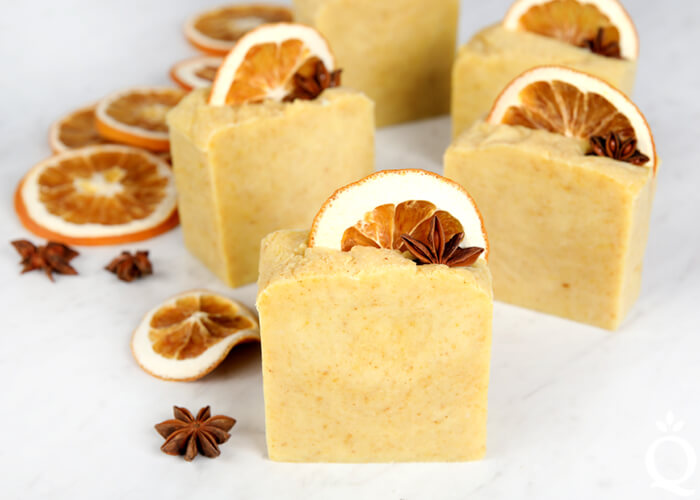
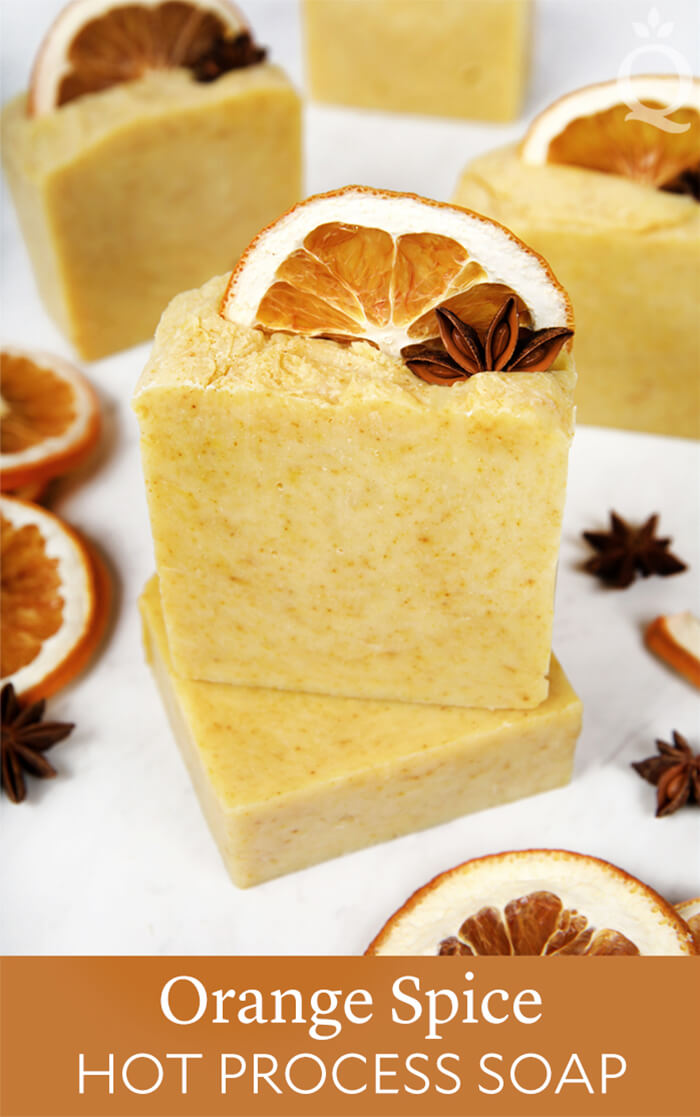
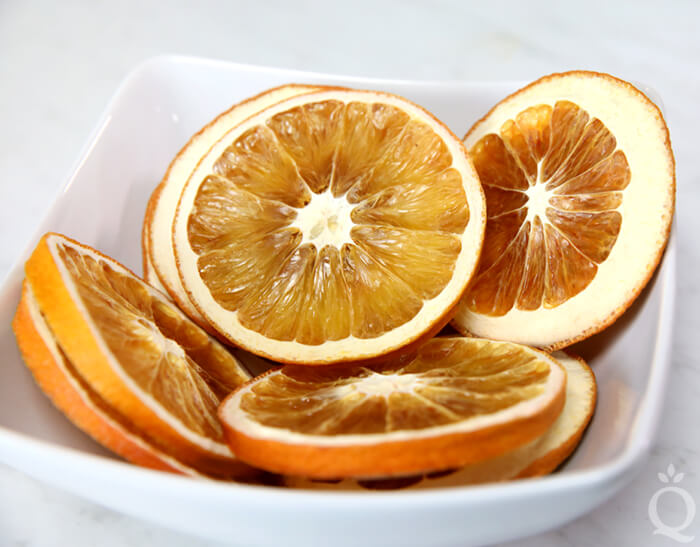
We love making things from scratch. That love of DIY inspired this Orange Spice Hot Process Soap, complete with homemade dried orange slices. The slices were created in a dehydrator as a perfect accent for this holiday project.

It’s scented with a combination of Orange 10X Essential Oil and cinnamon leaf essential oil, which makes the bars smell like a delicious holiday treat. Orange peel powder adds texture and a touch of color.
Orange Spice Hot Process Soap

Unfamiliar with hot process soapmaking? The main difference between hot process and cold process soap is that hot process is cooked, which speeds up the saponification process. This results in soap that can be cut within 24 hours and enjoyed the same day. It’s the perfect project if you need to make last-minute gifts. Learn more in this Lemongrass and Lavender Hot Process Soap video on Soap Queen TV.

To create the dried oranges, we used a process very similar to this tutorial. After about 12 hours in the dehydrator, the orange slices are a hard texture perfect for topping soap. They are purely for decoration and can be left out if you prefer. Oranges are natural items that can wilt or even mold if left in the shower long enough.
FIFTEEN

What You Need:
2 lb. Wood Loaf Mold
Silicone Liner for 2 lb. Wood Mold
22 oz. Lots of Lather Quick Mix
3.2 oz. Sodium Hydroxide Lye
7.3 oz. Distilled Water
0.7 oz. Sodium Lactate
0.7 oz. Orange 10X Essential Oil
0.3 oz. Cinnamon Leaf Essential Oil
1 Tbsp. Orange Peel Powder
Anise Stars
Dried Orange Slices

Click here to add everything you need for this project to your Bramble Berry shopping cart!

If you’ve never made hot process soap before, stop here. Check out our FREE four part SoapQueen.tv series on cold process soapmaking, especially the episode on lye safety. Bramble Berry also carries a wide range of books on the topic, including Pure Soapmaking.

FRAGRANCE PREP: Measure 0.7 ounces of Orange 10X Essential Oil and 0.3 oz. cinnamon leaf essential oil into a small glass container and set aside.

SAFETY FIRST: Suit up for safe handling practices. That means goggles, gloves, and long sleeves. Make sure kids, pets, other distractions, and tripping hazards are out of the house or don’t have access to your soaping space. Always soap in a well-ventilated area.

ONE: Slowly and carefully add the lye to the water and gently stir until the lye has fully dissolved and the liquid is clear. Set aside to cool. Once cooled to about 130 °F , add the sodium lactate to the lye water. Sodium lactate is used in hot process at 3% of the oil weight to help produce a smoother bar.

TWO: Fully melt the entire bag of Lots of Lather Quick Mix until it’s completely clear and there’s no cloudiness. Shake the bag to mix up all the oils. Measure 22 oz. into your Crock-Pot and turn it on.
NOTE: The heat setting you use may vary depending on your cooking vessel. We have cooked hot process soap on low and high heat with equally good results. For this recipe, we used the high heat setting for a faster cook time. If you’re making hot process soap in your cooking vessel for the first time, start with the low setting. Next time try the high setting and see which you prefer. 

THREE: Slowly add the lye water to the oils. Make sure the mixture does not fill up more than half of the pot or cooking vessel. Tap the stick blender on the bottom of the pot to release air bubbles and begin to blend.

ONE

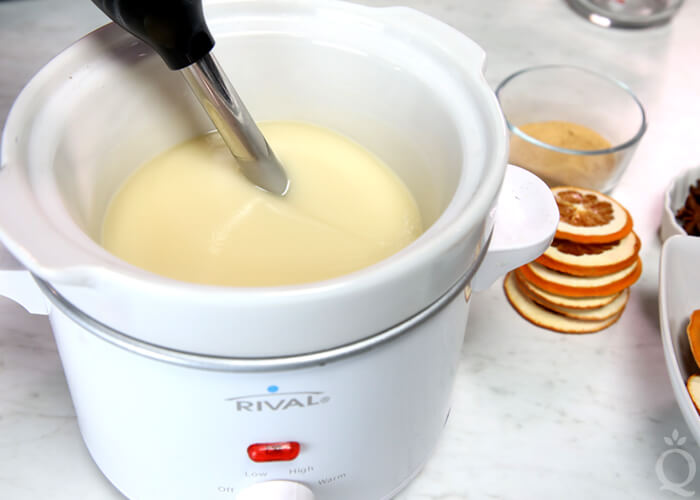
FOUR: Mix with a stick blender until a thick trace is achieved.

TWO

FIVE: Put the lid on the Crock-Pot and allow the soap to start cooking.

THREE

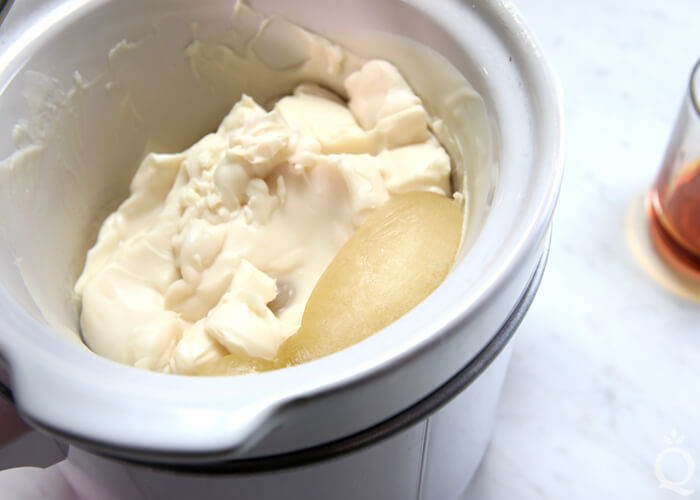
After about 10 minutes, check the soap to see the progress made. Starting from the outside, the texture and color of the soap will start to change into a glossy, slightly Vaseline-like texture (shown below).
NOTE: Don’t be surprised if the soap starts to grow in volume. Do not leave your soap unattended in the first 10 minutes of cook time for this reason. If the soap gets too high in the pot, wearing gloves, take the pot off heat and stir like crazy.

FOUR

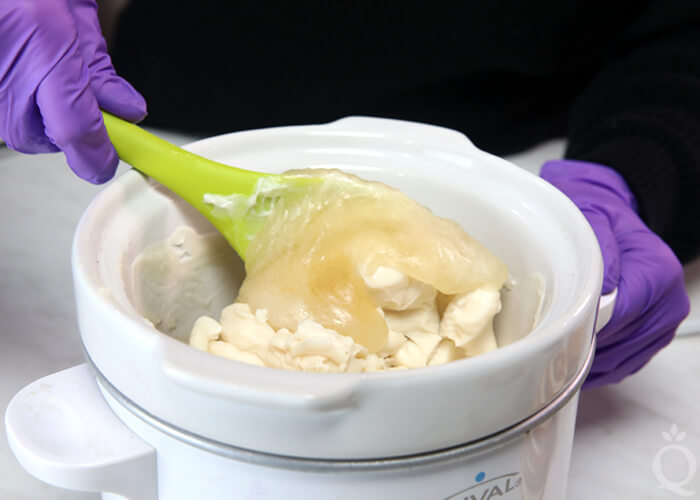
SIX: Stir the batch to ensure even cooking. Place the lid back on the pot and allow it to cook for about another 7-10 minutes.

FIVE

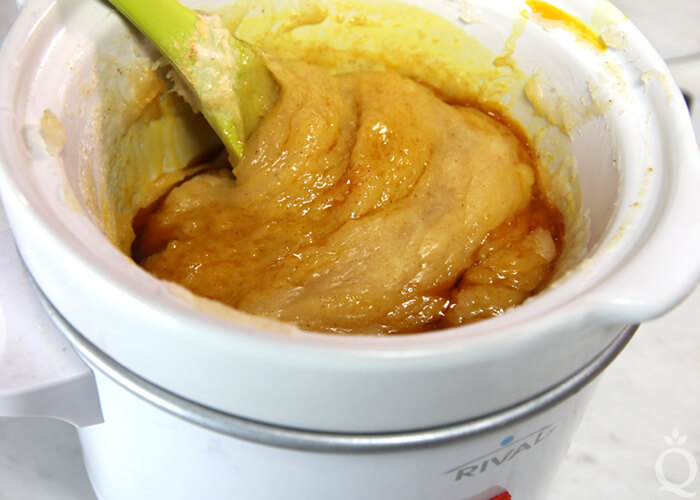
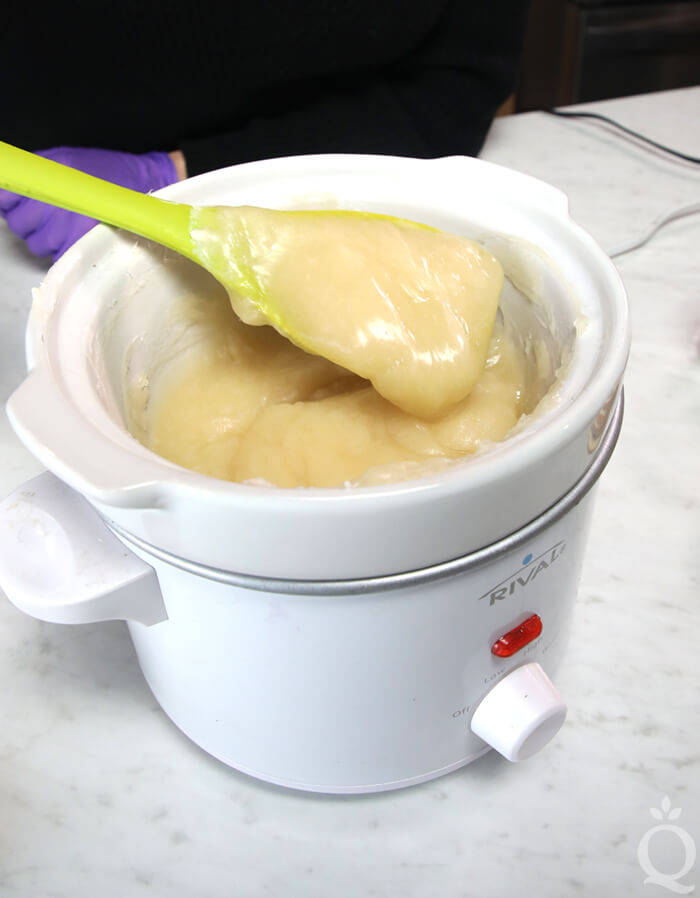
SEVEN: The batch will be ready when it’s the texture of glossy mashed potatoes. This may take up to three more 5-10 minute sessions. When you think it’s ready, use a pH strip to test the levels. Place a small amount of the soap into a cup of distilled water and stir. Dip the pH strip into the water – it should be below 10. Be sure not to overcook the soap, you don’t want it too dry for the next steps.

SIX

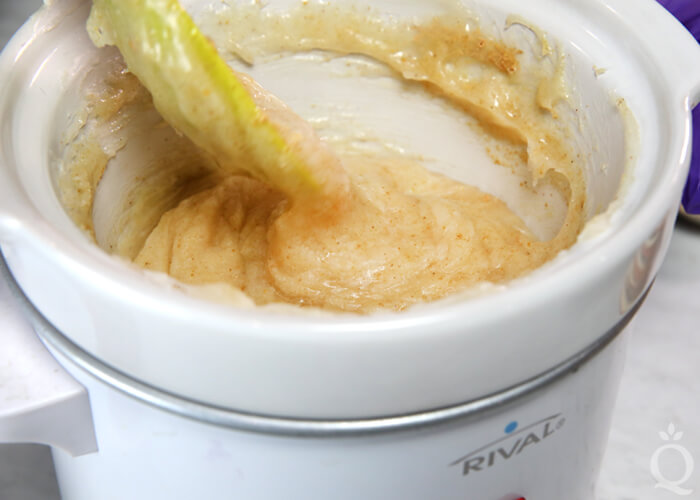
EIGHT: Add 1 tablespoon of orange peel powder directly to the soap batter and stir to get rid of any clumps.

SEVEN

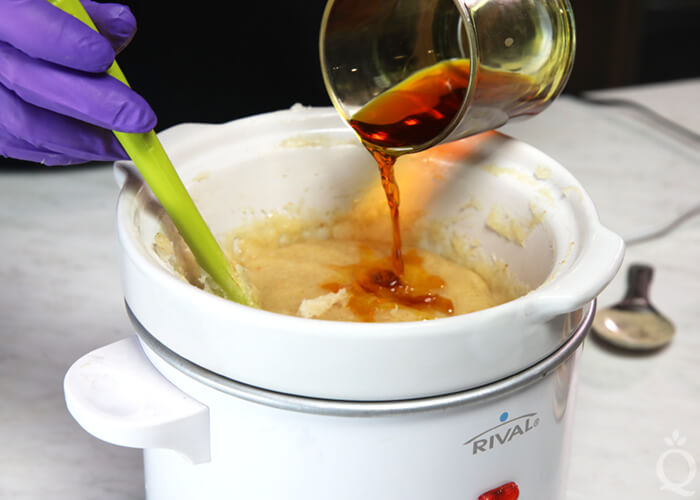
NINE: Add the essential oil blend to the soap and gently stir until fully incorporated.

EIGHTNINE

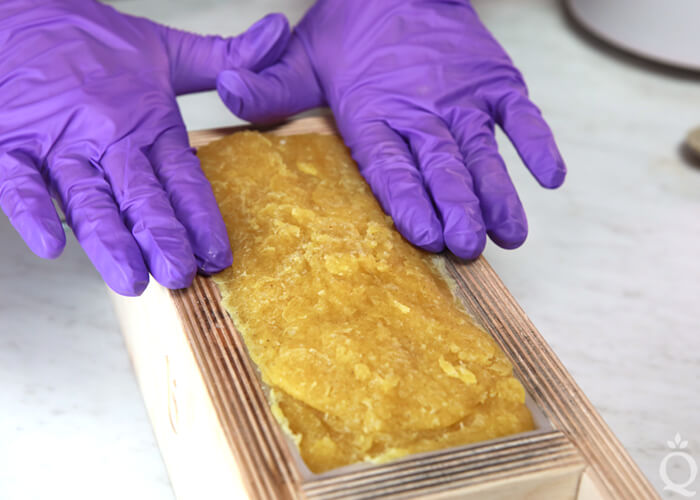
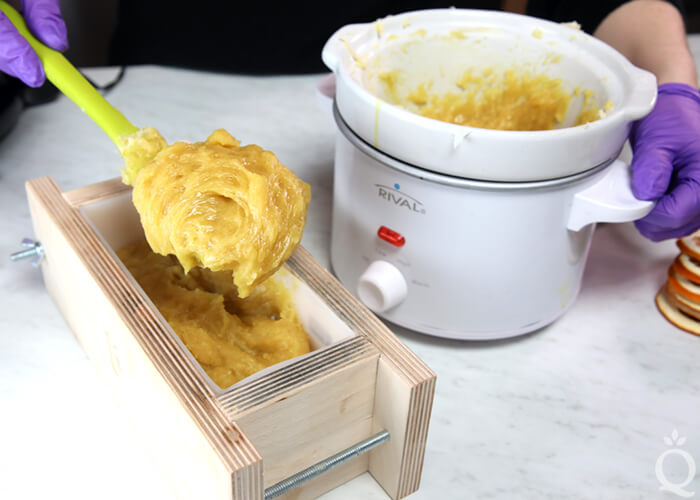
TEN: Working quickly, spoon the soap into the mold. Tap the mold on the counter firmly to help it settle. Once all the soap is in the mold, use a spoon or gloved hands to smooth the top.

TENELEVEN

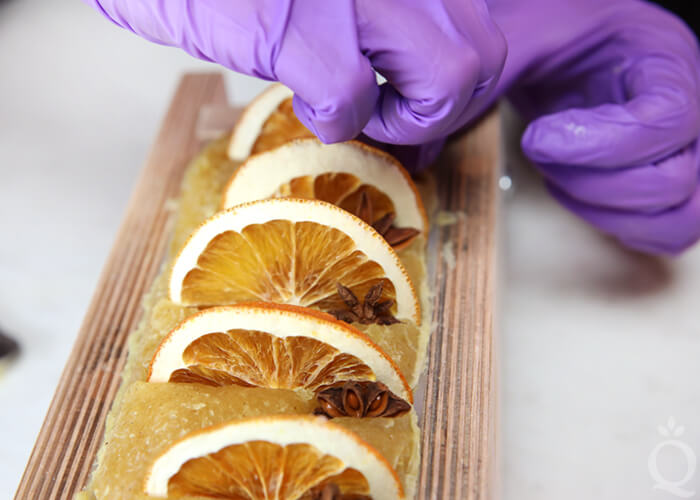
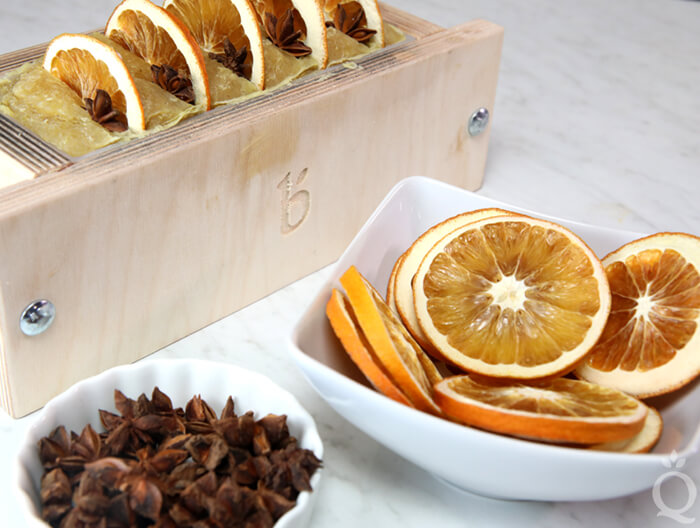
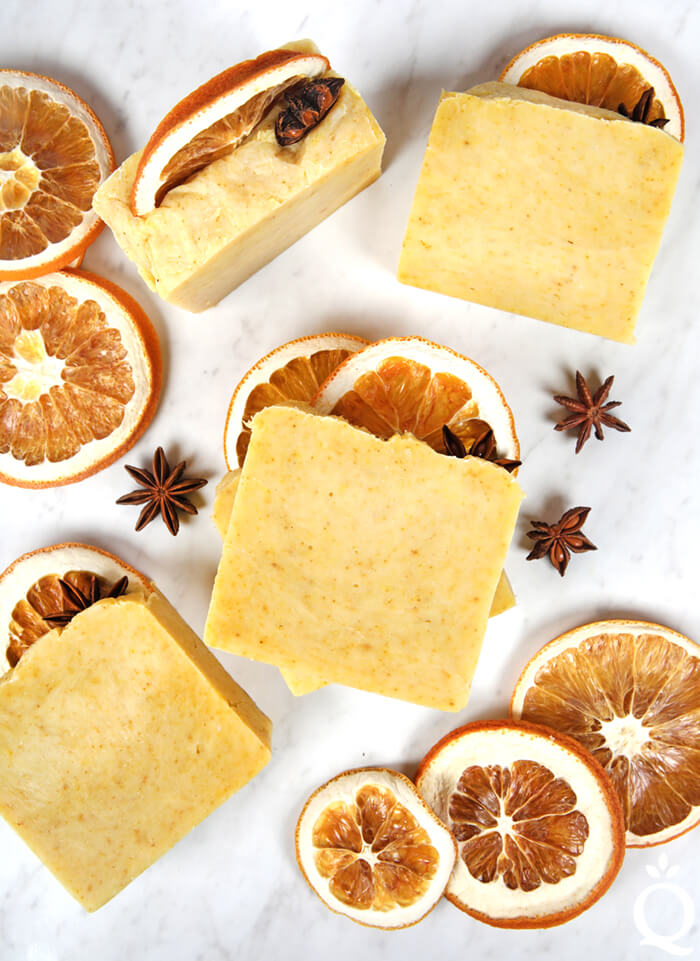
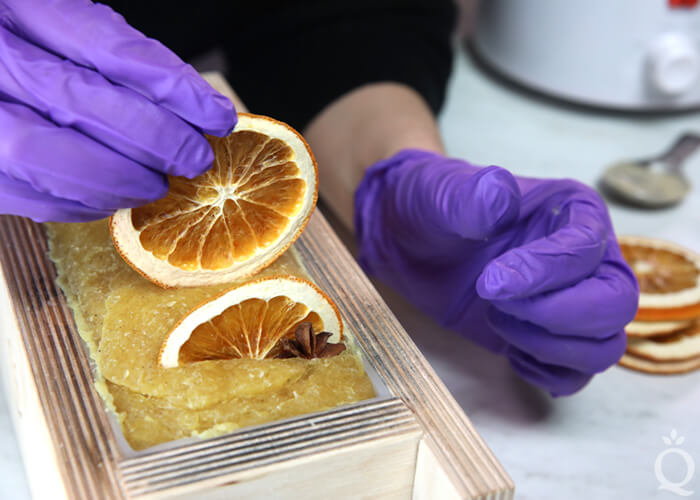
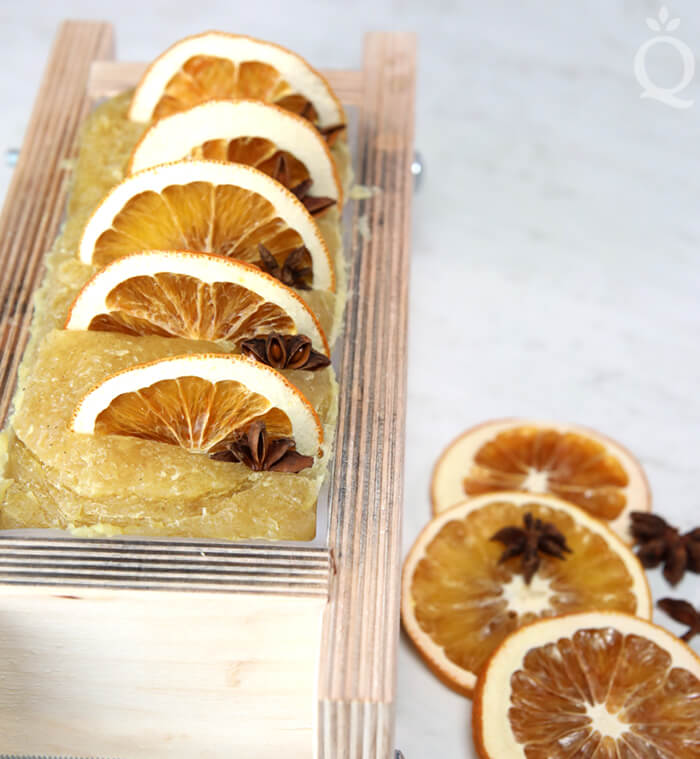
ELEVEN: Insert dried orange slices into the top of the soap. Space them out according to how large you’d like the bar to be. We fit five into the loaf and spaced them to be cut behind the orange slices. Then, insert an anise star directly in front of the orange. Continue this process until the loaf is full.

TWELVETHIRTEEN

TWELVE: Allow the soap to stay in the mold for at least 24 hours. Unmold and cut into bars. This soap is ready to use right away, but will last longer in the shower after at least a 2 week cure time.

FOURTEEN

SIXTEENOrange Spice Hot Process Soap DIY


Orange Spice Hot Process Soap Tutorial

Soap Queen
This easy hot process soap can be made just in time for the holidays.
Cook Time 2 hours
Total Time 2 hours
Recipe type Hot Process Soap
Makes 2 pounds of soap

Ingredients
  

  • 2 lb. Wood Loaf Mold
  • Silicone Liner for 2 lb. Wood Mold
  • 22 oz. Lots of Lather Quick Mix
  • 3.2 oz. Sodium Hydroxide Lye
  • 7.3 oz. Distilled Water
  • 0.7 oz. Sodium Lactate
  • 0.7 oz. Orange 10X Essential Oil
  • 0.3 oz. Cinnamon Leaf Essential Oil
  • 1 Tbsp. Orange Peel Powder
  • Anise Stars
  • Dried Orange Slices

Instructions
 

FRAGRANCE PREP: Measure 0.7 ounces of Orange 10X Essential Oil and 0.3 oz. cinnamon leaf essential oil into a small glass container and set aside.

    SAFETY FIRST: Suit up for safe handling practices. That means goggles, gloves, and long sleeves. Make sure kids, pets, other distractions, and tripping hazards are out of the house or don’t have access to your soaping space. Always soap in a well-ventilated area.

    • Slowly and carefully add the lye to the water and gently stir until the lye has fully dissolved and the liquid is clear. Set aside to cool. Once cooled to about 130 °F , add the sodium lactate to the lye water. Sodium lactate is used in hot process at 3% of the oil weight to help produce a smoother bar.
    • Fully melt the entire bag of Lots of Lather Quick Mix until it’s completely clear and there’s no cloudiness. Shake the bag to mix up all the oils. Measure 22 oz. into your Crock-Pot and turn it on. NOTE: The heat setting you use may vary depending on your cooking vessel. We have cooked hot process soap on low and high heat with equally good results. For this recipe, we used the high heat setting for a faster cook time. If you’re making hot process soap in your cooking vessel for the first time, start with the low setting. Next time try the high setting and see which you prefer.
    • Slowly add the lye water to the oils. Make sure the mixture does not fill up more than half of the pot or cooking vessel. Tap the stick blender on the bottom of the pot to release air bubbles and begin to blend.
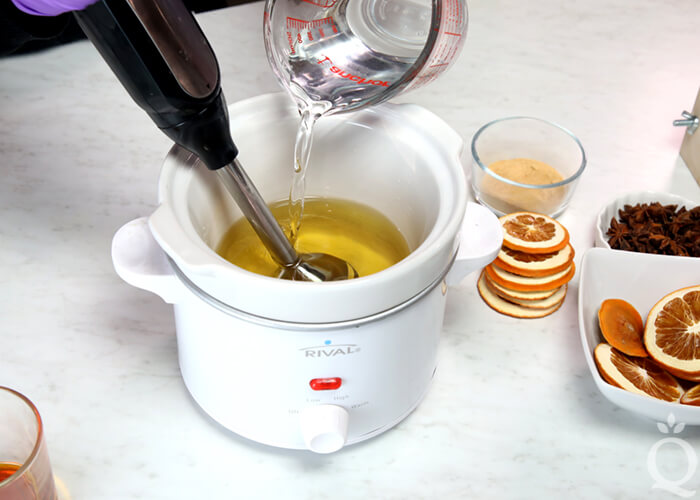
    • Mix with a stick blender until a thick trace is achieved.
    • Put the lid on the Crock-Pot and allow the soap to start cooking. After about 10 minutes, check the soap to see the progress made. Starting from the outside, the texture and color of the soap will start to change into a glossy, slightly Vaseline-like texture (shown below). NOTE: Don’t be surprised if the soap starts to grow in volume. Do not leave your soap unattended in the first 10 minutes of cook time for this reason. If the soap gets too high in the pot, wearing gloves, take the pot off heat and stir like crazy.
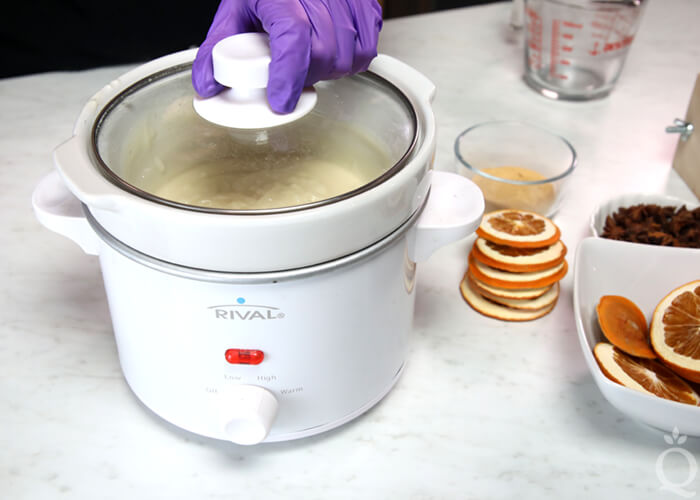
    • Stir the batch to ensure even cooking. Place the lid back on the pot and allow it to cook for about another 7-10 minutes.
    • The batch will be ready when it’s the texture of glossy mashed potatoes. This may take up to three more 5-10 minute sessions. When you think it’s ready, use a pH strip to test the levels. Place a small amount of the soap into a cup of distilled water and stir. Dip the pH strip into the water – it should be below 10. Be sure not to overcook the soap, you don’t want it too dry for the next steps.
    • Add 1 tablespoon of orange peel powder directly to the soap batter and stir to get rid of any clumps.
    • Add the essential oil blend to the soap and gently stir until fully incorporated.
    • Working quickly, spoon the soap into the mold. Tap the mold on the counter firmly to help it settle. Once all the soap is in the mold, use a spoon or gloved hands to smooth the top.
    • Insert dried orange slices into the top of the soap. Space them out according to how large you’d like the bar to be. We fit five into the loaf and spaced them to be cut behind the orange slices. Then, insert an anise star directly in front of the orange. Continue this process until the loaf is full.
    • Allow the soap to stay in the mold for at least 24 hours. Unmold and cut into bars. This soap is ready to use right away, but will last longer in the shower after at least a 2 week cure time.
    Tried this recipe?Let us know how it was!


    You may also like these

    Become an email subscriber

    Enter your email address below and you will receive all our new posts directly in your email inbox.

    1. 5 stars
      This was a great recipe for my first time making hot process soap. My house smells fantastic! Everything went perfectly and the end product is wonderful — my daughters love the scent and the lovely lather. I will definitely be making this again!

    2. Hi!
      I used the Lavendar and Lemongrass recipe that is linked for the YouTube channel. I made the soap and after it as shiny, I used 2 tablespoons of sweet almond oil to mix mica in at the end. The soap was made 4 days ago and is still soft and oily. How do I recover the soap? Heat it again? Heat it and add more lye water?

      1. You can find slow cookers online, at grocery stores in the kitchen section, or sometimes at second-hand stores like Goodwill.

    3. 5 stars
      Hi! I just made the hot process soap for the first time and it turned out great! Can you use this same recipe for cold process? I’m a newbie and I’m not sure how the recipes work in cold process vs got process.
      Thank you!!!

      1. You can make this recipe using the cold process method. The main difference with cold process soap is you’ll be adding the essential oil and orange peel powder when the soap is first emulsified, rather than at the end of the process. It will also have a smoother appearance and will take about 3-5 days to unmold and cut, followed by 4-6 weeks of curing.

        This four-part series goes over how to get started making cold process soap: https://www.youtube.com/watch?v=yR6ttCSrLJI&list=PLAADF6209996265D2

        And this post has more resources including how to color and scent the soap: https://soapqueen.com/bramble-berry-news/beginning-soaper-resource-roundup/

    4. I am wanting to try a hot process soap… acutally trying the Luck of the Irish layered soap but commenting if off on that thread. I have coconut oil, olive pomace, a bit of jojoba, avocado and can get shea or cocoa butter. After reading about different oils, I wonder if this recipe would be okay? What would the characteristics of the soap likely be? I will add the sodium lactate per the recipe.

      Lye (Sodium Hydroxide) 4.60 oz
      Ounces of liquid 11.29 oz

      OILS & FATS
      Avocado Oil 4.30 oz 12.6 %
      Coconut Oil (92 Degrees) 8.50 oz 24.9 %
      Jojoba oil 1.70 oz 5.0 %
      Olive Oil (Pomace) 16.30 oz 47.7 %
      Shea Butter (Refined) 3.40 oz 9.9 %
      Total34.20 oz 100 %

      Thanks for any help!

      1. That recipe looks great, it will be really nice and moisturizing. It will be softer but because you’re hot processing it, the soap will be ready to cut after it sits overnight. If you prefer big fluffy bubbles versus creamy, smaller lather, you can add castor oil at 2-5%. You can reduce the olive oil to make up for that addition.

        Learn more about castor oil here: https://soapqueen.com/bath-and-body-tutorials/tips-and-tricks/sunday-night-spotlight-castor-oil/

        If you do make any substitutions, make sure to run your recipe through the Lye Calculator again: https://www.brambleberry.com/Pages/Lye-Calculator.aspx

    5. Perfect timing for this post. I’ve got a CP with Orange 10x with Orange Peel Powder & the Citrus Slices as toppers on the curing rack right now. All made with Bramble Berry products & made in my BB 10” Mold. I just bought a crockpot last week to try my hand at HP. Since I already have all the Bramble Berry ingredients (except using my own recipe), I think this soap would be perfect for my first attempt at HP. Thanks for the fabulous tutorial!

      1. The Citrus Slice toppers are from the Bramble Berry Wax Tart Mold. I think I will use that mold again with some MP since I don’t have a dehydrator for the actual orange slices.

        1. 5 stars
          Thanks Kelsey! I made this w/ Valencia Orange EO w/ my own recipe but the soap split in the middle when I unmold it. How do I prevent this next time? Thank you!

          1. Did you put any mica in between your layers? That can sometimes cause splitting. Hot process soap can also split if it gets overcooked. Did you notice the soap getting dry or flaky?

            1. There are a couple tricks to getting your melt and pour layers to stick.

              We recommend spritzing with 99% isopropyl alcohol right before the second layer is poured. If the alcohol is spritzed too early, it can evaporate. You want your layer covered with alcohol, but not completely soaked. Learn more about working with layers here: https://soapqueen.com/bath-and-body-tutorials/5-tips-layering-melt-pour/

              Read more about 99% isopropyl alcohol here: https://soapqueen.com/bramble-berry-news/sunday-night-spotlight-99-isopropyl-alcohol/

              Another way to help the layers stick is a nice sharp knife. I’ve found my layers separated on me when I used a dull knife, even with alcohol. I like using a sharp kitchen knife with a smooth blade.

              For the soap now, you can “glue” those layers back together with melt and pour. To do so, melt 1-2 ounces of clear soap on 5 second bursts. When it’s melted, brush a light layer on and gently press the separated soap on top. Let that harden for 1-2 hours. That should help your soap stick together.

    6. Hi

      Is it OK to hot process the cow milk soap recipe and do we also know it is done when it becomes like “mashed potatoes “? I could not leave this comment there and I like that recipe. thank you very much for your help with this.

        1. Both actually bars to use instantly and body shampoo ( I call it body shampoo as I thought it differs from regular liquid soap.) Thank you so much!!

        2. Hi Kelsey
          I want to make bars and start using them sooner that’s why I asked if we can hot process the cow milk soap.
          I also was thinking if I could use the bar as a base to make body shampoo

          1. Hot processing milk soap can be tricky. Because the mixture will be heated for an extended period of time, it will scorch. That causes discoloration and an unpleasant smell. I would recommend a small test batch to see what you think. If you’re not a fan of that discoloration, you can use distilled water instead.

            1. Thank you Kelsey for your replies. If it’s only about discoloration that’s fine but if hot process would make hinder the quality thn I am not a fan. Should the cooking stop at a certain earlier point than other hp soaps?

      1. Thank you Kelsey. There are many recipes here that include Lots of Lather Quick Mix. What can you use as a substitute?

    7. 5 stars
      This recipe sounds fantastic! I prefer hot process over cold process due to limited space for curing. Let’s have more on hot process!!

    8. I’ve never done HP but keep saying I want to try it – I would have to throw some orange butter into it 🙂

    9. Wow this soap looks EXACTLY like my clove and orange soap right down to the design! Wondering where your inspiration came from…

      1. We recently got a dehydrator in the studio and experimented with drying oranges. Once we saw the finished product, we decided it would be a perfect complement to cinnamon and anise. We love the classic holiday combination of citrus and spice.

    10. Hi, everybody. While CP is my favorite and I do mostly CP soap, I absolutely do love HP, too and it had definite advantages over CP. I love that you don’t have to worry about glycerine rivers or soda ash and it is ready to use much sooner, even IF you allow some cure time. While I have not done this one, I love the orange 10X essential oil and have used it many times in soapqueen’s sunshine soap and it always sticks sooooo very well in CP soap. I highly recommend it.

    11. 1 star
      Hi,
      Is there a typo in the amount of Cinnamon Leaf EO’s you used for this recipe? Cinnamon Leaf & Bark EO’s both have a maximum usage rate of .5% for Category 9 Products which includes both HP & CP bar soap. Since most of the water will be cooked and/or evaporated off, and water isn’t used normally used in the EO’s maximum amount calculation since it would be very difficult to know how much final water would be in the cured HP or CP bars. It is usually advisable to calculate EO’s & FO’s based solely on PPO used in the recipe. This means you should be using no more than .11 oz Cinnamon EO’s in a recipe that contains 22 oz of oil. Your recipe contains almost 3 times that amount which would be very irritating to skin.

      1. We used the Rebatch setting on our Fragrance Calculator to find the usage rate for this recipe. It’s per pound of soap, which is what we use for our fragrance calculations: http://www.brambleberry.com/Pages/Fragrance-Calculator.aspx

        That usage rate is based on International Fragrance Association Guidelines. You can use less cinnamon essential oil or skip it entirely in this recipe if you like. People with sensitive skin may find it irritating, even with a safe usage rate. One of the advantages of making products from scratch is being able to choose exactly what goes in them.

    Comments are closed.

    {"email":"Email address invalid","url":"Website address invalid","required":"Required field missing"}

    The Latest from Soap Queen TV

    Inspired by Gems & Crystals

    All About Essential Oils

    The Power of Charcoal

    Create Your Own Clay Face Mask

    DIY Bath Bombs

    Cold Process Soap Tips & Tricks

    Learn the Basics of Cold Process Soapmaking

    Learn the Basics of Melt & Pour Soapmaking

    Want to Start Your Own Soap Business?

    Soap Business Success Stories

    Soap Queen TV Favorites

    Ingredient Spotlight

    Disclosure

    Unless stated otherwise, all images are original material and are copyrighted. If you'd like to use an image, please be a friend and credit the photo and link back to Soap Queen. Feel free to share, tweet and pin to your hearts content.