





Choosing a fragrance from all the fragrances out there is a big choice! There are sooooo many good ones =) One important factor to consider is fragrance discoloration. Some fragrance oils change the color of soap due to various components within the oil. The most common type of fragrance discoloration is vanilla discoloration, which changes the soap to a deep brown. Fragrance oils can also turn soap various shades of yellow, tan, and orange. Fragrance oil discoloration can dramatically change the colors created in soap, so it’s important to choose your fragrance oil (FO) wisely.
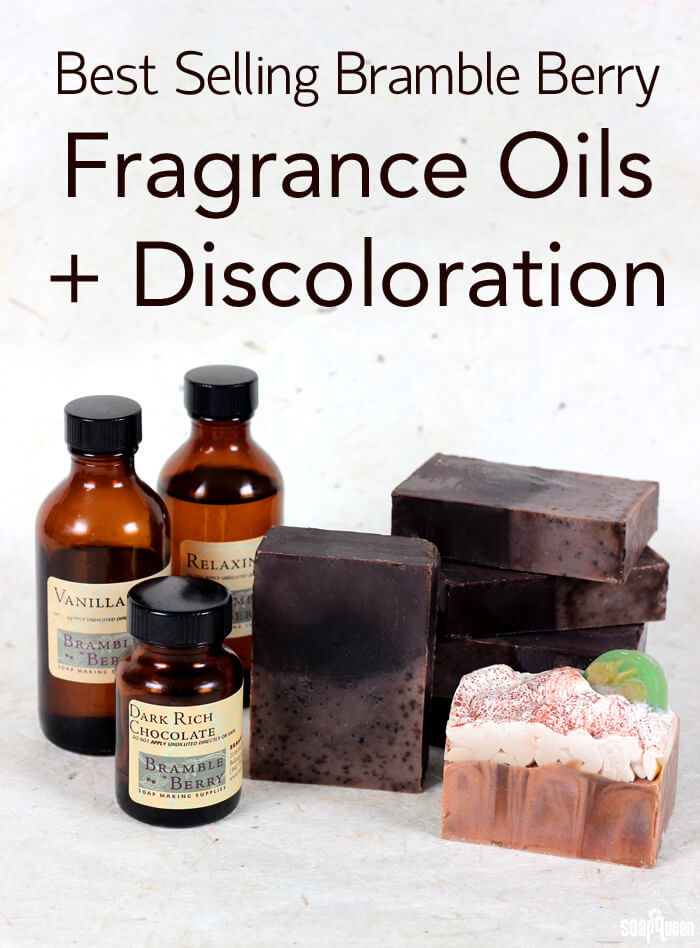
Vanilla discoloration is a natural occurrence. Fragrances containing vanilla notes are created with a component called vanillin, which is the primary component of the extract of vanilla bean. Vanillin is the organic compound that gives vanilla its flavor, and is widely used in fragrances to impart gourmand sweetness. The chemical nature of vanillin leads it to cause a darkening or browning, especially of white products. This effect also occurs with natural vanilla extract. The higher the level of vanillin within the fragrance oil, the more darkening will occur. Even fragrances with a small amount of vanillin content of .4% (such as Almond Fragrance Oil) will still cause slight discoloration.
Fragrance discoloration becomes noticeable in cold process soap within the first 24-48 hours. When soap begins to discolor, you may notice a darker ring of color on the outside of the soap. Vanilla discoloration is accelerated by light and air, known as oxidation. Once the soap is cut and light/air is able to reach the center, the discoloration will rapidly progress throughout the soap. The photo below is an example of the beginnings of vanilla discoloration starting from the outside, and working towards the center. (Bonus technical information: that crack at the very top of the soap that is barely detectible? That’s from heat. Soap that gets too hot expands and can crack down the middle.)
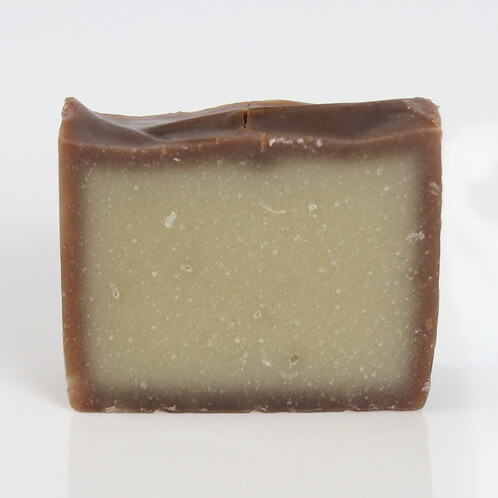 Vanilla discoloration is accelerated by contact with light and air. It is common to notice the discoloration on the outside of the soap first. Eventually, the discoloration will occur throughout the soap.
There are stabilizers for vanillin, such as the Vanilla Color Stabilizer for melt and pour, however they only delay the inevitable. Using a white colorant such as Titanium Dioxide can lighten discoloration, but eventually the soap will still darken over time. To learn more about vanilla discoloration, along with a list of fragrances containing vanillin, click here.
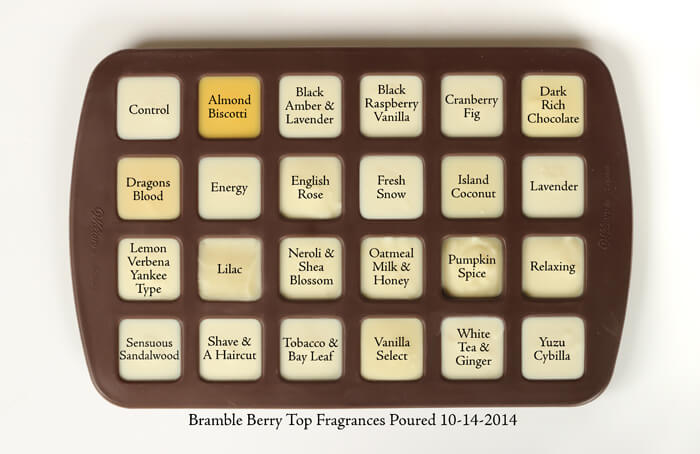
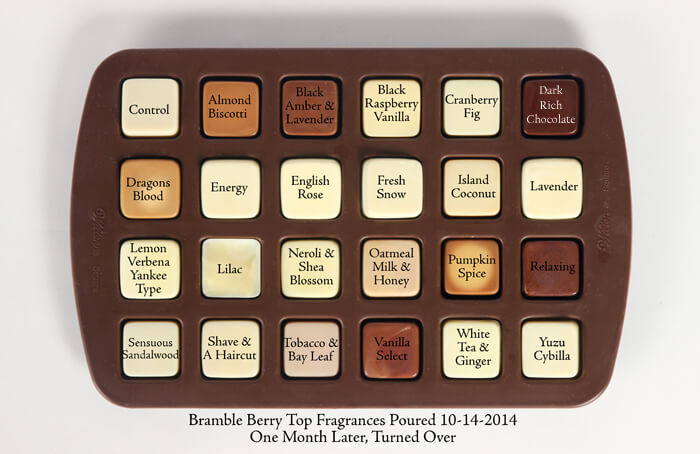
Because of the deep brown color vanilla can cause, choosing the right fragrance oil is critical to your soap design. To help make the process of selecting fragrance oils easier, the most popular Bramble Berry fragrance oils were tested for fragrance discoloration. The soap was then documented two weeks and one month later. It’s so interesting to see the colors change over time! To help compare to unscented soap, a “control” was poured in the top left corner of the tray.
As you can see, some fragrance oils have an immediate effect on the color of the soap. Notice the Almond Biscotti Fragrance Oil and Dragon’s Blood Fragrance Oil; both have already started to change the color of the fresh soap batter.
Best Selling Bramble Berry Fragrance Oils
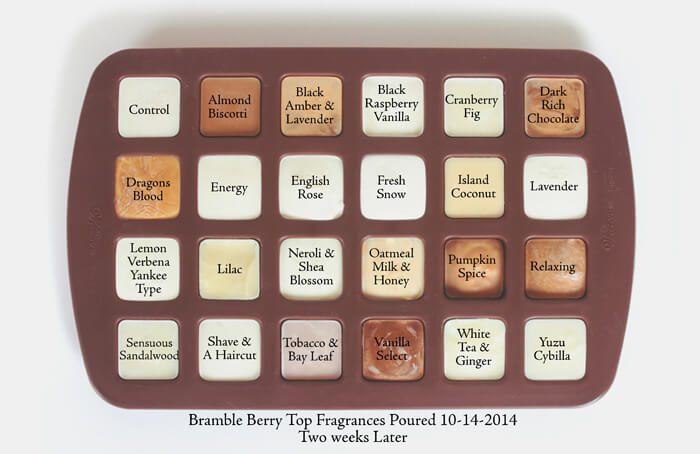
Best Selling Bramble Berry Fragrance Oils, Two Weeks Later
After two weeks, the vanilla discoloration is well under way. Keep in mind, some of these samples (ie: Relaxing Fragrance Oil) have a small amount of soda ash, which makes the color appear slightly lighter. Click here to read more about soda ash.
Best Selling Bramble Berry Fragrance Oils, One Month Later (Turned Over)
After one month, the soap is fully discolored. It will no longer continue to darken. The samples below have been turned over to show the discoloration without soda ash. Look how dark the Relaxing Fragrance Oil and Dark Rich Chocolate Fragrance Oil have become! The Pumpkin Spice will eventually go entirely brown as it is fully exposed to air.
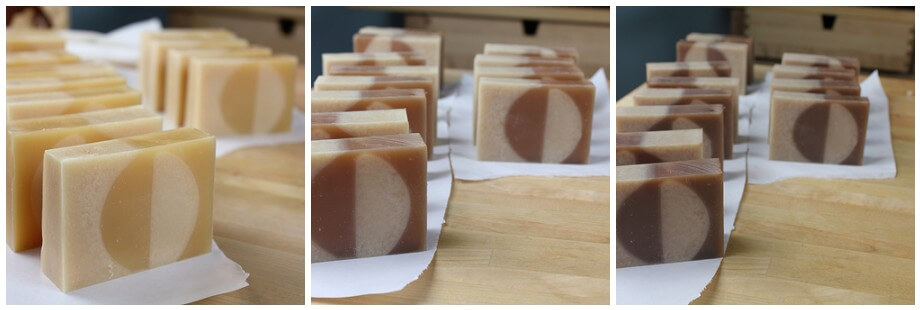
If you are planning a soap with lots of bright colors, look for a fragrance oil with minimum discoloration. You can use fragrance oil discoloration to your advantage. You just need to plan your design accordingly! In the Vertical Sandalwood Vanilla with a Twist uses Sandalwood Vanilla Fragrance Oil, which discolors to a deep brown soap. The entire batch is fragranced, while half the batch is lightened with Super Pearly White Mica. The result is two brown hues; the deep brown looks fantastic against the light brown color.
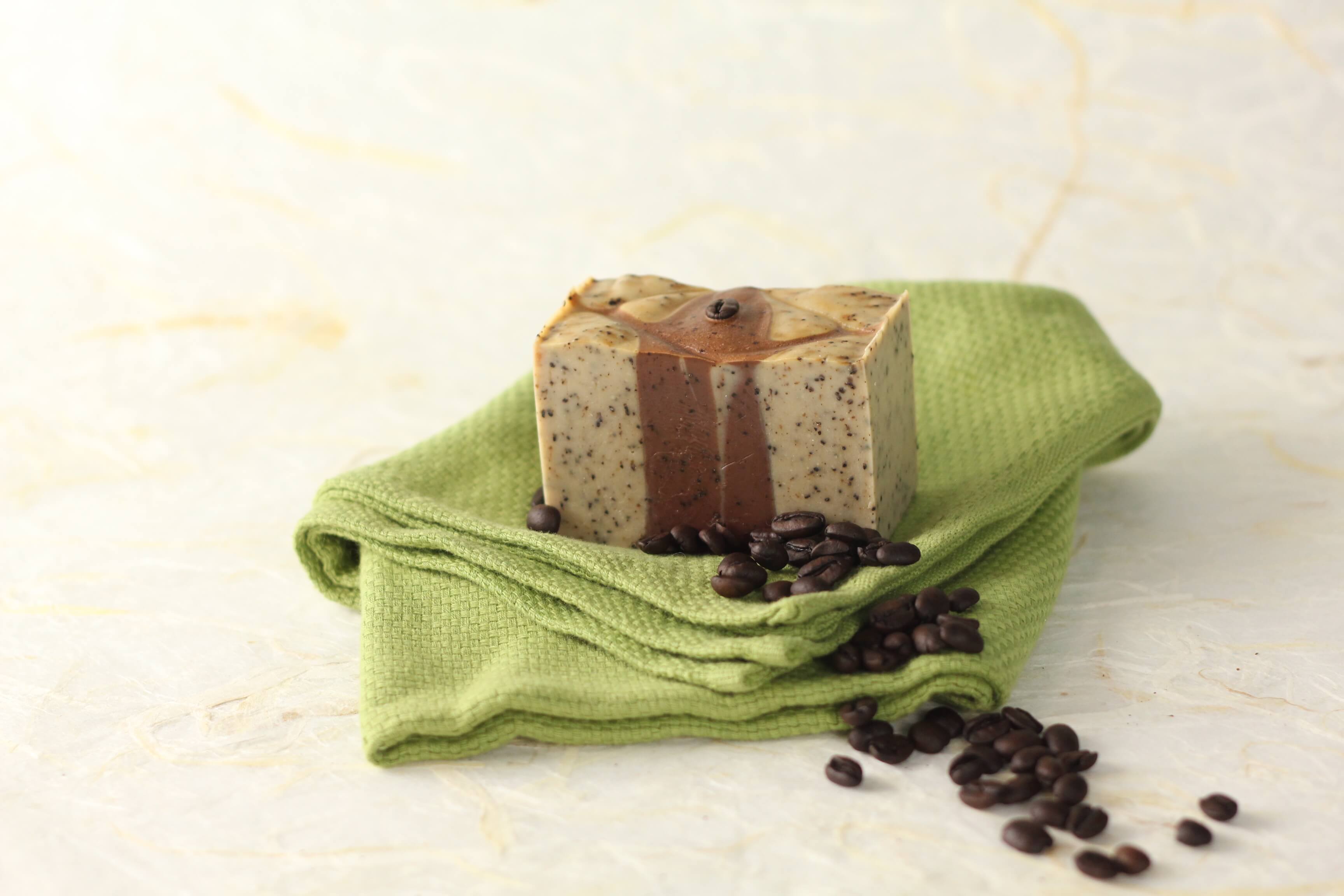
Another beautiful example of fragrance discoloration is the Espresso Shot Cold Process. The discoloration from the Espresso Fragrance Oil along with Brown Oxide creates a striking stripe down the center of the soap. Coffee grounds give the bar exfoliation as well. The result is a bar with striking contrast and plenty of texture.
 Have you ever used fragrance discoloration to your advantage? I would love to see photos on Instagram, and the Bramble Berry Facebook page!
