



• January 9, 2013

On its own, this everything balm is excellent for many applications. Because the oils used in this recipe are all lip-safe, it makes a great lip balm as well (though, you’ll want to ensure any essential oils you use are lip safe as well if you go that route). Try it on your cuticles, or on stubborn winter dry patches (like elbows and knees) for intensive moisture. Check out the end of the tutorial for some of my favorite additives to kick the benefits up a notch!

Note: The 8 oz. Glass Bail Jars have been discontinued. The kit now comes with Tall 8 oz. Plastic Bail Jars.
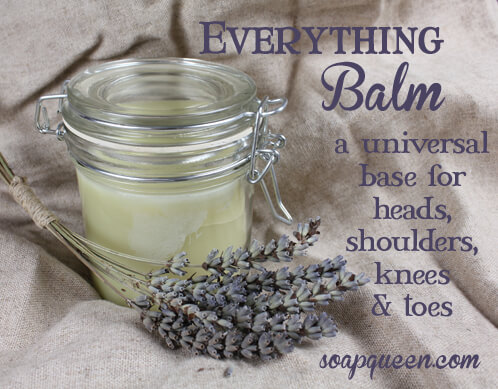
Everything Balm

Recipe:

1.5 oz Beeswax

2 oz Cocoa Butter

5 oz Avocado Butter

8 oz Sunflower Oil

1 oz Tamanu Oil

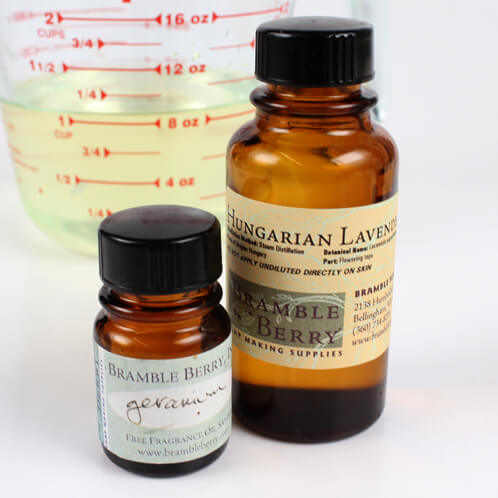
6 mL Hungarian Lavender Essential Oil

2 mL Egyptian Geranium Essential Oil

2 8 oz Plastic Bail Jars

Click here to add everything you need for this project to your Bramble Berry shopping cart!

Add to Cart

Essential Oils

ONE: Combine and melt the Beeswax and Cocoa Butter in the Sunflower Oil. Putting these solids into the Sunflower Oil helps keep the temperature of the entire combination lower. Remember, we don’t want glass to burst in the microwave. Missed that? See my post on that little happenstance here.

TWO: Add the Avocado Butter to the warm mixture and stir until melted. Stick the mixture in the microwave on 30 second bursts if you begin to see bits of Beeswax chunks re-forming.
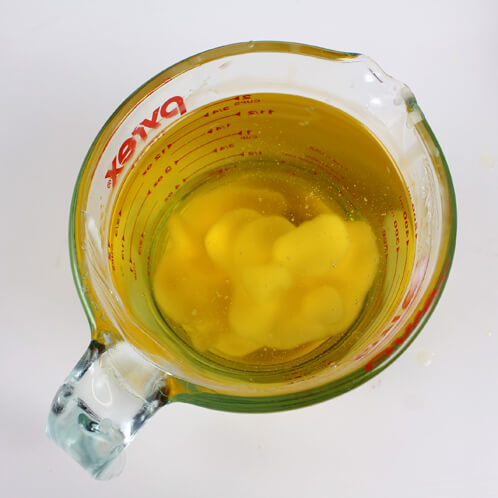
Adding butter to warm oils

THREE: Add the Tamanu Oil and Hungarian Lavender and Egyptian Geranium Essential Oils and stir until combined. TIP: Tamanu Oil is a thick and viscous oil. It’s got a wonderful nutty smell and is super skin-loving! Stick the bottle in the microwave for 10-15 seconds with the cap off, then replace the cap and shake it to get the consistency to a point where it’s a bit easier to pour.
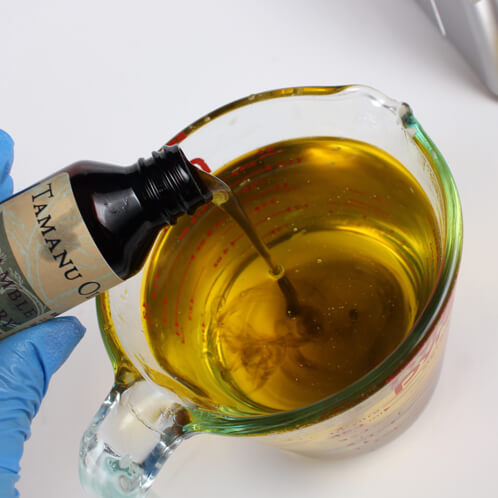
Adding Tamanu

FOUR: Pour the mixture into the glass bail jars. If you are using plastic jars, be aware of your mixture’s temperature before pouring. Because of Beeswax’s high melting point, in order for it to remain liquid and pourable the mixture may be at too hot to pour into some plastics.
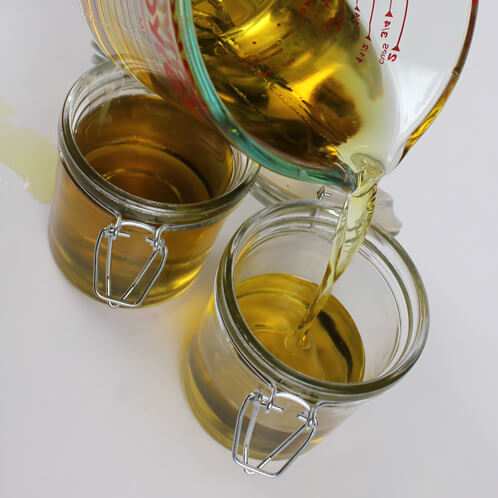
Pouring into bail jars

You can take this balm to the next level and easily tailor it for specific skin care needs! Use this balm recipe as a base, and combine with the right additives for a specialty product. Here are a few ideas:

Zinc Oxide: Zinc Oxide is the active ingredient in popular intensive ointments for diaper rash, including Balmex and Butt Paste, and in those formulations is used at 11.3% and 16% respectively. Adding some Zinc Oxide to the balm will make it an excellent diaper balm. The Zinc Oxide acts as a barrier between skin and diaper, working in tandem with the skin loving properties of Tamanu oil and Avocado Butter to help relieve irritation. Zinc oxide is also lip-safe (and is actually a common food additive) and aids in UV protection as well. To add it to any balm, pre-mix it with a little bit of the liquid oil like you would any oxide.

Arnica Oil Infusion: Before making this recipe, take a moment to infuse the Sunflower oil with some Arnica. Arnica is typically used as a skin healer, anti-inflammatory, and as an aid to heal wounds. If you’re new to infusing, check out this Soap Queen TV Episode where I infuse an oil for a lip balm. Or, you can check out my book on infusing, which is included in this infusing kit! To keep with the soothing theme, check out these sore muscle essential oil blends I came up with for our BBAC athletes last year.

Calendula Extract: Calendula is a popular skin-loving ingredient. It’s a gentle soother for sensitive and irritated skin, and can also be used as an antiseptic. This ingredient can easily be combined with other additives for a skin-loving powerhouse balm. When in dried petal form, Calendula can also be easily infused into any base oil much like Arnica.

Vitamin E Oil (tocepherol): A great alternative to Tamanu Oil, which can potentially cause sensitivities in persons with nut allergies, is Vitamin E oil. It’s similar in consistency to Tamanu in that it’s a thick and viscous oil, and also is a popular anti-oxidant and mainstay in many skin care products.

Tapioca Powder: On their own, balms are typically a bit greasy. They aren’t emulsified with water like a lotion, and the oils don’t absorb into the skin as quickly. One way of making the balm less greasy without turning it into a lotion is by adding Tapioca Powder. Try adding two teaspoons to this recipe for a nice, powdery feel.

Honey: Honey has excellent moisture retention and is a fabulous addition to any skin care product. In addition, it has natural antioxidant and anti-microbial properties, and is thought to be beneficial to the treatment of minor cases of acne. When adding honey to this recipe, keep the level below 2% and stir for longer than you think necessary as honey has a tendency to separate when added in larger quantities.

What are your favorite skin-loving additives? I’d love to hear your must haves. 

Click here for a printable PDF of this tutorial.

You may also like these

Become an email subscriber

Enter your email address below and you will receive all our new posts directly in your email inbox.

  1. I made this last night with help from my husband. Unfortunately, he swapped the EO amounts, and the balm came out particularly…. pungent! 🙂
    Do you have any suggestions to help with the strong scent? I’m wondering if making another batch (unscented) and mixing that with the first batch might help? This is the first balm recipe I’ve ever tried, so I’m not sure what to do.

    Thanks!
    Christine

    P.S. I haven’t seen one on your blog (maybe I missed it?) but a post on how to deal with screw ups would be extremely helpful for me. Ahem. And my husband 😉

  2. I made this last night with help from my husband. Unfortunately, he swapped the EO amounts, and the balm came out particularly…. pungent! 🙂
    Do you have any suggestions to help with the strong scent? I’m wondering if making another batch (unscented) and mixing that with the first batch might help? This is the first balm recipe I’ve ever tried, so I’m not sure what to do.

    Thanks!
    Christine

    P.S. I haven’t seen one on your blog (maybe I missed it?) but a post on how to deal with screw ups would be extremely helpful for me. Ahem. And my husband 😉

  3. I made this last night with help from my husband. Unfortunately, he swapped the EO amounts, and the balm came out particularly…. pungent! 🙂
    Do you have any suggestions to help with the strong scent? I’m wondering if making another batch (unscented) and mixing that with the first batch might help? This is the first balm recipe I’ve ever tried, so I’m not sure what to do.

    Thanks!
    Christine

    P.S. I haven’t seen one on your blog (maybe I missed it?) but a post on how to deal with screw ups would be extremely helpful for me. Ahem. And my husband 😉

  4. Could you swap the avocado butter for lanolin? Or even Shea butter? What percentage/weight would you use?

    1. Hi Fran!

      If you’d like to swap out the avocado butter for another butter, you certainly can, just keep in mind that it could change the consistency of the product. If you prefer to use Shea Butter, you could use a very similar usage rate because they have a fairly similar texture :). Lanolin is a little bit different, and will most likely effect the texture more. I would recommend shea butter if you’d like to substitute the avocado butter 🙂

      -Amanda with Bramble Berry

  5. I have found the information on here very helpful and the people engaged to be very well read. As a physician, I see new skin care products on a weekly basis and I think some of the “recipes” on here are as good as many that land in my office. I am working on a scar cream/balm and I am incorporating zinc oxide and vitamin E as you have recommended as possible additives. However I have a few questions and any input would be greatly appreciated:

    – How much zinc oxide do you recommend to add for sun protection?
    – I would like to substitute a silicone oil(dimethicone)and would like your input on which oil to substitute. I actually would like the product to be as fragrance free as possible.
    – Is there a dye you know of that is skin colored? I have patients complain about the white/cakey appearance of zinc oxide and would like to have the balm tinted skin tone. Thank you very much.

    1. Hi Nate!

      Because sunscreen is considered a drug, we have not made it before so unfortunately I cannot speak to how much zinc oxide to add for sun protection. Sunscreen requires FDA approval. We have not used silicone oil in our products, so while I am not very familiar with it, I know it does contribute to the smoothness and glide in cosmetic products. If you were looking for a oil that provided that benefit, I would recommend Meadowfoam Oil.

      Meadowfoam Oil:https://www.brambleberry.com/Meadowfoam-Oil–P4978.aspx

      If you are looking for colorants for your products, I would recommend micas or pigments.Something like the Soft Beige Mica, or the Honeyed Beige Mica might work really well!

      Soft Beige Mica:
      https://www.brambleberry.com/Soft-Beige-Mica-P3597.aspx

      Honeyed Beige Mica:
      https://www.brambleberry.com/Honeyed-Beige-Mica-P3600.aspx

      I hope this is helpful to you!

      -Amanda with Bramble Berry

  6. Is it possible to use a different butter in this recipe? As much as I love chocolate, I cannot stand the smell or feel of cocoa butter. Is shea butter a good substitute for the cocoa butter?

    1. Hi Linda!

      If you’re not crazy about Cocoa Butter, you could swap out with Shea, just keep in mind that Shea Butter is much softer than Cocoa, and your end product will be softer as well. If you give it a try, let us know how it turns out! We’d also love to see your creations on our Facebook page 🙂

      -Amanda with Bramble Berry

    1. Good morning, Yvette!

      At this time we do not carry Pumpkin Flakes or Pumpkin Oil. But, if you are interested, we do have a few pumpkin fragrance oils that you might be interested in. You can find them here:

      Pumpkin Spice: https://www.brambleberry.com/Pumpkin-Spice-Fragrance-Oil-P3917.aspx

      Pumpkin Pie: https://www.brambleberry.com/Pumpkin-Pie-Cybilla-Fragrance-P3394.aspx

      Pumpkin Lager: https://www.brambleberry.com/Pumpkin-Lager-Fragrance-Oil-P4839.aspx

      Pumpkin Pie (Candle & Soap) : https://www.brambleberry.com/Pumpkin-Pie-Candle-Soap-Fragrance-Oil-P2987.aspx

      -Becky with Bramble Berry

  7. This may be a strange question or not who knows. I am curious as to how I would disperse a solid resin (dragons blood specifically) into balms. Is this possible and if so how much would I add % wise to total oils and when/how would I go about doing it. Thanks for any help.

    Matthew

    1. Hi Matthew!

      We’ve never used a resin in our balms before, but it is definitely something you could try out. One think that you can try is to infuse it into any of the oils that are used in this recipe to see if that works for you. I am actually going to do a bit more research on including resins in balms and get back to you if that is alright. 🙂

      -Becky with Bramble Berry

    2. Hi Matthew!

      Thank you so much for your patience while we did some research on this topic. You can either try an infusion or dispersion in either alcohol or fractionated Coconut Oil. If you are going to do infusion/dispersion in alcohol, be sure not to heat it!

      Start at 1 ounce of resin to 6 ounce of carrier oil. If you are using oil, it should dissolved with some heat application (microwave or stove) on a very, very, low temperature with contact stirring — a whisk is super helpful!

      Dragon’s Blood Resin is such a lovely blood red color, but that will eventually settle as a find sediment on the bottom and will not impart a homogeneous color in things like oils or perfumes. The resin itself if crushed and filtered will impart a light pink fleshy color to soap.

      I hope this helps! Let us know if you have any other questions. =)
      -Becky with Bramble Berry

      1. Hey Becky,

        I did the heat method in a small jar with outlive oil like as if I was canning peaches. Low heat for about 3 hours. Worked like a charm. 🙂

  8. I tried this last night thinking it was the recipe I used previously for push up tubes and subbed Candelilla wax to keep it vegan. It’s beautiful but will add more Cocoa Butter and more Candelilla to make it harder. I’ve read through all the questions as well and learned a lot along the way.

    1. Hi Fuchia!

      This recipe is a little soft, and if you want to keep it vegan as well as harder, I would definitely add a tad more Candellila Wax to this recipe. You can start out with 1% – 2% more that what is called for in the recipe and go up from there using the frozen spoon trick.

      The frozen spoon trick is an easy way to test if you like the consistency of the lip balm you are making before it hardens up.

      All you need to do is stick 1-2 spoons in the freezer about 10 minutes prior to melting your ingredients. Once all of your ingredients are melted, you pull the spoons out of the freezer and stick the tip of it in your melted mixture. It will immediately harden up and be the texture and consistency it would be when your recipe has hardened. It is a super easy way to adjust your recipe before you’ve poured it in your containers!

      You can see the trick in action in this Soap Queen TV episode: https://soapqueen.com/bath-and-body-tutorials/lip-products/how-to-make-infused-lip-balm-on-soap-queen-tv/

      I hope this helps! Let us know how your next batch turns out and if you are able to get any pictures, you can share them with us on Bramble Berry’s Facebook page. 🙂

      -Becky with Bramble Berry

      https://www.facebook.com/BrambleBerry

  9. Hi! I see several people have asked about switching the sunflower oil and I am no exception :). Since jojoba oil is technically a wax, could it be used instead? What about fractionated coconut oil? I have those on hand :). I can’t wait to try this one out!

    1. Good morning, Shannon!

      You could use Jojoba Oil in this recipe in place of the Sunflower Oil, but it is going to change the consistency of the final product. I would suggest substituting out the Sunflower Oil for another light oil like Apricot Kernel Oil so you can keep the same consistency. You could also experiment with Fractionated Coconut Oil, but I would make small test batch to make sure you like how it works for you. 🙂

      -Becky with Bramble Berry

      Apricot Kernel Oil: https://www.brambleberry.com/Apricot-Kernel-Oil-P3206.aspx

  10. Hey I was inspired by this recipie,
    but I made a few modifications due to
    what I had on hand.

    1.5 oz beeswax
    2 oz cocoa butter
    2.5 oz coconut oil
    2.5 oz palm oil
    4 oz sweet almond oil
    4 oz olive oil
    3 ml lime eo
    1 ml patchouli eo
    1 ml ylang ylang eo
    1 ml lemon eo
    1 ml grapefruit eo
    1 ml sweet orange eo
    2 tsp tapioca starch

    Worked wonderfully and melts to the slightest touch.
    The fragrance combo was a customer request for citrusy
    And earthy.

    1. Hi Matthew!

      That sounds absolutely delightful! I’m a huge fan of earthy/citrus blends and I actually recently did one with 10X Orange (https://www.brambleberry.com/10x-Orange-Essential-Oil-P4441.aspx) and Cedarwood Essential Oil(https://www.brambleberry.com/Cedarwood-Essential-Oil-P4897.aspx). I love all the scents you chose and I’ll have to try your blend out. Thanks for sharing your recipe with us. If you get any pictures, be sure to share them with us on Bramble Berry’s Facebook page. =)

      -Becky with Bramble Berry

      https://www.facebook.com/BrambleBerry

  11. Can dead sea salt be introduced to this recipe or the lip balm with calendula infused almond oil recipe to soothe psoriasis breakouts? How would salt affect a balm or lotion? Any suggestions? I know soaking in a dead sea salt bath with would help tremendously but honestly most people don’t have time for baths.

    1. Good morning, Monica!

      Great questions! You could add dead sea salt to either the lip balm recipe or this everything balm tutorial but it will only add an exfoliating factor and not have the same qualities as soaking in a bath of salt water would. It will change the consistency for the balms and wouldn’t actually dissolve like it would in a bath, so I would suggest making a small test batch to make sure you like how it feels!

      Here are a couple of other tutorials we have done with dead sea salt for those people who don’t have the time to take a bath:

      Summer Strawberry Salt Scrub: https://soapqueen.com/bath-and-body-tutorials/summer-strawberry-salt-scrub-2/

      Salt Scrub Recipes: https://soapqueen.com/bath-and-body-tutorials/quick-stocking-stuffers-salt-scrub-recipes-2/

      I hope this helps! Keep us updated on what you end up going with. =)

      -Becky with Bramble Berry

      1. Hello!

        I’m new to making balms at home, and would like to try making a salted maple lip balm using the regular balm ingredients plus some maple flavouring and crushed sea salt. do you think this would work, or would I end up with the flavouring and salt not blending evenly (or possibly with the flavouring separating and and the salt sinking, creating a not-so-yummy stratified waste-of-a-tube-and-ingredients balm)? Any insight you can give would be much appreciated. (Note also that I bought regular maple flavouring…should I buy flavoured candy oils instead? I though I should, but was uncertain, and maple is soooo yummy :P) Thanks!

        Cheers,

        Nat

        1. Hi Nat!

          What a fun idea! The salt may be difficult to incorporate. If you just add the salt to your balm, it may irritate your lips, as salt is a great exfoliator and removes dead skin.

          You may dissolve the salt and add it to your balm. However, that may dry your lips out.

          Another idea is to leave the salt out of your balm and add it to a lip scrub instead! I’ll include a recipe for our Exfoliating Kisser Scrub, which uses sugar to gently exfoliate. 🙂

          -Kelsey with Bramble Berry

          Exfoliating Kisser Scrub: https://soapqueen.com/bath-and-body-tutorials/lip-products/exfoliating-kisser-scrub-2/

    1. Hi Amanda!

      If you aren’t wanting to use the Sunflower Oil in this particular recipe, you can substitute it out for another fixed oil of your choice. I’d suggest Meadowfoam Oil, Sweet Almond Oil, Apricot Kernel Oil or Olive Oil.

      Meadowfoam Oil: https://www.brambleberry.com/Meadowfoam-Oil–P4978.aspx

      Sweet Almond Oil: https://www.brambleberry.com/Sweet-Almond-Oil-P3205.aspx

      Apricot Kernel Oil: https://www.brambleberry.com/Apricot-Kernel-Oil-P3206.aspx

      Olive Oil: https://www.brambleberry.com/Olive-Oil-Pure-P5246.aspx

      I hope this helps! =)
      -Becky with Bramble Berry

      1. Thanks Becky!! I’m am going to Mary your whipped butter and this balm. I know you don’t need a preservative because they are all natural but would a preservative extend the shelf life? If so which one would you recommend? Thanks !!!

        1. Also which oil could I substitute the bran oil for in your whipped coffee butter recipe?? Thanks for you time !!

        2. Hi Amanda!

          The shelf life on your product will be extended based on the type of oils you are using. If you are using an oil with a short shelf life like Hazelnut Oil which has a 3 month shelf-life, your product isn’t going to last very long. But, if you use an oil that has a longer shelf life, like Olive, Apricot Kernel or Sweet Almond, your product is going to have a longer shelf life.

          Sweet Almond Oil: https://www.brambleberry.com/Sweet-Almond-Oil-P3205.aspx

          Apricot Kernel Oil: https://www.brambleberry.com/Apricot-Kernel-Oil-P3206.aspx

          Olive Oil: https://www.brambleberry.com/Olive-Oil-Pure-P5246.aspx

          For more on shelf lives of oils, you can check out this post from the Teach Soap Forums:

          http://www.teachsoap.com/forum/viewtopic.php?f=2&t=3800

          Preservatives don’t actually extend the shelf life but protect your product from molds and bacteria. The only times you are going to need a preservative in your body butters, balms and scrubs is if they have water in them or if you are going to be using them in the shower or bath. I hope this helps! =)

          -Becky with Bramble Berry

  12. I would like to make this balm in the push tubes from bramble berry. how many tubes would this recipe be equal to?

      1. I also noticed comments about not to pour when the mixture too hot. will i have to watch out for this with the push tubes? thanks!!

  13. I have another question which I would like you to help me with please Becky, at what temperature or stage it would be advisable to add Zinc Oxide to my diaper rash balm?

    1. If you want to add the Zinc Oxide into your balm just pre-mix it with a little bit of the liquid oil like you would any oxide. Then you would just add it to your balm like you would a colorant or extract. I hope this helps! 🙂
      -Becky with Bramble Berry

  14. Hi, To keep this vegan, is it ok to substitute candellila wax for the beeswax?

    Thanks!
    Sarah

  15. My husbands thumbs keep cracking in the winter. Would this balm help him. He currently uses neosporin with band aids at night.

      1. Well, I just keep coming back. I got the ingredients for the belly balm. It takes you to a tutorial to infuse oil, but it’s for the warm method on the stove.

        Is there a link here on how to do it cold?

        Mary

  16. Hi, I would like to make a diaper rash balm and I would like to use Zinc Oxide as Ann Marie suggested, my question is how much is recommended per pound of oil, thank you

        1. I like the idea of a diaper rash balm, would you make this recipe just as the recipe says and then add the zinc oxide, or would you substitute some of the ingredients or eo?

          1. Make the recipe as called for – and then add the Zinc Oxide on top of that. I’d add the Zinc Oxide and disperse with a mini mixer (just like an oxide) to the liquid oil (Sunflower oil) to help keep it lump-free in the balm.

  17. If using the calendula extract that can be purchased from Bramble Berry, would you reduce the amount of another oil by the amount of the extract?

  18. Ab-fab recipe! But here’s a question you may know the answer to. My teenaged daughter has terribly oily skin and acne, so I buy her Palladio Rice Paper, which are individual oil-absorbing blotting tissues coated with rice POWDER. Rice is high in naturally-occuring silica, a drying agent, so I’m wondering if the rice FLOUR I have would be a good substitute for the tapioca powder to make the balm less greasy…not for her, but for my dry skin. Somewhere I read about using rice flour in cosmetics, so I bought some. What do you think?

    1. Good morning, Patricia!

      We’ve never used Rice Flour in our recipes, but if you were to try it out, I’d make a super small batch first and try a little bit on your daughters skin to make sure it works for you. We’ve always found that the Tapioca Powder works wonders for us. Keep us updated if you use the Rice Flour, we’d love to know how it turns out. =)

      -Becky with Bramble Berry

      1. Hi Becky!

        Thank you for the reply, but the balm was not for my daughter, but for me. I wasn’t sure if “rice flour” was the same as “rice powder,” so I did a little research online and found that what I bought was cosmetic grade “flour,” and it has the same botanical name as found on EWG’s Cosmetics Database for “rice powder,” so that’s good. It can be used in mineral make-up, lotions and facial masks (alone even,) but I have yet to find any recipes online using it. I have a jar of body butter that I made a couple of weeks ago using primarily hard oils and jojoba, and it turned out too hard, too greasy and slow to absorb, so I think I’ll remelt it, add some more soft oil and the flour/powder and see what happens. I’ll let you know.

        1. “I have a jar of body butter that I made a couple of weeks ago using primarily hard oils and jojoba, and it turned out too hard, too greasy and slow to absorb”

          Could you share that recipe? It sounds like its right up my alley for an idea I have.

  19. Hello!
    I love your tutorial because of the levander. I realised that you use Hungarian levander oil , so you made me so proud of my country!
    Greetings from Hungary!

  20. Favorite additives are: soy lecithin & hemp seed oil for a cuticle salve; sesame oil because it’s light and penetrates quickly; anhydrous lanolin because of the texture it brings to a salve recipe.

  21. I have tried using honey in healing balms before, and it has always separated out. I would love to know if honey powder would work as well, and also if there is a trick to getting honey to stay combined!! Love the recipe, I was just looking to make some balms for our poor skin in very dry, very cold Idaho!!

    1. Hi LuAnn!

      If you are wanting to use honey in your balms, we do suggest keeping it less than 2% so it doesn’t separate too much and stir vigorously to keep it suspended int he balm. I think this would a be a great balm for the Idaho weather and would definitely help your skin out! 🙂

      -Becky with Bramble Berry

    1. Good morning, Natasha!

      Great question! That is why we recommend less than 2% and you will need to stir a ton to keep it suspended in the balm. We’ve never tried honey powder, but if you were to try it out, I’d do a super small batch to make sure it is what you want! 🙂 Keep us updated if you try it out.

      -Becky with Bramble Berry

    1. oops! Meant to add, this is a great tutorial. A nice base to make and use to add other things to change it up a bit.

    2. Hi Madea!

      It’s a personal preference to use honey and many people believe it to be a natural preservative. Since this recipe does not contain any water, you wouldn’t have to use a preservative in it. But, if you added the honey, I would suggest a preservative around .5% – 1%. =) I hope this helps! Let me know if you have any other questions.

      -Becky with Bramble Berry

Comments are closed.

{"email":"Email address invalid","url":"Website address invalid","required":"Required field missing"}

The Latest from Soap Queen TV

Inspired by Gems & Crystals

All About Essential Oils

The Power of Charcoal

Create Your Own Clay Face Mask

DIY Bath Bombs

Cold Process Soap Tips & Tricks

Learn the Basics of Cold Process Soapmaking

Learn the Basics of Melt & Pour Soapmaking

Want to Start Your Own Soap Business?

Soap Business Success Stories

Soap Queen TV Favorites

Ingredient Spotlight

Disclosure

Unless stated otherwise, all images are original material and are copyrighted. If you'd like to use an image, please be a friend and credit the photo and link back to Soap Queen. Feel free to share, tweet and pin to your hearts content.