



• July 19, 2017

Lavender and Honeyquat Lotion Recipe

Old favorites like olive oil and rice bran oil are great additions in handmade lotion. There’s no denying their powerful moisturizing properties, but the list of ingredients you can add to your recipe doesn’t stop there. Your skin will love additives like our new honeyquat and allantoin powder.

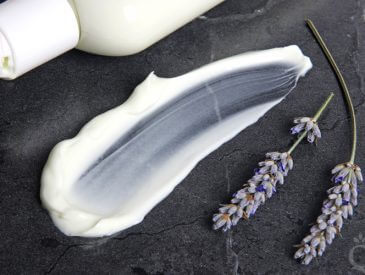
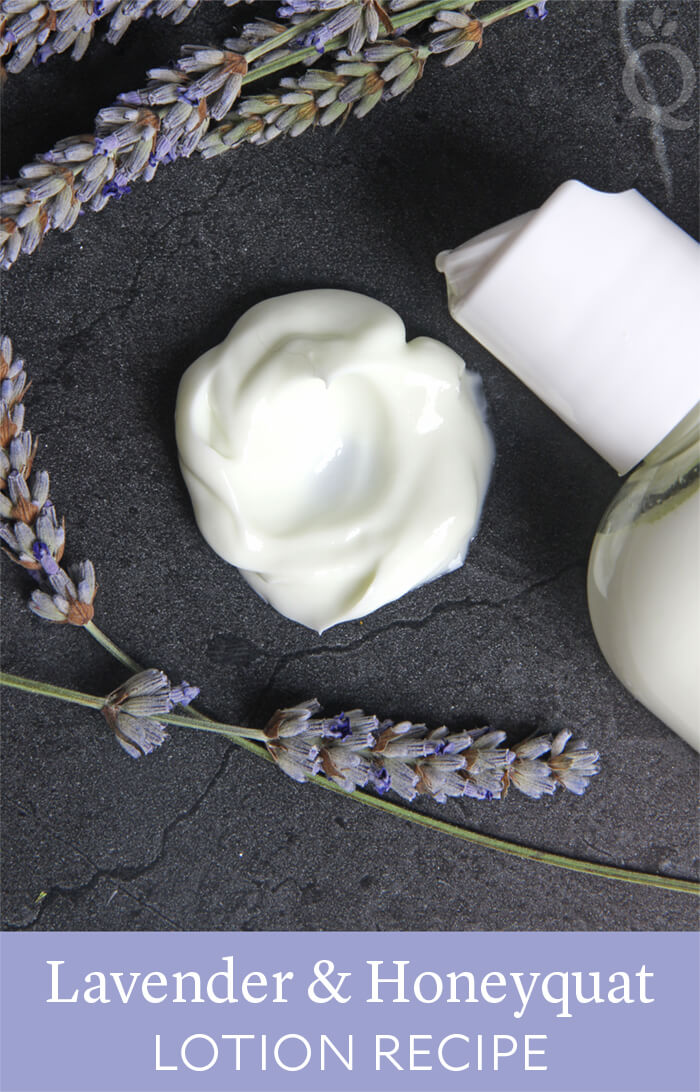
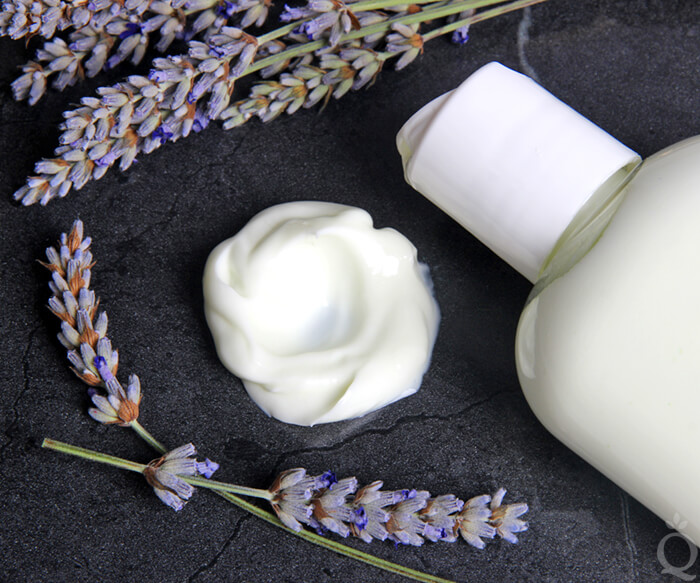
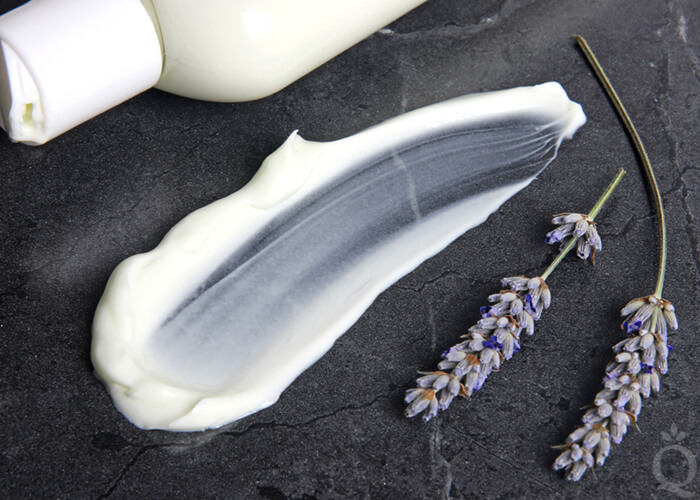
Both of those new ingredients are used in this Lavender and Honeyquat Lotion. It’s also made with moringa seed oil, rosehip seed oil, and shea butter. That mixture creates a thick lotion that absorbs quickly into the skin and leaves it feeling soft and silky. Allantoin powder adds a hydrating feel to the lotion while honeyquat draws more moisture to the skin.
LavenderHoneyquatLotion

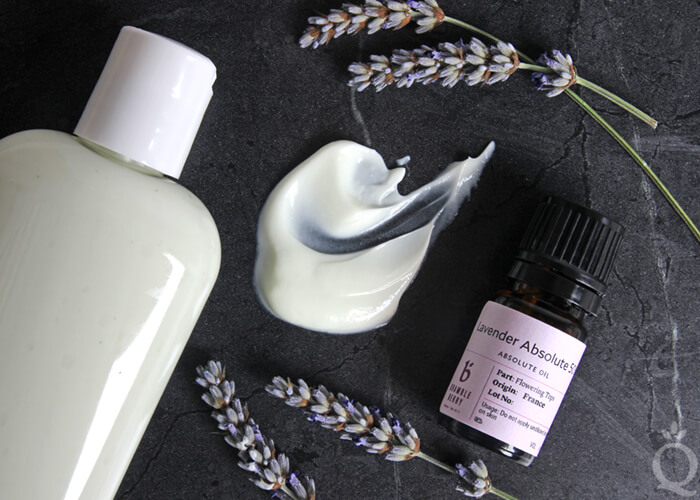
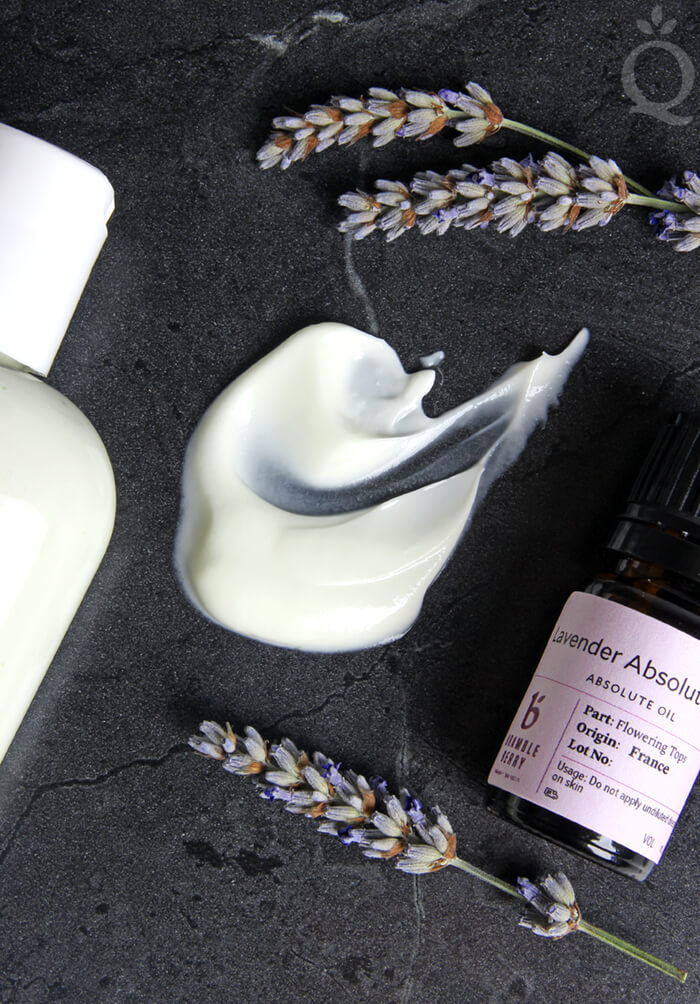
This lotion has a sweet, floral scent from new Lavender Absolute 50%, which is amazing paired with the herby scent of moringa seed oil. On its own, lavender absolute is incredibly thick and hard to work with. Bramble Berry’s Lavender Absolute 50% has been diluted with fractionated coconut oil to create a thinner product that’s easier to use. It’s still quite thick and heavy, so pay special attention to the lotion temperature when you add it to this recipe. If it’s added while the lotion is still very thin, it may separate out.
LavenderHoneyquatLotionDIY

 What You Need:

Four 4 oz. Bottles (White Disk Cap)
Water Phase:
11.9 oz. Distilled Water (73%)
0.1 oz Allantoin Powder (0.5% )
Oil Phase:
1 oz. Moringa Seed Oil (6%)
1 oz. Rosehip Seed Oil (6%)
0.3 oz. Shea Butter (2%)
1 oz. Polawax Emulsifying Wax (6%)
0.3 oz. Cetearyl Alcohol (2%)
Cool Down Phase:
0.5 oz. Honeyquat (3%)
2 mL or 40 drops Lavender Absolute (0.5%)
5 mL Optiphen (1%)


Click here to add everything you need for this project to your Bramble Berry shopping cart!
DIYLavenderHoneyquatLotion

EQUIPMENT PREP: Disinfect your utensils by dipping them in a 5% bleach water solution and allowing to dry. This includes mixing containers, your stick blender, and any spoons or spatulas that may come in contact with your lotion. Your products must be as free as possible of germs, bacteria, and microbes.

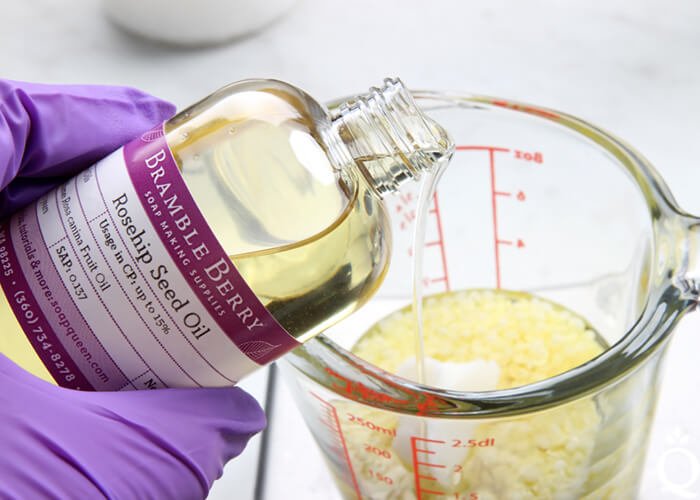
ONE: In a heat-safe container, combine the rosehip seed oil, moringa seed oil, shea butter, Polawax Emulsifying Wax, and cetearyl alcohol. Heat the container in the microwave in 30-second bursts until the waxes have fully melted and the mixture is about 160° F.
ONE

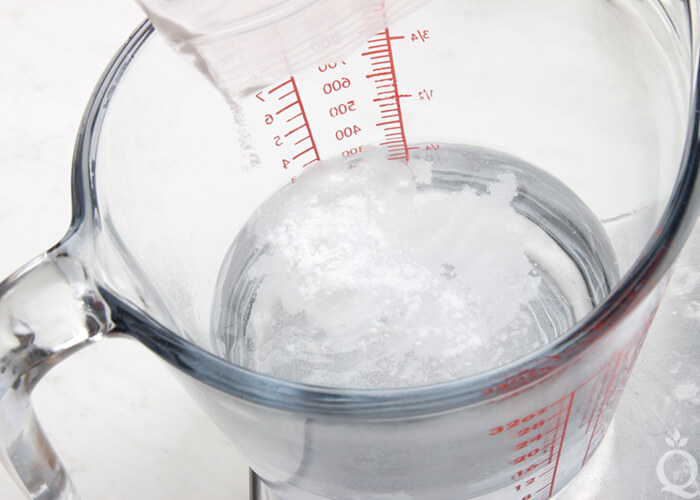
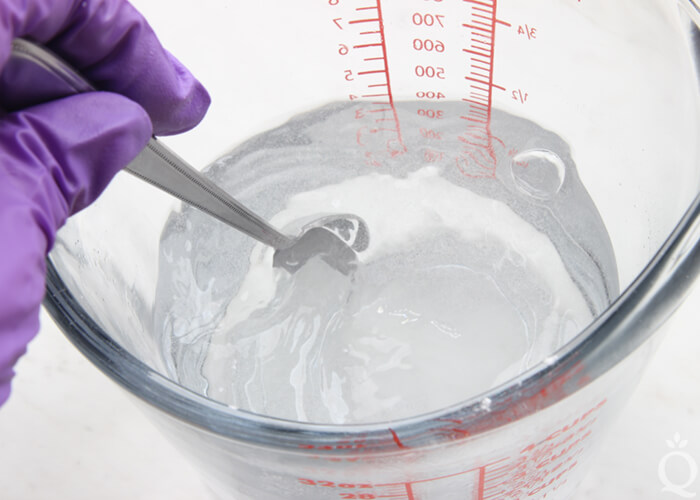
TWO: Pour the distilled water into a second heat-safe container. Heat in the microwave to about 160° F. Add the allantoin powder to the hot water. Use a spoon to fully mix in the powder until completely dissolved.
TWOTHREE

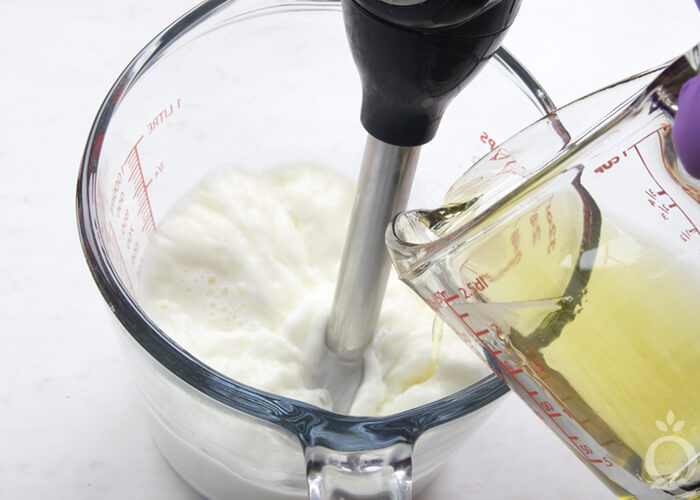
THREE: Check the temperatures of both containers. Each should be about 140-150° F. Once they are at the correct temperature, pour the oils and wax into the water and begin pulsing the stick blender. Blend the mixture for 60-90 seconds, making sure the oil and water phases are fully emulsified. Be careful to “burp” your stick blender by tamping it on the bottom of the container to release bubbles – you don’t want bubbles trapped in your lotion.
FOURFIVE

FOUR: Continue stick blending until the temperature drops to about 130° F. Add the honeyquat and use the stick blender to pulse for about 60 seconds to fully mix in.

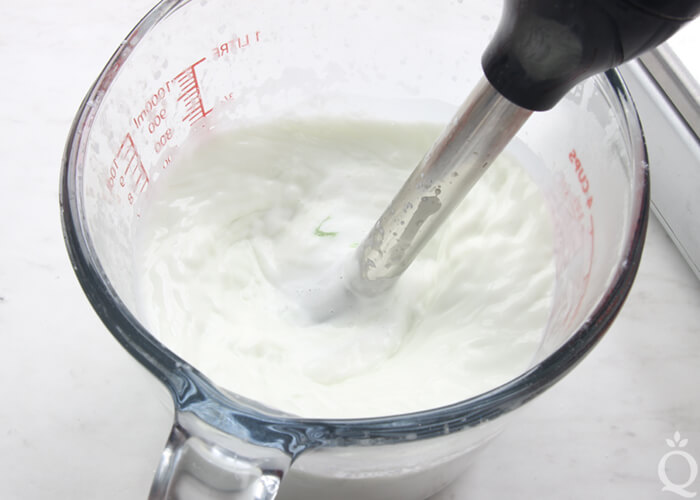
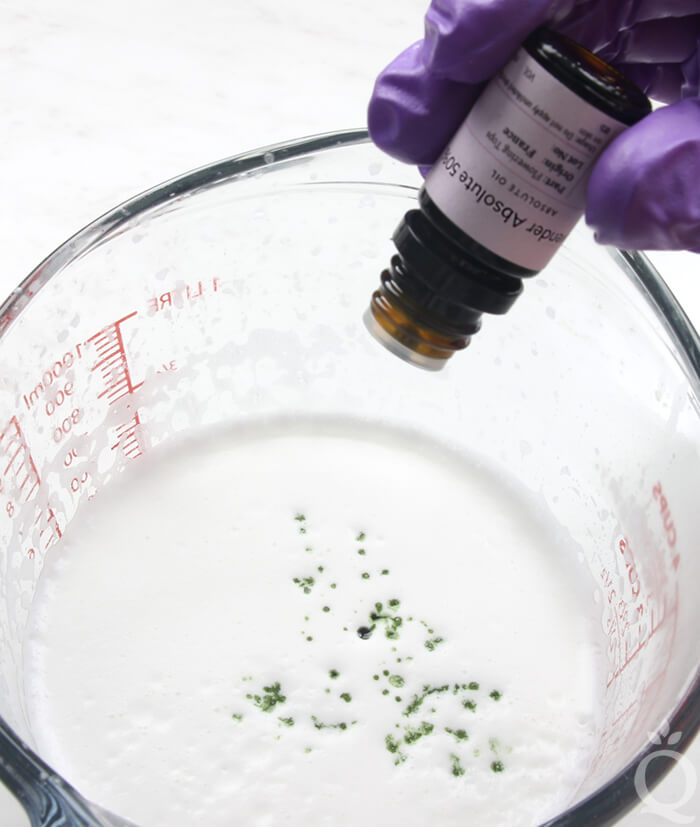
FIVE: Because the Lavender Absolute 50% is thick, it must not be added until the mixture has cooled and thickened. If added to a hot, thin lotion, it may separate out. Check the temperature of the mixture. Once it is 130° F or below, add the Lavender Absolute 50% and stick blend for several minutes. It will turn the lotion a very faint green color. Once mixed in, add the Optiphen and continue to stick blend for about 1-2 minutes more.

SIXSEVEN

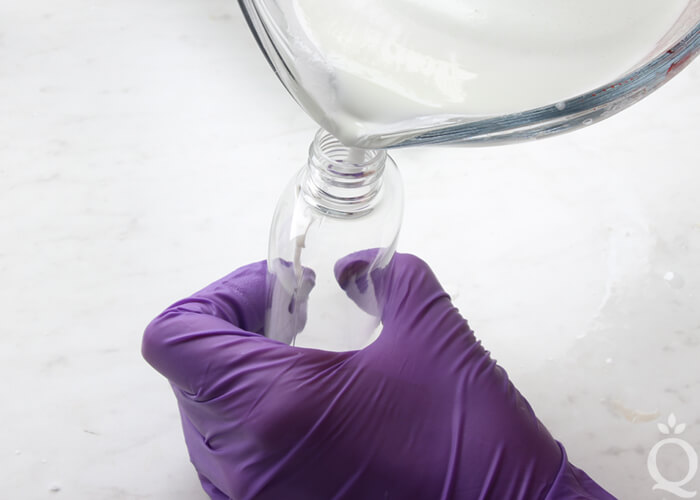
SIX: Carefully pour the lotion into bottles. Let the bottles sit overnight without a cap (otherwise condensation can form inside the bottle). Once completely cooled, place the caps on the bottles and enjoy!

NOTE: If the Lavender Absolute 50% begins to separate after being poured into the bottles, don’t fret. Pour the lotion back into bowl, and stick blend the lotion for several more minutes. If it’s too thick to blend, place the mixture into the microwave and heat using 15-second bursts until it has slightly thinned. 

EIGHT

LavenderHoneyquatLotionTutorial

Lavender & Honeyquat Lotion Recipe

Soap Queen
This luxurious lotion is made with Lavender Absolute 50% and honeyquat.
Cook Time 30 minutes
Total Time 30 minutes
Recipe type Lotion

Ingredients
  

  • Four 4 oz. Bottles White Disk Cap
  • 11.9 oz. Distilled Water 73%
  • 0.1 oz Allantoin Powder 0.5%
  • 1 oz. Moringa Seed Oil 6%
  • 1 oz. Rosehip Seed Oil 6%
  • 0.3 oz. Shea Butter 2%
  • 1 oz. Polawax Emulsifying Wax 6%
  • 0.3 oz. Cetearyl Alcohol 2%
  • 0.5 oz. Honeyquat 3%
  • 2 mL or 40 drops Lavender Absolute 0.5%
  • 5 mL Optiphen 1%

Instructions
 

EQUIPMENT PREP: Disinfect your utensils by dipping them in a 5% bleach water solution and allowing to dry. This includes mixing containers, your stick blender, and any spoons or spatulas that may come in contact with your lotion. Your products must be as free as possible of germs, bacteria, and microbes.

  • In a heat-safe container, combine the rosehip seed oil, moringa seed oil, shea butter, Polawax Emulsifying Wax, and cetearyl alcohol. Heat the container in the microwave in 30-second bursts until the waxes have fully melted and the mixture is about 160° F.
  • Pour the distilled water into a second heat-safe container. Heat in the microwave to about 160° F. Add the allantoin powder to the hot water. Use a spoon to fully mix in the powder until completely dissolved.
  • Check the temperatures of both containers. Each should be about 140–150° F. Once they are at the correct temperature, pour the oils and wax into the water and begin pulsing the stick blender. Blend the mixture for 60 – 90 seconds, making sure the oil and water phases are fully emulsified. Be careful to “burp” your stick blender by tamping it on the bottom of the container to release bubbles — you don’t want bubbles trapped in your lotion.
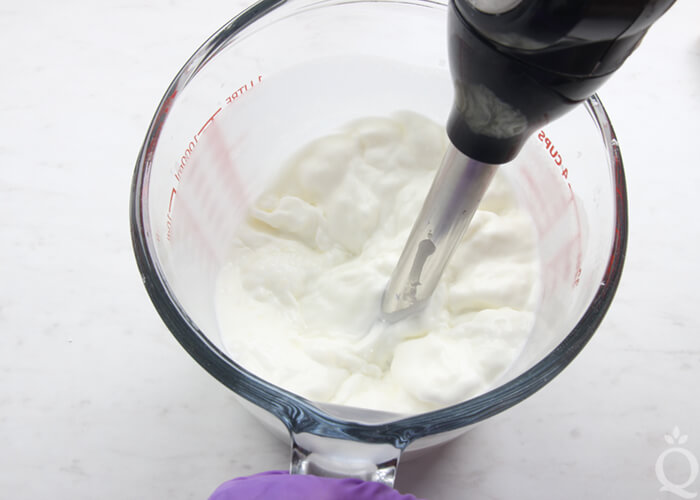
  • Continue stick blending until the temperature drops to about 130° F. Add the honeyquat and use the stick blender to pulse for about 60 seconds to fully mix in.
  • Because the Lavender Absolute 50% is thick, it must not be added until the mixture has cooled and thickened. If added to a hot, thin lotion, it may separate out. Check the temperature of the mixture. Once it is 130° F or below, add the Lavender Absolute 50% and stick blend for several minutes. It will turn the lotion a very faint green color. Once mixed in, add the Optiphen and continue to stick blend for about 1-2 minutes more.
  • Carefully pour the lotion into bottles. Let the bottles sit overnight without a cap (otherwise condensation can form inside the bottle). Once completely cooled, place the caps on the bottles and enjoy!
Tried this recipe?Let us know how it was!


You may also like these

Become an email subscriber

Enter your email address below and you will receive all our new posts directly in your email inbox.

  1. How can I make this a cream for the face instead of lotion for the body? I cannot find a face cream recipe anywhere on BB.

  2. 5 stars
    I want to substitute Stearic Acid for the Cetearyl Alcohol. Is it a 1-1 substitution?

    Also, is there a reason we wait to add the honeyquat to the lotion? I had assumed honeyquat is just a nicer substitute for glycerin which we usually add to the water before heating – I think.

    Thanks so much! I love Brambleberry’s products. Always my go to store.

    1. Nevermind! I noticed my questions were answered elsewhere.
      2-5% Stearic Acid for those wondering the answer to my question!

  3. 5 stars
    HI can a lotion be made with raw agave and or honey if so will
    Dehydroacetic acid and benzyl alcohol preserve it or what suggestions do you have please .

    1. Yes, you can use honey in lotion. We recommend it at 5% of the total weight of the recipe and you’ll need to mix it into the distilled water. This post talks more about that: https://soapqueen.com/bath-and-body-tutorials/tips-and-tricks/use-honey-bath-beauty-products/

      For a preservative, we recommend Optiphen, Germaben, or Phenonip. They’ll protect against mold and bacteria in your recipe.

      Optiphen: https://www.brambleberry.com/Optiphen-P3682.aspx

      Germaben: https://www.brambleberry.com/Germaben-Preservative-P3972.aspx

      Phenonip: https://www.brambleberry.com/Phenonip-P4038.aspx

      Learn more about preservatives here: https://soapqueen.com/bath-and-body-tutorials/lotion/talk-it-out-tuesday-preservatives/

  4. Hi,

    I just wanted to know, are these lotions that use emulsifying wax acidic or basic? If so, what is their pH?

    Thanks

  5. I want to make this recipe for my friends as a Christmas gift. If I make it now (March) will it still be fresh and good in December. Is there a time limit on the quality of the product if it sits too long?

  6. Can I substitute lavender essential oil instead of the lavender absolute? What would the amount be?

    1. Yes, you can use lavender essential oil in this recipe. Find out how much to add with our Fragrance Calculator: /www.brambleberry.com/Pages/Fragrance-Calculator.aspx

  7. Hi I don’t have allantoin or C alcohol. Could those simply be omitted? And could I use different combo of oils same amount?
    Thank you!

  8. Do you guys happen to know if one can add salt to a lotion? I was wondering whether it’ll mess with the emulsification of the lotion.

  9. I often experience condensation after filling my bottles. This happens with lotions made from scratch as well as with lotion bases. It happens very soon after filling the bottles and I have not put the caps on and it doesn’t go away after 24 hours uncapped. The temps range from 125F – under 140F. It’s happened with plastic bottles and glass mason jars. I don’t usually fill the bottles to the top. Maybe I should start filling them to the top so there will be nowhere for condensation to build? Is this a problem as far as bacteria is concerned? Thanks!

      1. Yes, it’s is humid where I am. I made some lotion this past weekend and the temps were cool, however, the humidity may still have been a little high. I don’t mind if I need to fill the bottles more toward the top so I can easily wipe the condensation away, if needed. My main concern is these particular bottles and if they are in danger of causing mold once the bottle is squeezed and the lotion comes into contact and mixes with the condensation. I was hoping the preventive would take care of it once they have combined. I hope that makes sense.

        1. Absolutely. The lotion may just need a bit more time with the lid off for that condensation to evaporate in humid weather. Try placing the lotion bottles in a cool, dry area. If you have a dehumidifier or a fan that will help. You can also try filling the bottles more if you like, that way there’s less room for it to form.

  10. Can you use Honeywuat In CP soap, if so how do I incorporate it? Add to oils or at thin trace? Thank you and I can’t wait to hear back!

    1. Yes, you can use honeyquat in soap. It’s water soluble, so you can mix it into the cooled lye water or add it at thin trace. I would start with about 1-5% in your recipe.

  11. 3 stars
    I am super excited about this recipe, however I don’t have
    optiphen, what other preservative can i use and in what quantities? Can i add oat powder to the recipe and if I can do I add it at the water phase?

    1. You can use Phenonip in this recipe in the same amount, that will work well: https://www.brambleberry.com/Phenonip-P4038.aspx

      You can use colloidal oatmeal (oat powder) in your recipe at 1% in the water phase. It does thicken the lotion up, so you may want to make a small test batch to see if you need to add more water to thin it out.

      Colloidal oatmeal: https://www.brambleberry.com/Colloidal-Oatmeal-P5565.aspx

      Learn more about making lotion here: https://soapqueen.com/bath-and-body-tutorials/lotion/how-to-create-homemade-lotion-recipes/

  12. 5 stars
    I imagine it should be very good even this lavender recipe, well explained the post and easy to understand, because it would be better still a video explaining only the way of preparation, but it is to be congratulated …. Success !!

    1. The Polawax is necessary in this recipe – it emulsifies the oil and water and prevents separation. This recipe talks more about emulsifiers: https://soapqueen.com/bath-and-body-tutorials/lotion/how-to-create-homemade-lotion-recipes/

      If you’d like to skip those, you can make a balm. Because it’s made up of oil and wax and no water, it doesn’t need to be emulsified. I’ll link some balm recipes you may like below.

      Frankincense Body Balm: https://soapqueen.com/bath-and-body-tutorials/lotion/frankincense-essential-oil-balm/

      Chamomile and Coconut Oil Balm: https://soapqueen.com/bath-and-body-tutorials/infused-chamomile-coconut-balm/

      -Kelsey with Bramble Berry

  13. Why do you switch from mL to Oz measure. It is confusing. my scale does not measure mLs. Also when I measure out liquids in a measuring cup. I TARE the scale with the measuring cup on it. However, the line on the cup will say 14 ounces, but my scale will say 11.5 ounces.
    Is there an issue with my scale? or should I just go by the oz measured on the glass measuring cup?

    Thanks for any feedback.

    1. When we say ounces in our recipes, those ounces are measured by weight on a scale. The cup will say a different amount because it’s measured by volume. The same goes for mL – that’s a volume measurement, so it’s not able to be weighed on a scale. You can use these droppers to measure ingredients in mL: https://www.brambleberry.com/Droppers-With-Suction-Bulb-P3802.aspx

      This post has more on the difference between weight and volume: https://soapqueen.com/bath-and-body-tutorials/tips-and-tricks/a-guide-to-weight-vs-volume/

      -Kelsey with Bramble Berry

  14. I have already made this recipe two times. I can’t get enough of it and neither can those I have given it to.

    Thank you Brambleberry!

  15. 5 stars
    Any suggestions on what to replace the moringa oil with? I have everything but that, and my family is getting desperate for some good lotion!! I have apricot, avocado, jojoba, hemp and rice bran….any of those Okay? I’m excited to try something different!! Thanks!

      1. 5 stars
        Sorry, one more quick question!
        What can be used to replace the Cetearyl Alcohol? In the recipes I have made in the past, I’ve used a combination of Polawax and BTMS 50, or stearic acid, so would either of those products work? Thank you!!

  16. 5 stars
    Just found this site. Amazing. I just love it, Thank you
    Can’t wait to try some of your recipes
    Rhonda Rooke
    Cobble Hill, B.C.
    Canada

    1. You’re welcome Rhonda, glad you’re enjoying the site! Thanks for saying so. 🙂

      -Kelsey with Bramble Berry

    1. When the lotion is first applied, you may notice a slight stickiness. That is common with humectants like glycerin and honeyquat, as they draw moisture to the skin. However, that stickiness goes away fairly quickly as the lotion absorbs into the skin. The oils in the recipe are lightweight, so I didn’t notice a greasy feeling.

      -Kelsey with Bramble Berry

    1. I will have forward your message to customer service and they will contact you with a shipping estimate. 🙂

      -Kelsey with Bramble Berry

  17. 5 stars
    I don’t have honeyquat or lavender absolute but don’t want to wait for my order to arrive to make a batch of lotion. What are good substitutes for them?

    1. In place of the honeyquat, you can use liquid glycerin: https://www.brambleberry.com/Glycerin-Liquid-P5965.aspx

      You can use it in the same amount and the same way as the honeyquat.

      As for the lavender, you can use any skin-safe fragrance or essential oil instead of the lavender. Just make sure to run this recipe through the Fragrance Calculator to find out how much to add: https://www.brambleberry.com/Pages/Fragrance-Calculator.aspx

      Fragrance oils: https://www.brambleberry.com/Fragrance-Oils-C161.aspx

      Essential oils: https://www.brambleberry.com/Essential-Oils-C157.aspx

      -Kelsey with Bramble Berry

      1. If you are using glycerin instead of the honeyquat, do you add it to the water phase (as found in other recipes) or add it to the cool down phase?
        Thanks in advance.

    1. That’s correct – honeyquat is made from honey, so it isn’t considered vegan.

      -Kelsey with Bramble Berry

  18. I’ve read reviews of Honeyquat that it is great to work with, but has a terrible smell that does carry over to the finished product. Did you experience this in your tests? Thanks!

    1. Honeyquat does have a pretty distinct smell, but we don’t notice it in finished products, especially with a fragrance or essential oils. It’s typically used in a small amount so that scent doesn’t carry over. 🙂

      -Kelsey with Bramble Berry

      1. 5 stars
        Thank you, Kelsey! BrambleBerry.com and Soap Queen.com have the BEST customer service hands down!

Comments are closed.

{"email":"Email address invalid","url":"Website address invalid","required":"Required field missing"}

The Latest from Soap Queen TV

Inspired by Gems & Crystals

All About Essential Oils

The Power of Charcoal

Create Your Own Clay Face Mask

DIY Bath Bombs

Cold Process Soap Tips & Tricks

Learn the Basics of Cold Process Soapmaking

Learn the Basics of Melt & Pour Soapmaking

Want to Start Your Own Soap Business?

Soap Business Success Stories

Soap Queen TV Favorites

Ingredient Spotlight

Disclosure

Unless stated otherwise, all images are original material and are copyrighted. If you'd like to use an image, please be a friend and credit the photo and link back to Soap Queen. Feel free to share, tweet and pin to your hearts content.