





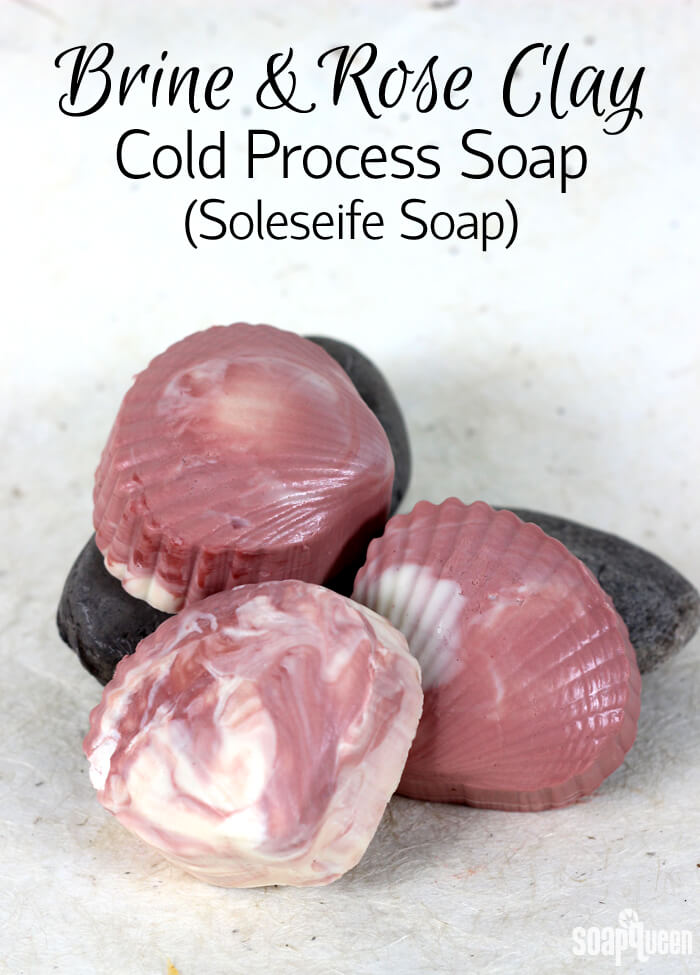
A typical cold process salt bar involves adding salt crystals at trace. These are wonderful bars, but they tend to be crumbly and may not last as long, as the salt dissolves with use. Soleseife (or brine soap) is the German name for soap made with salt water. Brine soap is a fantastic alternative to the standard salt bar. The salt is dissolved into the lye water leaving a smooth-textured, creamy white, extremely hard bar of soap. Salt does decrease lather – but this can be counteracted with a high percentage of coconut oil in your recipe. Just be sure to use a high superfat so it does not become drying.
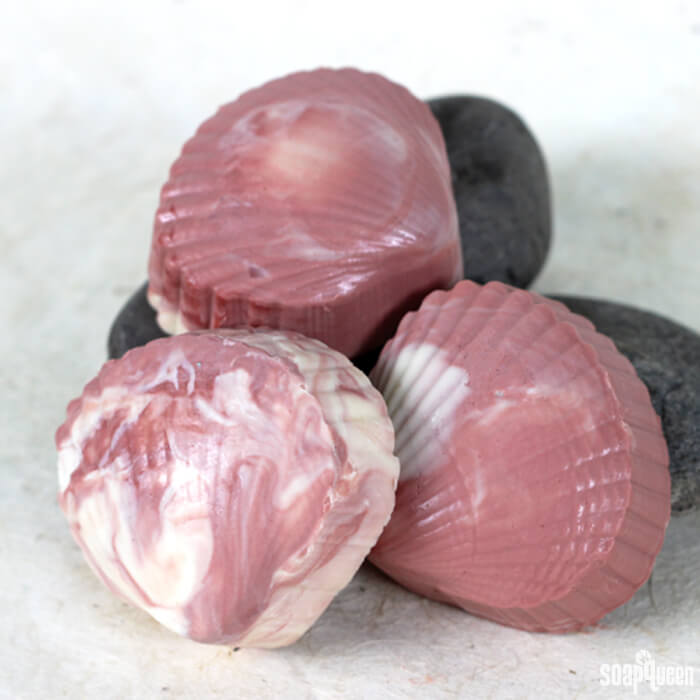
This recipe was actually the inspiration behind the Lavender and Rose Pink Salt Bars. Using a similar design of an in-the-pot swirl with rose clay, these bars look similar but feel drastically different. It’s amazing how using salt water rather than adding salt at trace changes the look and feel. If you’re looking for a small amount of exfoliation, I would recommend adding salt at trace like in the Lavender and Rose Pink Salt Bars. If you like a smooth feel, brine soap is the way to go. Both techniques produce an extremely creamy lather.
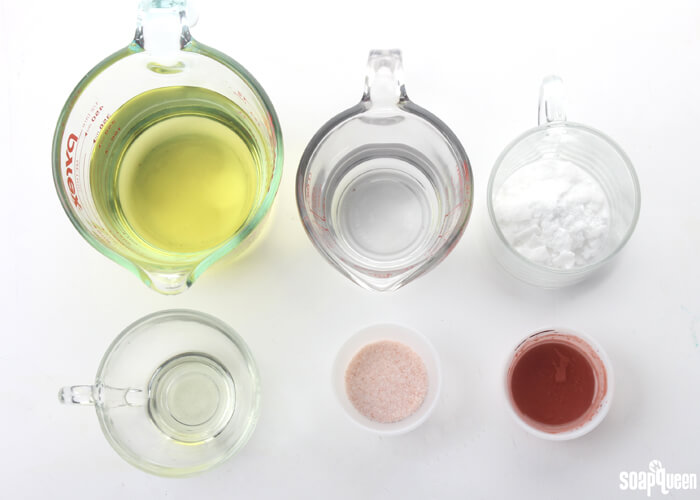
What You’ll Need:
Note: This recipe uses a 10% superfat to counteract the high percentage of coconut oil in this recipe.
Clam Shell Mold
3.6 oz. Distilled Water
1.6 oz. Sodium Hydroxide Lye
.5 oz. Pink Himalayan Sea Salt (Extra Small) (14% of the water amount)
8.3 oz. Coconut Oil (75%)
1.9 oz. Olive Oil (17%)
0.6 oz. Avocado Oil (5%)
0.3 oz. Castor Oil (3%)
Rose Clay
0.5 oz. Lemongrass Essential Oil

Click here to add everything you need for this project to your Bramble Berry shopping cart!
If you’ve never made Cold Process soap before, stop here! I highly recommend checking out our FREE four part SoapQueen.tv series on Cold Process Soapmaking, especially the episode on lye safety. And if you’d rather do some reading, Bramble Berry carries a wide range of books on the topic, including my newest book, Soap Crafting. You can also checkout the digital downloads for that instant gratification factor.
SAFETY FIRST: Suit up for safe handling practices! That means goggles, gloves and long sleeves. Make sure kids, pets, and other distractions and tripping hazards are out of the house or don’t have access to your soaping space. Always soap in a well-ventilated area.
FRAGRANCE PREP: Measure .5 ounces of the lemongrass essential oil in a glass, essential oil safe container. Set aside.
COLOR PREP: Disperse 1.5 teaspoons of the Rose Clay into 1.5 tablespoons of distilled water. Clays are best dispersed in water rather than oil because of their ability to absorb moisture.
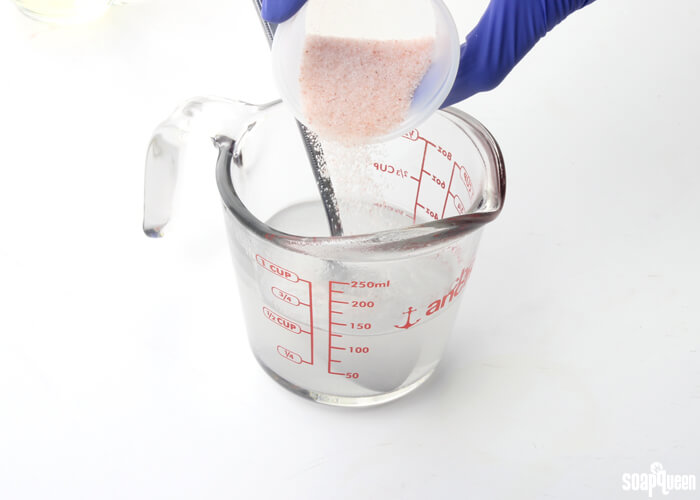
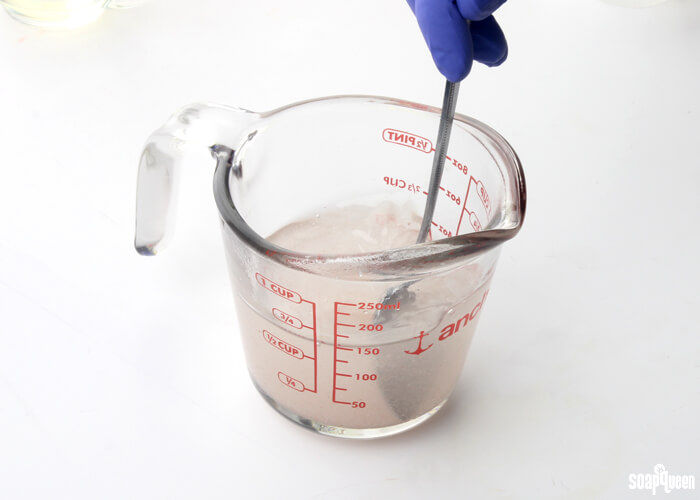
ONE: Slowly and carefully add the lye to the water and gently stir until the lye has fully dissolved. While the lye water is still very hot, add the pink sea salt and stir until most of the salt is dissolved. A small amount may remain undissolved. Be very careful while stirring, and be sure to have on all your safety gear. Set lye aside.
TWO: Melt and combine the coconut oil, olive oil, avocado oil and castor oil. Once the lye water and the oils have cooled to 120 degrees or below (and are ideally within 10 degrees of each other), add the lye water to the oils and stick blend until thin trace. The large amount of coconut oil and salt will cause this batter to thicken quickly, so be careful to not over blend.
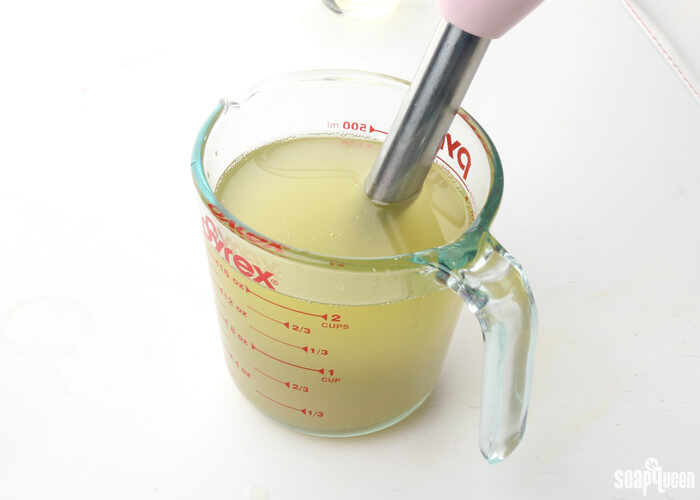
THREE: Once you’ve reached a thin trace, whisk in the lemongrass essential oil. Then, split off about 1/3 of the soap batter (it’s okay to eyeball it) into a separate container. Add all of the dispersed rose clay to this container and use a whisk to fully mix in.
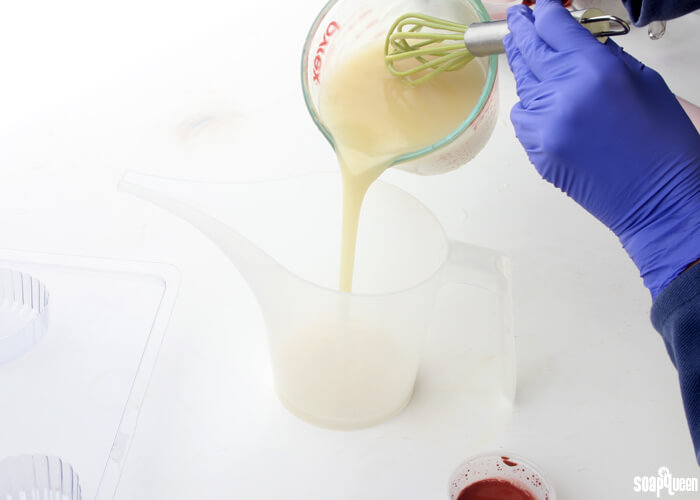
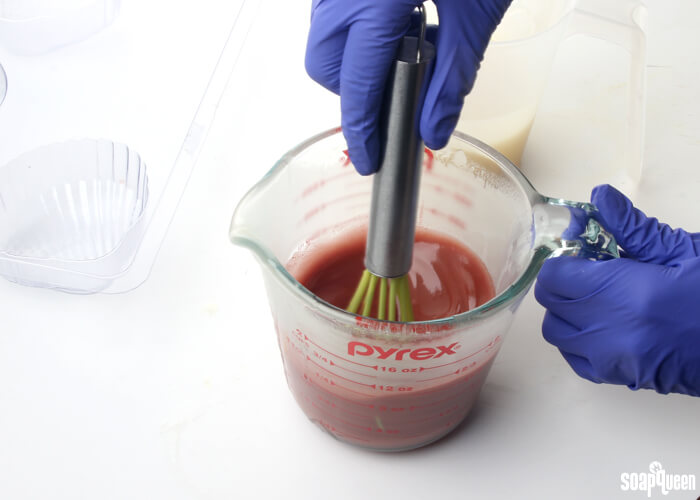
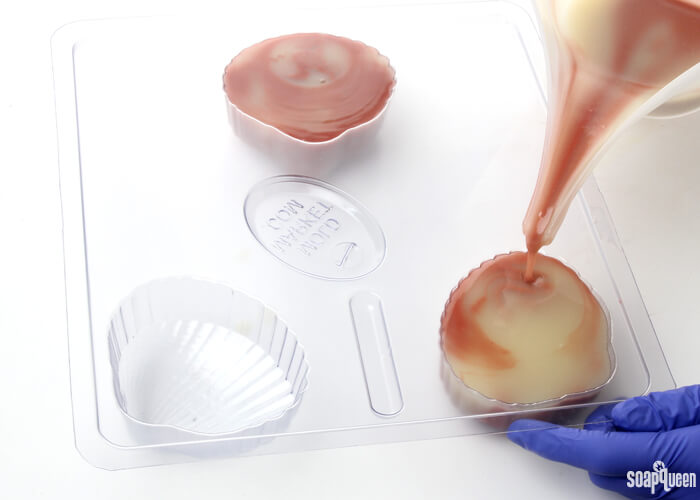
FOUR: Stir the uncolored batter to loosen the trace. Next, pour the pink batter into the uncolored batter in a circular pattern. Pour the batter from several inches above the other container to make sure the pink soap breaks through down to the bottom of the container.
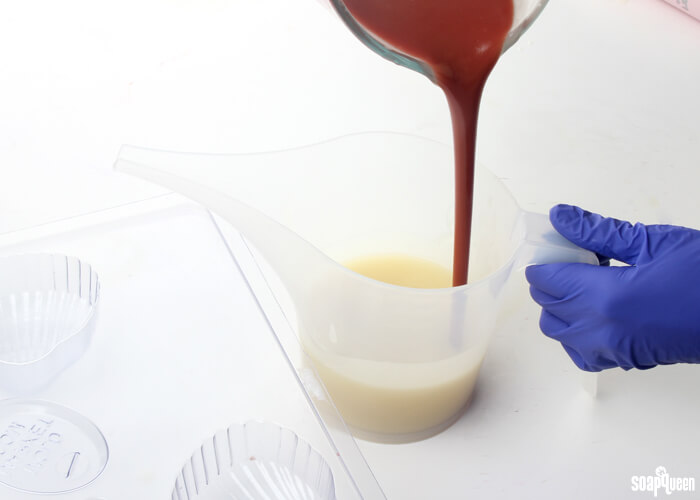
FIVE: Pour the combined batters into the mold cavities. Spritz the top of the soap with 99% isopropyl alcohol to help prevent soda ash. Allow the soaps to set for 24-48 hours before unmolding. Cure soaps for 4-6 weeks before using and enjoy!
How do you prefer to incorporate salt into your soap?
Brine and Rose Clay Cold Process Soap (Soleseife Soap)
Ingredients
- Clam Shell Mold
- 3.63 oz Distilled Water
- 1.6 oz Sodium Hydroxide Lye
- .5 oz Pink Himalayan Sea Salt Extra Small (14% of the water amount)
- 8.3 oz Coconut Oil 75%
- 1.9 oz Olive Oil 17%
- 0.6 oz Avocado Oil 5%
- 0.3 oz Castor Oil 3%
- Rose Clay
- 0.5 oz Lemongrass Essential Oil
Instructions
SAFETY FIRST: Suit up for safe handling practices! That means goggles, gloves and long sleeves. Make sure kids, pets, and other distractions and tripping hazards are out of the house or don’t have access to your soaping space. Always soap in a well-ventilated area.
FRAGRANCE PREP: Measure .5 ounces of the lemongrass essential oil in a glass, essential oil safe container. Set aside.
COLOR PREP: Disperse 1.5 teaspoons of the Rose Clay into 1.5 tablespoons of distilled water. Clays are best dispersed in water rather than oil, because of their ability to absorb moisture.
- Slowly and carefully add the lye to the water and gently stir until the lye has fully dissolved. While the lye water is still very hot, add the pink sea salt and stir until most of the salt is dissolved. A small amount may remain undissolved. Be very careful while stirring, and be sure to have on all your safety gear. Set lye aside.
- Melt and combine the coconut oil, olive oil, avocado oil and castor oil. Once the lye water and the oils have cooled to 120 degrees or below (and are ideally within 10 degrees of each other), add the lye water to the oils and stick blend until thin trace. The large amount of coconut oil and salt will cause this batter to thicken quickly, so be careful to not over blend.
- Once you’ve reached a thin trace, whisk in the lemongrass essential oil. Then, split off about 1/3 of the soap batter into a separate container. Add all of the dispersed rose clay to this container and use a whisk to fully mix in.
- Stir the uncolored batter to loosen the trace. Next, pour the pink batter into the uncolored batter in a circular pattern. Pour the batter from several inches above the other container, to make sure the pink soap breaks through down to the bottom of the container.
- Pour the combined batters into the mold cavities. Spritz the top of the soap with 99% isopropyl alcohol to help prevent soda ash. Allow the soaps to set for 24-48 hours before unmolding. Cure soaps for 4-6 weeks before using and enjoy!
