




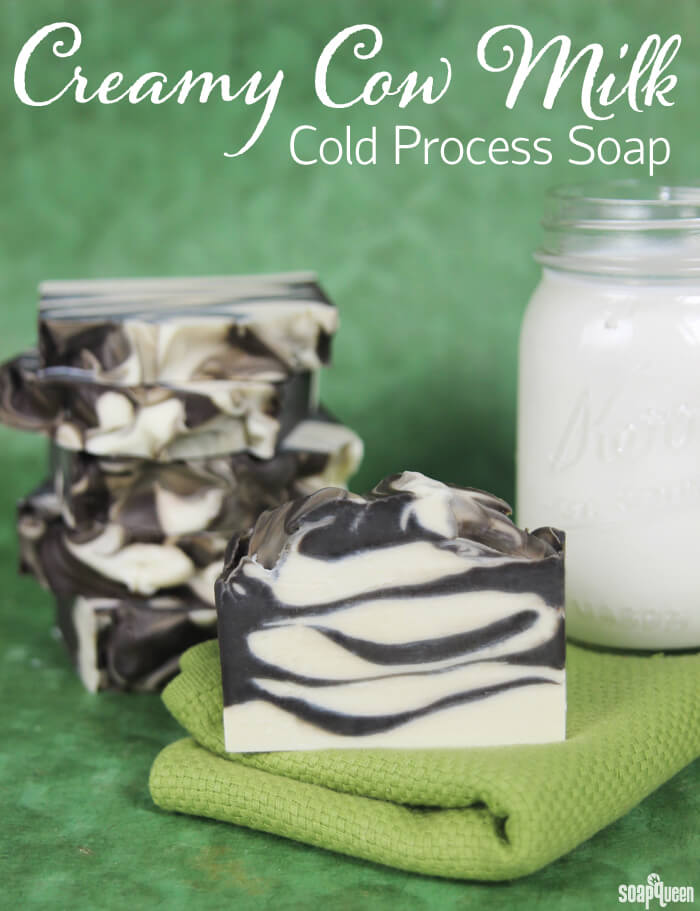
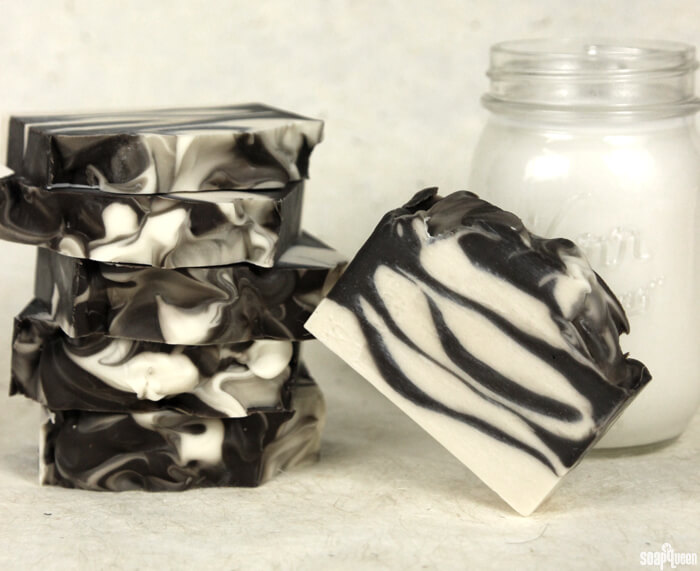
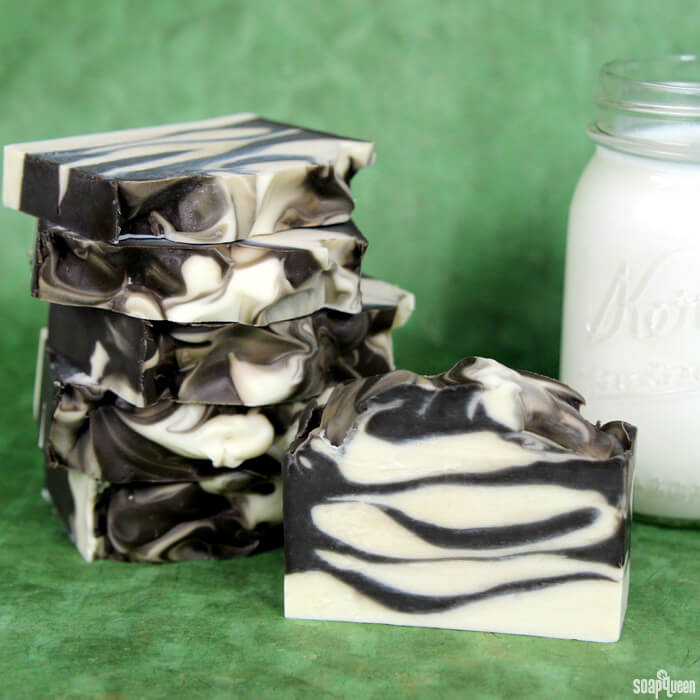
Soap made with goat milk is popular, but did you know luxurious soap can also be made with cow milk? For this Creamy Cow Milk Cold Process Tutorial, whole cow milk is used to add extra moisture and skin-loving properties. Full of contrast, this project features black and white layers reminiscent of a cow pattern. The scent combination of Vanilla Rosewood and Grass Stain fragrance oils creates a blend that is both warm and green…similar to a barn!
Freezing the cow milk before adding the lye prevents the milk from scorching. For a step by step tutorial of this process, check out this How to Add Lye to Milk for Cold Process Soap blog post. When selecting milk for soap making, be on the lookout for the least amount of additives such as vitamins, preservatives or thickeners. These additives can cause unpredictable soaping results. It can be difficult to find milk without vitamins. This recipe uses whole milk with added vitamin D; it worked great. You can also use skim, 1% or 2% milk if you’d like.
What You’ll Need:
10″ Silicone Loaf Mold
3.5 oz. Sweet Almond Oil (10%)
8.8 oz. Coconut Oil (25%)
10.5 oz. Olive Oil (30%)
8.7 oz. Palm Oil (25%)
3.5 oz. Shea Butter (10%)
4.9 oz. Sodium Hydroxide Lye
11.6 oz. Whole Milk
1 oz. Vanilla Rosewood Fragrance Oil
1 oz. Grass Stain Fragrance Oil
Titanium Dioxide Pigment
Activated Charcoal

If you’ve never made Cold Process soap before, stop here! I highly recommend checking out our FREE four part SoapQueen.tv series on Cold Process Soapmaking, especially the episode on lye safety. And if you’d rather do some reading, Bramble Berry carries a wide range of books on the topic, including my newest book, Soap Crafting. You can also checkout the digital downloads for that instant gratification factor.
SAFETY FIRST: Suit up for safe handling practices! That means goggles, gloves and long sleeves. Make sure kids, pets, and other distractions and tripping hazards are out of the house or don’t have access to your soaping space. Always soap in a well-ventilated area.
MILK PREP: Measure out 11.6 ounces of whole milk. Pour the milk into ice cube trays and place them into the freezer until completely hard (several hours to overnight).
COLOR PREP: To ensure that the Titanium Dioxide blends smoothly into the soap batter, we recommend micronizing it before dispersing it in oil. Please note this is an optional tip but it does help with the titanium dioxide clumping in the soap =) To micronize colorant, simply use a coffee grinder to blend the colorant to break up any clumps of color and prevent streaks of white from showing in the final soap. We like to use a coffee grinder that has a removable, stainless steel mixing area for easy cleaning. Then, disperse 2 teaspoons of the colorant into 2 tablespoon of sunflower or sweet almond oil (or any other liquid oil). Disperse 2 teaspoons of the activated charcoal into 2 tablespoon light liquid oil. Use a mini mixer to get the clumps of color worked out smoothly.
ONE: Remove the fully frozen milk from the ice cube trays and put it into a container that has been placed in an ice bath. Slowly add lye and stir until the lye is fully dissolved and the milk has become liquid. Click here to see this process and more tips on creating a lye and milk mixture. If you’d like a harder bar of soap that releases faster from the mold, you can add sodium lactate to the cooled lye milk. Use 1 teaspoon of sodium lactate per pound of oils in the recipe. For this recipe, you’d add about 2.5 tsp. sodium lactate.
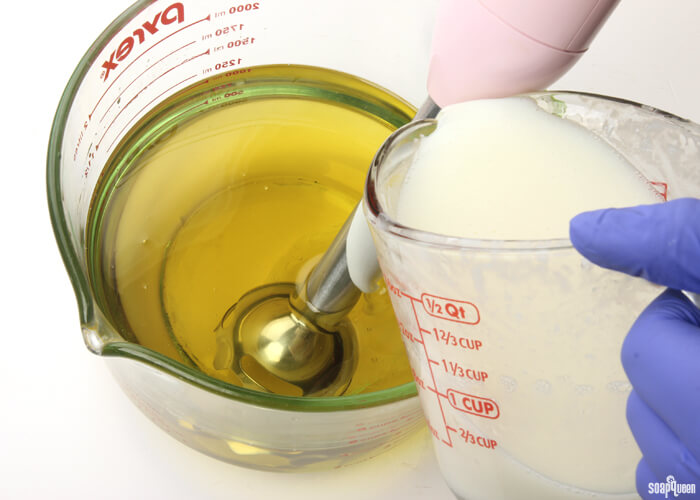
TWO: Melt and combine the coconut oil, olive oil, shea butter, sweet almond oil and palm oils (remember to fully melt then mix your entire container of palm oil before portioning). Once the oils have cooled to 130 degrees or below, add the lye milk to the oils and stick blend until thin trace.
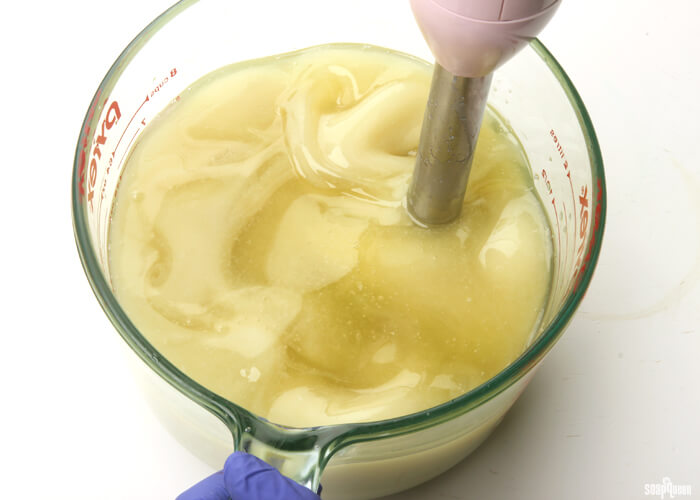
THREE: Once the batter has reached a light trace, split it evenly into two containers. Each container will hold about 3 cups. To one container, add all of the dispersed titanium dioxide. Use a whisk to fully blend in.
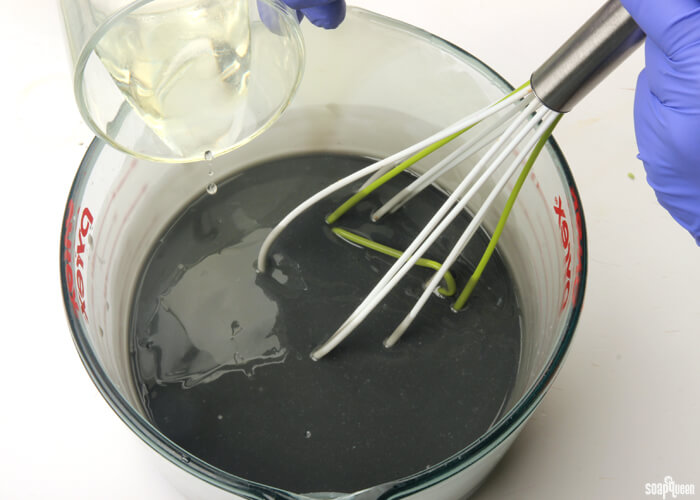
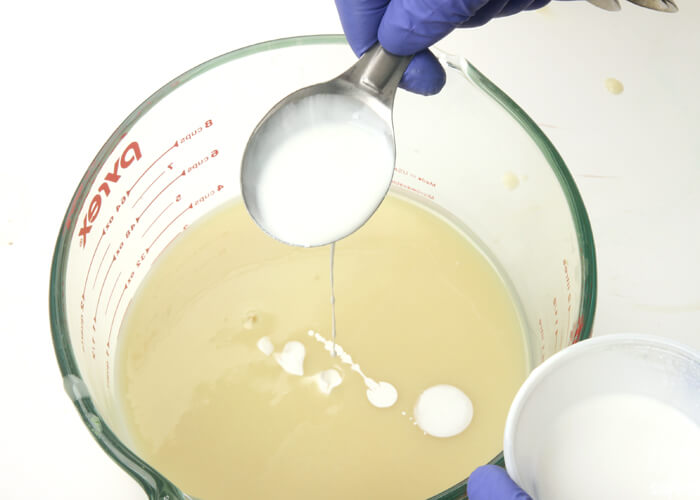 FOUR: To the other container, add 1 tablespoon and 2 teaspoons of the dispersed activated charcoal and use a whisk to fully mix in. To the black soap, add the Vanilla Rosewood Fragrance Oil. To the white soap, add the Grass Stain Fragrance Oil and use a whisk to mix in. Because the Vanilla Rosewood discolors to a deep brown, be sure not to mix the fragrances up! You can read more about fragrance discoloration in the Why Did My Soap Turn Brown post.
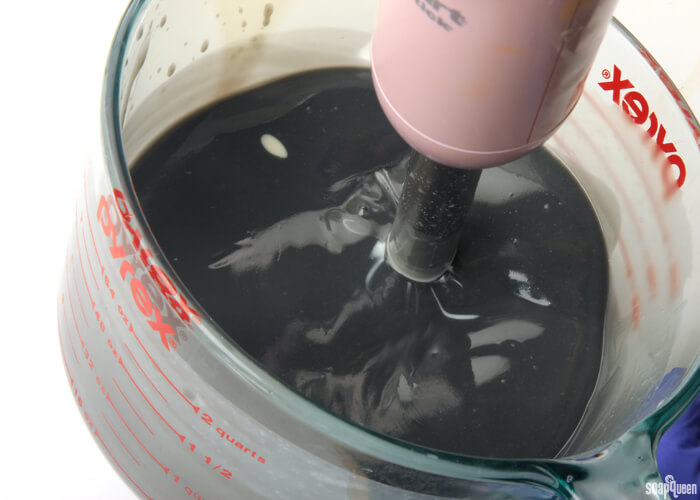
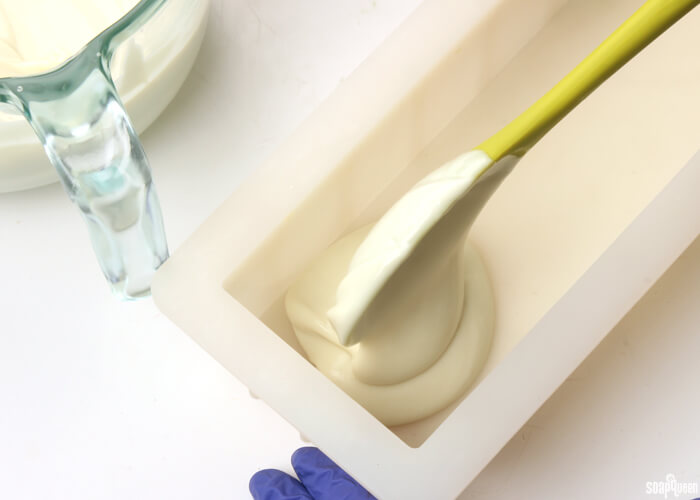
 FIVE: The spoon-plop technique works best with a thick trace. To thicken the soap, stick blend each color for several seconds if necessary. The soap should be the texture of pudding.
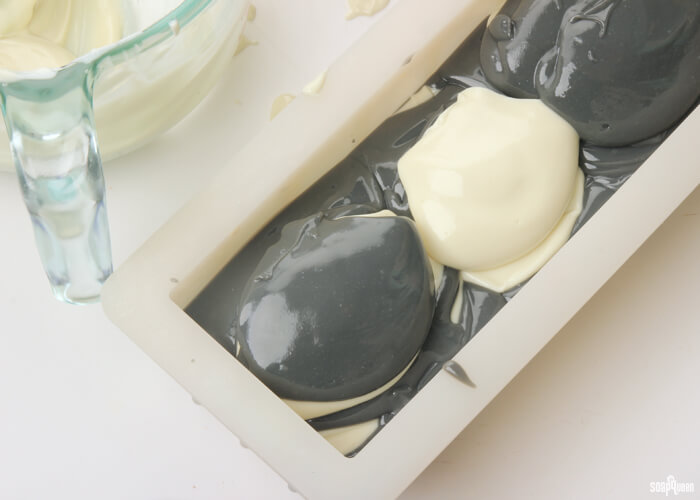
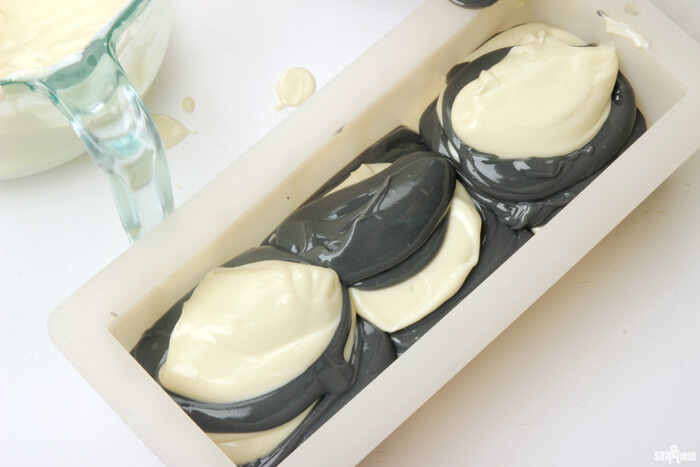
 SIX: Grab a large spoon for each color. Spoon the soap into the mold, one color at a time, layering them in three different spots within the mold.
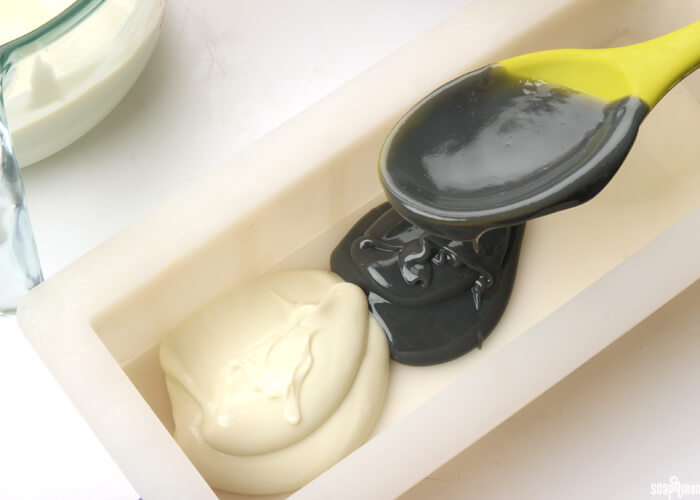 SEVEN: Continue to plop the soap, placing the white soap onto black and vice versa. Use some large plops and some small to add visual interest.
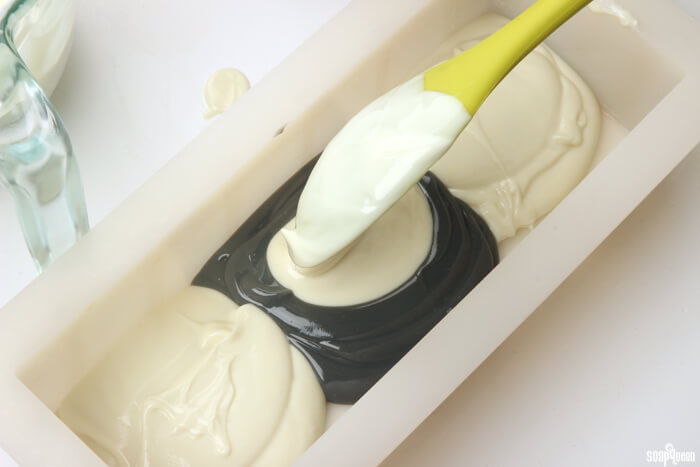
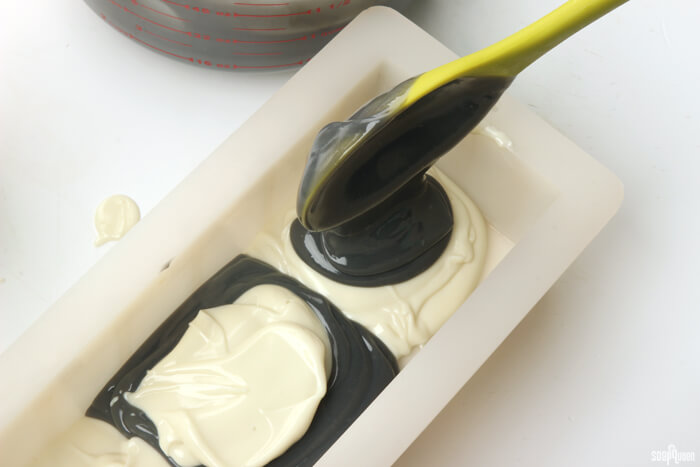 EIGHT: Keep layering the colors until the mold is completely full. Tap the mold firmly on the counter to help release any air bubbles.
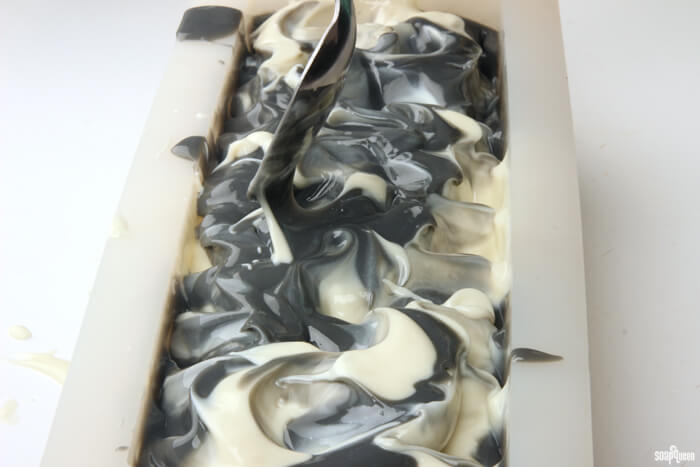
 NINE: Use a spoon to mound the soap toward the center. Then, twist and turn the soap in the soap to create texture. Be careful not to play with the soap too much, or the colors will blend together into a light grey tone. Spray the top of the soap with 99% isopropyl alcohol and place the soap in the freezer for 5-24 hours to help prevent gel phase. Remove the soap from the freezer and allow to sit in the mold for 4-5 days. Milk soap can be a little softer due to the extra milk fat. Patience is key =) Once cut, the black soap will deepen in color over time due to the vanilla content in the Vanilla Rosewood Fragrance Oil.
Have you ever used cow milk in soap before? I’d love to hear what you thought!
Creamy Cow Milk Cold Process Tutorial
Ingredients
- 10 " Silicone Loaf Mold
- 3.5 oz. Sweet Almond Oil 10%
- 8.8 oz. Coconut Oil 25%
- 10.5 oz. Olive Oil 30%
- 8.7 oz. Palm Oil 25%
- 3.5 oz. Shea Butter 10%
- 4.9 oz. Sodium Hydroxide Lye
- 11.6 oz. Whole Milk
- 1 oz. Vanilla Rosewood Fragrance Oil
- 1 oz. Grass Stain Fragrance Oil
- Titanium Dioxide Pigment
- Activated Charcoal
Instructions
SAFETY FIRST: Suit up for safe handling practices! That means goggles, gloves and long sleeves. Make sure kids, pets, and other distractions and tripping hazards are out of the house or don’t have access to your soaping space. Always soap in a well-ventilated area.
MILK PREP: Measure out 11.6 ounces of whole milk. Pour the milk into ice cube trays and place them into the freezer until completely hard (several hours to overnight).
COLOR PREP: To ensure that the Titanium Dioxide blends smoothly into the soap batter, we recommend micronizing it before dispersing it in oil. Please note this is an optional tip but it does help with the titanium dioxide clumping in the soap =) To micronize colorant, simply use a coffee grinder to blend the colorant to break up any clumps of color and prevent streaks of white from showing in the final soap. We like to use a coffee grinder that has a removable, stainless steel mixing area for easy cleaning. Then, disperse 2 teaspoons of the colorant into 2 tablespoon of sunflower or sweet almond oil (or any other liquid oil). Disperse 2 teaspoons of the activated charcoal into 2 tablespoons light liquid oil. Use a mini mixer to get the clumps of color worked out smoothly.
- Remove the fully frozen milk from the ice cube trays and place into a container that has been placed in an ice bath. Slowly add lye and stir until the lye is fully dissolved and the milk has become liquid. Click here to see this process and more tips on creating a lye and milk mixture. If you’d like a harder bar of soap that releases faster from the mold, you can add sodium lactate to the cooled lye milk. Use 1 teaspoon of sodium lactate per pound of oils in the recipe. For this recipe, you’d add about 2.5 tsp. sodium lactate.
- Melt and combine the coconut oil, olive oil, shea butter, sweet almond oil and palm oils (remember to fully melt then mix your entire container of palm oil before portioning). Once the oils have cooled to 130 degrees or below, add the lye milk to the oils and stick blend until thin trace.
- Once the batter has reached a light trace, split the batch evenly into two containers. Each container will hold about 3 cups. To one container, add all of the dispersed titanium dioxide. Use a whisk to fully blend in.
- To the other container, add 1 tablespoon and 2 teaspoons of the activated charcoal and use a whisk to fully mix in. To the black soap, add the Vanilla Rosewood Fragrance Oil. To the white soap, add the Grass Stain Fragrance Oil and use a whisk to mix in. Because the Vanilla Rosewood discolors to a deep brown, be sure not to mix the fragrances up! =)
- The spoon-plop technique works best with a thick trace. To thicken the soap, stick blend each color for several seconds if necessary.
- Grab a large spoon for each color. Spoon the soap into the mold, one color at a time, layering them in three different spots within the mold.
- Continue to plop the soap, placing the white soap onto black and vice versa. Use some large plops and some small to add visual interest.
- Keep layering the colors until the mold is completely full. Tap the mold firmly on the counter to help release any air bubbles.
- Use a spoon to mound the soap towards the center. Then, twist and turn the soap in the soap to create texture. Be careful not to play with the soap too much, or the colors will blend together into a grey tone. Spray the top of the soap with 99% isopropyl alcohol and place the soap in the freezer for 5-24 hours to help prevent gel phase. Remove the soap from the freezer and allow to sit in the mold for 4-5 days. Milk soap can be a little softer due to the extra milk fat. Patience is key =)