




Anne-Marie note: Elham sent me a baby care package months ago with a wonderful bar of beer soap. I couldn’t get over how nice it was in the shower with luxurious, soft lather that felt silky on the skin and rinsed away cleanly. She has graciously agreed to do a tutorial on this wonderful soap. Thank you Elham!
Hi, I’m Elham from SkinChakra® and I am so excited to be here for a guest post.
I have been a cosmetic chemist for almost half of my life, and I’ve had my own line of hand-crafted soap and skin care products for the past two years (in addition to my consulting activities in the cosmetic industry). I live in Bavaria in Germany, and so I have had the opportunity to experiment with countless beer soap variations. I am surrounded by small, handcrafted breweries, and I consider myself a specialist in beer soap. Not surprisingly, beer soap is one of my best selling products!
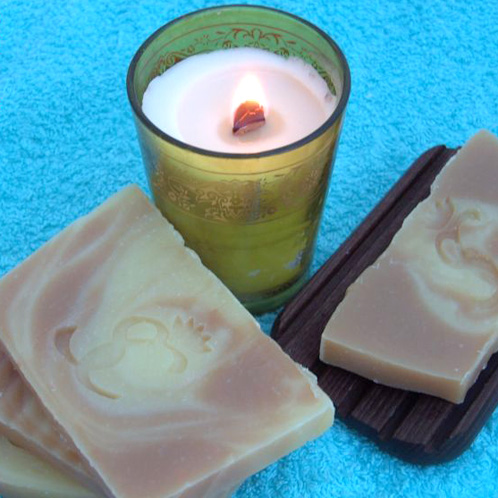
Today, I’ll show you how to make a marbled beer soap. I hope you enjoy this recipe! (Note from A-M: If you’ve never made Cold Process soap before, stop here! I highly recommend checking out our FREE four part SoapQueen.tv series on Cold Process Soapmaking, especially the episode on lye safety. And if you’d rather do some reading, Bramble Berry carries a wide range of books on the topic, including my newest book, Soap Crafting. You can also checkout the digital downloads for that instant gratification factor. — A-M.)
Notes from Elham before you begin:
1. The color of the soap depends on the beer and on the origin of all other oils. Lighter beers may cause slightly lighter colors while darker beers can cause more brownish colors. I’ve mainly applied virgin plant oils with intensive inherent colors, so the color of your oils might be different from mine. (Keep in mind that the color and even the scent of plant oils and essential oils differs from harvest to harvest and from batch to batch)
2. I understand that babassu oil is not available to most of you and that Bramble Berry doesn’t supply this oil at the moment. The only oil with exactly the same SAP value is palm kernel oil, and you can replace babassu with palm kernel oil in a 1:1 ration without running the whole calculation through the Lye Calculator. However, if you decide to replace it with any other oil, you have to recalculate the lye. I do not recommend increasing coconut oil, but you may replace babassu oil with each one of or a combination of : (perilla seed oil, rice bran oil, camelina seed oil, sesame oil, sweet almond oil etc.) I do not recommend applying cocoa butter in this recipe but you may apply shea butter, mango seed butter or partially hydrogenated soybean oil instead of babassu oil (don’t forget to run it through the lye calculator!)
3. I have not considered the superfat (soybean oil in my case) in the lye calculation. It means you can easily replace it with your preferred oil without any need to redo the lye calculation. I do not recommend green-colored oils in this recipe (Avocado, Tamanu or Hemp Seed Oil for example). My soybean is a virgin oil with a very intensive yellow color but it doesn’t affect the beer soap that much.
Beer preparation:
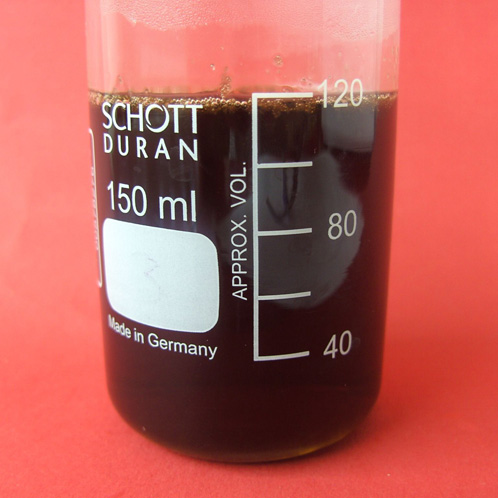
You need about two standard bottles of beer (12 oz. each, 24 oz. total). Our Bavarian bottles are bigger (500 ml or 16.9 oz) and I evaporated one bottle to about 1/3 of the original volume (5 oz or 150 ml). In this particular recipe, I knew I needed about 4.5 oz. of beer so I boiled much more than I needed to start with. (P.S. For more on preparing beer for soapmaking, check out a beer soap tutorial we did back in August. – A-M)
Before you begin, remember this important safety information:
Even if you are an experienced soapcrafter, it doesn’t hurt to review Anne-Marie’s fabulous video on lye safety or my blog post on safely handling sodium hydroxide. Remember: the most severe accidents tend be caused by experienced soapmakers and not beginners.
For this project you’ll need:
Chilled Beer (after evaporation): 4.6 oz
Cold distilled water: 4.6 oz
Sodium Hydroxide: 3.6 oz
Palm kernel oil: 20.0% (4.8 oz)
Palm oil: 15.0% (3.6 oz)
Coconut oil: 15.0% (3.6 oz)
Babassu oil: 5.0% (1.2 oz)
Rapeseed (Canola) oil: 20.0% (4.8 oz)
Sunflower oil: 20.0% (4.8 oz)
Castor oil: 5.0% (1.2 oz)
Soybean oil (superfat): 7.0 % (2.1 oz) based on oil content
Cedarwood Essential Oil: 2.5% (0.6 oz) based on oil content
2 lb. Wood Loaf Mold with Silicone Liner
SAFETY FIRST: Suit up for safe handling practices! That means goggles, gloves and long sleeves. Make sure kids, pets, and other distractions and tripping hazards are out of the house or don’t have access to your soaping space. Always soap in a well-ventilated area.
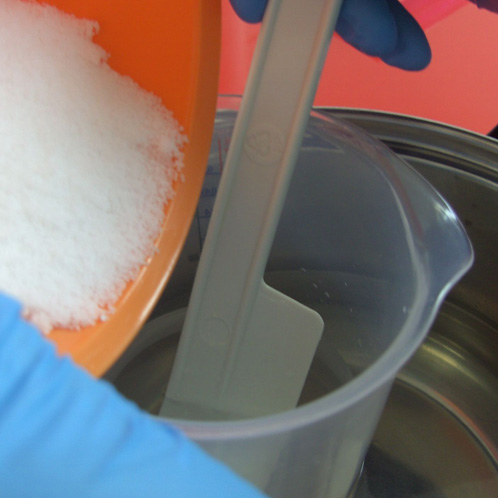
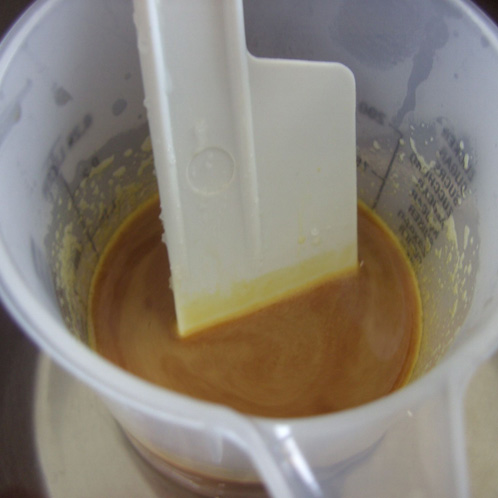
One: Prepare your lye solutions by slowly pouring the sodium hydroxide into the cold water and beer separately and stirring until the the lye has dissolved. (This means adding 1.8 oz lye to 4.6 oz water and 1.8 oz lye to 4.6 oz beer). The beer turns to an ugly dark color with a disgusting smell (don’t be disappointed, it is temporary). I prefer to keep my liquid pot in a cold water bath to better control and reduce the temperature of the lye water. If you’re working in a cold lab or soap kitchen you may rely on the room temperature to adjust the temperature.
Two: As the lye solution becomes cold, melt your solid oils in a water bath. Do not let the water temperature exceed 170 degrees F.
Three: When the solid oils are melted, add the Babassu, Rapeseed, Sunflower and Castor oils and mix gently with a spatula. (Note: If you don’t have any Babassu oil, you can substitute more coconut oil in its place. If you use more coconut oil, you’ll need to run the recipe through Bramble Berry’s lye calculator to get the new amounts of lye and liquid).
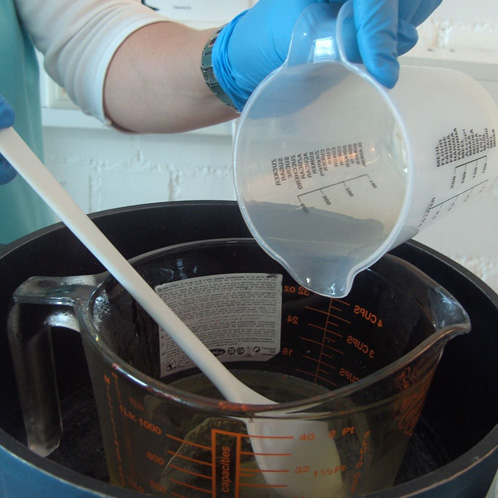
Four: Then combine the Soybean Oil and Cedarwood Essential Oil in a separate container. Mix well and then set aside for later.
Five: Measure the temperature of water-lye, beer-lye and the oil mixture. They should be around 100-120 degrees F with a max. of 10 degrees F difference between oil and lye as you mix lye and oil together.
Six: Divide your oil phase in two. Eyeballing is okay. If you’re working in a cold soap lab or kitchen, keep one part in the still-warm water bath to avoid cooling as you’re adding lye to the other part.
Seven: Gently tap your stick blender in the oil pot to get rid of air bubbles. Gently and slowly pour the lye (I prefer to start with the water-lye at first) over the blender. Turn the blender on and stir in short bursts. Avoid over mixing. You need a mixture with a thin trace. Keep in mind that this mixture doesn’t come to a heavy trace so don’t wait for it.
Eight: After you’re satisfied with the mixture, go to the second half of the oil blend and apply beer-lye over the stick blender and blend.
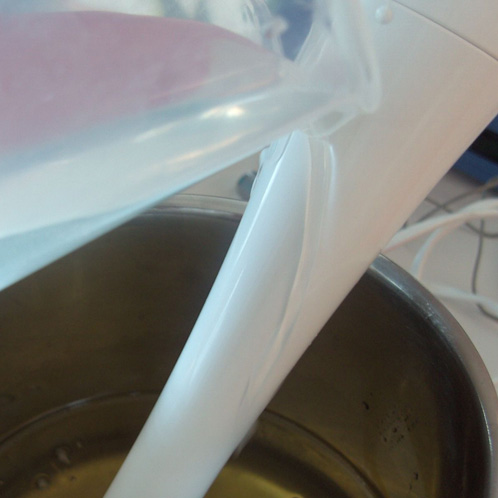
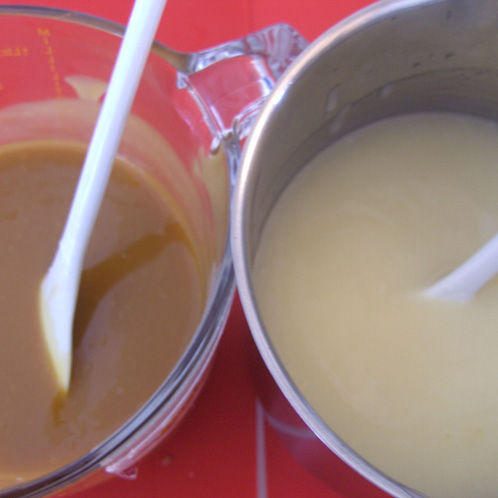
Nine: Apply the superfat and essential oil blend. Eyeballing is enough. Divide the mixture between two soap pots. Mix gently with a spatula.
Ten: The fun part begins from here. Alternate between pouring the dark soap and the light soap into the mold. There are no strict rules and there isn’t a ‘wrong’ way to do it! For this soap, I poured the batter from the middle of the mold, but you can try pouring from one side or one corner for different looks. Each time you marble, you’ll end up with a unique, beautiful result.
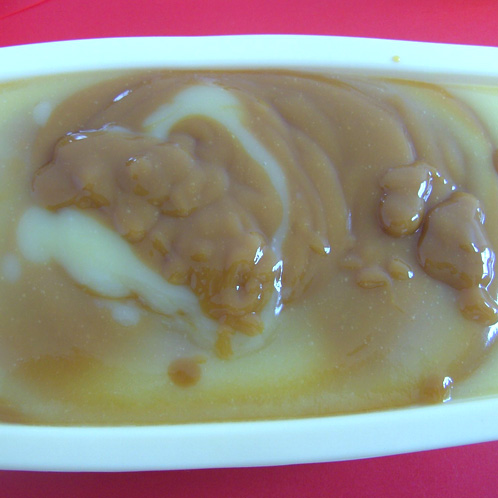
Pour both batters until you’ve poured all of the soap into the mold.
Eleven: Spray the surface with rubbing alcohol to avoid soda ash on the surface of the soap. As you see, I keep the surface rather rough. It’s up to you if you prefer a smooth surface or not.
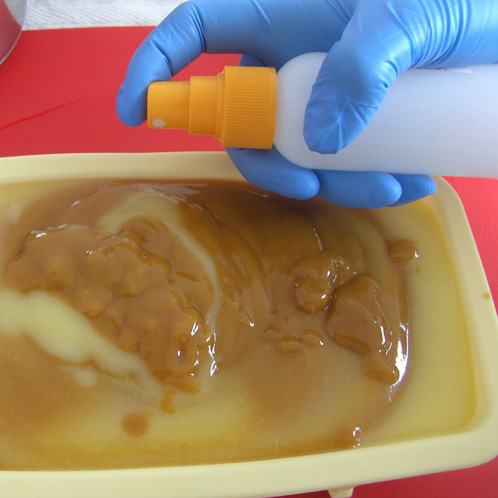
Twelve: We’re almost done now! Cover the mold and insulate the soap and keep it warm for at least 24 hours. I recommend waiting at least 48 hours before unmolding the soap.
As you can see, I like to use soap stamps in the finished bars. Then I set them on a curing rack and give them at least 8 weeks to fully cure.
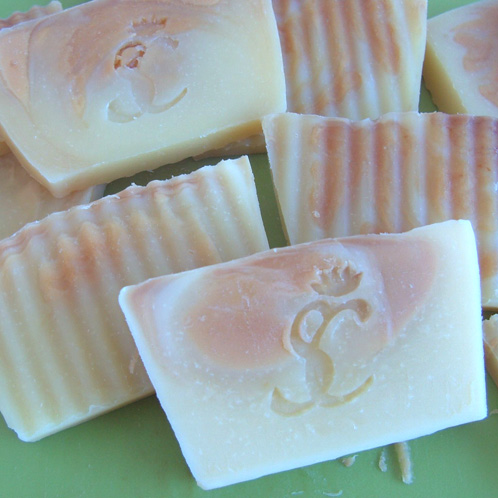
You’re welcome to visit my blog for other tutorials, and enjoy your beer soap! — Elham
