





If you’re a regular reader of the blog, you know cold process is my favorite method of soap making; it’s how I originally learned to make soap, and is my “first love.” But, there are multiple ways to create gorgeous soap, including hot process soap making. Hot process soaping is a fantastic (and quick!) method that results in a rustic style bar of soap.
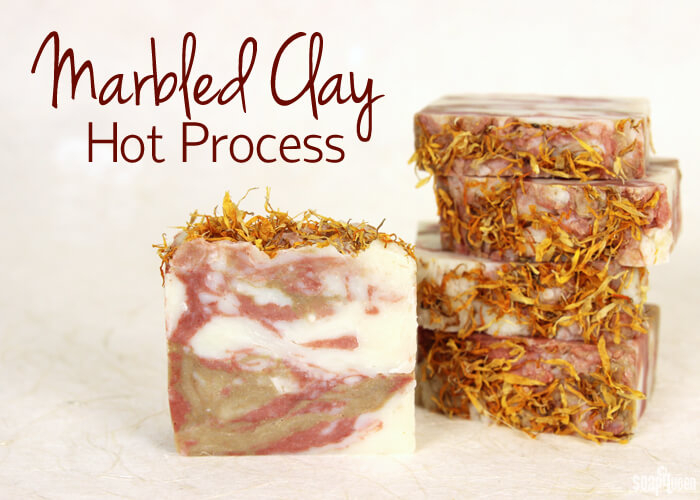
The main difference between the cold process and hot process methods is temperature. In cold process, hot oils and lye are combined to initiate the saponification process. The soap is then set aside for several days to harden and set up. In hot process, hot oils and lye are combined to begin saponification, and then introduced to heat via a Crock Pot or double boiler. The additional heat speeds up the saponification process and “cooks” the soap before it goes into the mold. This cuts down dramatically on the wait time! Make sure when making hot process soap, that your recipe does not fill up the Crock Pot more than halfway. Hot process soap tends to expand, and you don’t want it overflowing!
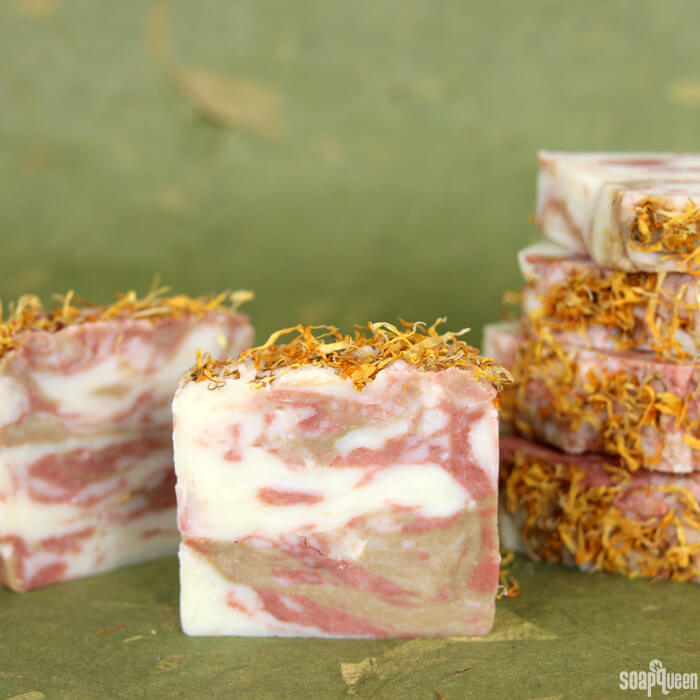
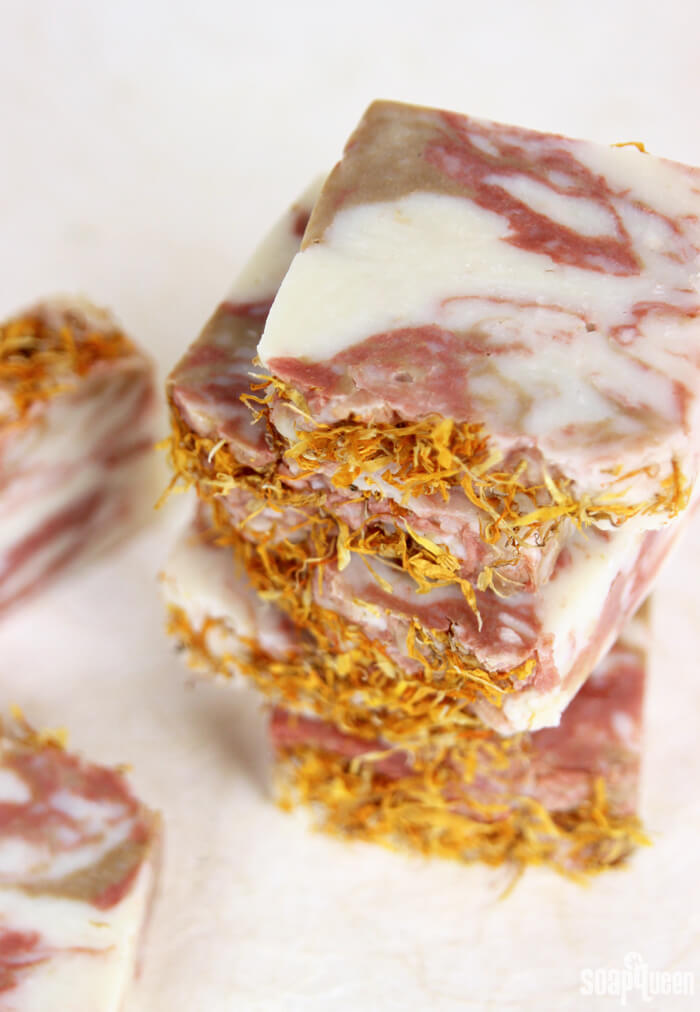
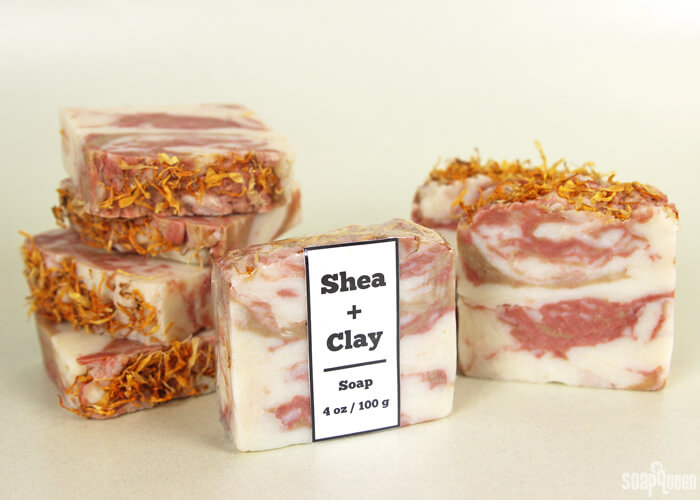
In this project, a Crock Pot is used to cook the soap but you can also use a double boiler. Natural red Brazilian and yellow silt clay give this soap a natural, marbled effect. Calendula petals are placed on top for additional flair.
What You’ll Need:
1.2 oz. Avocado Butter
2.3 oz. Avocado Oil
5.8 oz. Coconut Oil
6.9 oz. Olive Oil
5.8 oz. Palm Oil
1.2 oz. Shea Butter
.7 oz. Sodium Lactate
3.3 oz. Sodium Hydroxide Lye
7.7 oz. Distilled Water
.5 oz. Fresh Mango Fragrance Oil
.5 oz. Kumquat Fragrance Oil
Dark Red Brazilian Clay
Yellow Silt Clay
Marigold (Calendula) Petals
2 lb Wood Loaf Mold
Silicone Liner for 2 lb Wood Mold
Crock Pot

Click here to add everything you need for this project to your Bramble Berry shopping cart!
COLOR PREP: Disperse 1 teaspoon red Brazilian clay into 1 tablespoon distilled water. Disperse 1 teaspoon yellow silt clay into 1 tablespoon distilled water. Use a mini mixer to disperse any clumps.
FRAGRANCE BLEND: In a glass container, combine .5 oz. of Fresh Mango Fragrance Oil and .5 oz. of Kumquat Fragrance Oil. Set aside.
SAFETY FIRST: Suit up for safe handling practices! Goggles, gloves, and long sleeves are your soap making uniform. Be sure that kids and pets are out of the house or unable to access your soaping space, and always soap in a well-ventilated area. Make sure the soap volume will not fill up more than half of your crock pot. If you have never made cold process soap before, I highly recommend you get a couple of basic recipes under your belt before trying out this tutorial. Check out this (free!) 4-part series on cold process soap making, especially the episode on lye safety.
ONE: Slowly and carefully add the lye to the water and gently stir until the lye has fully dissolved and the liquid is clear. Set aside to cool. Once cooled, add sodium lactate. Sodium lactate is used in hot process at 3% of the oil weight to help produce a smoother bar.
TWO: Melt and combine the palm and coconut oils. Add the shea butter, avocado butter to the warmed oils and still until melted. Add the olive, and avocado and stir to combine. Pour the oils into your Crock Pot’s pot. Slowly add the lye water to the oils.
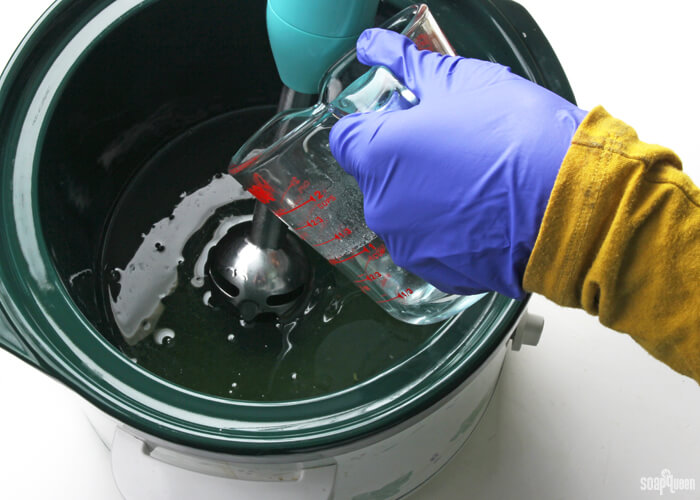 THREE: Mix with a stick blender until a thick trace is achieved.
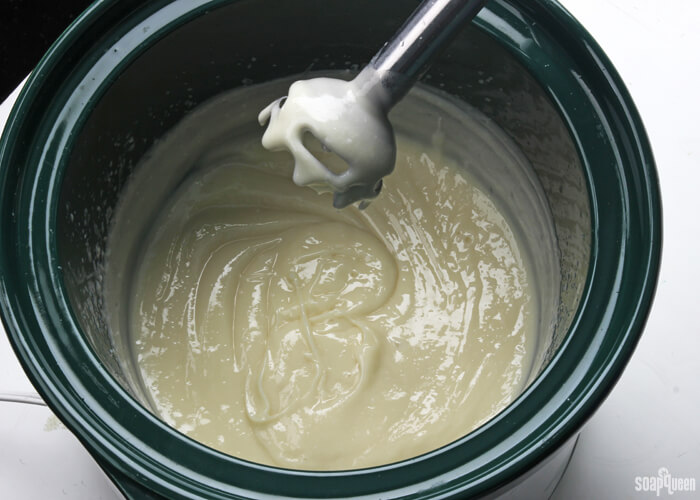
FOUR: Put the lid on the Crock Pot and set it to low. After 15 minutes, check the soap to see the progress made. Starting from the outside, the texture and color of the soap will start to change. If the middle does not appear to be changing, stir the batch to ensure even cooking. Don’t be surprised if the soap starts to grow in volume. Do not leave your soap unattended in the first 30 minutes of cook time for this reason. If the soap gets too high in the pot, take the pot off heat and stir like crazy.
FIVE: The batch will be ready when it’s the texture of mashed potatoes. This may take another 15 minute session or even two or three more stir’n’waits. When you think it’s ready, use a pH strip to test the levels. It should be showing below a 10. Be sure not to overcook the soap; you don’t want too dry a texture for the next steps!
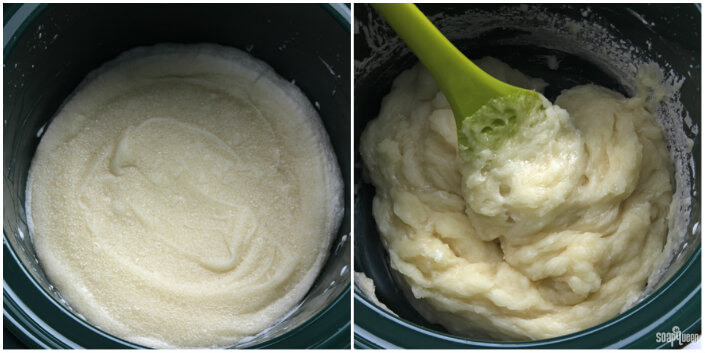 NOTE: The amount of time that the soap takes in the Crock Pot phase can depend on the size and shape of your Crock Pot. The flatter ones meant for roasts may go a bit quicker because the soap will be spread out thinner on the heated surface. Because this is a small batch of soap, you may find it will cook faster than larger batches. For our standard sized Crock Pot, the soap took 20 minutes to cook.
SIX: When the soap is ready, add the fragrance oil blend and mix well.
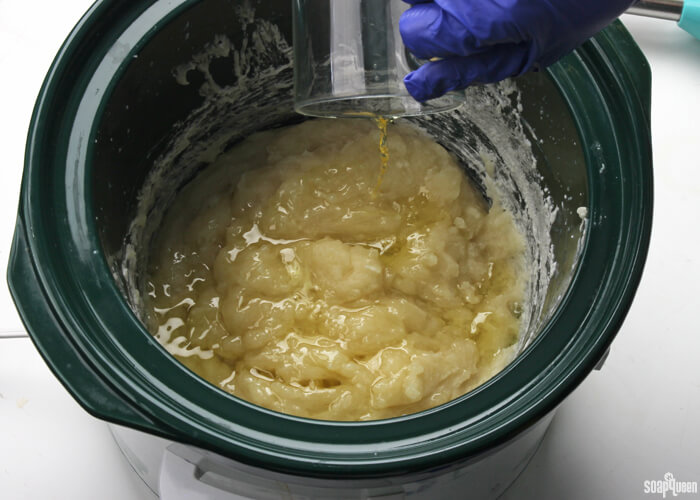 SEVEN: Split the soap into three even parts, leaving one part in the crock pot and transferring the other two into separate containers. Color one container with all the dispersed yellow silt clay, and the other with all the dispersed red Brazilian Clay. Stir in each of the colors well.
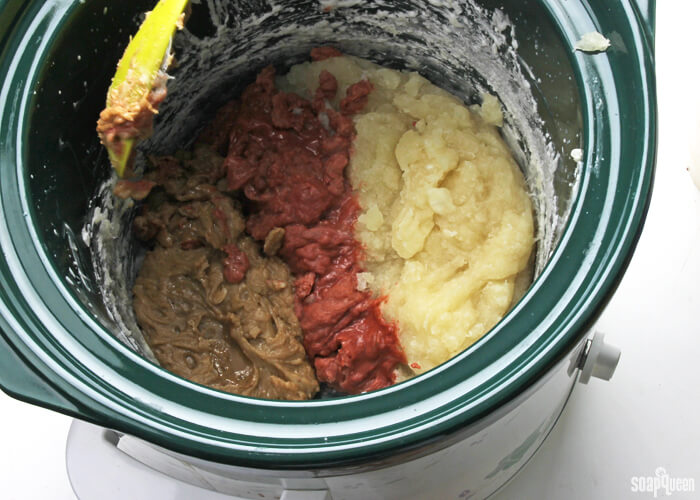
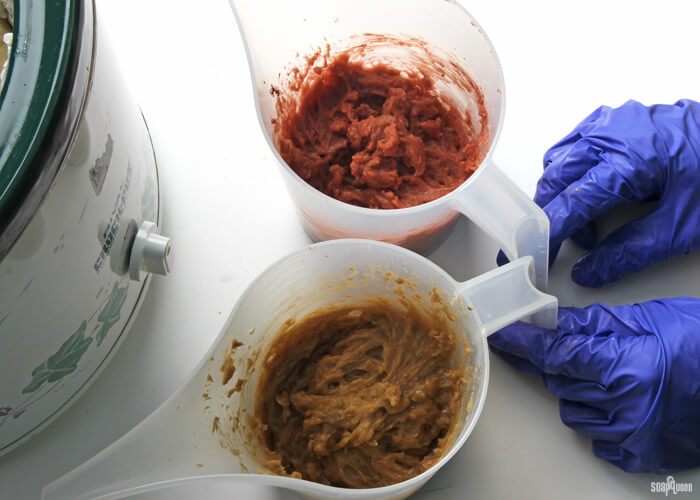 EIGHT: Move all the uncolored soap still in the Crock Pot to one side of the pot. Spoon the red colored soap next to the uncolored soap. Spoon the yellow colored soap into the pot, next to the red soap.
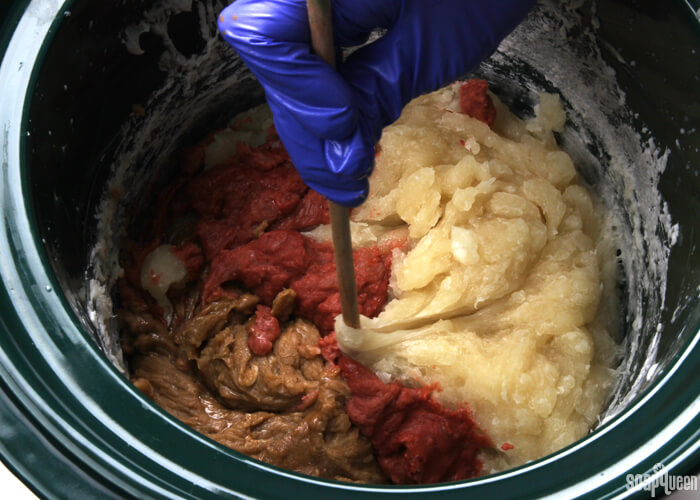
 NINE: Using a dowel or chopstick, swirl the three colors together by moving the swirling tool to one side of the Crock Pot to the other. Continue to swirl the colors together several times, until they are slightly combined.
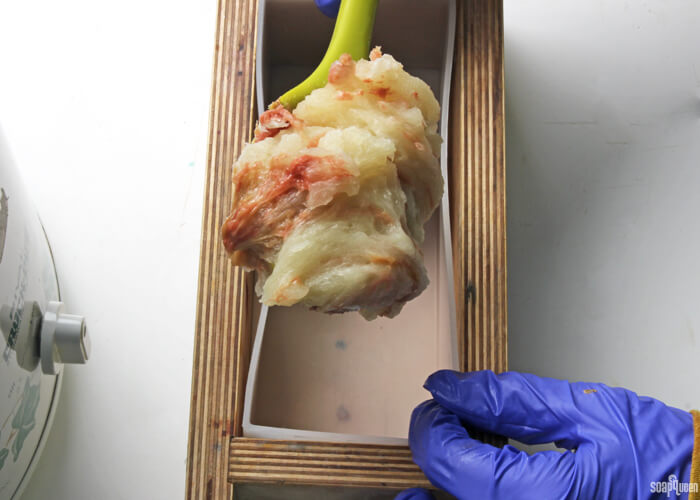
 TEN: Using a large spoon, transfer the soap into the mold, tapping the mold down on the counter in between each scoop.
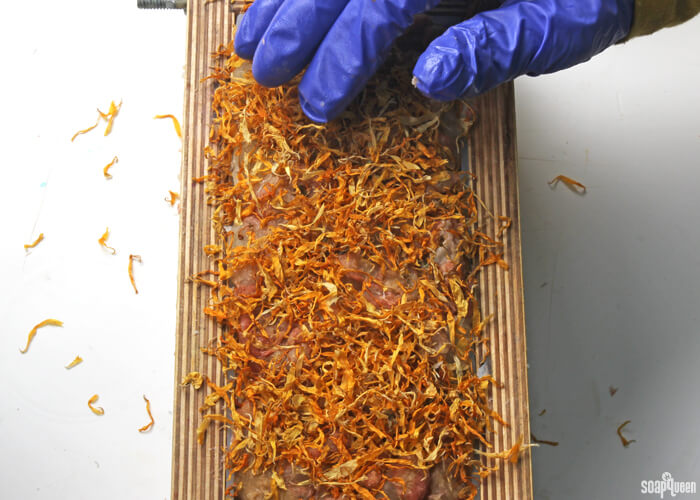
 ELEVEN: Once all the soap has been transfered, cover the top with calendula petals and press gently into the soap to help adhere.
Do you prefer hot process, or cold process soap? I’m excited to share more hot process recipes with you! If you’d like to see more hot process techniques and recipes, check out the blog posts below =)
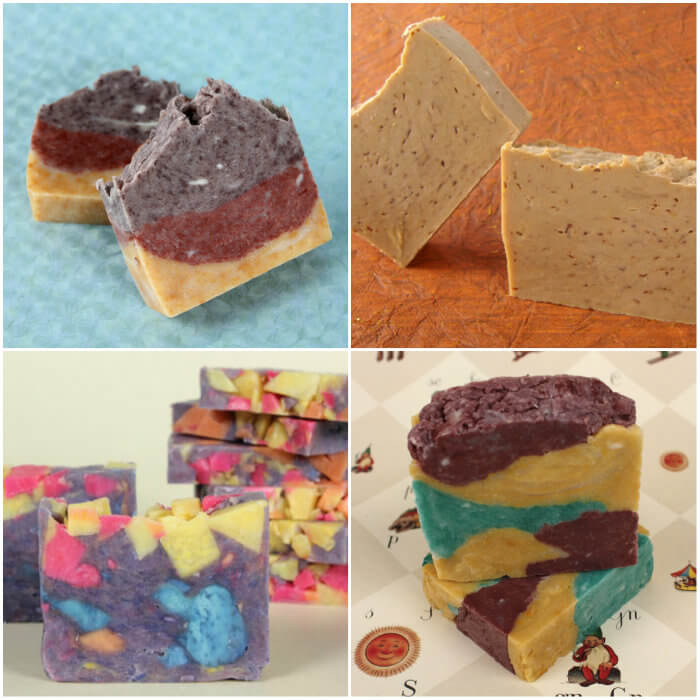 Top row: Hot Process Layers, Hot Process Hero
Bottom row: Black Cherry Bounces Back, Crock Pot Camo
Marbled Clay Hot Process Soap
Ingredients
- 1.2 oz. Avocado Butter
- 2.3 oz. Avocado Oil
- 5.8 oz. Coconut Oil
- 6.9 oz. Olive Oil
- 5.8 oz. Palm Oil
- 1.2 oz. Shea Butter
- 3.3 oz. Sodium Hydroxide Lye
- 7.7 oz. Distilled Water
- .7 oz. Sodium Lactate
- .5 oz. Fresh Mango Fragrance Oil
- .5 oz. Kumquat Fragrance Oil
- Dark Red Brazilian Clay
- Yellow Silt Clay
- Marigold Calendula Petals
Instructions
- Disperse 1 teaspoon red Brazilian clay into 1 tablespoon distilled water. Disperse 1 teaspoon yellow silt clay into 1 tablespoon distilled water. Use a mini mixer to disperse any clumps.
- In a glass container, combine .5 oz. of Fresh Mango Fragrance Oil and .5 oz. of Kumquat Fragrance Oil. Set aside.
- Suit up for safe handling practices! Goggles, gloves, and long sleeves are your soap making uniform. Be sure that kids and pets are out of the house or unable to access your soaping space, and always soap in a well-ventilated area. Make sure the soap volume will not fill up more than half of your crock pot.
- Slowly and carefully add the lye to the water and gently stir until the lye has fully dissolved and the liquid is clear. Set aside to cool. Once cooled, add sodium lactate. Sodium lactate in hot process helps produce a smoother bar.
- Melt and combine the palm and coconut oils. Add the shea butter, avocado butter to the warmed oils and still until melted. Add the olive, and avocado and stir to combine. Pour the oils into your Crock Pot’s pot. Slowly add the lye water to the oils.
- Mix with a stick blender until a thick trace is achieved.
- Put the lid on the Crock Pot and set it to low. After 15 minutes, check the soap to see the progress made. Starting from the outside, the texture and color of the soap will start to change. If the middle does not appear to be changing, stir the batch to ensure even cooking. Don’t be surprised if the soap starts to grow in volume. Do not leave your soap unattended in the first 30 minutes of cook time for this reason. If the soap gets too high in the pot, take the pot off heat and stir like crazy.
- The batch will be ready when it’s the texture of mashed potatoes. This may take another 15 minute session or even two or three more stir’n’waits. When you think it’s ready, use a pH strip to test the levels. It should be showing below a 10. Be sure not to overcook the soap; you don’t want too dry a texture for the next steps! NOTE: The amount of time that the soap takes in the Crock Pot phase can depend on the size and shape of your Crock Pot. The flatter ones meant for roasts may go a bit quicker because the soap will be spread out thinner on the heated surface. Because this is a small batch of soap, you may find it will cook faster than larger batches. For our standard Crock Pot, the soap took 20 minutes to cook.
- When the soap is ready, add the fragrance oil blend and mix well.
- Split the soap into three even parts, leaving one part in the crock pot and transferring the other to into separate containers to add clays. Color one split batch with all the dispersed yellow silt clay, and the other with all the dispersed red Brazilian Clay. Stir in each of the colors well.
- Move all the uncolored soap still in the Crock Pot to one side of the pot. Spoon the red colored soap next to the uncolored soap. Spoon the yellow colored soap into the pot, next to the red soap.
- Using a dowel or chopstick, swirl the three colors together by moving the swirling tool to one side of the Crock Pot to the other. Continue to swirl the colors together several times, until they are slightly combined.
- Using a large spoon, transfer the soap into the mold, tapping the mold down on the counter in between each scoop.
- Once all the soap has been transferred, cover the top with calendula petals and press gently into the soap to help adhere.
