





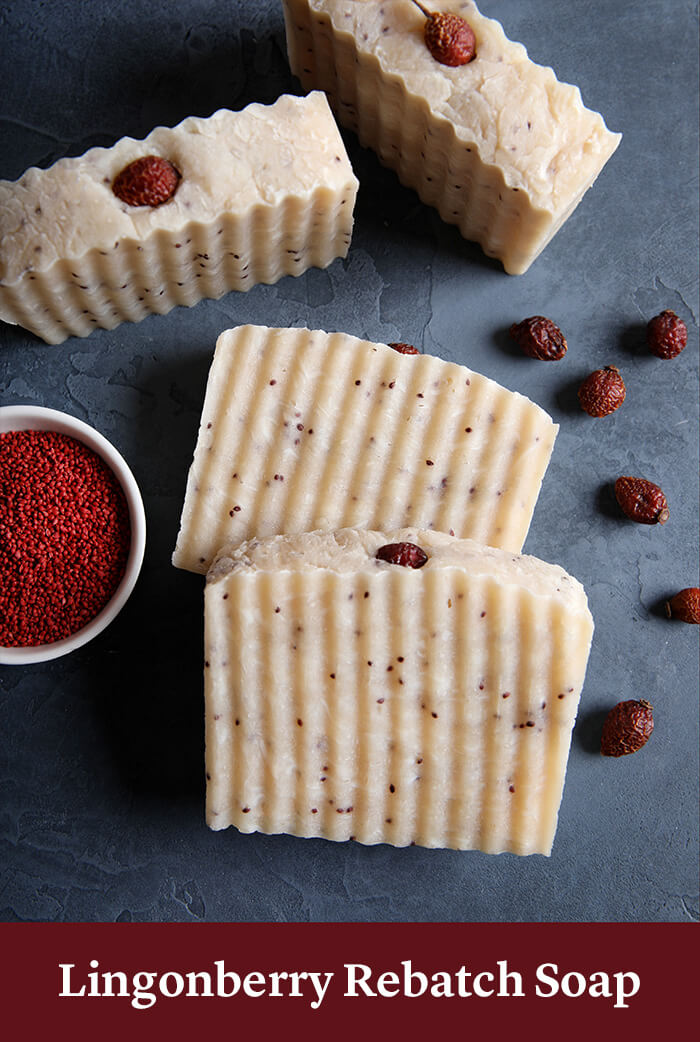
Rebatch is a technique that involves melting shredded cold process soap and customizing it with additives. This Lingonberry Rebatch Soap is made on the stove top, but you can also use a slow cooker or a double boiler. The key is low and slow heat to prevent burning.
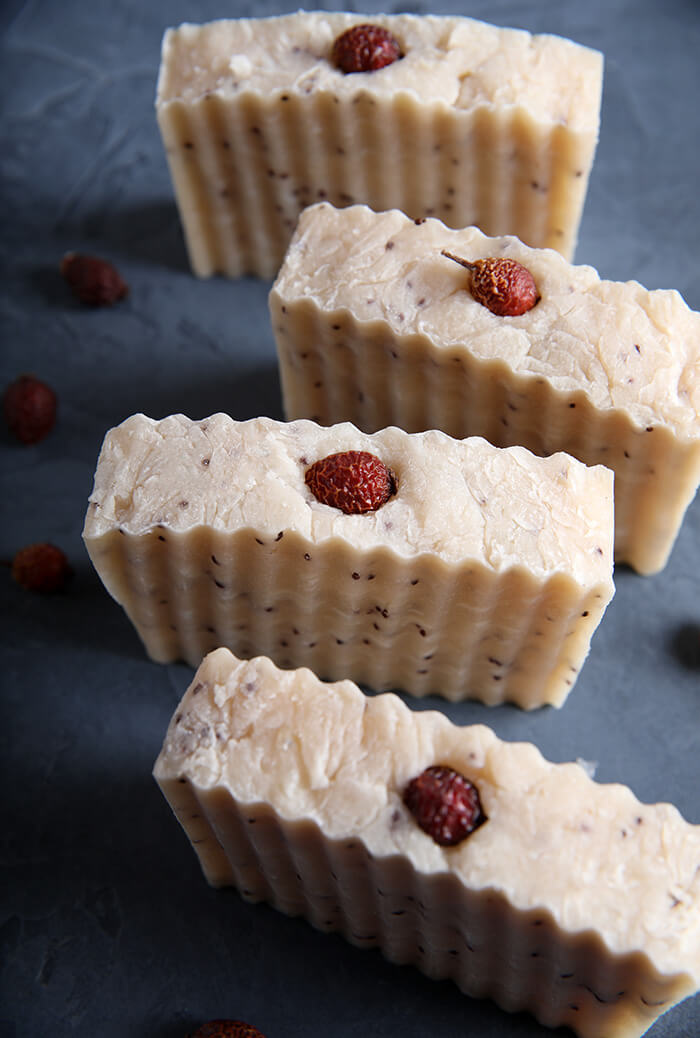
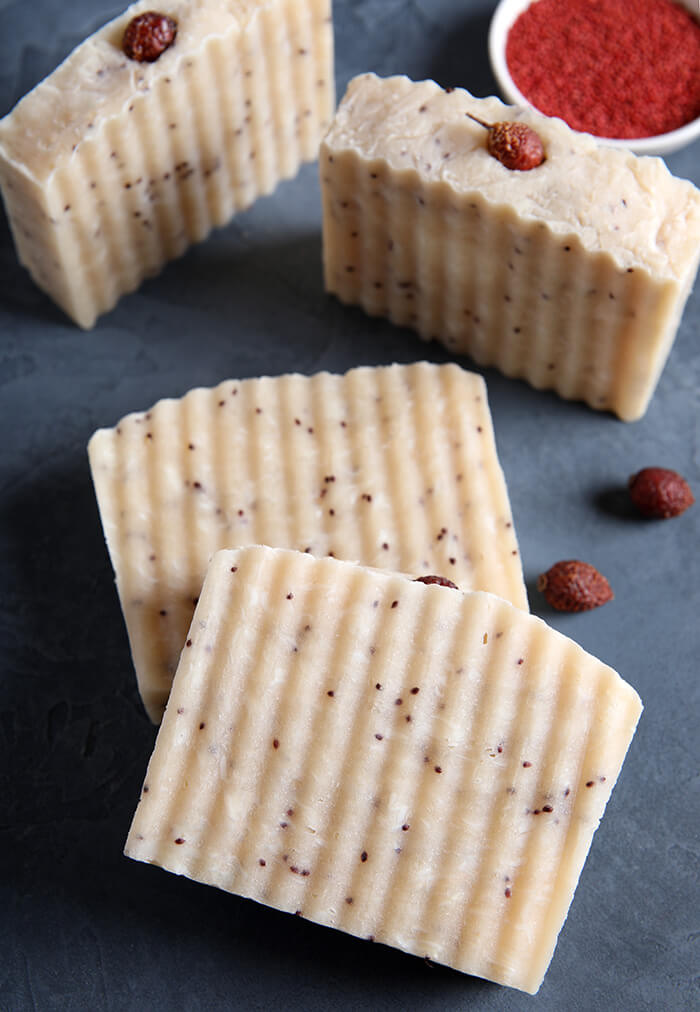
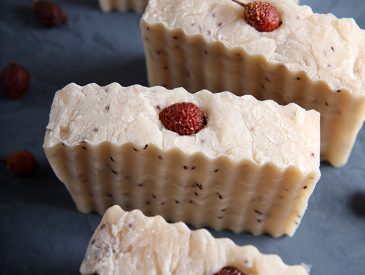
The recipe is scented with a blend of Lingonberry Spice Fragrance Oil and slightly sweeter Cranberry Fig Fragrance Oil. Cranberry seeds are added for exfoliation and interest. Rose hips are placed on top to give the bars a finishing touch.
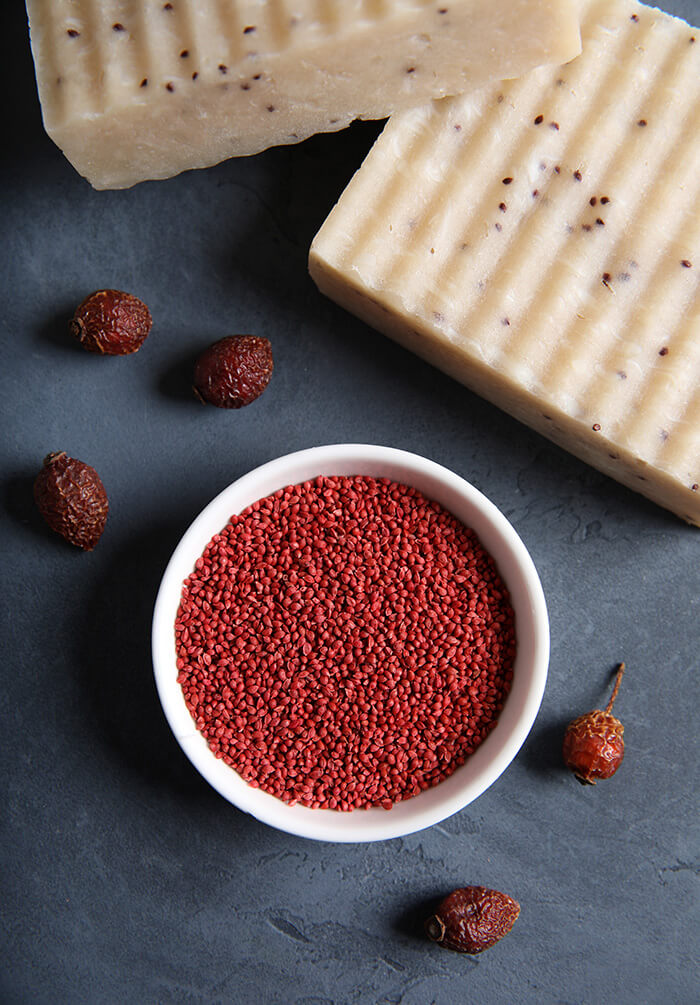
If you’ve never made rebatch soap before, learn how in the Wildflower Rebatch Soap video. In both projects we use the Grated Luxury Rebatch Soap. It’s made in-house with skin-loving ingredients like cocoa butter, shea butter, and mango butter. We recommend using it within 1-2 months. Older soap will need more distilled water and it will take longer to soften.
Lingonberry Rebatch Soap
What You Need:
10″ Silicone Loaf Mold
50 oz. Grated Luxury Rebatch Soap
4-6 oz. Distilled Water
1 oz. Cranberry Fig Fragrance Oil
0.5 oz. Lingonberry Spice Fragrance Oil
1 Tbsp. Cranberry Seeds
Rose Hips
Click below to add everything you need for this project to your Bramble Berry shopping cart!
FRAGRANCE PREP: Measure 1 ounce of Cranberry Fig Fragrance Oil and 0.5 ounces of Lingonberry Spice Fragrance Oil into a glass fragrance oil-safe container. Set aside.
ONE: Place a large sauce pot on the stove and turn the heat onto medium. You can also use a double boiler or a slow cooker.
TWO: Add as much rebatch soap as your pot can comfortably hold – we added about 30 ounces at first. Pour in about 2 ounces of distilled water.
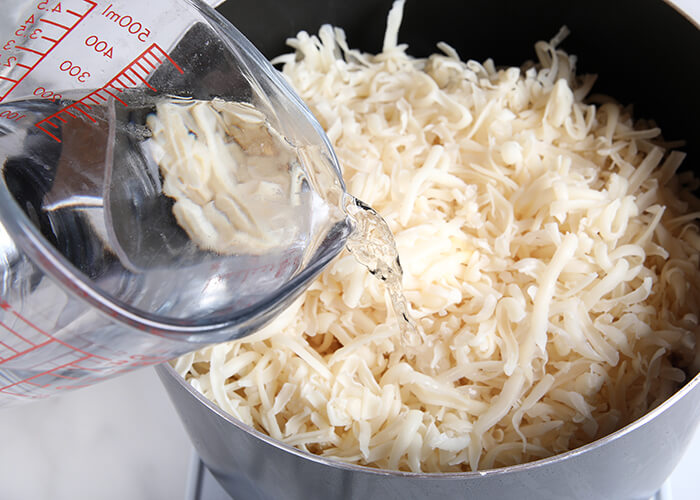
THREE: Allow the soap to heat up and soften. Stir every 30-60 seconds to prevent burning. After a few minutes, the soap will begin to condense into a very thick paste. Add the rest of the rebatch soap and 2-3 ounces of distilled water.
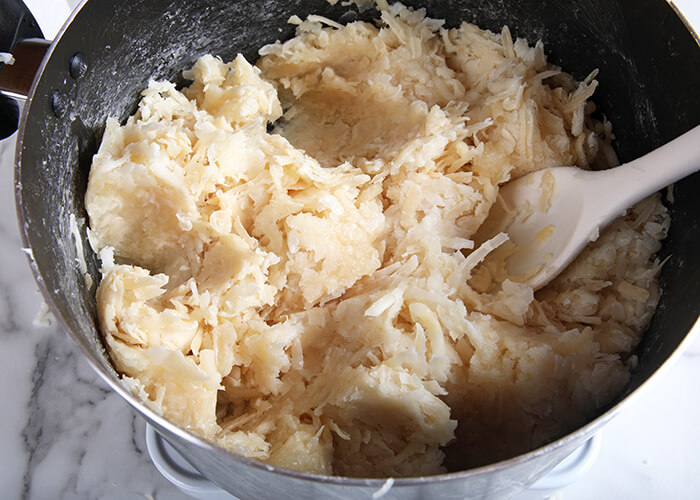
FOUR: As the soap continues to cook, it will become softer. Keep stirring every few minutes.
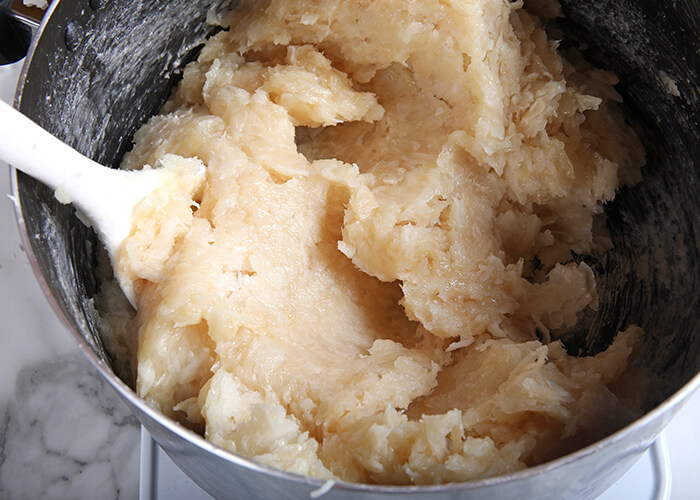
FIVE: Eventually the soap will take on the texture of very thick mashed potatoes with a slightly glossy look. All the small pieces of rebatch soap should be melted and incorporated.
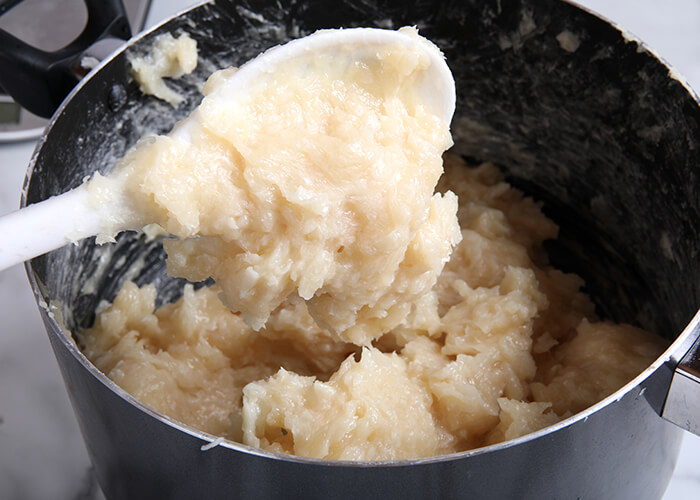
SIX: Turn off the heat and add the fragrance oil mixture. Stir in thoroughly.
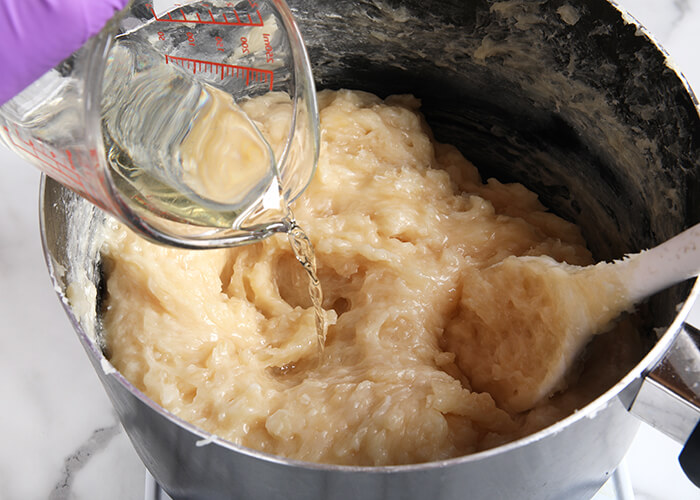
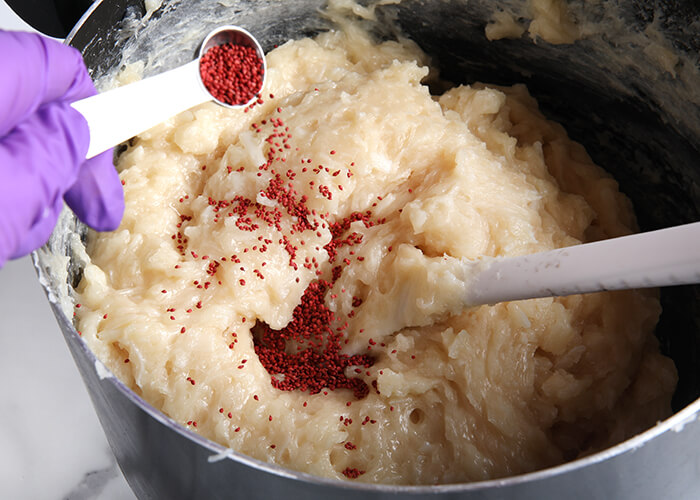
SEVEN: Add 1 tablespoon of cranberry seeds and thoroughly mix in.
NOTE: Feel free to add more seeds if you like a very scrubby bar. You can also use less.
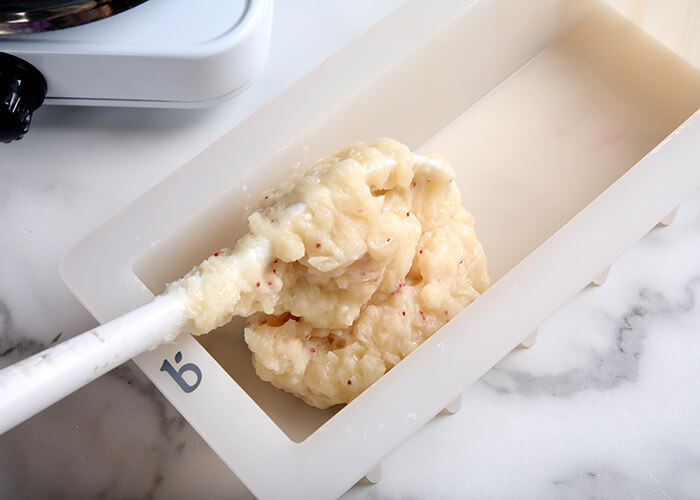
EIGHT: Quickly transfer the soap into the mold. Tap the mold firmly on the counter to help settle the soap into the mold.
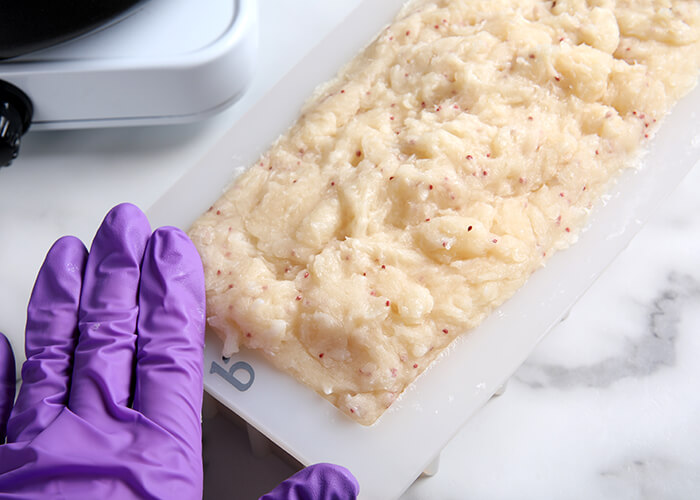
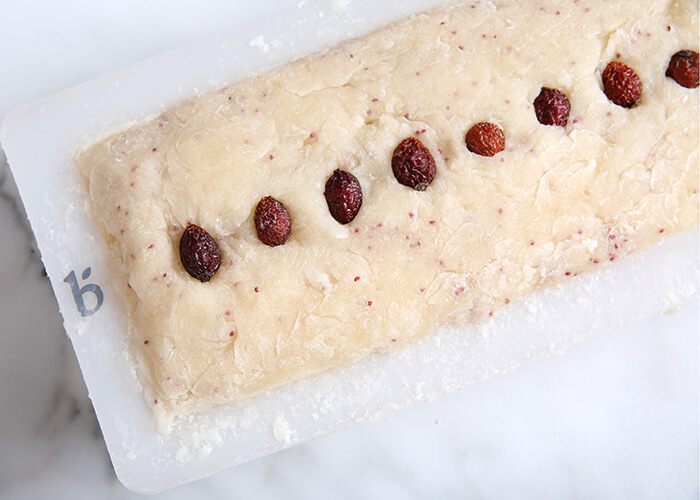
NINE: Use gloved hands to press the top of the soap to give it an even and smooth appearance.
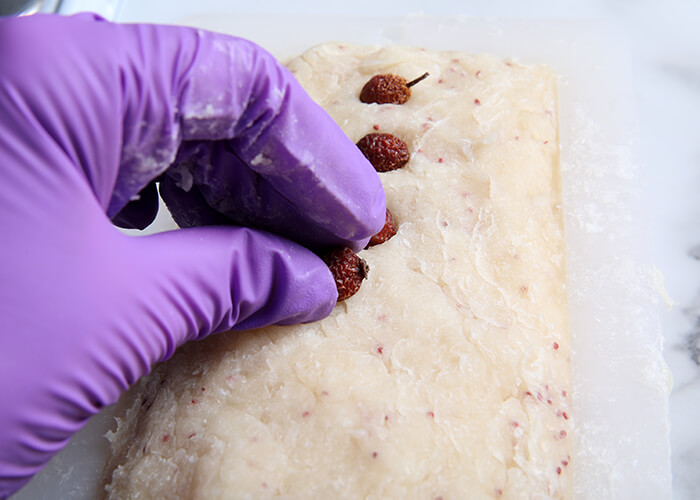
TEN: Working quickly before the soap cools, place rose hips down the length of the mold. Place them where you’d like the middle of the bar to be.
ELEVEN: Allow the soap to fully cool and harden for 24 hours. If the mold pulls away easily from the soap, it’s ready to unmold. If not, let it harden for another day.
TWELVE: Cut into bars. Rebatch soap doesn’t require a 4-6 week cure time like cold process soap does. But allowing the bars to cure for about 2 weeks will ensure extra moisture evaporates, creating a harder and longer-lasting bar. Enjoy.
Lingonberry Rebatch Soap
Ingredients
- 10 ″ Silicone Loaf Mold
- 50 oz. Grated Luxury Rebatch Soap
- 4-6 oz. Distilled Water
- 1 oz. Cranberry Fig Fragrance Oil
- 0.5 oz. Lingonberry Spice Fragrance Oil
- 1 Tbsp. Cranberry Seeds
- Rose Hips
Instructions
FRAGRANCE PREP: Measure 1 ounce of Cranberry Fig Fragrance Oil and 0.5 ounces of Lingonberry Spice Fragrance Oil into a glass fragrance oil-safe container. Set aside.
- Place a large sauce pot on the stove and turn the heat onto medium. You can also use a double boiler or a slow cooker.
- Add as much rebatch soap as your pot can comfortably hold – we added about 30 ounces at first. Pour in about 2 ounces of distilled water.
- Allow the soap to heat up and soften. Stir every 30-60 seconds to prevent burning. After a few minutes, the soap will begin to condense into a very thick paste. Add the rest of the rebatch soap and 2-3 ounces of distilled water.
- As the soap continues to cook, it will become softer. Keep stirring every few minutes.
- Eventually the soap will take on the texture of very thick mashed potatoes with a slightly glossy look. All the small pieces of rebatch soap should be melted and incorporated.
- Turn off the heat and add the fragrance oil mixture. Stir in thoroughly.
- Add 1 tablespoon of cranberry seeds and thoroughly mix in. NOTE: Feel free to add more seeds if you like a very scrubby bar. You can also use less.
- Quickly transfer the soap into the mold. Tap the mold firmly on the counter to help settle the soap into the mold.
- Use gloved hands to press the top of the soap to give it an even and smooth appearance.
- Working quickly before the soap cools, place rose hips down the length of the mold. Place them where you’d like the middle of the bar to be.
- Allow the soap to fully cool and harden for 24 hours. If the mold pulls away easily from the soap, it’s ready to unmold. If not, let it harden for another day.
- Cut into bars. Rebatch soap doesn’t require a 4-6 week cure time like cold process soap does. But allowing the bars to cure for about 2 weeks will ensure extra moisture evaporates, creating a harder and longer-lasting bar. Enjoy.
