





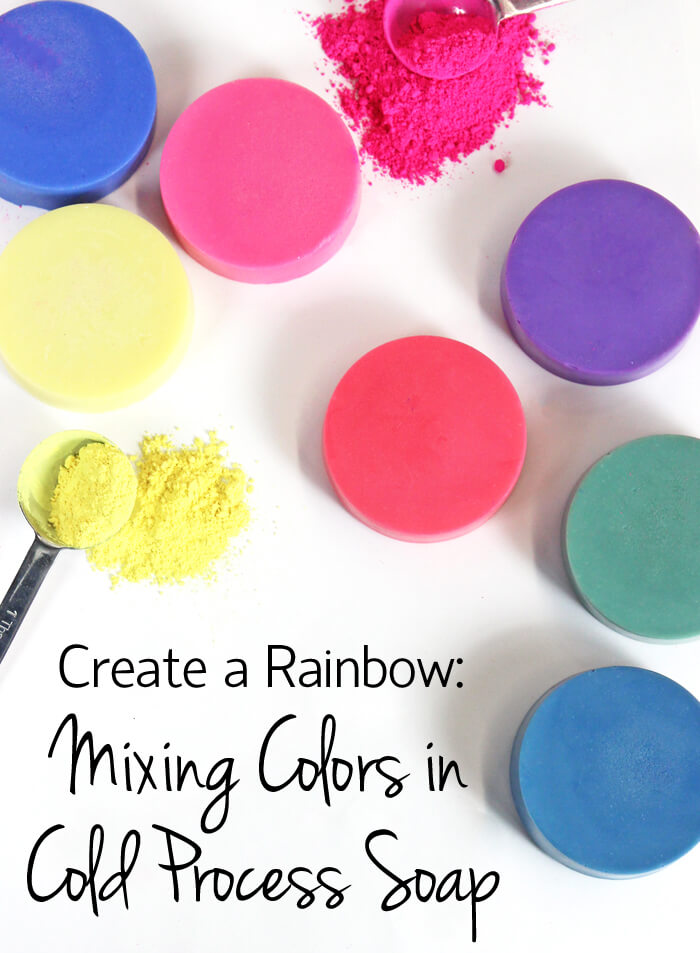
Working with color is one of my favorite aspects of soap making. I collect tons of color inspiration via Pinterest, magazines, Instagram, nature and fashion. When selecting colorants to use in soap, there are plenty of options including LabColors, clay, micas and color blocks for melt and pour. My go-to colorants are often pigments; they are non-bleeding, produce vibrant color and do not morph in cold process soap.
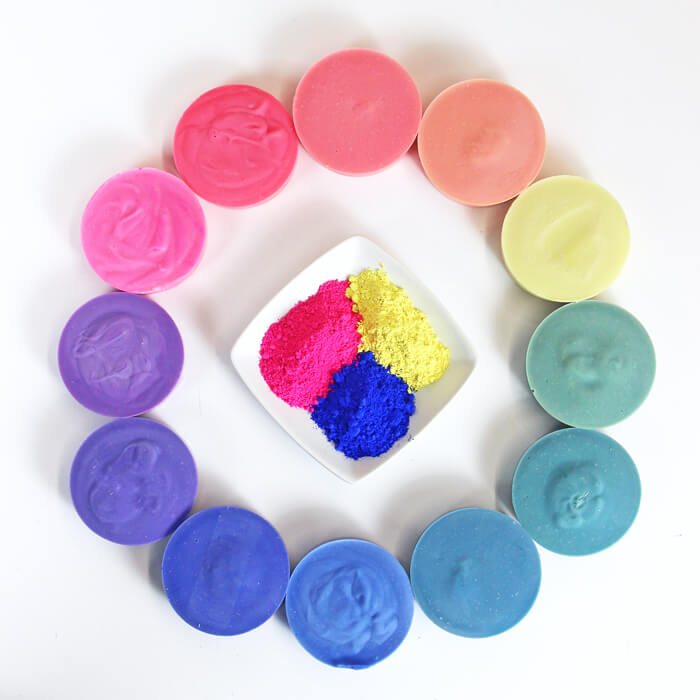
Part of the fun of working with colors is mixing to create unique shades. Blending colorants can seem a little intimidating at first. But with only three colors, you can create an entire color wheel. To demonstrate how to experiment with color blending I chose three colors to represent the primary colors of the color wheel: Ultramarine Blue Pigment, Fizzy Lemonade Colorant and Electric Bubble Gum Colorant.
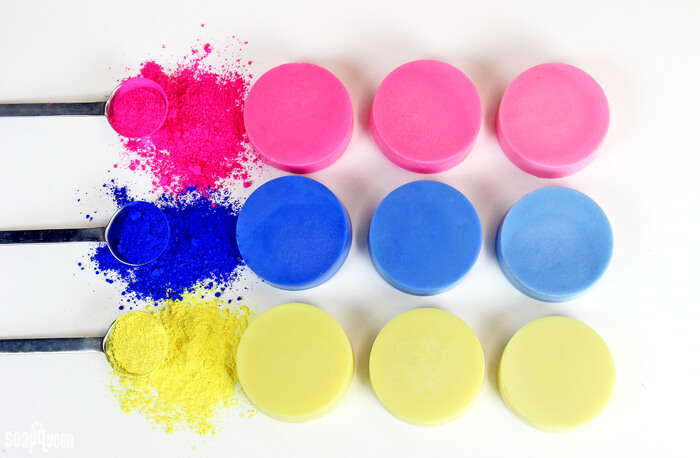
Why pink instead of red? A vibrant red can be tricky to achieve in cold process soap. My favorite red is made using one part Merlot Sparkle Mica to two parts Electric Bubble Gum. In order to keep the blends simple, Electric Bubble Gum represents the color red in these mixtures. The bright pink hue keeps the colors looking vibrant while adding a similar effect of a “true red.”
Below are the three “primary” colors used at different usage rates. The soaps shown represent using the colorants at 1/4 tsp. per pound of cold process soap, 1/2 tsp. per pound and 1 tsp. per pound. “Per pound” refers to the total yield of the soap, rather than the oils used in the recipe. All colorants have been dispersed in a lightweight carrier oil at a rate of 1 teaspoon of colorant to 1 tablespoon oil. For more information on how to disperse colorants for cold process soap, check out this Soap Queen TV video. It’s interesting to see that for some colorants, such as the Ultramarine Blue, the amount used places a huge role in the color. While for the Fizzy Lemonade, it does not affect the color as dramatically.
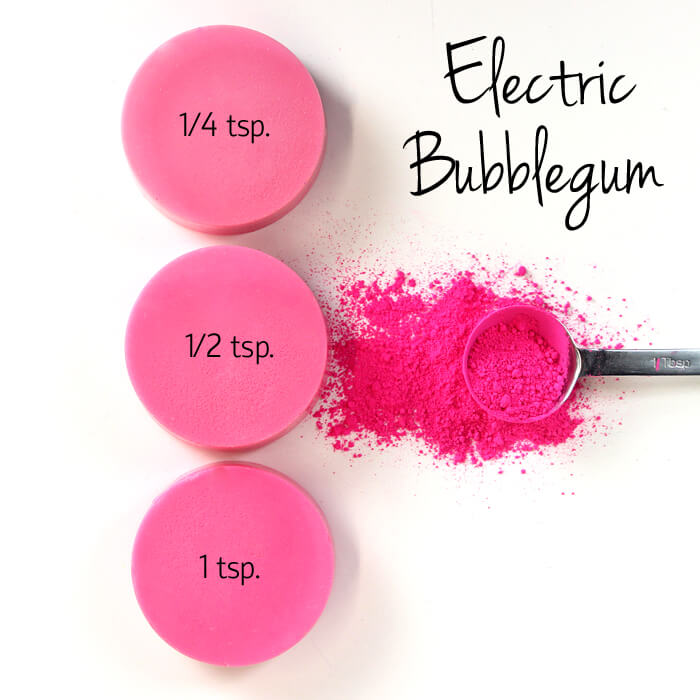 Electric Bubble Gum Colorant, top to bottom: 1/4 tsp. per pound of soap, 1/2 tsp. per pound of soap, 1 tsp. per pound of soap.
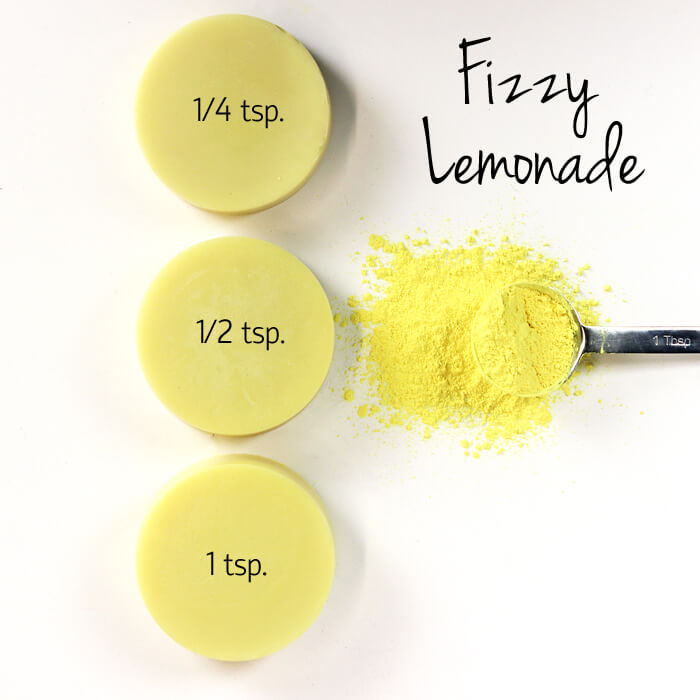 Fizzy Lemonade Colorant, top to bottom: 1/4 tsp. per pound of soap, 1/2 tsp. per pound of soap, 1 tsp. per pound of soap.
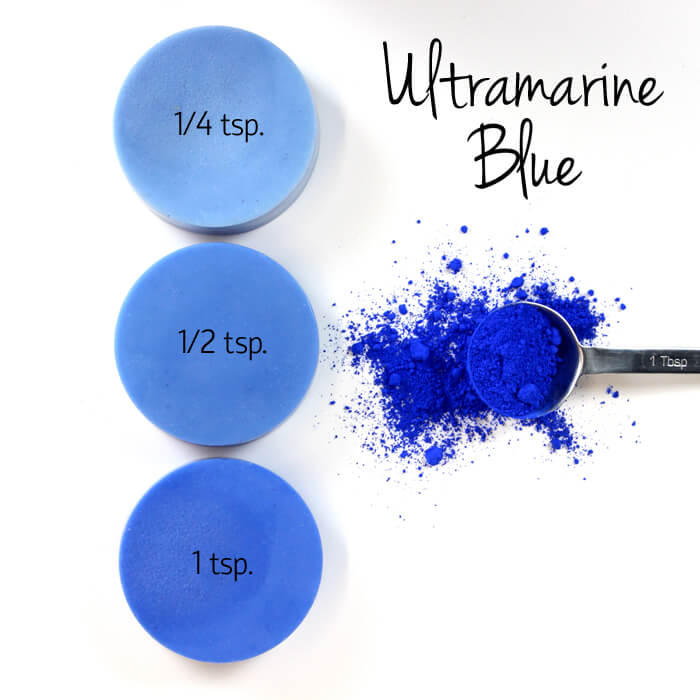
Ultramarine Blue Pigment, top to bottom: 1/4 tsp. per pound of soap, 1/2 tsp. per pound of soap, 1 tsp. per pound of soap.
Time to get mixing! Below are shades that can be achieved with mixing the Ultramarine Blue, Fizzy Lemonade and Electric Bubble Gum. The amounts listed are before being dispersed in a tablespoon of carrier oil. Each disk of soap has been colored with a total of one teaspoon of dispersed colorant, but the percentages of each varies. Mixing these three colors creates beautiful hues of green, purple and orange.
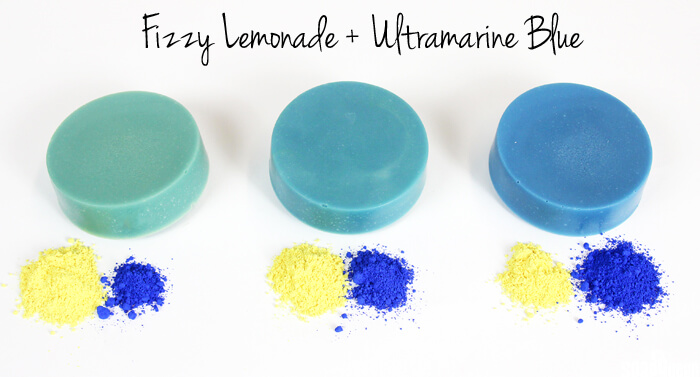 Left to right: .75 tsp. Fizzy Lemonade + .25 tsp. Ultramarine Blue
.5 tsp. Fizzy Lemonade + .5 tsp. Ultramarine Blue
.25 Fizzy Lemonade + .75 tsp. Ultramarine Blue
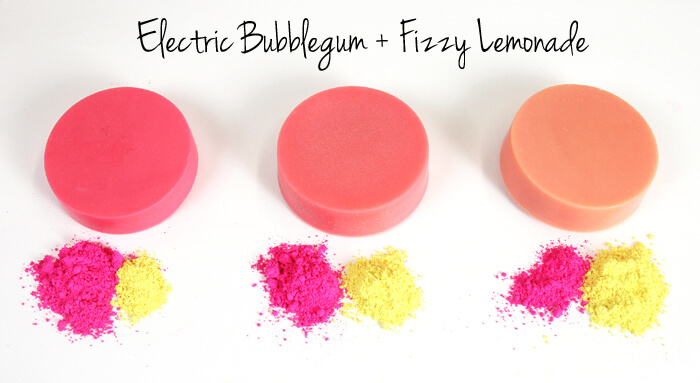 Left to right: .75 tsp. Electric Bubble Gum + .25 tsp. Fizzy Lemonade
.5 tsp. Electric Bubble Gum+ .5 tsp. Fizzy Lemonade
.25 tsp. Electric Bubble Gum + .75 tsp. Fizzy Lemonade
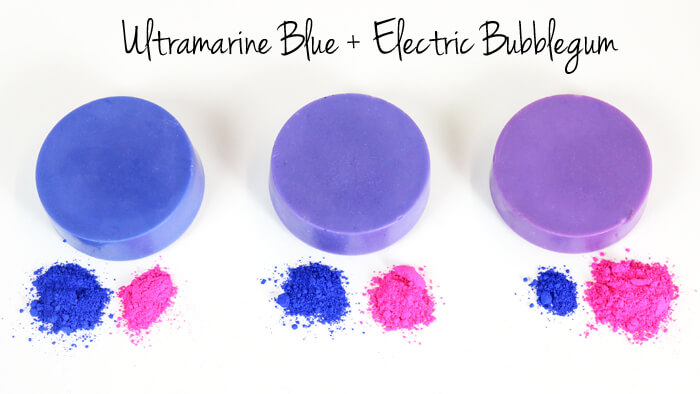 Left to right: .75 tsp. Ultramarine Blue + .25 tsp. Electric Bubble Gum
.5 tsp. Ultramarine Blue + .5 tsp. Electric Bubble Gum
.25 tsp. Ultramarine Blue + .75 tsp. Electric Bubble Gum
Creating your own shades is incredibly fun. With so many colorants, the possibilities are abundant! Below are some tips and things to consider when mixing colorants to create unique shades:
- Keep the color wheel in mind, and make deliberate decisions when adding colors.
- When mixing colorants, adding two colorants at 50/50 is a great place to start. Then, you can easily adjust either color to get the shade you’re looking for.
- Having white and black colorants on hand can lighten or darken colors.
- Consider mixing two colors in the same family (pinks with pinks, blues with blues, etc.) to create a totally new shade.
- Don’t forget to take notes! Once you find the perfect color, you’ll want to be able to recreate it.
- Decide how you like to blend colors, and be consistent. For example, some soapers like to disperse their colorants and add the various shades directly to the soap. Others like to disperse the colorants, and combine the liquids together and add them to their soap. Either way is fine, but it can be helpful to be consistent.
- If you are doing a lot of blending, it may be helpful to disperse large amounts of colorants in a sealable jar. That way you can blend the liquids and easily start over if the color does not work.
Do you enjoy mixing colorants to create unique shades? If you have any blending tips, I would love to hear them!
