





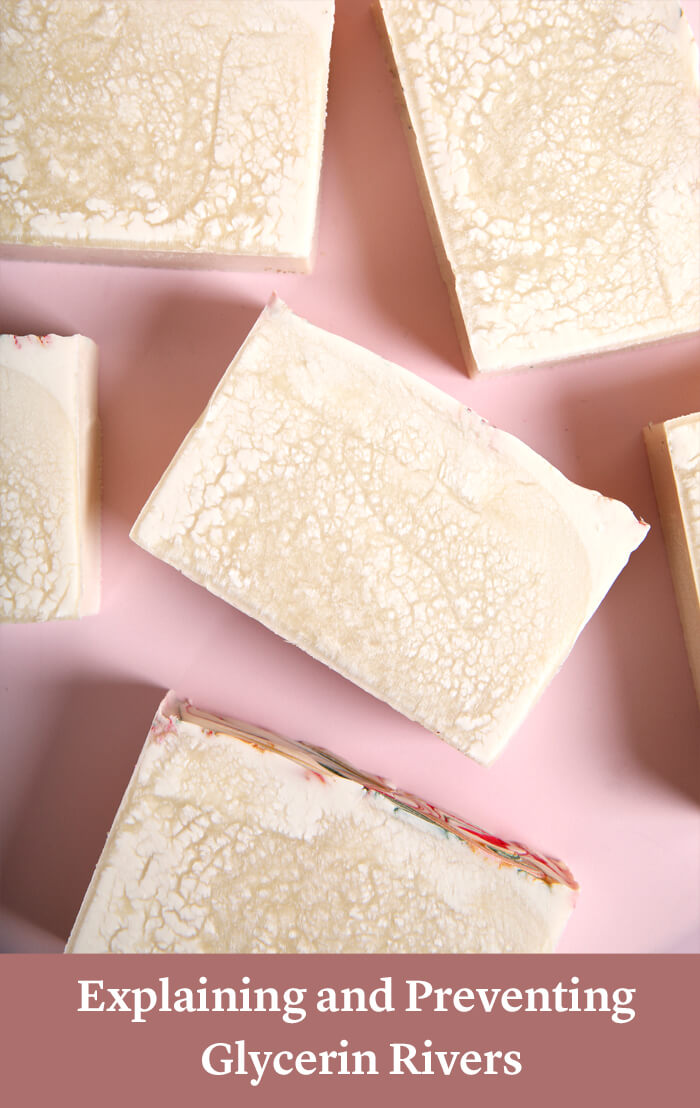
Soapmaking is both a science and an art. Countless variables, like temperature, can affect the look and feel of your soap. Cold process soap that gets too hot can form glycerin rivers.
They don’t affect the quality of the soap, but they do affect the way it looks. Glycerin rivers create a cracked or mottled appearance that can obscure more intricate designs. This post goes over how to prevent them.
What are glycerin rivers
Glycerin is a naturally-occurring byproduct of the soapmaking process. It adds cleansing properties and attracts moisture to the skin so it stays hydrated. In short, glycerin is one of the things that makes handmade soap so amazing.
When cold process soap gets too hot the glycerin can congeal, which makes the rivers more visible. If they’re thick or clustered in one section of soap, it can be softer than the rest.
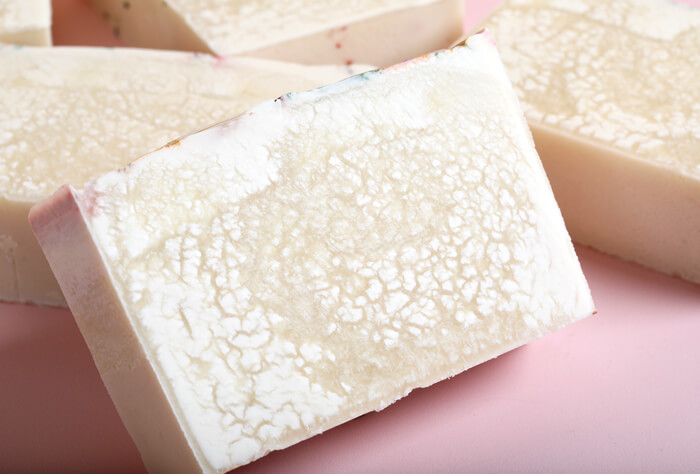
Glycerin rivers are more visible with pigments, especially titanium dioxide. That’s because they’re more dense than micas and LabColors. Learn more about the colors we offer and how to use them in this post.
How to prevent them
The good news is glycerin rivers are fairly rare, and most people won’t notice them. However, if you want to create a smooth bar, here are a few easy steps to prevent them.
- Try a water discount of 10% or higher. Along with preventing glycerin rivers, it helps prevent soda ash and helps the soap unmold and cure more quickly.
- Mix your colorants well before adding them to soap, especially if you’re using pigments. We recommend a ratio of 1 teaspoon of colorant mixed into 1 tablespoon of a lightweight oil like sweet almond. If you’re using titanium dioxide, it helps to disperse it in oil rather than distilled water.
- Lower the temperatures of your lye water and oils by 10 degrees. If that doesn’t do the trick, you can try soaping at room temperature. Then, put the mold in the freezer for 24 hours to keep it cold.
- Certain fragrance oils can cause the soap to heat up, which can lead to glycerin rivers. Make sure to read the performance notes before getting started.
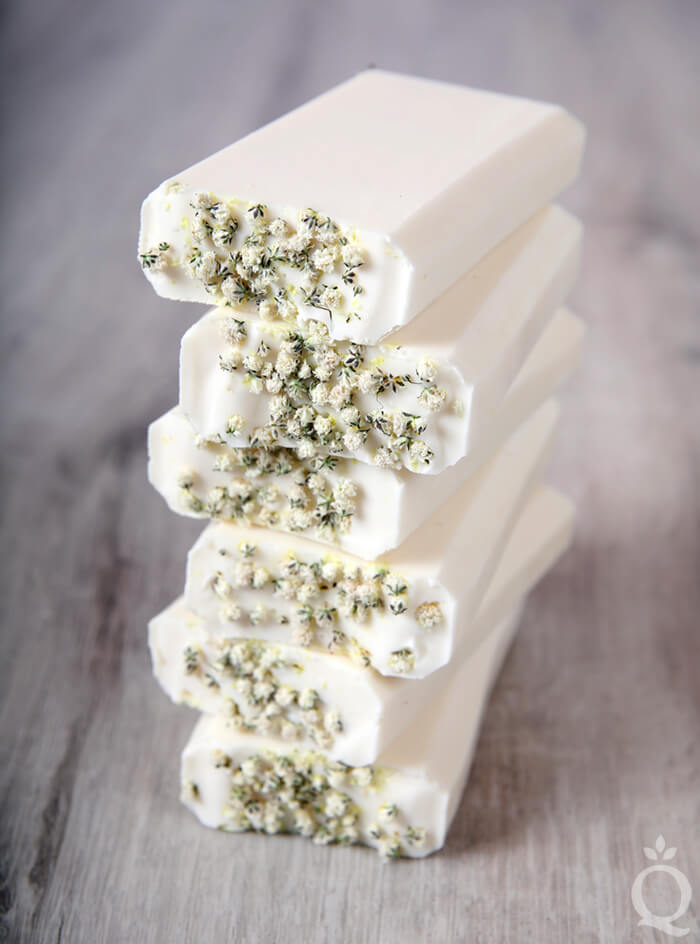 This Baby’s Breath Soap tutorial shows you how to create bright white bars with no glycerin rivers.
This post was updated in January 2019.
