





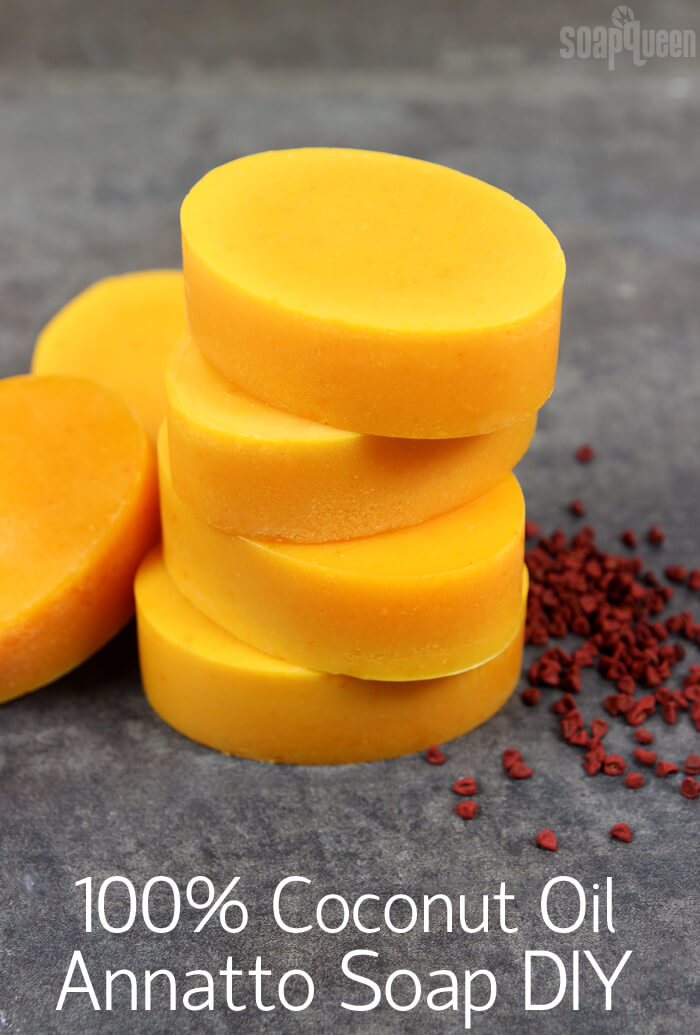
There are so many amazing uses for coconut oil. From creating lip balm to cold process soap, it’s fantastic for a variety of crafty beauty projects. In terms of cold process soap, I use it in just about every recipe.
While coconut oil is extremely hydrating when applied directly to skin, when combined with sodium hydroxide, it adds cleansing properties to cold process soap. If used at more than about 33% of the total recipe, it can make the bars feel too cleansing and can be drying to some. But, some soaping rules are meant to be broken! You can make soap out of 100% coconut oil if you have an unusually high superfat. Not sure what a “superfat” means? Long story short, it’s the amount of oils in a recipe that are not transformed into soap during the saponification process. An average superfat is usually between 1–7%. This means 1–7% of oils in the recipe are “free-floating” in the bar and were not turned into soap. A superfat is also referred to as a “lye discount.” This is because in order to turn fewer oils into soap, you reduce the amount of lye in the recipe. Still a little confused? This video may help.
A high superfat of 20% combats the super-cleansing properties of soap made with only coconut oil. Because the Bramble Berry Lye Calculator doesn’t calculate a superfat that high (it’s something we are hoping to add), I’ll walk you through how I calculated this recipe. It’s super easy!
First, choose “Solid” for the type of soap. Then, select ounces or grams (whichever you prefer working with). Then, select a superfat of “None.” Click the “Next” button. Then, enter how many ounces or grams of coconut oil you’d like to use. In this case, I used 21 ounces. Click “Next.” The lye calculator gave me the recipe below.
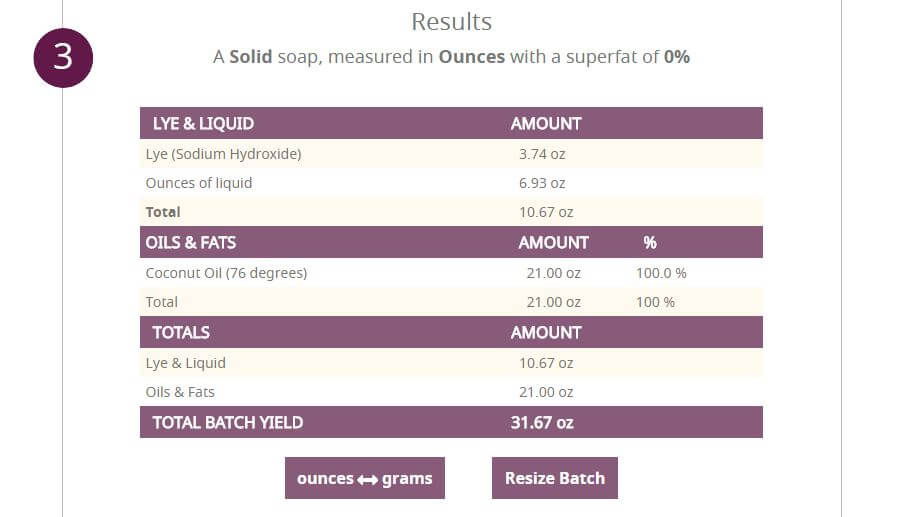
Now, we are going to reduce the amount of lye in this recipe by 20%. This will create a 20% superfat. To reduce the lye by 20%, multiply the 3.74 ounces of lye by 0.8 (because we want 80% of the lye). This equals 2.992, which I rounded to an even 3 ounces for ease of weighing. Then, while it’s not necessary, I like to reduce the water amount by 20% to maintain the ratio of water and lye (otherwise, the soap can be pretty soft and gooey coming out of the mold initially). Multiply the 6.93 ounces of distilled water by 0.8. This equals 5.544, which I rounded to 5.5 ounces. Now you have the lye and water amounts to give this recipe a 20% superfat.
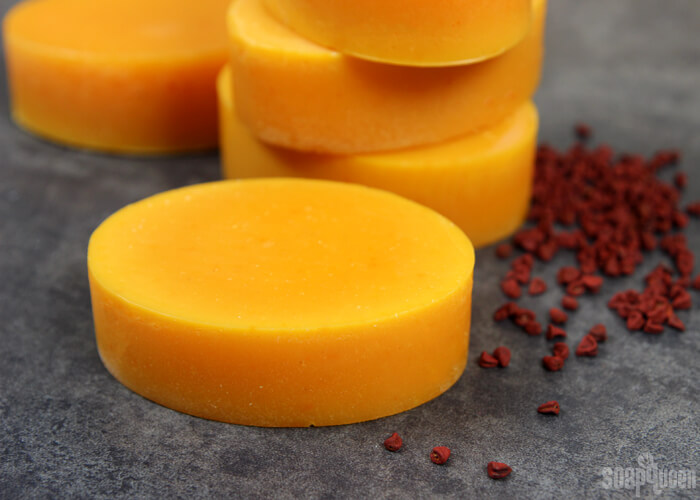
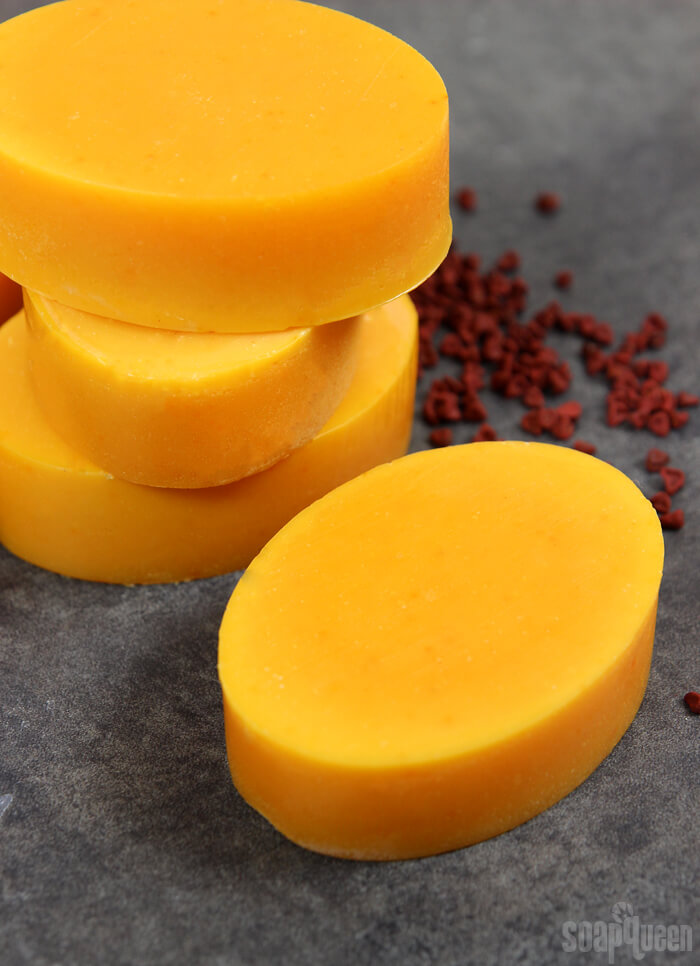
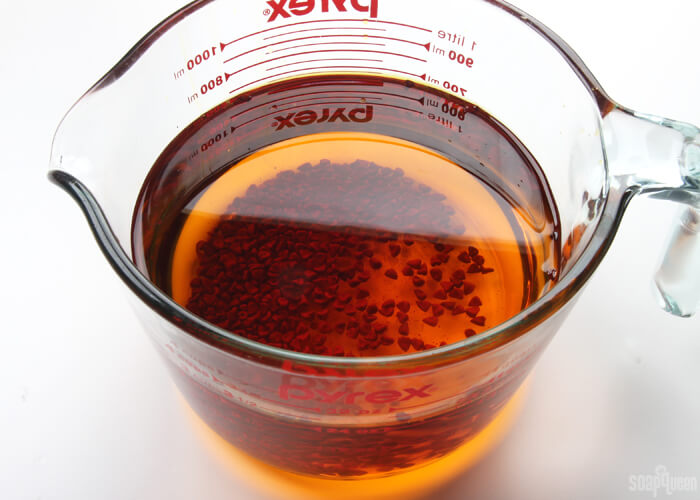
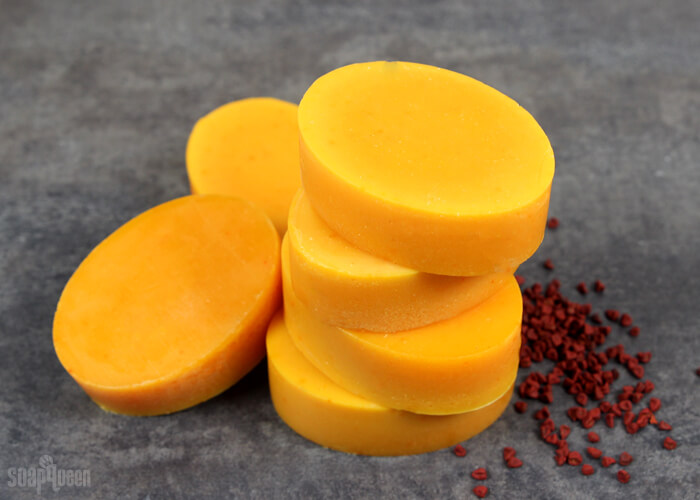
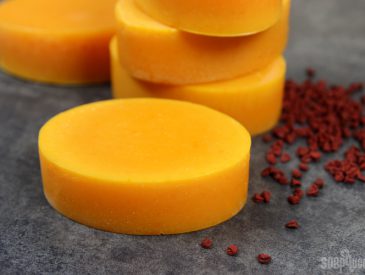
To keep these bars natural, I infused the coconut oil with annatto seeds for a bright orange color. I scented them with a blend of bergamot essential oil and litsea essential oil. It gives the soap a bright, citrusy scent that matches the orange hue. If you’re looking for more 100% coconut oil recipes, check out this 100% Coconut Oil Soap with Aloe Vera and Mantra Swirl by Kenna of Modern Soapmaking.
What You’ll Need:
6 Bar Oval Silicone Mold
21 oz. Coconut Oil
3 oz. Sodium Hydroxide Lye (20% lye discount)
5.5 oz. Distilled Water (20% water discount)
0.5 oz. Annatto Seeds
0.3 oz. Bergamot Essential Oil
0.5 oz. Litsea Essential Oil

Click here to add everything you need for this project to your Bramble Berry shopping cart!
If you’ve never made cold process soap before, stop here! I highly recommend checking out our FREE four part SoapQueen.tv series on Cold Process Soapmaking, especially the episode on lye safety. And if you’d rather do some reading, Bramble Berry carries a wide range of books on the topic, including my newest book, Pure Soapmaking. You can also checkout the digital downloads for that instant gratification factor.
INFUSE COCONUT OIL: First, we need to infuse the coconut oil with annatto seeds for color. There are several methods to infuse oils with annatto seeds, but for this project I used the “quick” method. Add 21 ounces of coconut oil into a heat-safe container. Place the container in the microwave, and heat the oils to about 160 ° F; be careful when removing the container from the microwave as it will be quite hot. Add the annatto seeds directly to the oil. Allow the annatto seeds to infuse the oil for about two hours, reheating the coconut oil in the microwave after the first hour. If you’d like, you can allow the annatto seeds to infuse the coconut oil for longer, which may result in a deeper color. I allowed my oil to infuse for about 2 hours, which created a nice bright orange color.
You can also infuse your coconut oil in a crock pot, click here for more information. Because coconut oil is a firm oil and hardens at cooler temperatures, I don’t recommend the cold oil infusion method for this recipe.
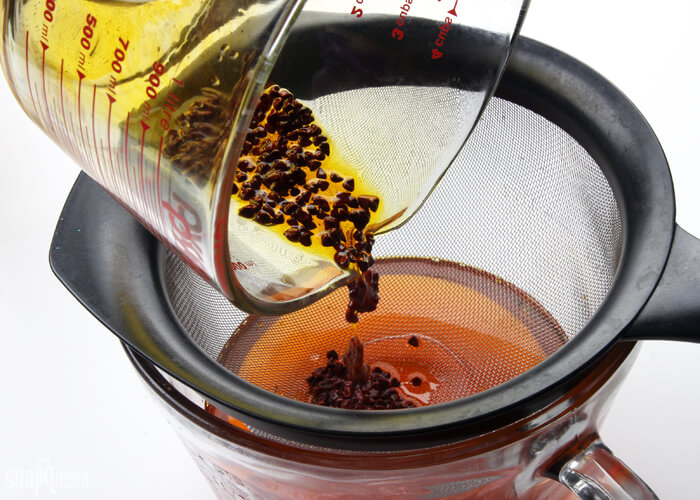
Pour the infused oil through a fine mesh strainer to remove the annatto seeds. Measure the amount of oil you’re left with; you may lose a small amount in the filtration process. If you have less than 21 ounces of coconut oil needed for the recipe, add more un-infused coconut oil to the container until you have the full 21 ounces. Set oil aside.
SAFETY FIRST: Suit up for safe handling practices! That means goggles, gloves and long sleeves. Make sure kids, pets, and other distractions and tripping hazards are out of the house or don’t have access to your soaping space. Always soap in a well-ventilated area.
FRAGRANCE OIL PREP: In a glass essential oil safe container, mix together 0.3 ounce of bergamot essential oil and 0.5 ounce of litsea essential oil. Set aside.
ONE: Slowly and carefully add the lye to the water and gently stir until the lye has fully dissolved and the liquid is clear. Set aside to cool to about 130° F.
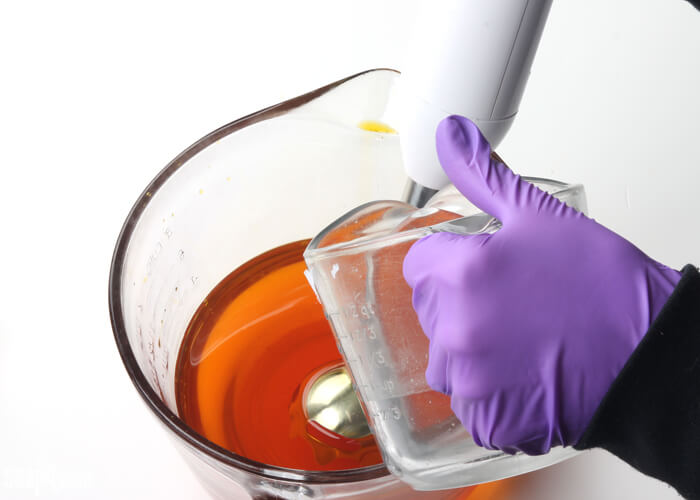
TWO: Fully melt and heat the annatto-infused coconut oil to 120-130 ° F. For this recipe, you need to soap on the warmer side to help prevent false trace. Read more about false trace here. Once the lye water and the oils have cooled to 120-130 ° F, add the lye water to the oils and stick blend until thin trace. Because this recipe is made from 100% hard oils, sodium lactate is not necessary for this recipe. The bars will be able to unmold within about 5-6 hours…maybe sooner!
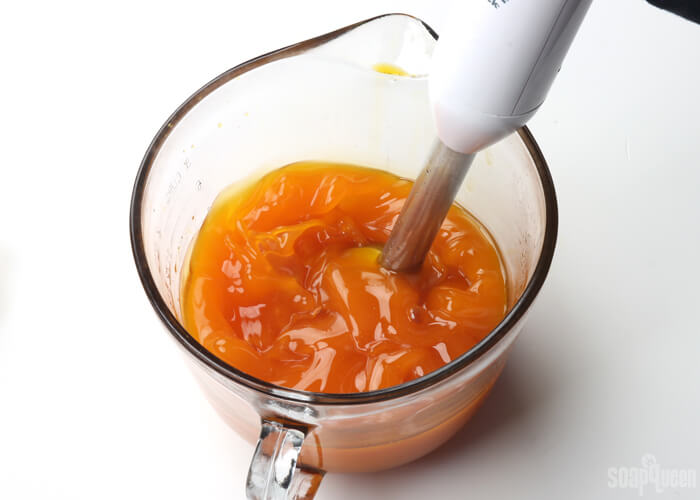
TWO: Once you have a very light trace, add the essential oil blend and stick blend in.
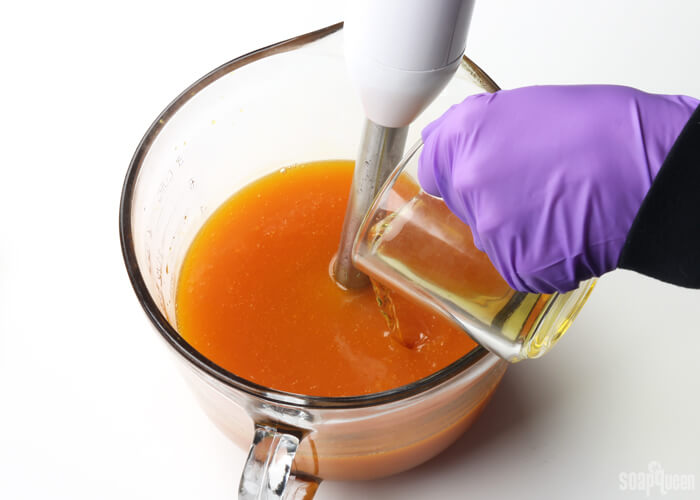
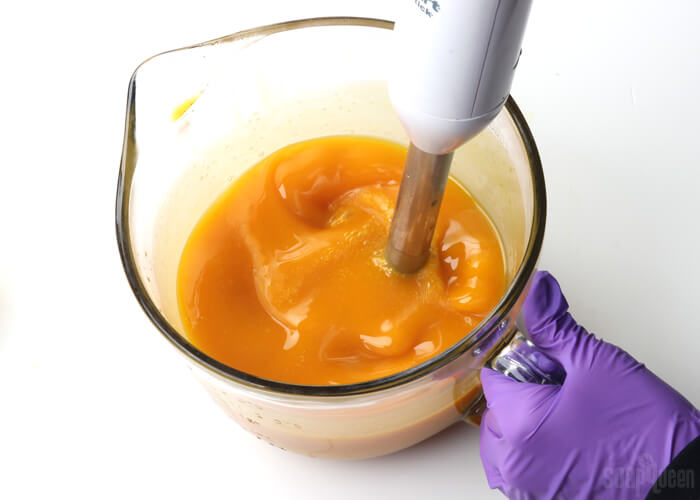
THREE: Continue to stick blend the mixture until you have a light trace and there are no oil streaks in the mixture. Alternate pulsing the stick blender and using it to stir the mixture throughout this step.
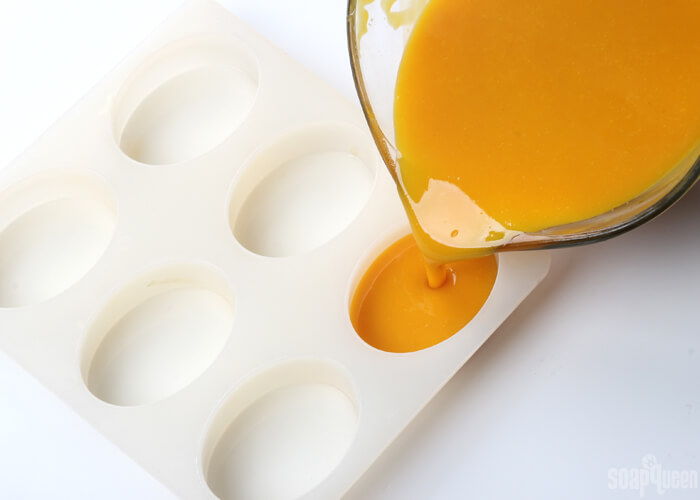
FOUR: Pour the soap into each mold cavity until full. Tap the mold on the counter to help release air bubbles. Spritz the top with 99% isopropyl alcohol to help prevent soda ash.
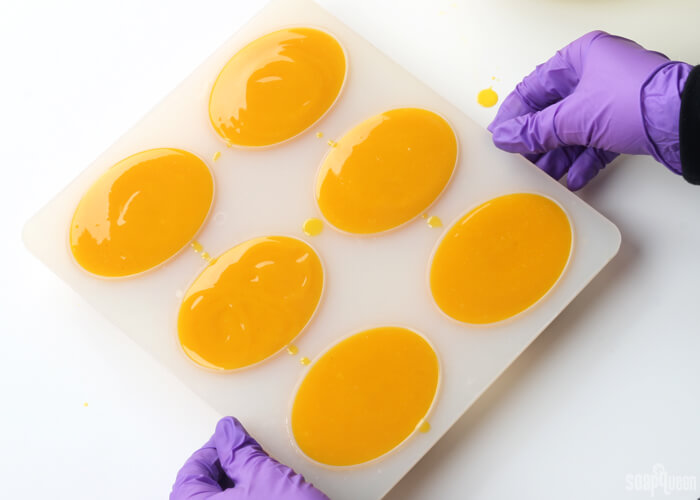
FIVE: Because this recipe requires a warmer temperature, this soap will have a tendency to gel. To help it go through a complete gel phase and avoid a partial gel in the center, place the mold on a heating pad on medium heat. Gelling this recipe will also help the color become more intense. Create a “cardboard tent,” and cover with a blanket to fully insulate. After about 30 minutes, turn off the heating pad and allow to stay insulated for several hours. If you live in a warmer or cooler climate, the soap may need more or less time on the heating pad.
Because this soap is made with only coconut oil, these bars can be removed from the mold very quickly! I would recommend giving them at least 6 hours to overnight to be on the safe side. Make sure you’re wearing gloves, as the bars are still saponifying and the lye can irritate the skin. To remove, gently pull the sides of the mold away from the soap to break the airlock, and push the soap out from the bottom. Once removed, use the Soap Shaver to clean up the bars. Allow to cure for 4-6 weeks to create an even firmer, more long lasting bar of soap.
100% Coconut Oil & Annatto Soap Tutorial
Ingredients
- 6 Bar Oval Silicone Mold
- 21 oz. Coconut Oil
- 3 oz. Sodium Hydroxide Lye 20% lye discount
- 5.5 oz. Distilled Water 20% water discount
- 0.5 oz. Annatto Seeds
- 0.3 oz. Bergamot Essential Oil
- 0.5 oz. Litsea Essential Oil
Instructions
INFUSE COCONUT OIL: First, we need to infuse the coconut oil with annatto seeds for color. There are several methods to infuse oils with annatto seeds, but for this project I used the "quick" method. Add 21 ounces of coconut oil into a heat-safe container. Place the container in the microwave, and heat the oils to about 160 ° F; be careful when removing the container from the microwave as it will be quite hot. Add the annatto seeds directly to the oil. Allow the annatto seeds to infuse the oil for about two hours, reheating the coconut oil in the microwave after the first hour. If you'd like, you can allow the annatto seeds to infuse the coconut oil for longer, which may result in a deeper color. I allowed my oil to infuse for about 2 hours, which created a nice bright orange color. You can also infuse your coconut oil in a crock pot, click here for more information. Because coconut oil is a firm oil and hardens at cooler temperatures, I don’t recommend the cold oil infusion method for this recipe.<br>Pour the infused oil through a fine mesh strainer to remove the annatto seeds. Measure the amount of oil you’re left with; you may lose a small amount in the filtration process. If you have less than 21 ounces of coconut oil needed for the recipe, add more un-infused coconut oil to the container until you have the full 21 ounces. Set oil aside.
SAFETY FIRST: Suit up for safe handling practices! That means goggles, gloves and long sleeves. Make sure kids, pets, and other distractions and tripping hazards are out of the house or don’t have access to your soaping space. Always soap in a well-ventilated area.
FRAGRANCE OIL PREP: In a glass essential oil safe container, mix together 0.3 ounces of bergamot essential oil and 0.5 ounces of litsea essential oil. Set aside.
- Slowly and carefully add the lye to the water and gently stir until the lye has fully dissolved and the liquid is clear. Set aside to cool to about 130° F.
- Fully melt the annatto-infused coconut oil to 120-130 ° F. For this recipe, you need to soap on the warmer side to help prevent false trace. Read more about false trace here. Once the lye water and the oils have cooled to 120-130 ° F, add the lye water to the oils and stick blend until thin trace. Because this recipe is made from 100% hard oils, sodium lactate is not necessary for this recipe. The bars will be able to unmold within about 5-6 hours…maybe sooner!
- Once you have a very light trace, add the essential oil blend and stick blend in.
- Continue to stick blend the mixture until you have a light trace, and there are no oil streaks in the mixture. Alternate pulsing the stick blender and using it to stir the mixture throughout this step.
- Pour the soap into each mold cavity until full. Tap the mold on the counter to help release air bubbles. Spritz the top with 99% isopropyl alcohol to help prevent soda ash.
- Because this recipe requires a warmer temperature, this soap will have a tendency to gel. To help it go through a complete gel phase, and avoid a partial gel phase in the center, place the mold on a heating pad on medium heat. Gelling this recipe will also help the natural orange color become more intense. Create a “cardboard tent,” and cover with a blanket to fully insulate. After about 30 minutes, turn off the heating pad and allow to stay insulated for several hours. If you live in a warmer or cooler climate, the soap may need more or less time on the heating pad. Because this soap is made with only coconut oil, these bars can be removed from the mold very quickly! I would recommend giving them at least 6 hours to overnight to be on the safe side. Make sure you're wearing gloves, as the bars are still saponifying and the lye can irritate the skin. To remove, gently pull the sides of the mold away from the soap to break the airlock, and push the soap out from the bottom. Once removed, use the Soap Shaver to clean up the bars. Allow to cure for 4-6 weeks to create an even firmer, more long lasting bar of soap.
