





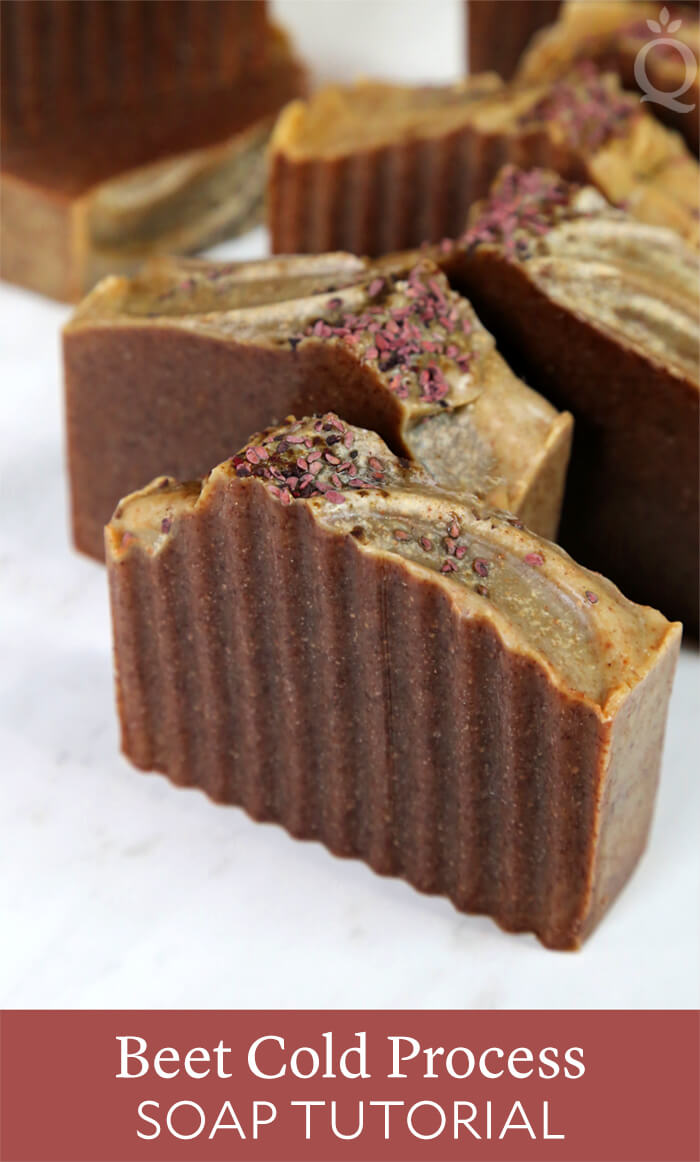
We love testing new ingredients. Beet root powder and rosehip powder are two additives that have interesting results in cold process soap. Despite its vibrant natural color, beet root powder fades almost completely in cold process soap. On the other hand, rosehip powder goes through an interesting color transformation.
This recipe contains both beet root powder and rosehip powder. Beet root powder might not add color, but it’s full of vitamins, magnesium, and folate. Rosehip powder contains plenty of vitamin C, making this bar a treat for your skin. Blackberry seeds add a rosy hue and texture on top.
Beet root powder, rosehip powder, and blackberry seeds are all part of the new Exotic Naturals Collection. Click here to see all of the new ingredients, which also include exotic oils like neem and wheat germ.
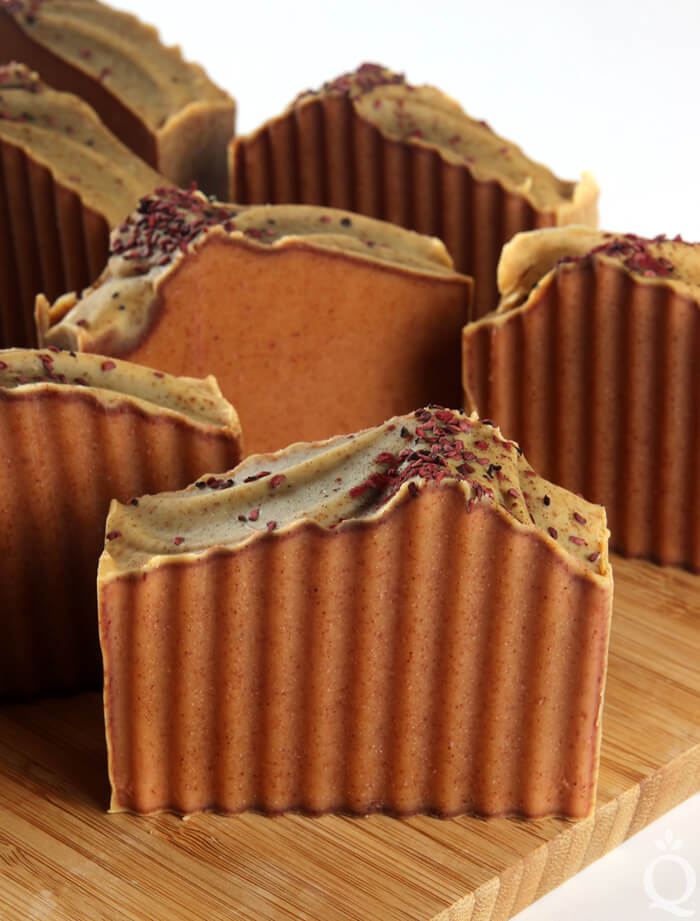
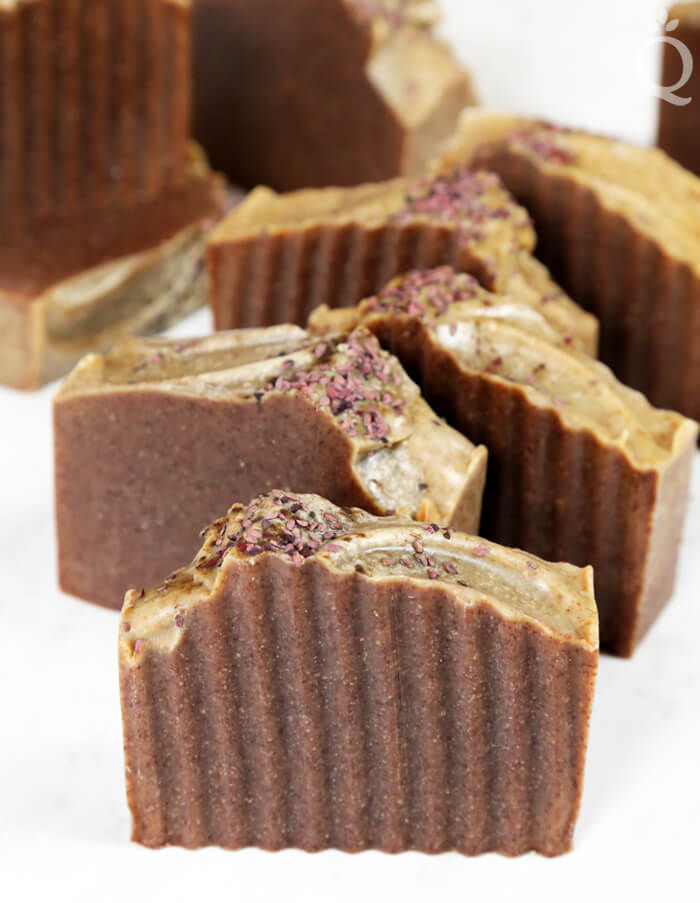
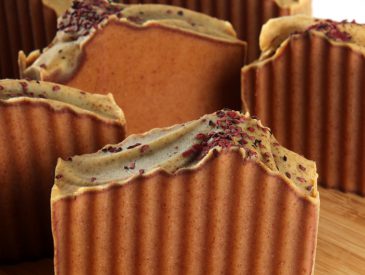
On its own, rosehip powder is a bright yellow color. This color remains when added to cold process soap batter. Once the soap is unmolded and cut into bars, that’s when things get interesting. Immediately after cutting into the soap, you’ll notice a burgundy color around the bars (shown below). Within about 10 minutes, this color makes its way throughout the entire bar of soap and deepens over 2-3 days.
Rosehip powder does color the lather a bit, and you will find that with these bars. If you’re worried about color transfer, you can use 1 teaspoon of powder. Just keep in mind you will have a lighter color.
What You Need:
10″ Silicone Loaf Mold
1.7 oz. Babassu Oil (5%)
3.3 oz. Cocoa Butter (10%)
8.3 oz. Coconut Oil (25%)
19.8 oz. Olive Oil (60%)
4.6 oz. Sodium Hydroxide Lye
10.9 oz. Distilled Water
2 oz. Balsam Peru Essential Oil
1 Tbsp. Beet Root Powder
2 tsp. Rosehip Powder
Blackberry Seeds
Click here to add everything you need for this project to your Bramble Berry shopping cart!
If you’ve never made cold process soap before, stop here. Check out our FREE four part SoapQueen.tv series on cold process soapmaking, especially the episode on lye safety. Bramble Berry also carries a wide range of books on the topic, including Pure Soapmaking.
COLOR PREP: Measure out 1 tablespoon of beet powder and 2 teaspoons of rosehip powder into a small container (or two separate containers). Set them aside.
FRAGRANCE PREP: Measure 2 ounces of Balsam Peru Essential Oil into a small glass container and set aside.
SAFETY FIRST: Suit up for safe handling practices. That means goggles, gloves, and long sleeves. Make sure kids, pets, and other distractions and tripping hazards are out of the house or don’t have access to your soaping space. Always soap in a well-ventilated area.
ONE: Slowly and carefully add the lye to the water and gently stir until the lye has fully dissolved and the liquid is clear. Set aside to cool. If you’d like a harder bar of soap that releases faster from the mold, you can add sodium lactate to the cooled lye water. Use 1 teaspoon of sodium lactate per pound of oils in the recipe. For this recipe, you’d add 2 teaspoons sodium lactate.
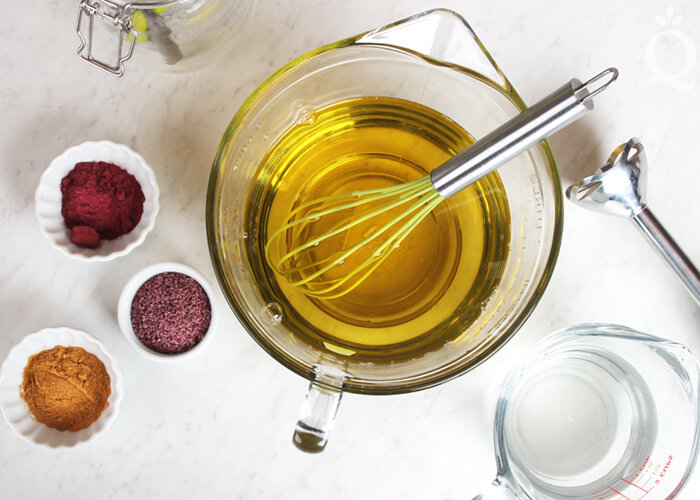
TWO: Melt and combine the coconut oil, babassu oil, cocoa butter, and olive oil in a large bowl. Add the measured beet root powder and rosehip powder directly into the oils and use the stick blender to fully mix them in.
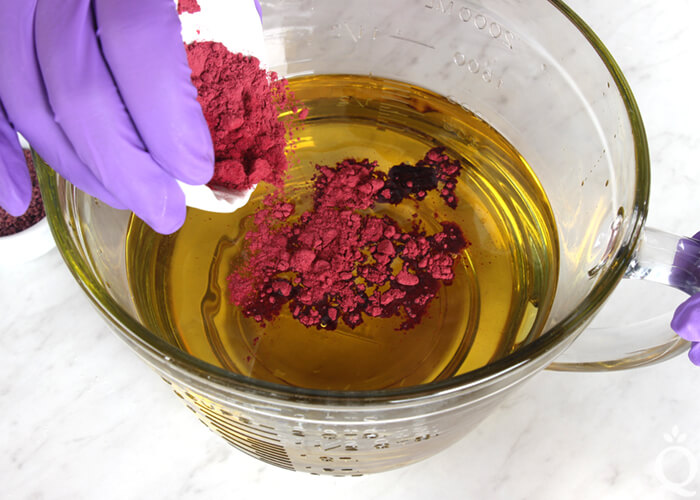
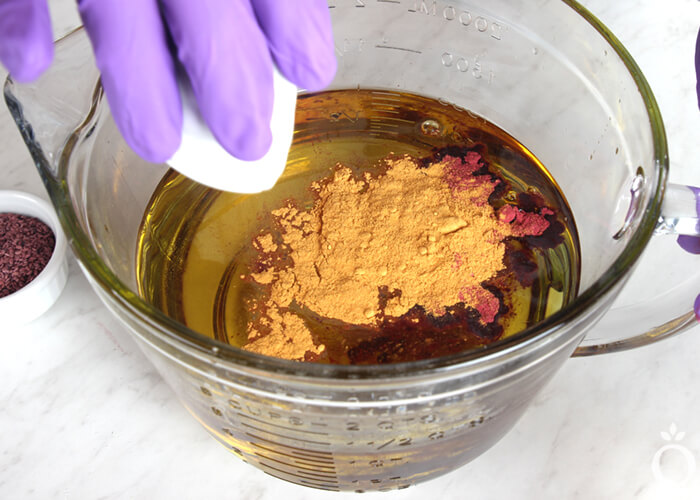
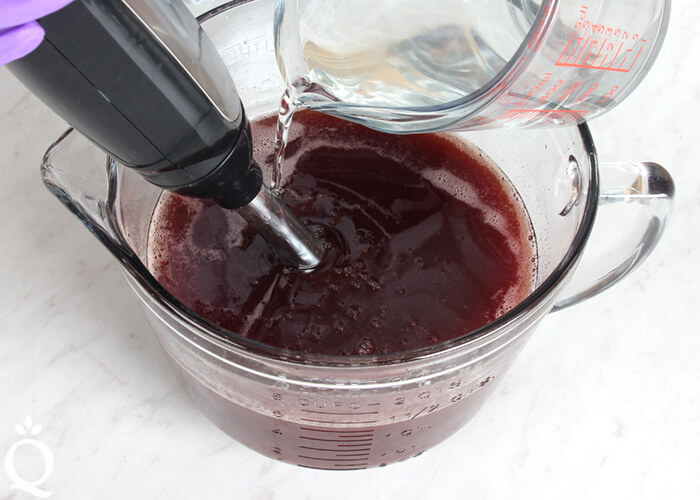
THREE: Once the lye water and the oils have cooled to 130 degrees or below (and are ideally within 10 degrees of each other), add the lye water to the oils and stick blend until thin trace.
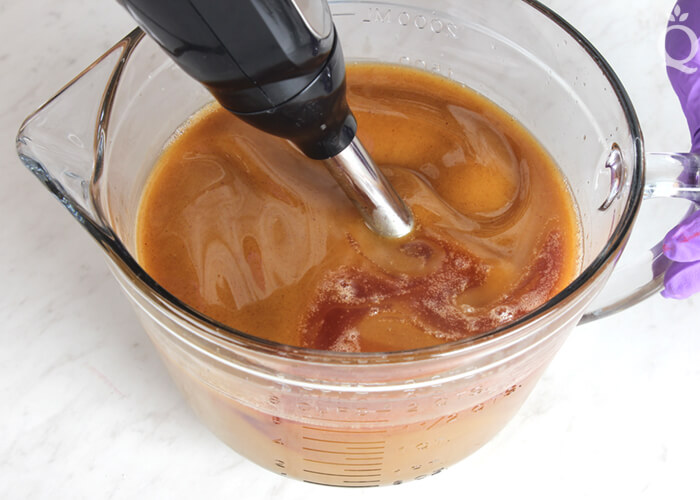
FOUR: Add the Balsam Peru Essential Oil to the soap batter. Use the stick blender to fully incorporate the essential oil.
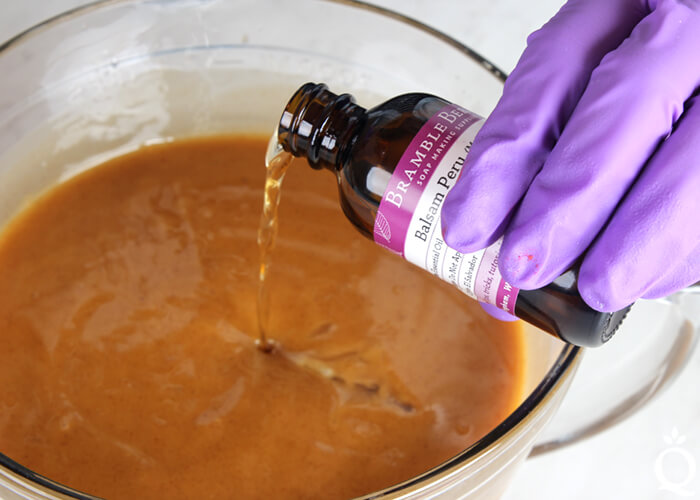
FIVE: Continue stick blending the soap batter until you reach a medium to thick trace. This may take a few minutes of blending.
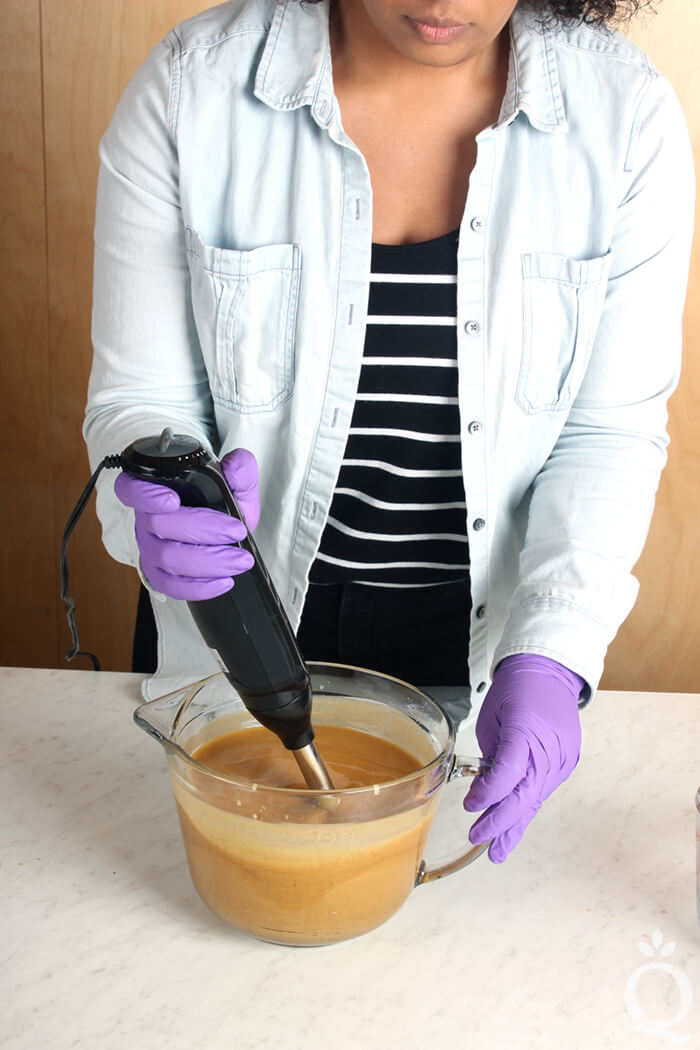
SIX: Once you’ve reached the texture of thick pudding, pour all of the soap into the mold. Tap it firmly on the counter to help get rid of air bubbles.
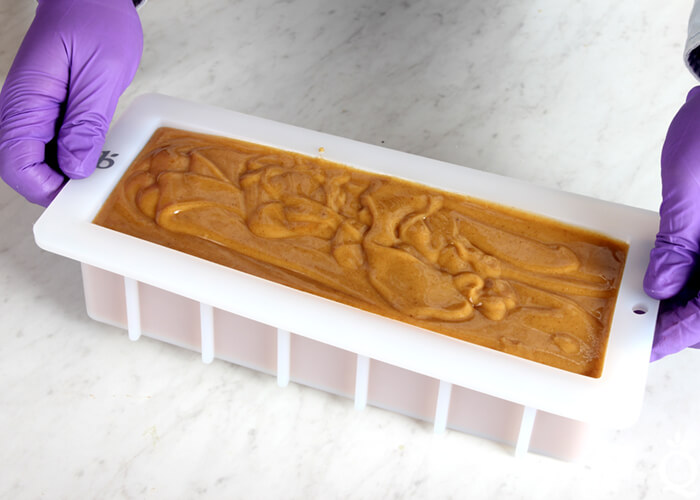
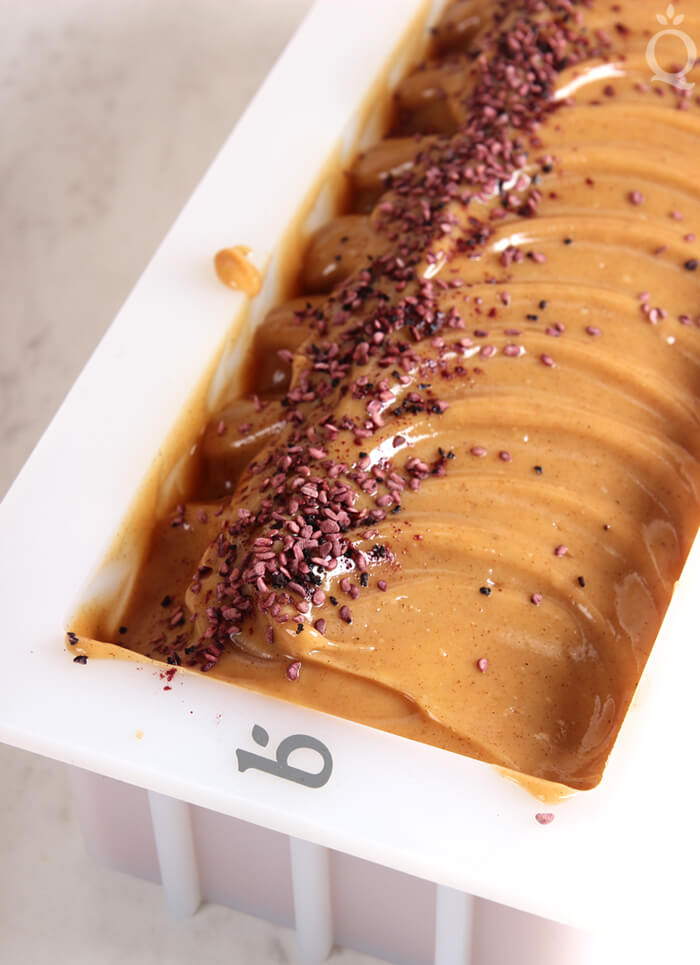
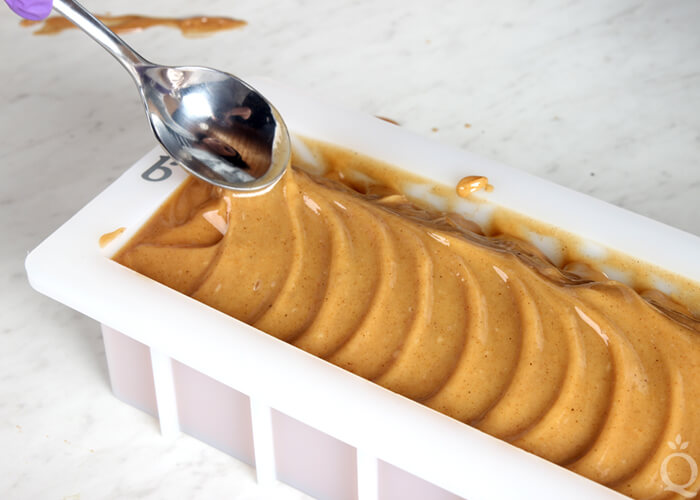
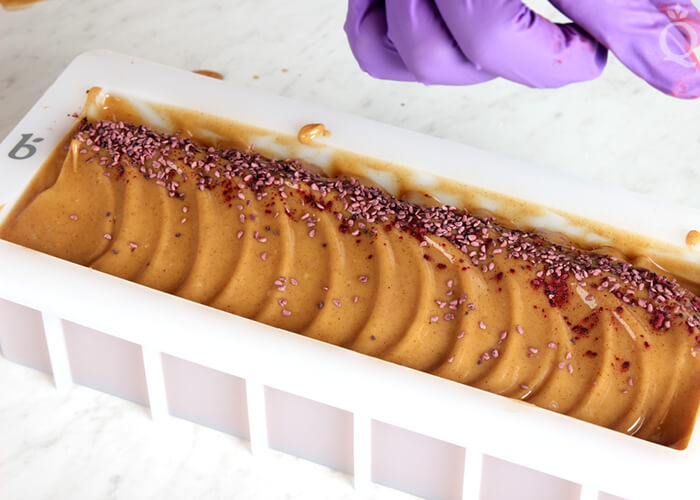
SEVEN: Use a spoon to create texture on top of the soap. We pushed the soap to one side to create a wave-like effect. If you find the soap is not holding its shape, allow it to sit in the mold for a few minutes to thicken and harden. Then, try creating texture on top again.
EIGHT: Once you’re happy with the top, sprinkle beet root powder and blackberry seeds on the top. We concentrated the seeds and powder on the peak of the soap.
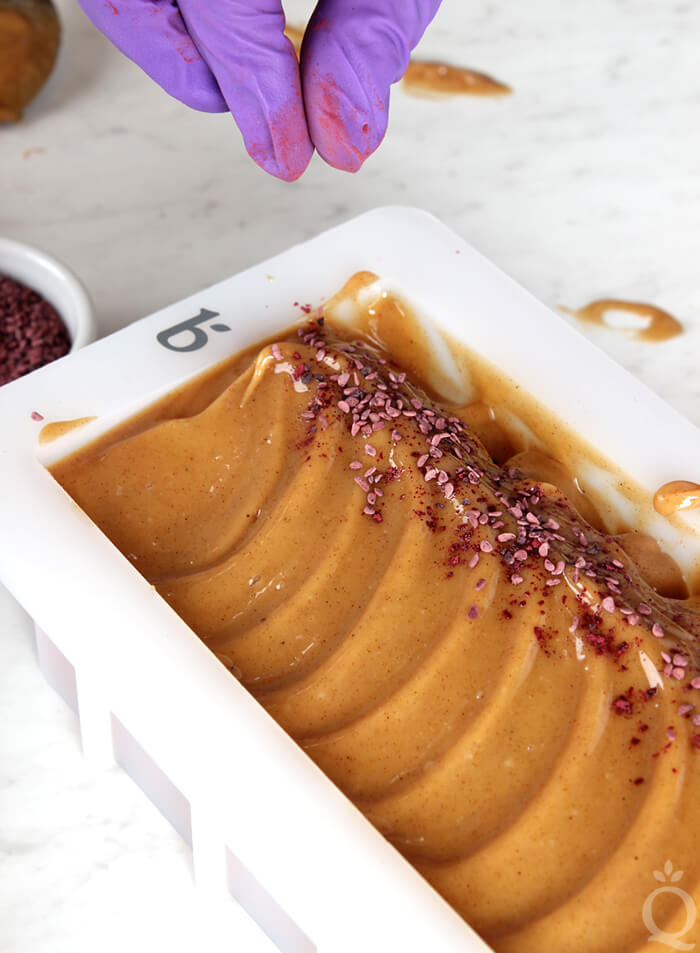
NINE: Spritz the top of the soap with 99% isopropyl alcohol to prevent soda ash. We put this soap in a drawer in a room temperature area to lightly insulate without disrupting the textured top.
Allow the soap to stay in the mold for 2-3 days. Pull the sides away from the mold to release the airlock and push the soap out from the bottom. If the mold does not pull away from the soap easily, give it another day or two in the mold. Once removed, cut into bars and allow to cure for 4-6 weeks. Enjoy.
Beet Cold Process Soap Tutorial
Ingredients
- 10 ″ Silicone Loaf Mold
- 1.7 oz. Babassu Oil 5%
- 3.3 oz. Cocoa Butter 10%
- 8.3 oz. Coconut Oil 25%
- 19.8 oz. Olive Oil 60%
- 4.6 oz. Sodium Hydroxide Lye
- 10.9 oz. Distilled Water
- 2 oz. Balsam Peru Essential Oil
- 1 Tbsp. Beet Root Powder
- 2 tsp. Rosehip Powder
- Blackberry Seeds
Instructions
COLOR PREP: Measure out 1 tablespoon of beet powder and 2 teaspoons of rosehip powder into a small container (or two separate containers). Set them aside.
FRAGRANCE PREP: Measure 2 ounces of Balsam Peru Essential Oil into a small glass container and set aside.
SAFETY FIRST: Suit up for safe handling practices. That means goggles, gloves, and long sleeves. Make sure kids, pets, and other distractions and tripping hazards are out of the house or don’t have access to your soaping space. Always soap in a well-ventilated area.
- Slowly and carefully add the lye to the water and gently stir until the lye has fully dissolved and the liquid is clear. Set aside to cool. If you’d like a harder bar of soap that releases faster from the mold, you can add sodium lactate to the cooled lye water. Use 1 teaspoon of sodium lactate per pound of oils in the recipe. For this recipe, you’d add 2 teaspoons sodium lactate.
- Melt and combine the coconut oil, babassu oil, cocoa butter, and olive oil in a large bowl. Add the measured beet root powder and rosehip powder directly into the oils and use the stick blender to fully mix them in.
- Once the lye water and the oils have cooled to 130 degrees or below (and are ideally within 10 degrees of each other), add the lye water to the oils and stick blend until thin trace.
- Add the Balsam Peru Essential Oil to the soap batter. Use the stick blender to fully incorporate the essential oil.
- Continue stick blending the soap batter until you reach a medium to thick trace. This may take a few minutes of blending.
- Once you’ve reached the texture of thick pudding, pour all of the soap into the mold. Tap it firmly on the counter to help get rid of air bubbles.
- Use a spoon to create texture on top of the soap. We pushed the soap to one side to create a wave-like effect. If you find the soap is not holding its shape, allow it to sit in the mold for a few minutes to thicken and harden. Then, try creating texture on top again.
- Once you’re happy with the top, sprinkle beet root powder and blackberry seeds on the top. We concentrated the seeds and powder on the peak of the soap.
- Spritz the top of the soap with 99% isopropyl alcohol to prevent soda ash. We put this soap in a drawer in a room temperature area to lightly insulate without disrupting the textured top. Allow the soap to stay in the mold for 2-3 days. Pull the sides away from the mold to release the airlock and push the soap out from the bottom. If the mold does not pull away from the soap easily, give it another day or two in the mold. Once removed, cut into bars and allow to cure for 4-6 weeks. Enjoy.
