



• September 20, 2011

Advanced Swirling Part 2: Getting Brave with Color

Guest post by Kat from Otion (Bramble Berry’s retail store)


Welcome back to my four-part swirling tutorial! If you missed part one on Understanding Color Theory Terminology, make sure to check it out here.

I’d like to start out today’s topic by reiterating what my professors told me in painting classes that helped build my confidence with color and technique.
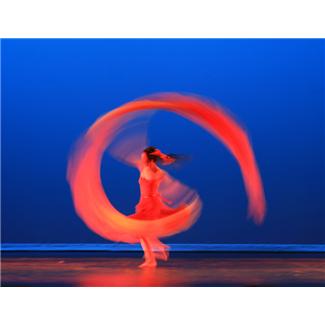
1. Don’t get too attached. This means a couple of things; don’t get too attached to a plan (expecting the swirls/colors to look a specific way) because it limits your spontaneity and creative flow. Allow things to happen. Also, don’t get too attached to the finished product or you will have a hard time trying new things, and you will most likely get stuck repeating yourself. Remember, what makes an interesting product line is variety.

2. Practice! Make a lot of soap, keep good notes, and try many color combinations. The more you know what happens when you use certain colors together, the more confidence you will gain. Specifically, know your pigments because some of them morph (or change color) in cold process.

3. Let Go. Worrying or having built up expectations adds unnecessary pressure to the process. It’s supposed to be fun, after all! What’s the worst thing that can happen? You get an ugly bar of soap. Trust me, someone will love it and it’s still a great working soap. One memorable professor told his class on the first day, “We’re not making Mona Lisa’s here, now let go and paint!”

When it comes to picking colors, experiment with colors that are opposites. I recommend trying a safe batch and a scary batch for comparison. Use colors that you feel really comfortable with in your safe batch (ex. blue and violet in a lavender batch), and pick colors that you wouldn’t normally go toward in your scary batch (ex. brown and pink in a sandalwood batch). You’ll be surprised how interesting the scary batch is compared to the safe one.

“A thimbleful of red is redder than a bucketful” –Henri Matisse
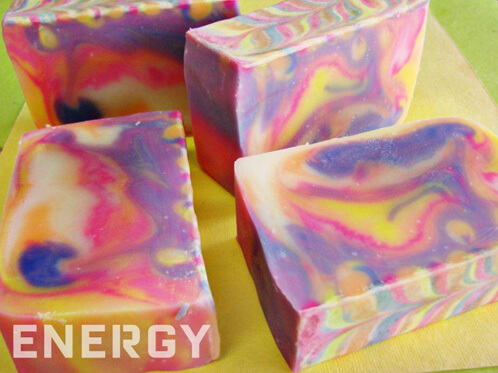
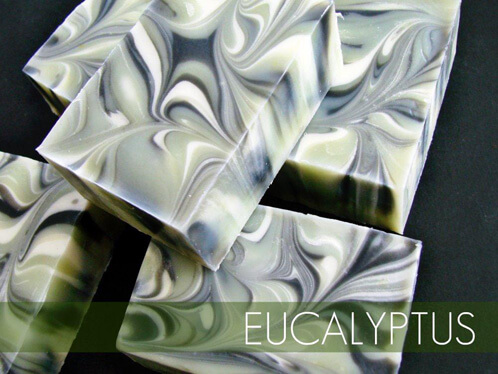
As a soap artist, you have a lot of power over people’s moods. Well, in a way. Your soap provides an experience and color is one of the many sensory elements that influences that experience. Check out the different moods that are created simply by the color choices in the Energy bars and the Eucalyptus bars above. The vibrant, saturated neon pigments in the Energy soap give that great burst of colorful excitement. The unsaturated, muted color palette in the Eucalyptus soap is simple and elegant, resulting in a very calming experience.

Stay tuned! I have more coloring tips to share next week. In the mean time tell me about your “safe” and “scary” soap batches.

You may also like these

Become an email subscriber

Enter your email address below and you will receive all our new posts directly in your email inbox.

  1. I know this was posted almost a year ago, but I was wondering if you could tell me what natural colorants you used for the Eucalyptus bar? It’s GORGEOUS!

  2. Great comments, thanks! A few more great scents to swirl with: Summer Melon Spritzer, Lavender and Herb, Black Raspberry Vanilla, Yuzu Cybilla, Sensuous Sandalwood, and Peppermint. In general, very floral scents tend to move quickly (or accelerate trace).

  3. Hello,
    What are the best oils to use , if you do not want your soap to trace quick?
    What type of fragrance /essential oils are good for swrilling

    1. Energy fragrance oil is my favorite fragrance for swirling: https://www.brambleberry.com/Energy-Fragrance-Oil-P3861.aspx Cranberry Fig, Fresh Snow and Orange Grove are also really great swirling fragrances.

      Lemongrass is a great essential oil for swirling: https://www.brambleberry.com/Lemongrass-Essential-Oil-P3822.aspx

      Litsea and Lavender are also fantastic.

      If you don’t want your soap to trace quickly, 60% or more liquid oils is a great idea. Really use that Olive Oil generously.

  4. I created what I thought was going to be a rather ugly Halloween soap. It has a dark brown/black background and thin marbled swirls of peachy orange and violet. It was perfect for the effect I was going for, which was spooky ghostly cobwebs on a dark background. The thing that surprised me was that so many people have told me that they think it is beautiful. I have to admit, it is rather striking.

  5. Playing with colours is really what nature does, isn’t it? There are combinations out there that I would never have thought to put together, but it does make sense.

  6. I have a terrible time with colors. i don’t know how to make them into liquid. i have micas and oxides and they just look awful. Please tell me the secrets so i can make beautiful colors as well
    thanks

      1. So you don’t mix any of the soap in with the oil and color? I just made my first attempt at swirling a batch, and my color (which I mixed with oil and then some light trace soap) set up in under a minute. All I got was globs of color on top of my soap box – not what I was going for!

        1. Okay, now that I re-read your post, Courtney, I see that you’re mixing your color mixture into some of your soap. Has it hit trace at all? How do you keep it from setting up before you get it into the soap? I just have a layer of color sitting on top of my soap.

Comments are closed.

{"email":"Email address invalid","url":"Website address invalid","required":"Required field missing"}

The Latest from Soap Queen TV

Inspired by Gems & Crystals

All About Essential Oils

The Power of Charcoal

Create Your Own Clay Face Mask

DIY Bath Bombs

Cold Process Soap Tips & Tricks

Learn the Basics of Cold Process Soapmaking

Learn the Basics of Melt & Pour Soapmaking

Want to Start Your Own Soap Business?

Soap Business Success Stories

Soap Queen TV Favorites

Ingredient Spotlight

Disclosure

Unless stated otherwise, all images are original material and are copyrighted. If you'd like to use an image, please be a friend and credit the photo and link back to Soap Queen. Feel free to share, tweet and pin to your hearts content.