




When planning a cold process soap design, fragrance oil selection plays a huge role. Some fragrance oils discolor brown (learn more about that here), making bright colors difficult. Other fragrance oils accelerate trace, which can make complicated designs like a Column Pour or a Peacock Swirl tricky to execute. Floral fragrances are known for their tendency to accelerate trace, but that doesn’t mean beautiful soap can’t be created with them! It just means you need to choose an appropriate design, and be ready to work fast. Setting up your soaping workspace beforehand helps immensely!
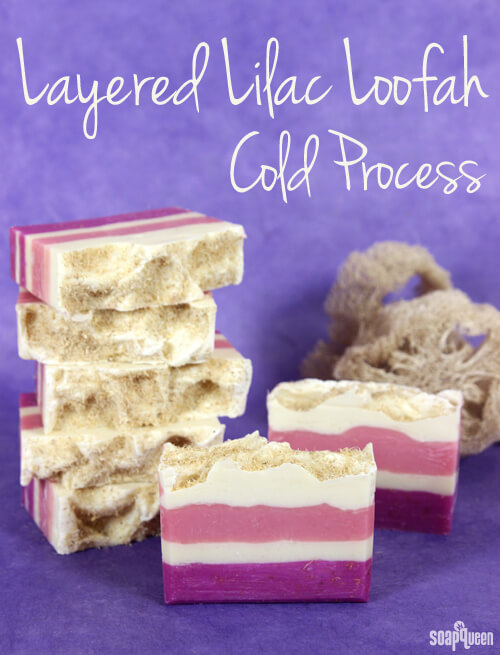
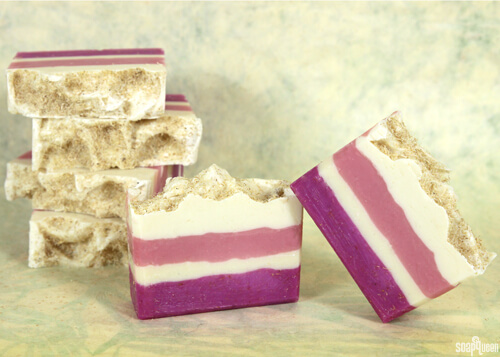
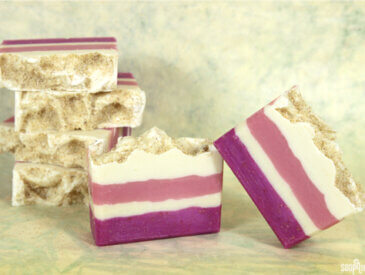
This Layered Lilac Loofah (say that ten times fast!) Cold Process project was created with acceleration in mind. Lilac Fragrance Oil tends to speed up trace, making layers a perfect design for this fragrance. Because the soap becomes thick quickly, it is able to support the layers on top. With plenty of butters and a bit of scrub from shredded loofah, this palm-free recipe leaves skin feeling incredibly soft.
What You’ll Need:
10″ Silicone Loaf Mold
3.6 oz. Avocado Oil
1.8 oz. Castor Oil
7.2 oz. Cocoa Butter
9 oz. Coconut Oil
3.6 oz. Green Tea Seed Oil
1.8 oz. Mango Butter
7.2 oz. Olive Oil
1.8 oz. Shea Oil
5 oz. Sodium Hydroxide
11.9 Distilled Water
Radiant Plum Colorant
Titanium Dioxide Pigment
Ultramarine Lavender Pigment
Electric Bubblegum Colorant
2.5 oz. Lilac Fragrance Oil
1 tbs. Shredded Loofah

If you’ve never made Cold Process soap before, stop here! I highly recommend checking out our FREE four part SoapQueen.tv series on Cold Process Soapmaking, especially the episode on lye safety. And if you’d rather do some reading, Bramble Berry carries a wide range of books on the topic, including my newest book, Soap Crafting. You can also checkout the digital downloads for that instant gratification factor.
SAFETY FIRST: Suit up for safe handling practices! That means goggles, gloves and long sleeves. Make sure kids, pets, and other distractions and tripping hazards are out of the house or don’t have access to your soaping space. Always soap in a well-ventilated area.
COLOR PREP: Disperse 1 teaspoon of each colorant into 1 tablespoon of sunflower or sweet almond oil (or any other liquid oil). Use a mini mixer to get clumps worked out smoothly. Prepping your colors in the beginning will allow you to work quickly and give you more time to work with your soap.
ONE: Slowly and carefully add the lye to the water and gently stir until the lye has fully dissolved and the liquid is clear. Set aside to cool.
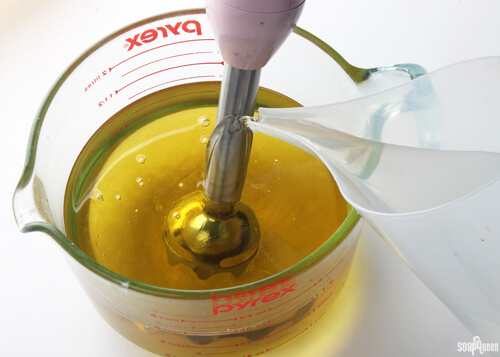
TWO: Melt and combine the cocoa butter, mango butter, coconut, olive, shea, green tea seed, castor and avocado oils. Once the lye water and the oils have cooled to 130 degrees or below (and are ideally within 10 degrees of each other), add the lye water to the oils and stick blend until very thin trace. If you’d like a harder bar of soap that releases faster from the mold, you can add Sodium Lactate to the cooled lye water. Use 1 teaspoon of Sodium Lactate per pound of oils in the recipe. For this recipe, you’d add about 2 tsp. Sodium Lactate.
Note: Because this fragrance oil causes the trace to accelerate quickly, be sure to stop stick blending once you have reached a very thin trace. You can always blend more later!
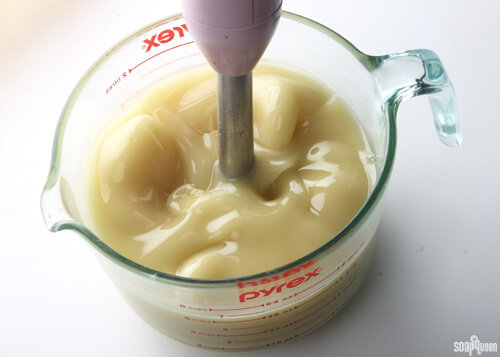 TWO: Once you’ve reached a thin trace, pour 1.5 cups of soap into two small containers. To one small container, add 1 tbs. Radiant Plum Colorant and 1 tbs. shredded loofah, and stir with a whisk to fully incorporate.
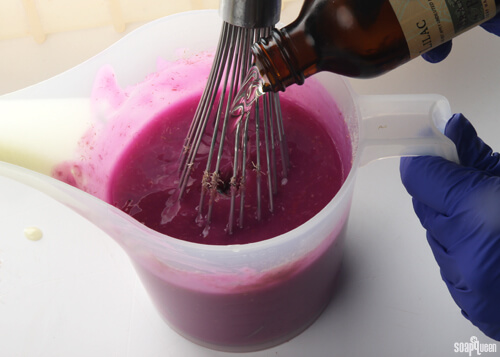
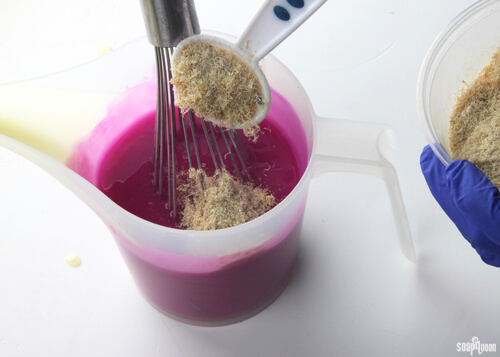 THREE: Add .75 ounces of Lilac Fragrance Oil, and use a whisk to thoroughly combine.
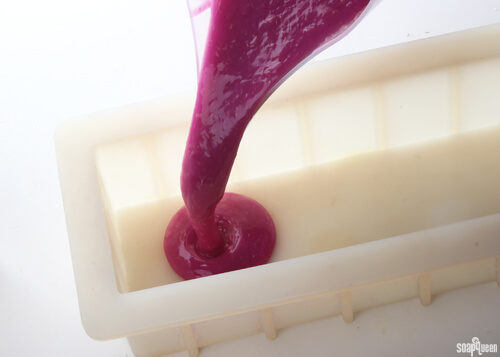
 FOUR: Pour the purple soap into the mold, and tap the mold down firmly on the counter to evenly disperse the soap. Notice how quickly the soap thickens!
 FIVE: To the large container of soap, add 1 tbs. titanium dioxide and 1 oz. of Lilac Fragrance Oil. Use a whisk to thoroughly combine.
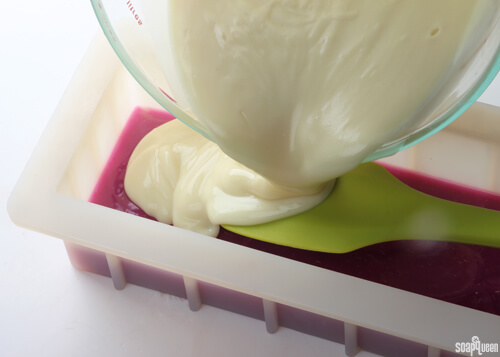
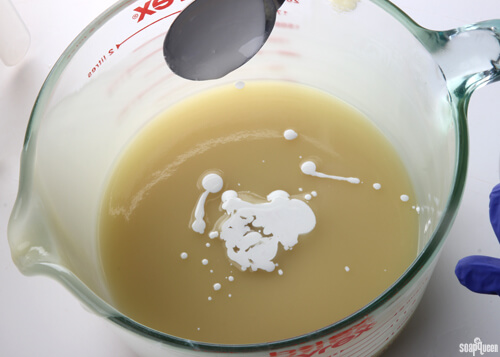 SIX: Gently pour about half of the white soap into the mold. In order to avoid the white soap from breaking through into the purple layer, you may choose to pour the soap over a spatula into the mold. Use the spatula to evenly distribute the white soap, and tap the mold firmly on the counter to release any bubbles.
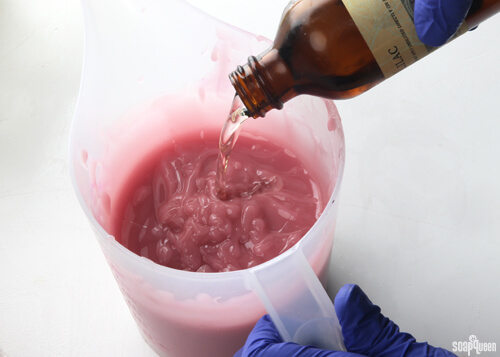
 SEVEN: To the remaining small container, add 1 tsp. of Ultramarine Lavender Pigment and 1/2 tsp. of Electric Bubblegum Colorant. Add .75 ounces of Lilac Fragrance Oil, and use a whisk to completely combine.
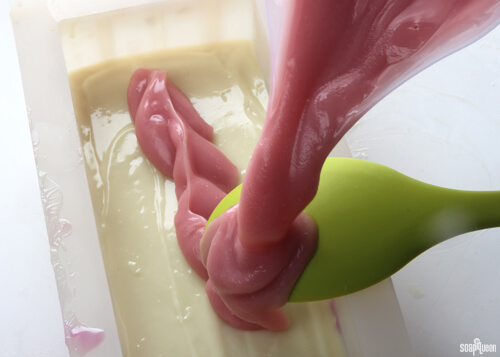
 EIGHT: Gently pour the pink soap into the mold. At this point, the soap will be very thick. In order to avoid the pink soap from breaking through into the white layer, you may choose to pour the soap over a spatula into the mold. Use the spatula to evenly distribute the white soap, and tap the mold firmly on the counter to release any bubbles.
 NINE: Slowly and carefully pour the remaining white soap into the mold. We found the pink soap was firm enough that pouring over a spatula was not necessary. Use a spoon to create a textured top. Because the soap will be a very thick trace, it is easy to create texture. No need to be precise, have fun creating peaks!
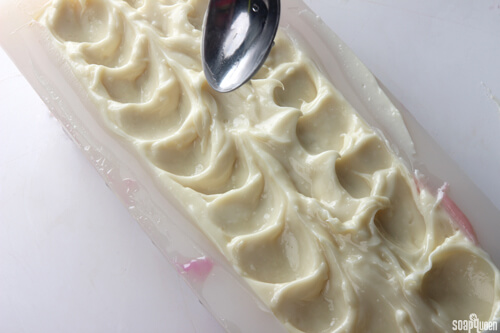 TEN:Once you are happy with the texture, sprinkle shredded loofah on top. Keep in mind some loofah will fall off, so don’t be shy!
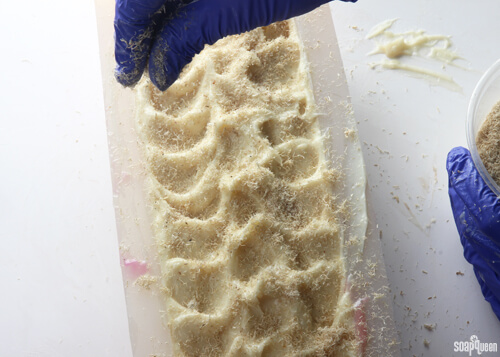 Spray with isopropyl alcohol, place a piece of cardboard and a blanket over the mold and place on a heating pad for 15 – 20 minutes. Then, remove from heat and let it sit overnight. Allow the soap to cure for 4 – 6 weeks and then enjoy!
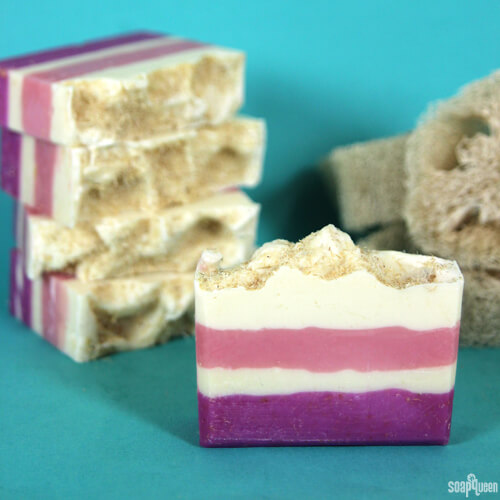
Layered Lilac Loofah Cold Process
Ingredients
- 10 ″ Silicone Loaf Mold
- 3.6 oz. Avocado Oil
- 1.8 oz. Castor Oil
- 7.2 oz. Cocoa Butter
- 9 oz. Coconut Oil
- 3.6 oz. Green Tea Seed Oil
- 1.8 oz. Mango Butter
- 7.2 oz. Olive Oil
- 1.8 oz. Shea Oil
- 5 oz. Sodium Hydroxide
- 11.9 Distilled Water
- Radiant Plum Colorant
- Titanium Dioxide Pigment
- Ultramarine Lavender Pigment
- Electric Bubblegum Colorant
- 2.5 oz. Lilac Fragrance Oil
- 1 tbs.Shredded Loofah
Instructions
- SAFETY FIRST: Suit up for safe handling practices! That means goggles, gloves and long sleeves. Make sure kids, pets, and other distractions and tripping hazards are out of the house or don’t have access to your soaping space. Always soap in a well-ventilated area.
- COLOR PREP: Disperse 1 teaspoon of each colorant into 1 tablespoon of Sunflower or Sweet Almond Oil (or any other liquid oil). Use a mini mixer to get clumps worked out smoothly. Prepping your colors in the beginning will allow you to work quickly and give you more time to work with your soap.
- Slowly and carefully add the lye to the water and gently stir until the lye has fully dissolved and the liquid is clear. Set aside to cool.
- Melt and combine the cocoa butter, mango butter, coconut, olive, shea, green tea seed and avocado oils. Once the lye water and the oils have cooled to 130 degrees or below (and are ideally within 10 degrees of each other), add the lye water to the oils and stick blend until thin trace. If you’d like a harder bar of soap that releases faster from the mold, you can add Sodium Lactate to the cooled lye water. Use 1 teaspoon of Sodium Lactate per pound of oils in the recipe. For this recipe, you’d add about 2 tsp. Sodium Lactate.
- Once you’ve reached a thin trace, pour 1.5 cups of soap into two small containers. To one small container, add 1 tbs. Radiant Plum Colorant and 1 tbs. shredded loofah, and stir with a whisk to fully incorporated.
- Add .75 ounces of Lilac Fragrance Oil, and use a whisk to thoroughly combine.
- Pour the purple soap into the mold, and tap the mold down firmly on the counter to evenly disperse the soap.
- To the large container of soap, add 1 tbs. titanium dioxide and 1 oz. of Lilac Fragrance Oil. Use a whisk to thoroughly combine.
- Gently pour about half of the white soap into the mold. In order to avoid the white soap from breaking through into the purple layer, you may choose to pour the soap over a spatula into the mold. Use the spatula to evenly distribute the white soap, and tap the mold firmly on the counter to release any bubbles.
- To the remaining small container, add 1 tsp. of Ultramarine Lavender Pigment and 1/2 tsp. of Electric Bubblegum Colorant. Add .75 ounces of Lilac Fragrance Oil, and use a whisk to completely combine.
- Gently pour the pink soap into the mold. At this point, the soap will be fairly thick. In order to avoid the pink soap from breaking through into the white layer, you may choose to pour the soap over a spatula into the mold. Use the spatula to evenly distribute the white soap, and tap the mold firmly on the counter to release any bubbles.
- Slowly and carefully pour the remaining white soap into the mold. We found the pink soap was firm enough that pouring over a spatula was not necessary. Use a spoon to create a textured top. No need to be precise, have fun creating peaks!
- Once you are happy with the texture, sprinkle shredded loofah on top. Keep in mind some loofah will fall off, so don’t be shy!
- Spray with isopopyl alcohol and then insulate the soap and place on a heating pad for 15 – 20 minutes. Then remove from heat and cover it overnight. Allow the soap to cure for 4 – 6 weeks and then enjoy!
