





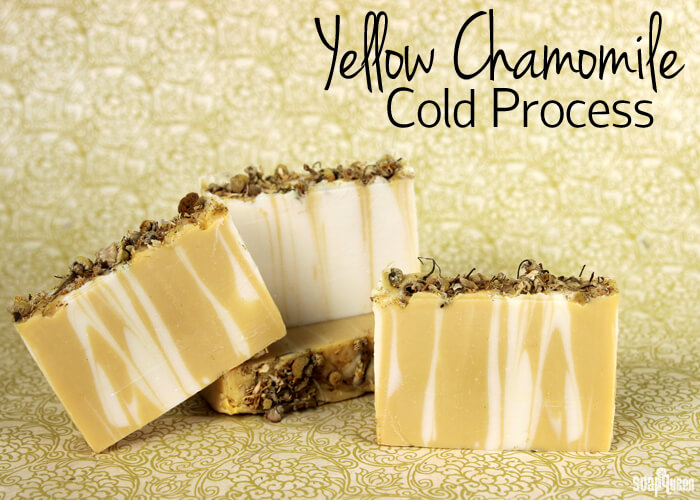
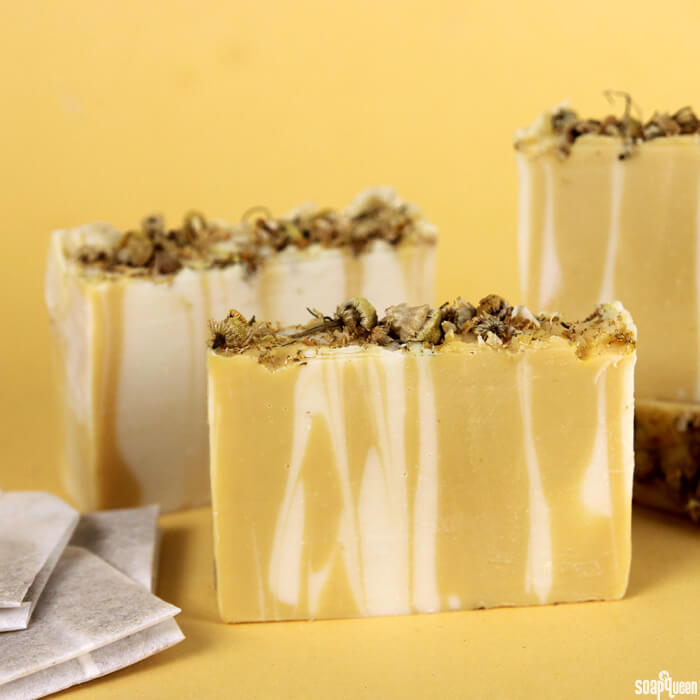
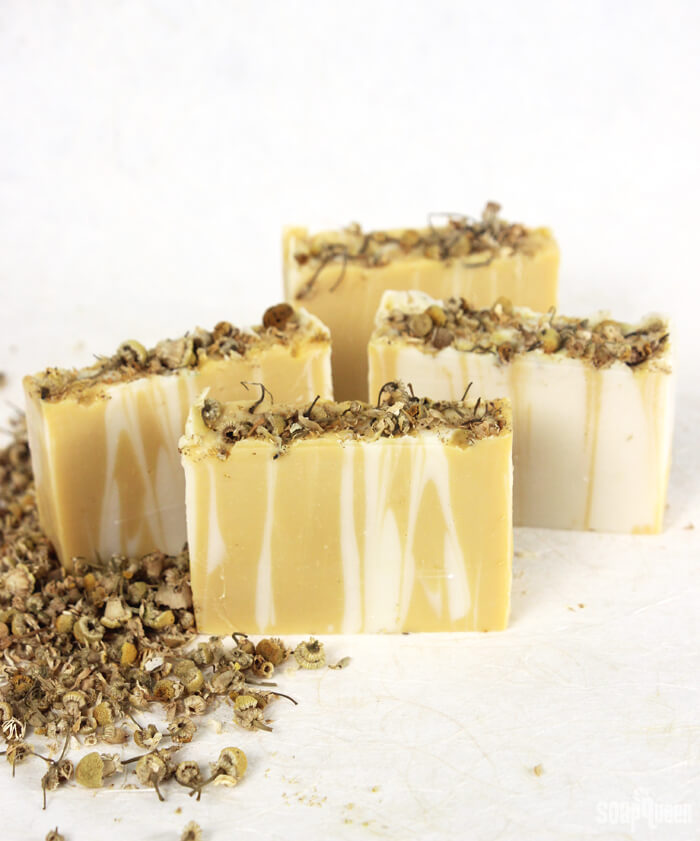
This Yellow Chamomile Cold Process soap is cheerful and bright. This project is made with with Chamomile Bergamot Fragrance Oil and topped with chamomile herbs; it smells like a calming cup of tea. Chamomile extract is also added at trace to give additional skin-soothing properties. Made in the 4″ Silicone Loaf Mold, this mold creates four 1″ bars of soap. It’s ideal for smaller recipes or even test batches.
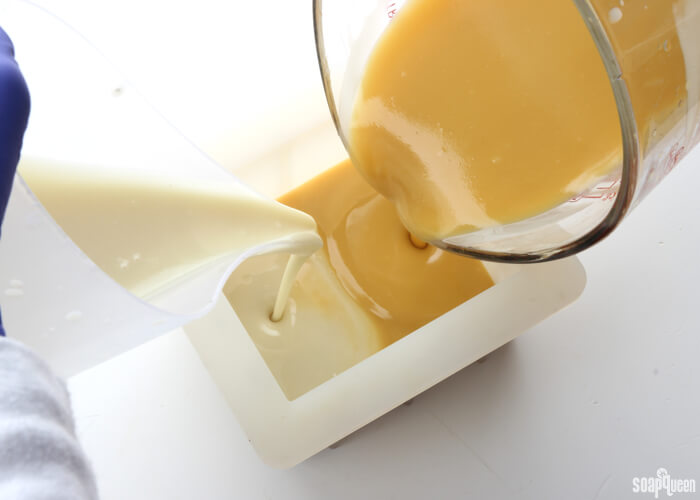
The vertical stripes are achieved by pouring the white and yellow soap into opposite ends of the mold at the same time. The colors are then swirled back and forth with a chopstick or dowel which pulls the colors into the other colored area. This technique is great for beginners, as you do not have to be precise when swirling.
What You’ll Need:
4″ Silicone Loaf Mold
2.8 oz. Coconut Oil
2.8 oz. Olive Oil
2.8 oz. Palm Oil
2.1 oz. Rice Bran Oil
2.1 oz. Sweet Almond Oil
1.4 oz. Cocoa Butter
1.9 oz. Sodium Hydroxide Lye
4.6 oz. Distilled Water
Yellow Oxide
Titanium Dioxide
1 oz. Chamomile Bergamot Fragrance Oil
1 Tbs. Chamomile Extract
Chamomile Herbs, Egyptian

Click here to add everything you need for this project to your Bramble Berry shopping cart!
If you’ve never made Cold Process soap before, stop here! I highly recommend checking out our FREE four part SoapQueen.tv series on Cold Process Soapmaking, especially the episode on lye safety. And if you’d rather do some reading, Bramble Berry carries a wide range of books on the topic, including my newest book, Soap Crafting. You can also checkout the digital downloads for that instant gratification factor.
SAFETY FIRST: Suit up for safe handling practices! That means goggles, gloves and long sleeves. Make sure kids, pets, and other distractions and tripping hazards are out of the house or don’t have access to your soaping space. Always soap in a well-ventilated area.
COLOR PREP: To ensure that the Titanium Dioxide blends smoothly into the soap batter, we recommend micronizing it before dispersing it in oil. Please note this is an optional tip but it does help with the titanium dioxide clumping in the soap =) To micronize colorant, simply use a coffee grinder to blend the colorant to break up any clumps of color and prevent streaks of white from showing in the final soap. We like to use a coffee grinder that has a removable, stainless steel mixing area for easy cleaning. Then, disperse 1 teaspoons of the colorant into 1 tablespoon of sunflower or sweet almond oil (or any other liquid oil). Finally, disperse 1 teaspoon Yellow Oxide into 1 tablespoon of light liquid oil. Use a mini mixer to get the clumps of color worked out smoothly.
ONE: Slowly and carefully add the lye to the water and gently stir until the lye has fully dissolved and the liquid is clear. Set aside to cool.
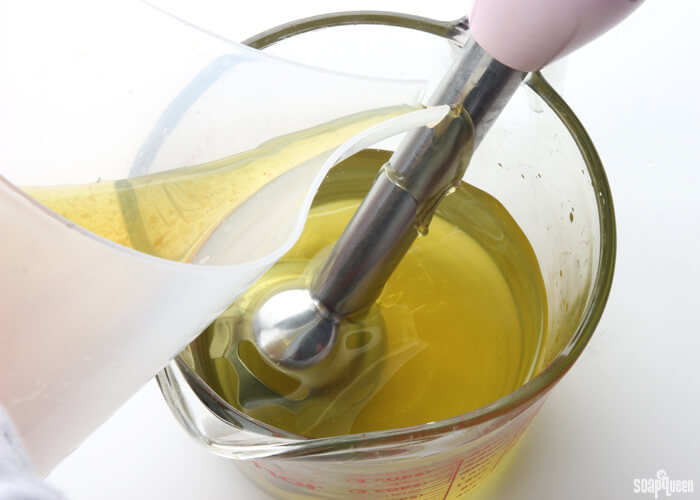
TWO: Combine the cocoa butter, coconut oil, olive oil, rice bran oil, sweet almond and palm oils (remember to fully melt then mix your entire container of palm oil before portioning). Once the lye water and the oils have cooled to 130 degrees or below (and are ideally within 10 degrees of each other), add the lye water to the oils and stick blend until thin trace. If you’d like a harder bar of soap that releases faster from the mold, you can add sodium lactate to the cooled lye water. Use 1 teaspoon of sodium lactate per pound of oils in the recipe. For this recipe, you’d add about 1 tsp. sodium lactate.
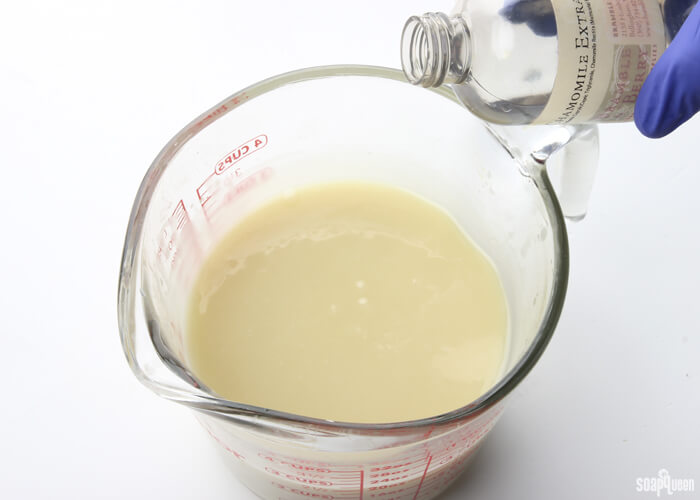
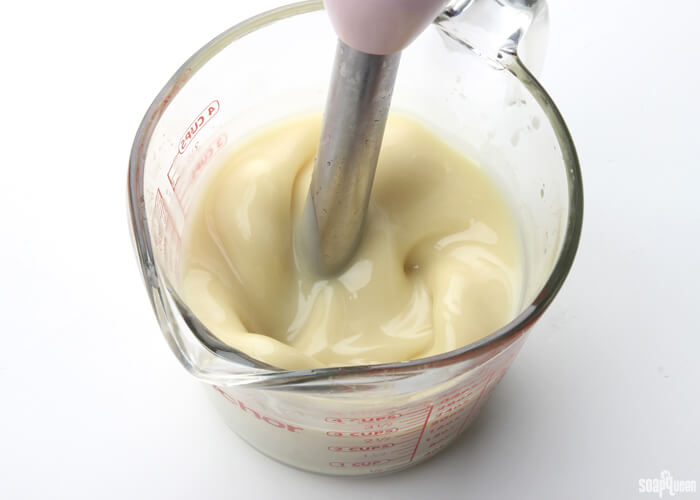 THREE: Once you’ve reached a light trace, add 1 tablespoon of chamomile extract and stir in with a whisk.
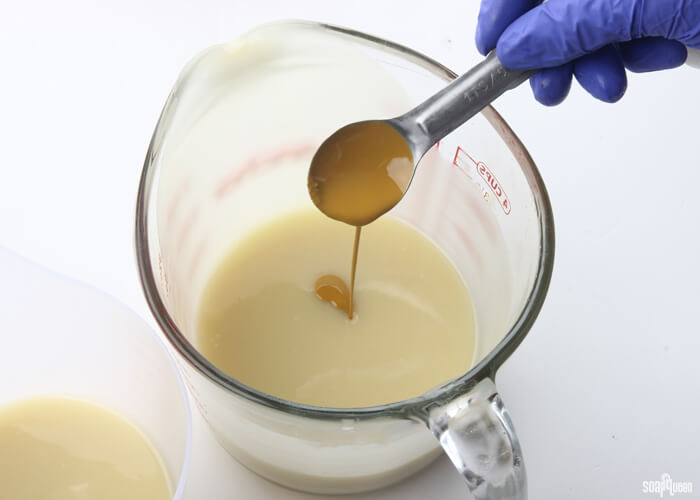
 FOUR: Split the batch in half, it’s okay to eyeball it! To one container, add 2 tsp. dispersed yellow oxide and stir in with a whisk.
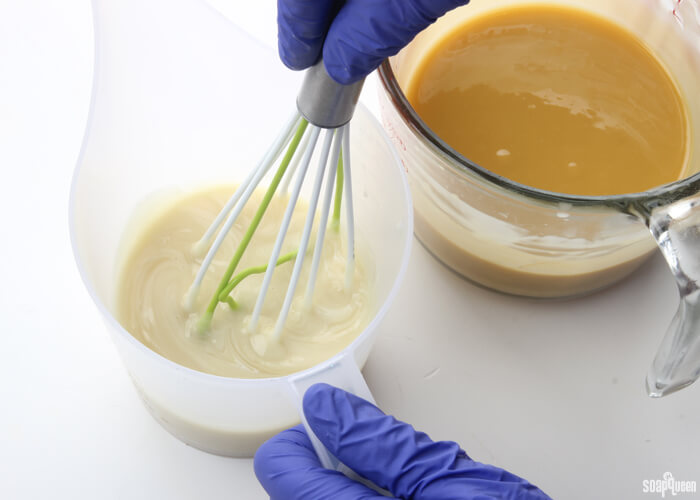
 FIVE: To the other container, add 1 tsp. dispersed titanium dioxide and whisk in.
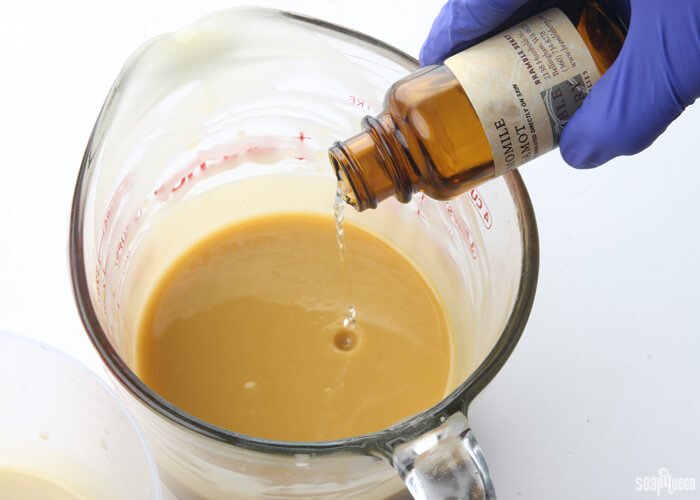
 SIX: Add .5 oz of Chamomile Bergamot Fragrance Oil into each container, and use a whisk to thoroughly combine.
 SEVEN: At the same time, pour each color into opposite sides of the mold. At this point, your soap will be a medium trace. If it is still thin, give it a few short pulses with the stick blender to thicken. If the soap is poured while thin, the two colors may blend together too much and become muddled.
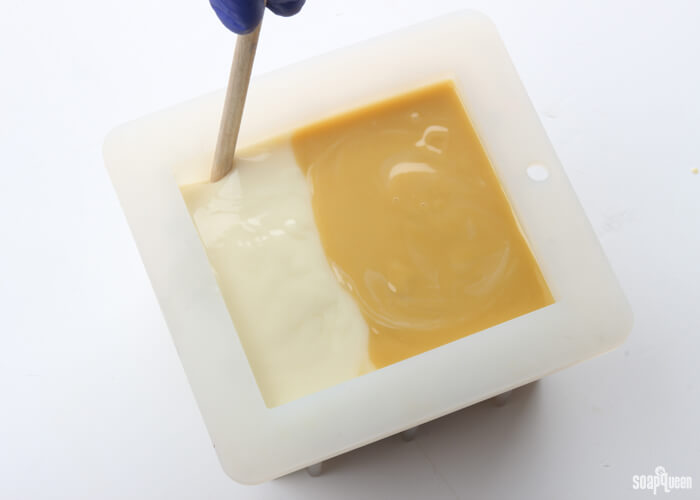
 EIGHT: Insert a chopstick or dowel down to the bottom of the mold. Then, move the dowel back and forth horizontally through the soap, making about four or five motions.
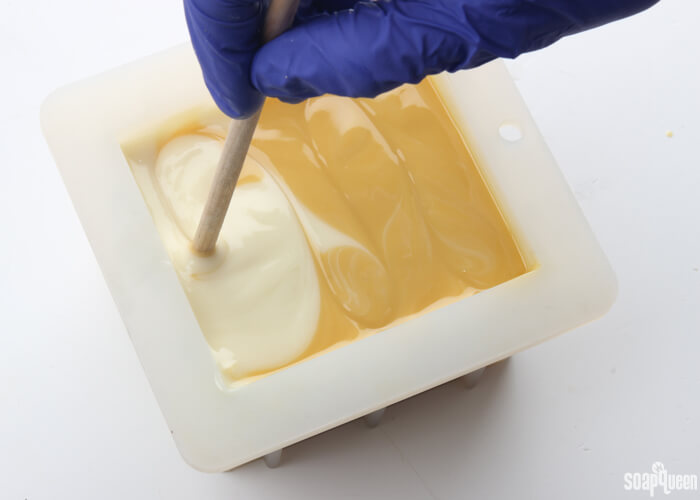
 NINE: Then, insert the swirling tool down to the bottom of the mold, and move it back and forth vertically through the soap. Repeat this process twice. No need to be super precise!
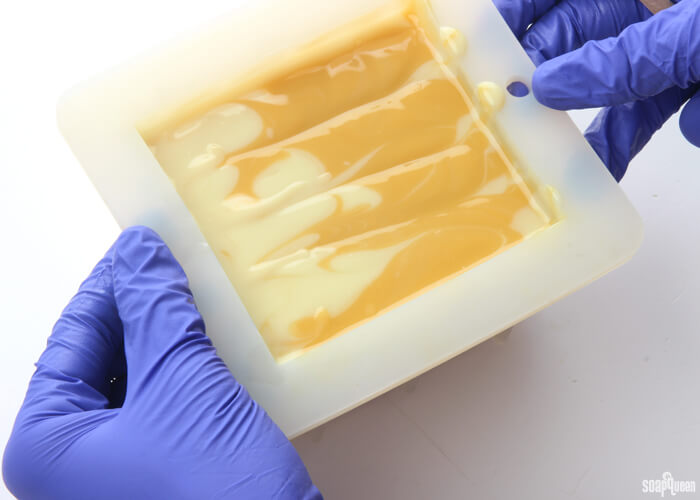
 TEN: Tap the mold firmly down on the counter to release any bubbles.
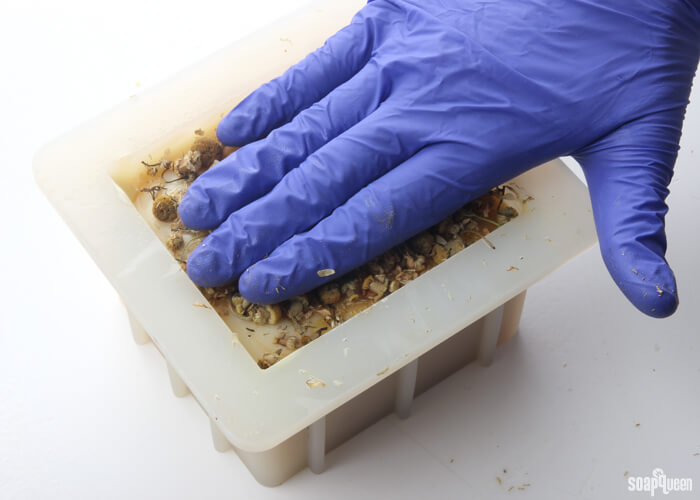
 ELEVEN: Sprinkle chamomile herbs on top of the soap, and press them down gently to ensure they adhere.
 Spray soap with 99% rubbing alcohol and allow the soap to sit in the mold for 48-72 hours. When it’s time to cut, flip the soap on its side and cut. If you cut from the top down, the herbs may cause drag marks.
Yellow Chamomile Cold Process Soap
Ingredients
- 4 ″ Silicone Loaf Mold
- 2.8 oz. Coconut Oil
- 2.8 oz. Olive Oil
- 2.8 oz. Palm Oil
- 2.1 oz. Rice Bran Oil
- 2.1 oz. Sweet Almond Oil
- 1.4 oz. Cocoa Butter
- 1.9 oz. Sodium Hydroxide Lye
- 4.6 oz. Distilled Water
- Yellow Oxide
- Titanium Dioxide
- 1 oz. Chamomile Bergamot Fragrance Oil
- 1 Tbs. Chamomile Extract
- Chamomile Herbs Egyptian
Instructions
SAFETY FIRST: Suit up for safe handling practices! That means goggles, gloves and long sleeves. Make sure kids, pets, and other distractions and tripping hazards are out of the house or don’t have access to your soaping space. Always soap in a well-ventilated area.
COLOR PREP: To ensure that the Titanium Dioxide blends smoothly into the soap batter, we recommend micronizing it before dispersing it in oil. Please note this is an optional tip but it does help with the titanium dioxide clumping in the soap =) To micronize colorant, simply use a coffee grinder to blend the colorant to break up any clumps of color and prevent streaks of white from showing in the final soap. We like to use a coffee grinder that has a removable, stainless steel mixing area for easy cleaning. Then, disperse 1 teaspoons of the colorant into 1 tablespoon of Sunflower or Sweet Almond Oil (or any other liquid oil). Finally, disperse 1 teaspoon Yellow Oxide into 1 tablespoon of light liquid oil. Use a mini mixer to get the clumps of color worked out smoothly.
- Slowly and carefully add the lye to the water and gently stir until the lye has fully dissolved and the liquid is clear. Set aside to cool.
- Combine the cocoa butter, coconut oil, olive oil, rice bran oil, sweet almond and palm oils (remember to fully melt then mix your entire container of Palm Oil before portioning). Once the lye water and the oils have cooled to 130 degrees or below (and are ideally within 10 degrees of each other), add the lye water to the oils and stick blend until thin trace. If you’d like a harder bar of soap that releases faster from the mold, you can add Sodium Lactate to the cooled lye water. Use 1 teaspoon of Sodium Lactate per pound of oils in the recipe. For this recipe, you’d add about 1 tsp. Sodium Lactate.
- Once you’ve reached a light trace, add 1 tablespoon of chamomile extract and stir in with a whisk.
- Split the batch in half, it’s okay to eye ball it! To one container, add 2 tsp. dispersed yellow oxide and stir in with a whisk.
- To the other container, add 1 tsp. dispersed titanium dioxide and whisk in.
- Add .5 oz of Chamomile Bergamot Fragrance Oil into each container, and use a whisk to thoroughly combine.
- At the same time, pour each color into opposite sides of the mold. At this point, your soap will be a medium trace. If it is still thin, give it a few short pulses with the stick blender to thicken. If the soap is poured while thin, the two colors may blend together too much, and the colors may become muddled.
- Insert a chopstick or dowel down to the bottom of the mold. Then, move the dowel back and forth horizontally through the soap, making about four or five motions.
- Then, insert the swirling tool down to the bottom of the mold, and move it back and forth vertically through the soap. Repeat this process twice. No need to be super precise during this process!
- Tap the mold firmly down on the counter to release any bubbles.
- Sprinkle chamomile herbs on top of the soap, and press them down gently to ensure they adhere.
- Spray soap with 99% rubbing alcohol and allow the soap to sit in the mold for 48-72 hours. When it’s time to cut, flip the soap on it’s side and cut. If you cut from the top down, the herbs may cause drag marks.
