





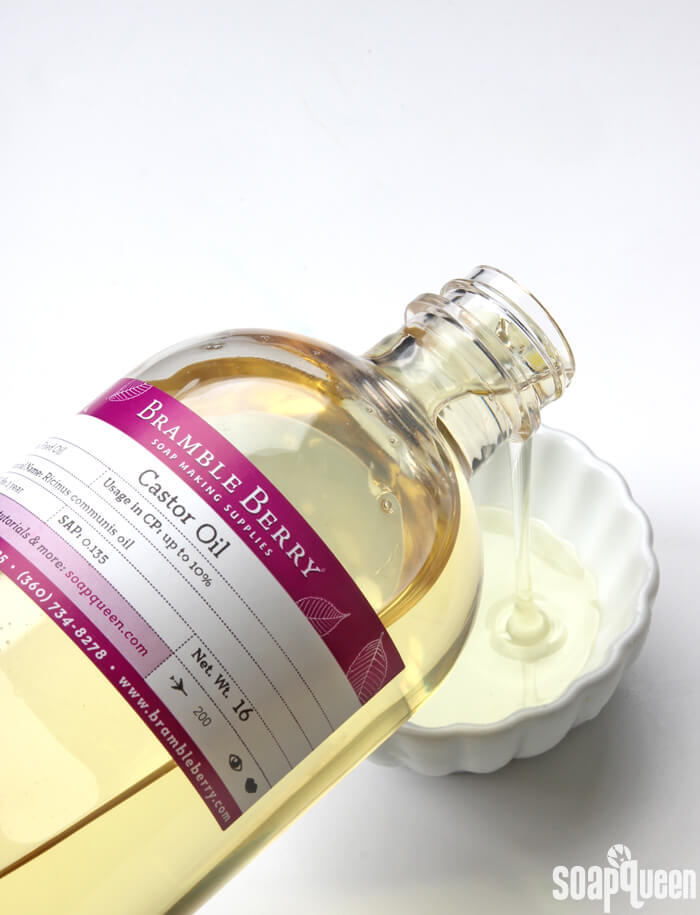
 Castor oil is an extremely unique fixed oil. It has a thick and viscous texture and a slight odor. In cold process soap, it contributes to large bubbles and is known for its cleansing properties. Due to its lathering ability, it’s a common ingredient in other soapy products such as solid bubble bath. It also adds shine and slip to lip products.
Castor oil is extracted from the seeds of the castor oil plant. The seeds are pressed to extract the oil within. It has a unique fatty acid profile, with 85-95% ricinoleaic acid, 2-6% oleic acid and 1-5% linoleic acid. In addition to bath and beauty products, castor oil is used in food and as a coating and lubricant in various industries.
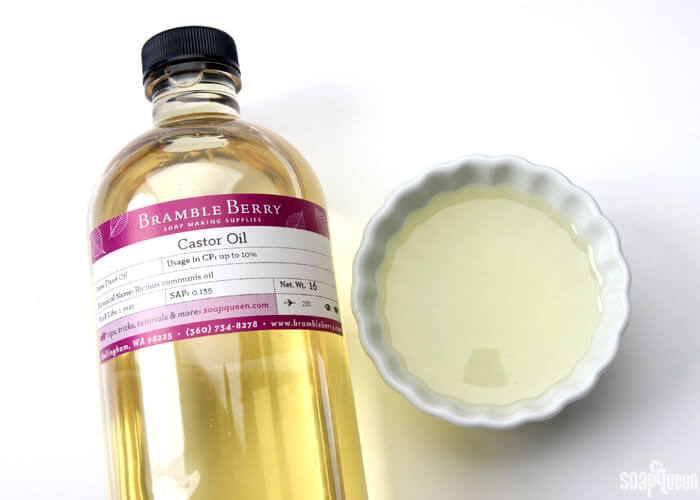
Castor oil feels similar to glycerin with a thick and sticky texture. It also acts as a humectant on the skin, just like glycerin. The humectant properties make it a wonderful addition to leave on products, such as balms. Castor oil has a shelf life of about 1 year.
In cold process soap, castor oil is typically used around 2-5% of the total oil weight. I’ve found using more than 10% can lead to a slightly sticky bar. Even a small amount of castor oil (such as 1%) contributes to a stable and fluffy lather. Substituting castor oil for another oil in recipes is tricky; there is not another fixed oil that adds quite the same properties. If you don’t have any on hand, I recommend increasing the amount of coconut oil in your recipe to increase lather. Read more about substituting oil in cold process recipes here. Castor oil does slightly accelerate trace, so keep that in mind when adding it to your recipes. If you’re looking for a few cold process recipes with castor oil, check out the cold process soap tutorials below.
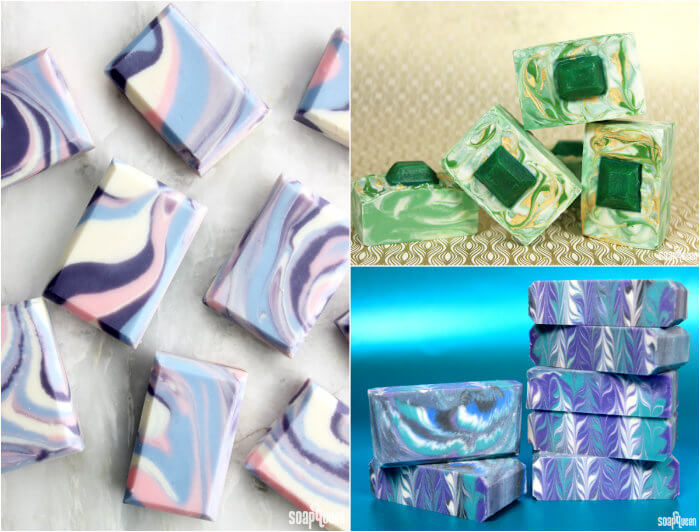 Left to right, clockwise: Pantone 2016 Spin Swirl Cold Process Soap, Emerald Swirl Cold Process Tutorial, Galaxy Clyde Slide Cold Process Tutorial
Castor oil created some interesting results in the Single Oil Cold Process Lather Tests. In this post, I made twelve soaps out of 100% of one oil. Below is the emulsified soap batter of 100% castor oil. Notice the thick, slightly sticky, gloopy texture. The castor oil soap hardened within the mold in just a few hours. I was a little surprised that the 100% castor oil soap produced lather. Click here to read more about the tests of each oil.
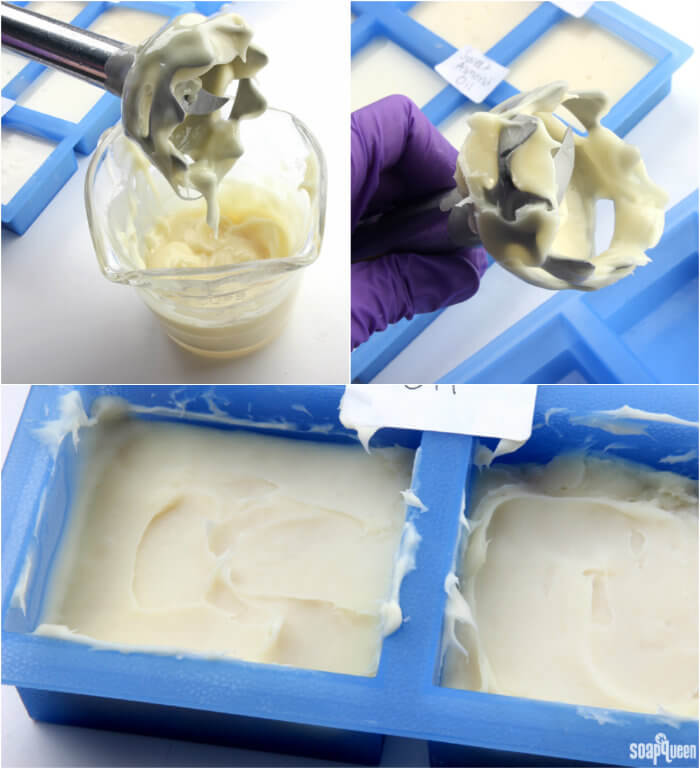 Castor oil has a thick and sticky texture, which led to very interesting results in the Single Oil Cold Process Lather Tests.
Castor oil is commonly used in solid bubble bath to contribute to fluffy bubbles. Check out the How to Make Solid Bubble Bath video below on Soap Queen TV to see the process in action. The recipe also contains liquid glycerin, baking soda and SLSA. The recipe is easy to customize with various scents and colors. In the LoveSpell Solid Bubble Bath DIY, the bars are colored purple and pink for a feminine look.
In lip products, castor oil adds shine and gloss. In the Radiant Red Lipstick video on Soap Queen TV, castor oil is used in equal parts with jojoba oil, along with various waxes for a rich, glossy texture. In the Rosy Red Lip Gloss, castor oil is used along with cera bellina wax for a soft, Vaseline-like texture. Adding castor oil to the Nourish Lip Balm Base adds a little more shine and gloss, as shown in the Beautiful Bronze Lip Tint Tutorial.
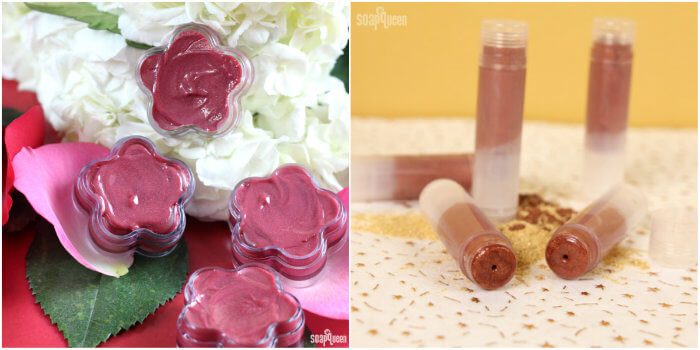 Left to right: Rosy Red Lip Gloss, Beautiful Bronze Lip Tint Tutorial
Castor oil has unique cleansing properties. Because of this, it’s a great addition to oil cleansers. In the Oat Oil Cleansers for Dry and Oily Skin, castor oil is used in both formulas. The idea behind oil cleansing is that it dissolves and washes away the sebum produced naturally by your skin, and replaces it with new “clean” oil. This leaves skin balanced, and does not cause skin to overproduce sebum. Click here to learn more about oil cleansing.
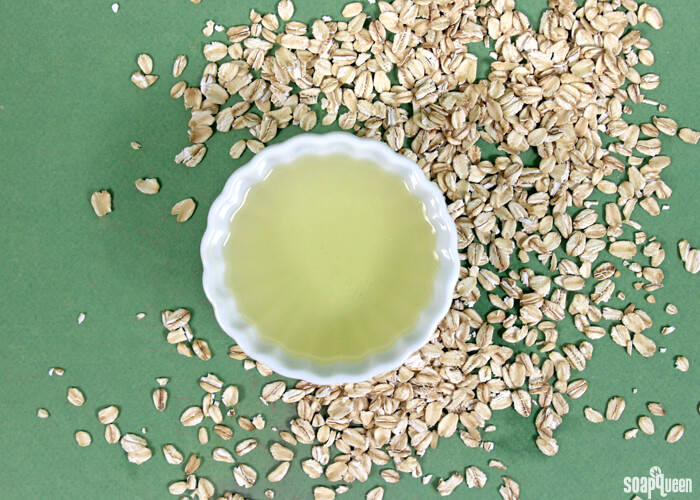 The Oat Oil Cleansers for Dry and Oily Skin both contain castor oil for its cleansing properties.
How to do incorporate the unique properties of castor oil into your products? I love using it in my cold process soap recipes when I want plenty of bubbles. =)
