





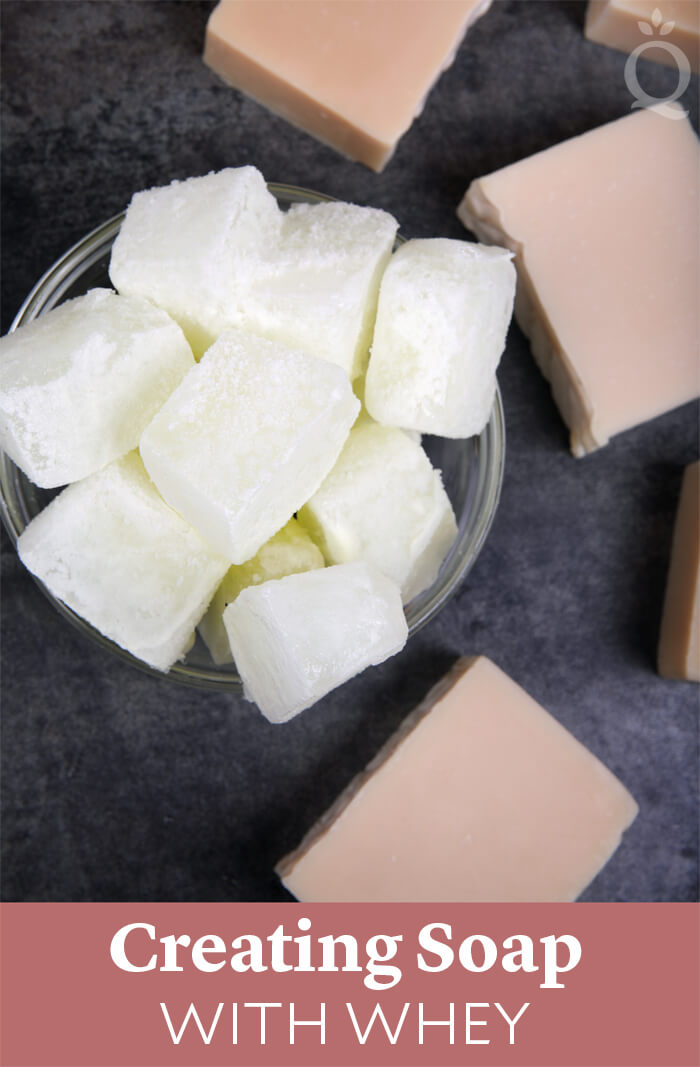
We love experimenting here in the Bramble Berry studio. If there are leftovers, there’s a good chance they’ll wind up in soap. We’ve made recipes with La Croix, coffee, kombucha, and more.
Bramble Berry CEO and Founder Anne-Marie has been trying all things DIY and sharing the results here. One of the first things she tried was making cheese. That process leaves you with a lot of whey, which is the watery part of milk that remains after curds are formed.
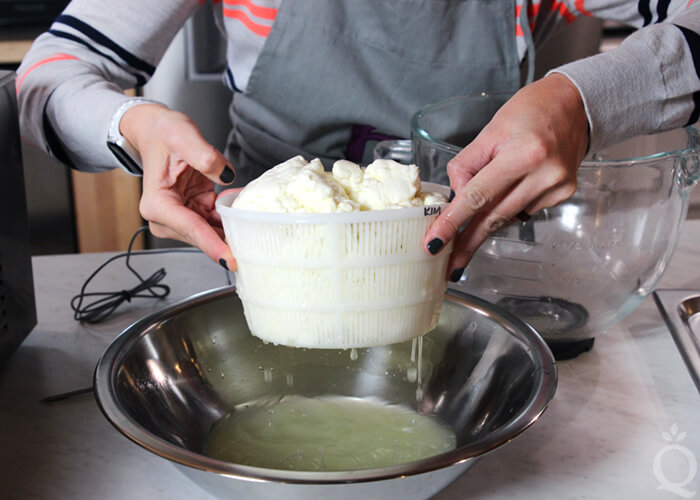
There are two types of whey. Sweet whey is the liquid that comes from making cheese with rennet, which includes cheddar and Swiss. Acid whey comes from cultured dairy products like sour cream or yogurt. Both are packed with protein, vitamins, and minerals, so we didn’t want it to go to waste.
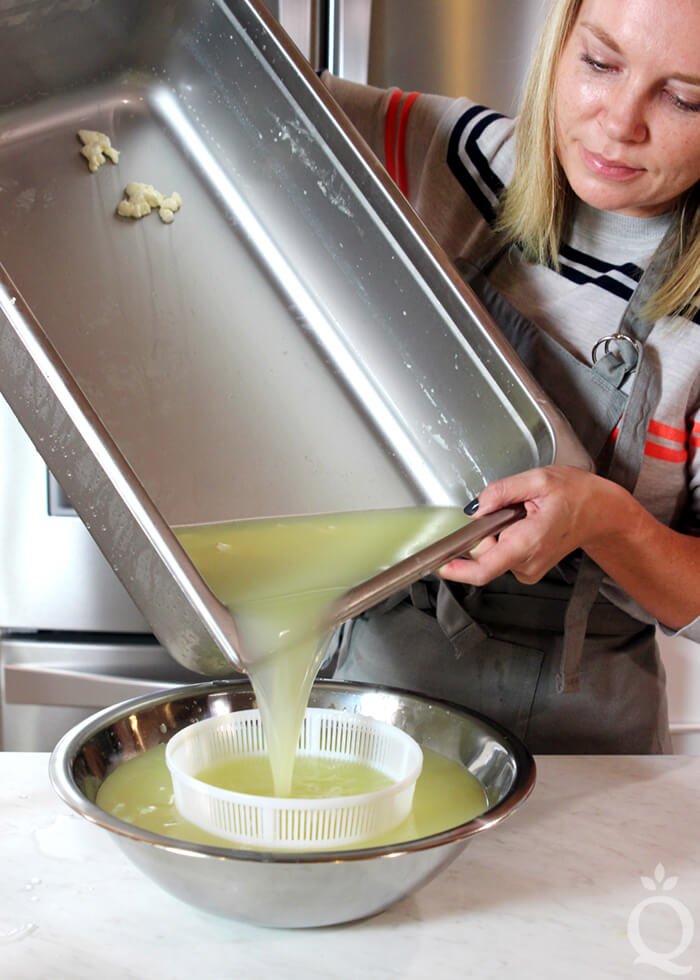
We decided to replace the distilled water in cold process soap with sweet whey. Knowing that temperatures are important for milk products, we tested several options. The oils were around 105-110°F for all of the tests.
The temperatures shown below were taken after the lye was fully mixed in. For the 86°F bar, we placed frozen cubes of whey into a container, then placed that container in an ice bath while the lye was added. The 93°F bar had frozen whey but no ice bath. The 99°F and 110°F bars had refrigerated whey placed in a cold water bath with a few ice cubes. The 135°F bar was a slushy consistency with no water bath – basically we let the whey cubes sit at room temperature for a few hours before adding the lye.
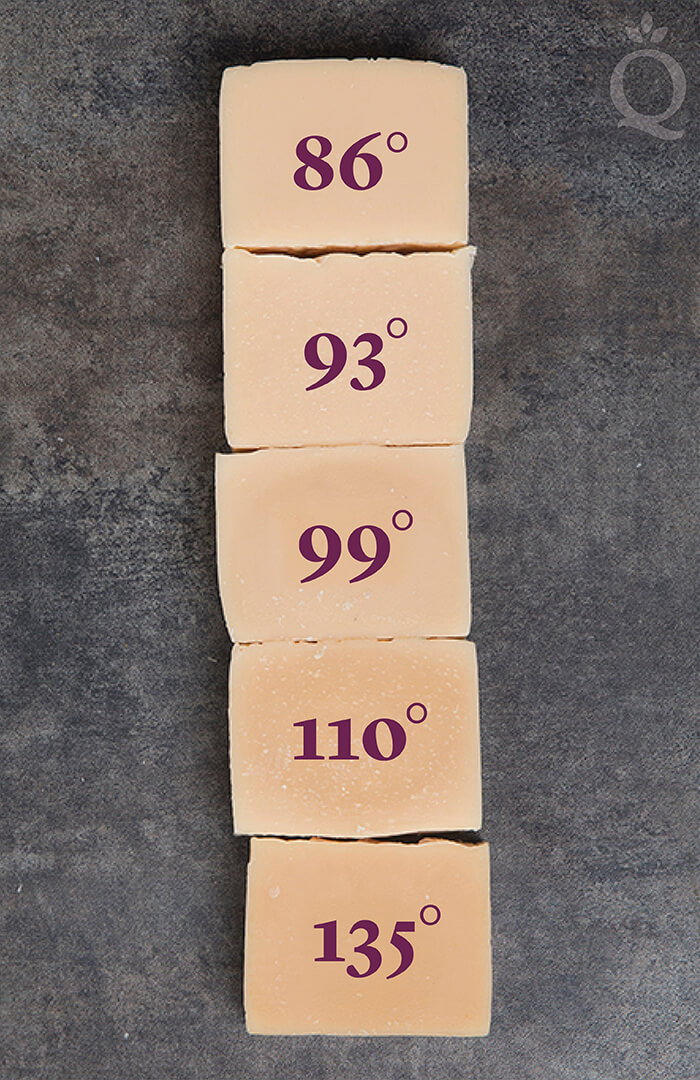
As you can see, the natural sugar in whey scorches at higher temperatures. That causes a darker color and an unpleasant smell. After our experiments, we found the option we like most is freezing the whey and placing it in an ice bath. After the soap is in the mold, we put it in the freezer for 5-24 hours. That will give you the most neutral color to work with and the smell won’t be as bad. It’s the same method we recommend for milk.
As for the way the bars feel, we didn’t notice a huge difference between whey and distilled water. Whey does add a slightly creamy feeling and nice lather to the soap, but not as much as something like goat milk or cow milk. Basically, we enjoyed experimenting with an alternative liquid and we made sure none of the whey went to waste.
If you don’t want to use it in soap, you’re in luck – you can use it in smoothies, bread, salad dressing, etc. Find a list of 36 ways to use leftover whey in this Don’t Waste the Crumbs blog post.
How do you use leftover whey?
