




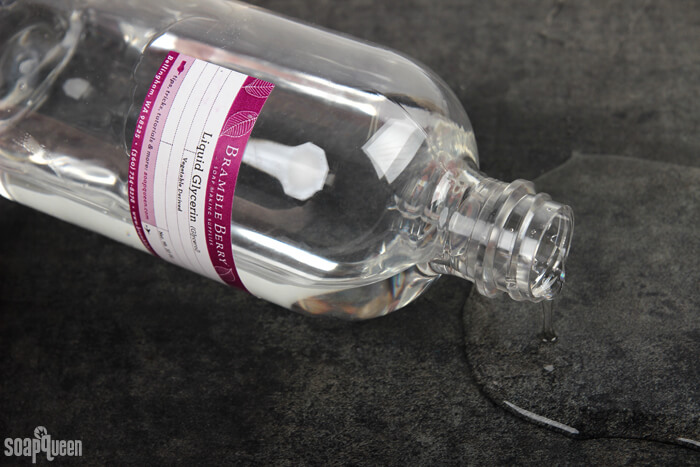
Glycerin is a thick, clear fluid that is used in a wide variety of bath and beauty products. It is a humectant, which means it has the ability to attract moisture in the air to the skin. This ability makes it great for lotions, soaps and other products. In addition to the bath and beauty industry, glycerin is used in the food industry as a sweetener. Outside the United States, it is commonly referred to as glycerol.
Glycerin is a major ingredient in melt and pour soap bases. In fact, some refer to melt and pour soap as “glycerin soap.” The large amount of glycerin is one of the reasons why melt and pour soap feels great on the skin. Adding extra glycerin to the soap softens the base. This is great if you want a bendable texture. For example, in the Melt & Pour Soap Ribbon Tutorial, additional glycerin gives soap the flexibility to create ribbons. The moldable texture also comes in handy in the Candy Cane Soap Tutorial, and the Embedded Melt & Pour Jellyroll Soap.
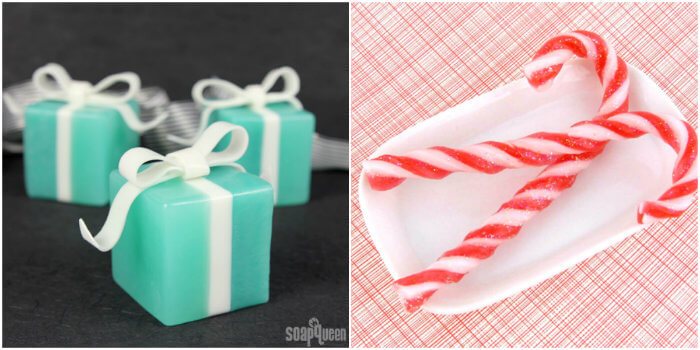 Left to right: Melt and Pour Soap Ribbons, Candy Cane Soap
Because glycerin attracts moisture from the air, it can cause melt and pour soap to “sweat.” This sweat is known as glycerin dew. Learn more about glycerin dew and how to prevent it in this post. In cold process soap, glycerin is a naturally occurring by-product of the saponification process. If the soap gets too hot, the glycerin can congeal which leads to glycerin rivers (shown below). Glycerin rivers are not harmful in any way, but they are a cosmetic issue. Click here to learn more about glycerin rivers and how to prevent them.
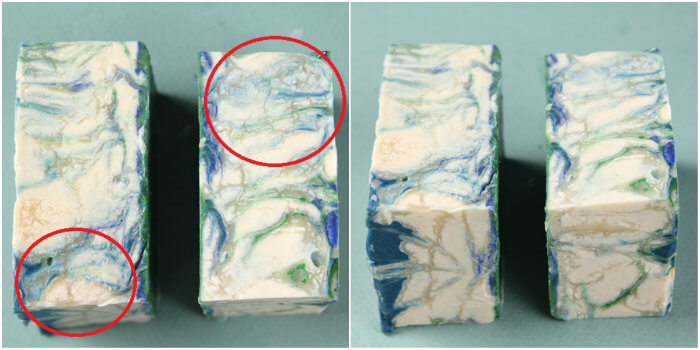 When cold process soap gets hot, the glycerin can congeal into “glycerin rivers.”
Glycerin adds humectant properties to lotion as well. Because it’s a water soluble product, glycerin is added to the water stages of lotion making. Glycerin is a major ingredient in many of the Bramble Berry Lotion Bases. To learn more about the difference between the bases and how to use them, check out this blog post. The bases are a great option if creating your own lotion recipe seems intimidating, or if you’re looking for an easy project. Click here to learn more about making you own lotion recipes from scratch.
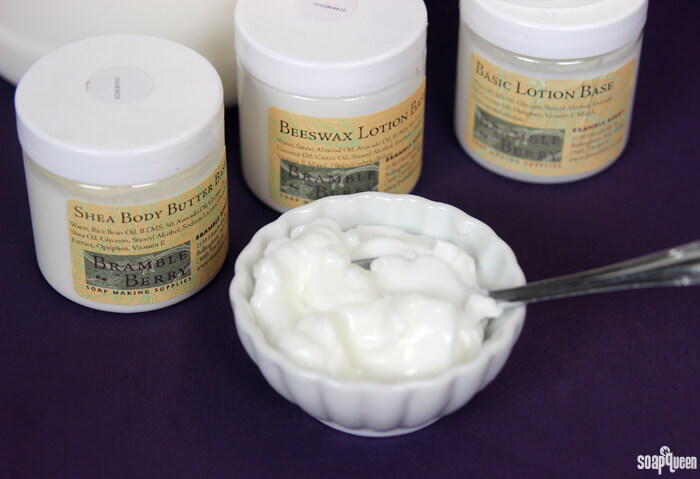 Glycerin is a common ingredient in lotion, including the Bramble Berry Lotion Bases.
If you’re looking for lotion recipes that contain glycerin, check out the Rose & Aloe In-Shower Lotion Tutorial. The lotion is applied before you leave the shower. Glycerin is also used in the Argan & Shea Lotion, which contains luxurious argan oil. If you prefer a light lotion texture, the Rose Water Lotion has a mixture of glycerin and lightweight oils.
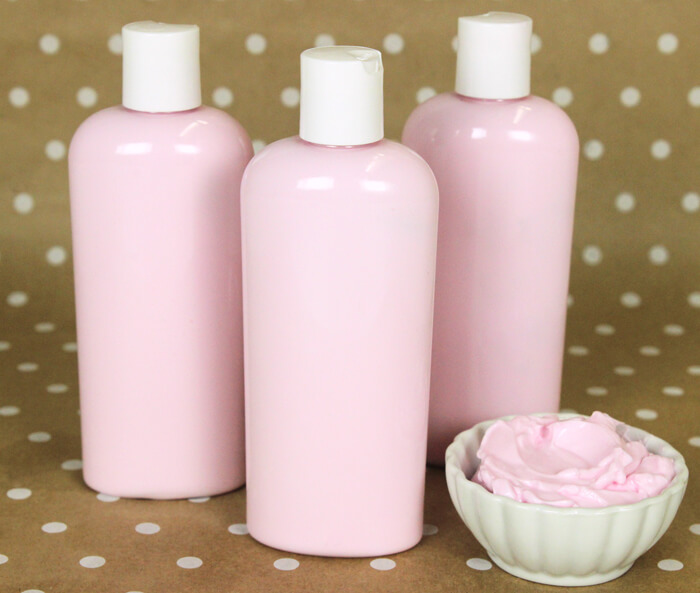 In the Rose & Aloe In-Shower Lotion Tutorial, glycerin adds humectant properties.
Glycerin is one of the main ingredients in my Solid Bubble Bath recipe. The glycerin helps create the moldable texture that allows the bars to be rolled. Check out this Soap Queen TV episode to see the recipe in action. The Lovespell Solid Bubble Bath DIY puts a girly spin on the recipe, with lots of glitter and a pink and purple color scheme.
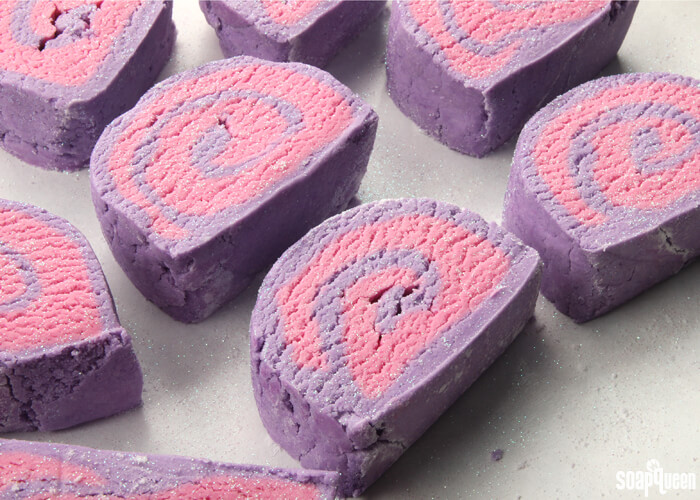 The Lovespell Solid Bubble Bath contains glycerin to give it a moldable texture.
Glycerin can also be added to scrubs and masks. In the Easy DIY Cranberry Sugar Scrub, glycerin is added to give the scrub humectant properties. The Rose Clay Foot Mask is comprised of primarily glycerin and clays to create a spreadable, thick texture.
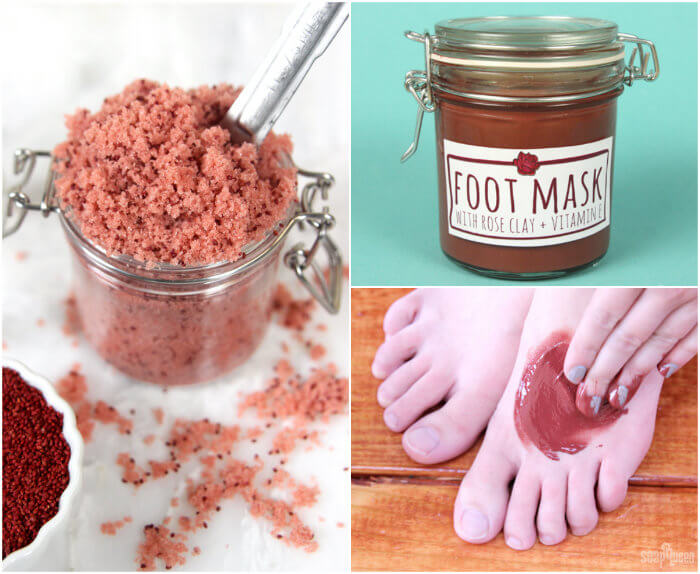 Left, clockwise: Easy DIY Cranberry Sugar Scrub, Rose Clay Foot Mask
What is your favorite way to use glycerin? It’s such a versatile product!
