





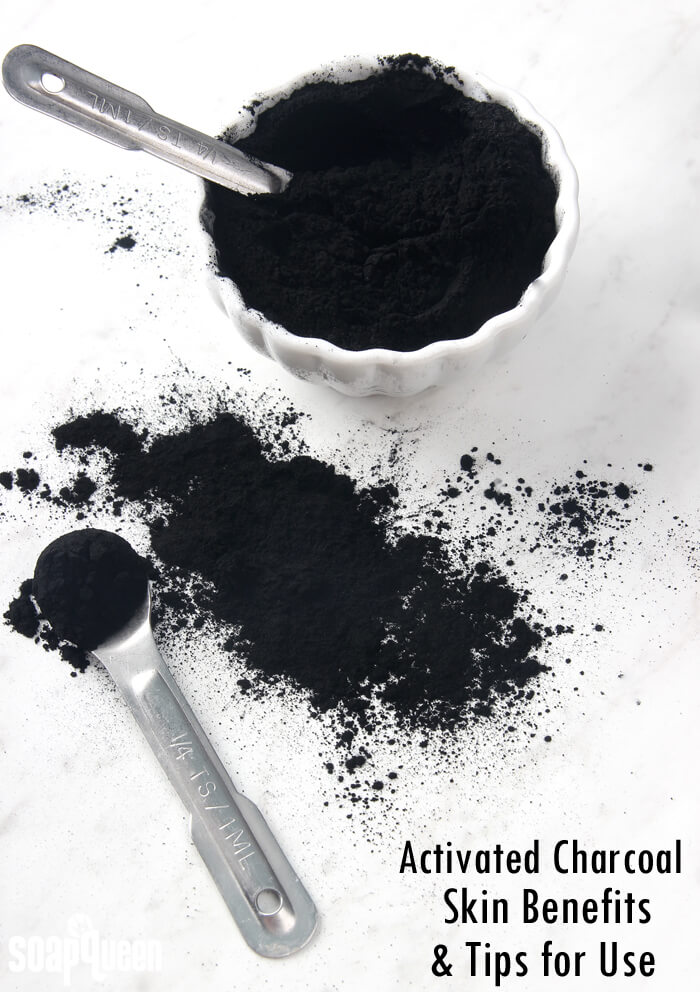
Activated charcoal has become a popular ingredient for skin care products in the past few years. But it’s not new – charcoal has been used in the beauty and medical industries for years. Charcoal is known for its ability to absorb and draw out oil from the skin. This makes charcoal a fantastic addition to soaps, scrubs, masks and more.
There are various types, including activated charcoal, sugar charcoal and Japanese charcoal (aka white charcoal). The different types of charcoal have various origins and production methods. “Regular” charcoal usually comes from wood, coal or peat. This type of charcoal is often used as fuel. Activated charcoal, on the other hand, is most commonly used for medical, beauty or purification processes. To become “activated,” the charcoal goes through a high temperature steam activation process. This process increases its surface area, which increases the charcoal’s ability to absorb and filter. This makes activated charcoal the proper choice for medical and cosmetic use.
In particular, activated charcoal is fantastic for oily skin. Its ability to absorb oil and dirt from pores leaves skin feeling balanced. If you have dry skin, activated charcoal may be a little bit too drying. Some use charcoal in their hair care to add volume, and some even use it in their tooth care regimen (keep in mind the charcoal at Bramble Berry is not meant to be consumed in anyway).
Want to add charcoal to your bath and body products? Interestingly, activated charcoal is not water soluble. A great example of this was in the Black Bath Bombs Test; the bath bombs made with activated charcoal left plenty of residue on the tub, because the charcoal did not want to mix with the water. A touch of Polysorbate 80 helped the activated charcoal blend in better with the water.
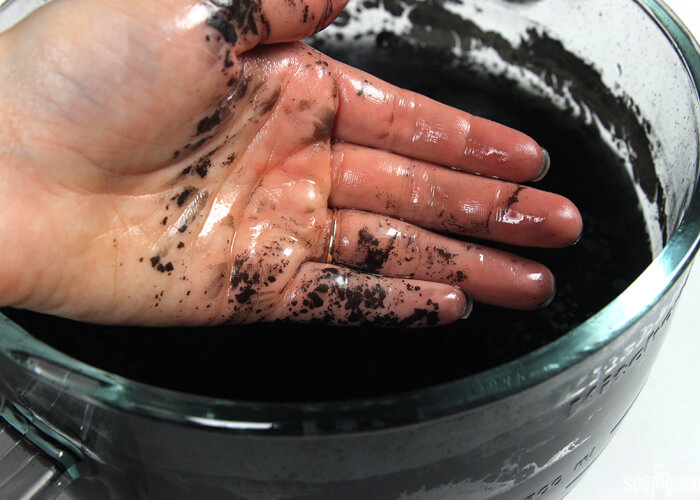 Activated charcoal is not water soluble, and does not work well in bath bombs without an emulsifier as shown in this post.
If you’re adding charcoal to your project, dispersing it in oil helps it mix in easier. Use 1 teaspoon charcoal to 1 tablespoon 99% isopropyl alcohol for melt and pour soap and a lightweight liquid oil for cold process soap. Activated charcoal can be added directly to melt and pour or cold process soap batter, but dispersing does help get rid of clumps. If you’d like to try adding it to emulsified projects like lotion, I recommend a small test batch first. We actually tried adding it to the clay mask recipes (which are essentially lotions) and found the charcoal did not mix in very well, even with plenty of stick blending (see photo below).
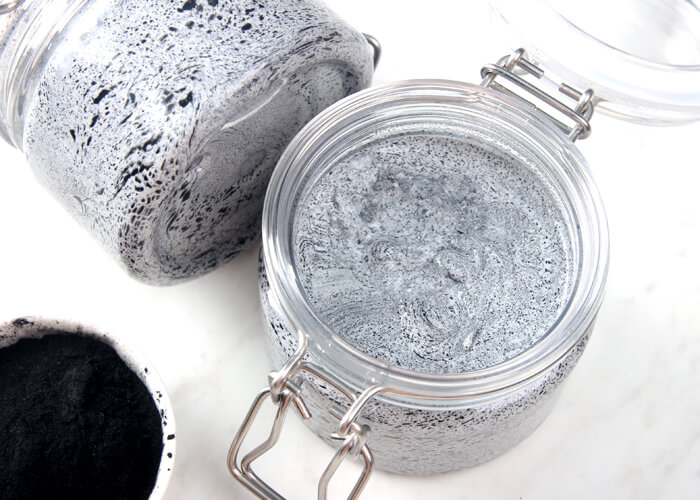 In our tests, activated charcoal did not mix in very well to emulsified clay masks.
In addition to the skin benefits, activated charcoal gives products a beautiful black color. Charcoal can create a gray lather and transfer color to a washcloth if a lot is used in a recipe. In my experience, I have not found charcoal soap stains washcloths permanently. If you use enough charcoal to create a dark black color, chances are it will give your lather a little color. For cold process and melt and pour soap, start with 1 teaspoon of dispersed charcoal per pound of soap. Add more color until you get the shade you like. A light to dark gray shade in soap will most likely not create a gray lather.
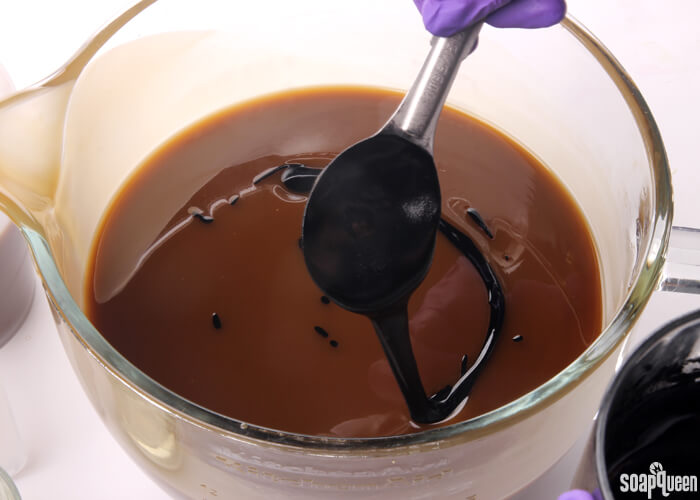 Charcoal is dispersed in oil and added to the soap batter in the Charcoal & Cedar Beer Soap Tutorial.
Now, let’s talk about handling activated charcoal. There is no way around it – this stuff is messy. It’s a very small and light powder, so it has a tendency to “poof” up into the air. If you’ve used activated charcoal, you know it can have a tendency to get everywhere. When working with it, I recommend closing windows and shutting off any fans to help avoid an unnecessary mess. If you do get charcoal on your hands while working with it, I recommend washing it off with water and soap. Once, I left activated charcoal on my knuckles for about an hour while formulating recipes. My knuckles were extremely dry for about a week! It has some serious absorbing properties.
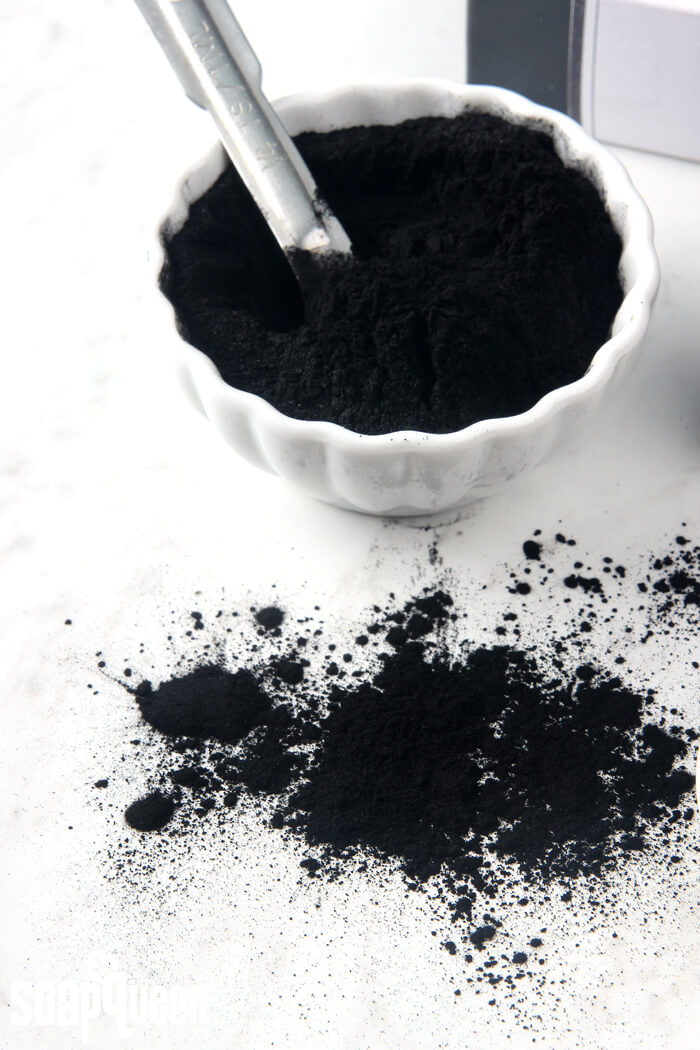
Looking for some charcoal recipe inspiration? Check out the tutorials below, and be on the lookout for more recipes this week!
- Rose Clay & Charcoal Soap Tutorial
- Gold Mine Cold Process Soap
- Wild Leopard Print Cold Process Soap
- Honey Bee Funnel Pour Cold Process Soap
- Creamy Cow Milk Cold Process Soap
- Charcoal & Cedar Beer Cold Process Tutorial
- Rose Gold & Charcoal Heart Soap
- Honey Bee Soap Tutorial
- Dragon’s Breath Cold Process Soap
- Charcoal and Rose Clay Spa Bar
- Minty Clay Melt & Pour Bar
- Natural Colorant Taiwan Swirl
